A lot happened in the year 1989, including the debut of a TV sitcom in which nothing happened. That show, of course, was Seinfeld, and we’ll be doing a deep dive into this iconic comedy over the coming weeks.
But first, to get a sense of the times and trends that helped shape this series, here’s a quick look at the notable books that were published in 1989.
The Power of One
by Bryce Courtenay
The Power of One is a novel by Australian author Bryce Courtenay, first published in 1989. Set in South Africa during the 1930s and 1940s, it tells the story of an English boy who, through the course of the story, acquires the name of Peekay. (In the movie version, the protagonist’s given name is Peter Phillip Kenneth Keith, but not in the book. The author identifies “Peekay” as a reference to his earlier nickname “Piskop”: Afrikaans for “Pisshead.”) It is written from the first person perspective, with Peekay narrating (as an adult, looking back) and trusting the reader with his thoughts and feelings, as opposed to a detailed description of places and account of actions. A film adaptation was released in 1992.
Billy Bathgate
by E.L. Doctorow
Billy Bathgate is a 1989 novel by author E. L. Doctorow that won the 1989 National Book Critics Circle award for fiction for 1990, the 1990 PEN/Faulkner Award for Fiction, the 1990 William Dean Howells Medal, and was the runner-up for the 1990 Pulitzer Prize and the 1989 National Book Award. A film based on the novel was released in 1991 to very mixed reviews.
The Remains of the Day
by Kazuo Ishiguro
The Remains of the Day is a 1989 novel by the Nobel Prize-winning British author. The protagonist, Stevens, is a butler with a long record of service at Darlington Hall, a stately home near Oxford, England. In 1956, he takes a road trip to visit a former colleague, and reminisced about events at Darlington Hall in the 1920s and 1930s. The work received the Booker Prize for Fiction in 1989. A film adaptation of the novel, made in 1993 and starring Anthony Hopkins and Emma Thompson, was nominated for eight Academy Awards. In 2022, it was included on the “Big Jubilee Read” list of 70 books by Commonwealth authors, selected to celebrate the Platinum Jubilee of Elizabeth II.
The Russia House
by John le Carre
The Russia House is a spy novel by the British writer. The title refers to the nickname given to the portion of the British Secret Intelligence Service that was devoted to spying on the Soviet Union. A film based on the novel was released in 1990 starring Sean Connery and Michelle Pfeiffer, and directed by Fred Schepisi. The BBC produced a radio play starring Tom Baker.
Clear and Present Danger
by Tom Clancy
Clear and Present Danger is a political thriller novel. A sequel to The Cardinal of the Kremlin (1988), main character Jack Ryan becomes acting Deputy Director of Intelligence in the Central Intelligence Agency, and discovers that he is being kept in the dark by his colleagues who are conducting a covert war against a drug cartel based in Colombia. It debuted at number one on The New York Times bestseller list. A film adaptation, featuring Harrison Ford reprising his role as Ryan, was released on August 3, 1994.
The Dark Half
by Stephen King
The Dark Half is a horror novel. Publishers Weekly listed The Dark Half as the second best-selling book of 1989 behind Tom Clancy’s Clear and Present Danger. The novel was adapted into a feature film of the same name in 1993. Stephen King wrote several books under a pseudonym, Richard Bachman, during the 1970s and 1980s. Most of the Bachman novels were darker and more cynical in nature, featuring a far more visceral sense of horror than the psychological, gothic style common in many of King’s most famous works. When King was identified as Bachman, he wrote The Dark Half – about an author – in response to his outing.
The book’s central villain, George Stark, was named in honor of Richard Stark, the pen name of writer Donald E. Westlake under which he wrote some of his darkest, most violent books. King telephoned Westlake personally to ask permission. King’s own “Richard Bachman” pseudonym was also partly named for Stark: King had been reading a Richard Stark novel at the time he chose the pen name.
The Pillars of the Earth
by Ken Follett
The Pillars of the Earth is a historical novel by British author Ken Follett published in 1989 about the building of a cathedral in the fictional town of Kingsbridge, England. Set in the 12th century, the novel covers the time between the sinking of the White Ship and the murder of Thomas Becket, but focuses primarily on the Anarchy. The book traces the development of Gothic architecture out of the preceding Romanesque architecture, and the fortunes of the Kingsbridge priory and village against the backdrop of historical events of the time. Before this novel was published, Follett was known for writing in the thriller genre. The Pillars of the Earth became his best-selling work. It was made into an 8-part miniseries in 2010, and a video game in 2017.
The book was listed at no. 33 on the BBC’s Big Read, a 2003 survey with the goal of finding the “nation’s best-loved book”. The book was selected in the United States for Oprah’s Book Club in 2007. It is the first book in the Kingsbridge Series, the others being a sequel, set 150 years later, entitled World Without End (2007), and A Column of Fire (2017) set in Elizabethan England. A fourth novel, The Evening and the Morning (2020), a prequel set in 997 AD, was released on September 15, 2020.
A Time to Kill
by John Grisham
A Time to Kill is a 1989 legal thriller and debut novel. The novel was rejected by many publishers before Wynwood Press eventually gave it a 5,000-copy printing. When Doubleday published The Firm, Wynwood released a trade paperback of A Time to Kill, which became a bestseller. Dell published the mass market paperback months after the success of The Firm, bringing Grisham to widespread popularity among readers. Doubleday eventually took over the contract for A Time to Kill and released a special hardcover edition. In 1996, the novel was adapted into a namesake film, starring Sandra Bullock, Matthew McConaughey, and Samuel L. Jackson. In 2011, it was further adapted into a namesake stage play by Rupert Holmes. The stage production opened at the Arena Stage in Washington, D.C. in May, 2011 and opened on Broadway in October, 2013. The novel spawned two sequels currently, Sycamore Row, released in 2013, and A Time for Mercy, released in 2020.
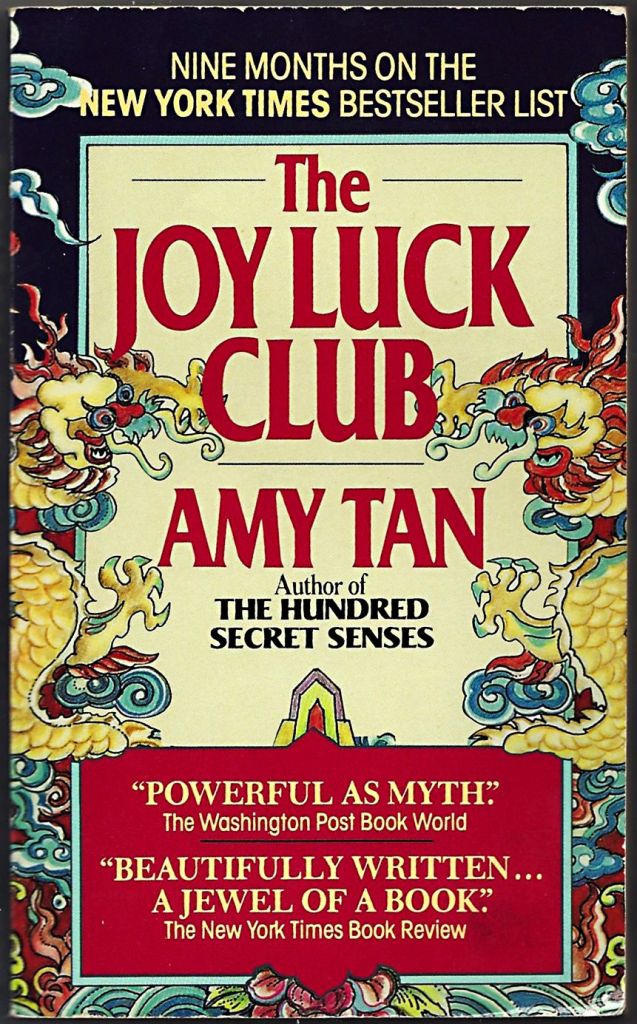
The Joy Luck Club
by Amy Tan
This novel focuses on four Chinese immigrant families in San Francisco who start a club known as The Joy Luck Club, playing the Chinese game of mahjong for money while feasting on a variety of foods. The book is structured similarly to a mahjong game, with four parts divided into four sections to create sixteen chapters. The three mothers and four daughters (one mother, Suyuan Woo, dies before the novel opens) share stories about their lives in the form of short vignettes. Each part is preceded by a parable relating to the themes within that section. In 1993, the novel was adapted into a feature film directed by Wayne Wang and starring Ming-Na Wen, Lauren Tom, Tamlyn Tomita, France Nguyen, Rosalind Chao, Kieu Chinh, Tsai Chin, Lisa Lu, and Vivian Wu. The screenplay was written by the author Amy Tan along with Ronald Bass. The novel was also adapted into a play, by Susan Kim, which premiered at Pan Asian Repertory Theatre in New York.
 SCREEN TIME WITH SAM