A lot happened in the year 1987, including the debut of a family-friendly TV sitcom set in San Francisco. The name of the show was Full House, and we’ll be doing a deep dive into this popular comedy over the coming weeks.
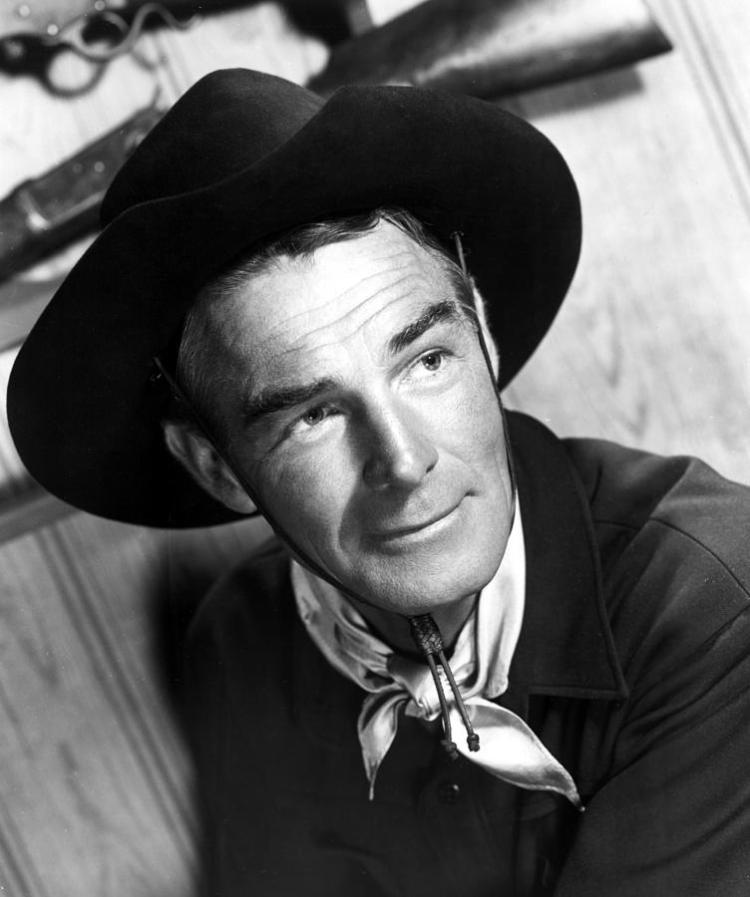
But first, to get a sense of the times and trends that helped shape this series, here’s a notable obituary from 1987 — Randolph Scott.
Randolph Scott was an American film actor whose career spanned the years from 1928 to 1962. As a leading man for all but the first three years of his cinematic career, Scott appeared in a variety of genres, including social dramas, crime dramas, comedies, musicals (albeit in non-singing and non-dancing roles), adventure tales, war films, and a few horror and fantasy films. However, his most enduring image is that of the tall-in-the-saddle Western hero. Out of his more than 100 film appearances over 60 were in Westerns. According to editor Edward Boscombe, “…Of all the major stars whose name was associated with the Western, Scott [was] most closely identified with it.”
Scott’s more than 30 years as a motion picture actor resulted in his working with many acclaimed screen directors, including Henry King, Rouben Mamoulian, Michael Curtiz, John Cromwell, King Vidor, Allan Dwan, Fritz Lang, Sam Peckinpah, Henry Hathaway (eight times), Ray Enright (seven), Edwin L. Marin (seven), Andre DeToth (six), and most notably, his seven film collaborations with Budd Boetticher. Scott also worked with a diverse array of cinematic leading ladies, from Shirley Temple and Irene Dunne to Mae West and Marlene Dietrich. His profile was incorporated into the original logo of the Las Vegas Raiders.
At 6 ft 2 in (188 cm), lanky, muscular, and handsome, Scott displayed what was seen as an easygoing charm and courtly Southern drawl in his early films that helped offset his limitations as an actor, where he was frequently found to be stiff or “lumbering”. As he matured, however, Scott’s acting was viewed as having improved, while his features became burnished and leathery, allowing him to portray a “strong, silent” type of stoic hero.
During the early 1950s, Scott was a consistent box-office draw. In the annual Motion Picture Herald Top Ten Polls, he ranked 10th in 1950, seventh in 1951, and 10th in both 1952 and 1953. Scott also appeared in Quigley’s Top Ten Money Makers Poll from 1950 to 1953.
Scott’s face was also the model for the pirate in the Las Vegas Raiders logo since 1960 when the Raiders were originally located in Oakland, California.
Although Scott achieved fame as a motion picture actor, he managed to stay fairly low profile with his private life. Offscreen he was a good friend of Fred Astaire and Cary Grant. He met Grant on the set of Hot Saturday (1932), and shortly afterwards, they moved in together and shared a beach house in Malibu that became known as “Bachelor Hall”. It is widely rumored, on scant circumstantial evidence, that the two were in a romantic relationship at the time. But both men and their wives and families have repeatedly denied these rumors. In 1944, Scott and Grant stopped living together, but they remained close friends for the rest of their lives.
Scott died of heart and lung ailments in 1987 at the age of 89 in Beverly Hills, California. He was interred at Elmwood Cemetery in Charlotte, North Carolina. He and his wife Patricia had been married for 43 years. She died in 2004 and is buried next to her husband. Their mid-century modern home was torn down in 2008. The Randolph Scott papers, which includes photos, scrapbooks, notes, letters, articles and house plans were left to the UCLA Library Special Collections.
 SCREEN TIME WITH SAM