A lot happened in the year 1987, including the debut of a family-friendly TV sitcom set in San Francisco. The name of the show was Full House, and we’ll be doing a deep dive into this popular comedy over the coming weeks.
But first, to get a sense of the times and trends that helped shape this series, here’s a notable obituary from 1987 — John Huston.
John Huston was an American film director, screenwriter, actor and visual artist. He wrote the screenplays for most of the 37 feature films he directed, many of which are today considered classics, including The Maltese Falcon (1941), The Treasure of the Sierra Madre (1948), The Asphalt Jungle (1950), The African Queen (1951), The Misfits (1961), Fat City (1972), The Man Who Would Be King (1975) and Prizzi’s Honor (1985). During his 46-year career, Huston received 15 Academy Award nominations, winning twice. He also directed both his father, Walter Huston, and daughter, Anjelica Huston, to Oscar wins.
In his early years, Huston studied and worked as a fine art painter in Paris. He then moved to Mexico and began writing first plays and short stories, and later working in Los Angeles as a Hollywood screenwriter, and was nominated for several Academy Awards writing for films directed by William Dieterle and Howard Hawks, among others. His directorial debut came with The Maltese Falcon, which despite its small budget became a commercial and critical hit; he would continue to be a successful, if iconoclastic, Hollywood director for the next 45 years. He explored the visual aspects of his films throughout his career, sketching each scene on paper beforehand, then carefully framing his characters during the shooting. While most directors rely on post-production editing to shape their final work, Huston instead created his films while they were being shot, with little editing needed. Some of Huston’s films were adaptations of important novels, often depicting a “heroic quest,” as in Moby Dick, or The Red Badge of Courage. In many films, different groups of people, while struggling toward a common goal, would become doomed, forming “destructive alliances,” giving the films a dramatic and visual tension. Many of his films involved themes such as religion, meaning, truth, freedom, psychology, colonialism, and war.
While he had done some stage acting in his youth and had occasionally cast himself in bit parts in his own films, he primarily worked behind the camera until Otto Preminger cast him in 1963’s The Cardinal, for which he was nominated for a Best Supporting Actor Oscar. He continued to take prominent supporting roles for the next two decades, including 1974’s Chinatown (directed by Roman Polanski), and he lent his booming baritone voice as a voice actor and narrator to a number of prominent films. His last two films, 1985’s Prizzi’s Honor, and 1987’s The Dead, filmed while he was in failing health at the end of his life, were both nominated for multiple Academy Awards. He died shortly after completing his last film.
Huston has been referred to as “a titan”, “a rebel”, and a “renaissance man” in the Hollywood film industry. Author Ian Freer describes him as “cinema’s Ernest Hemingway”—a filmmaker who was “never afraid to tackle tough issues head on.” He traveled widely, settling at various times in France, Mexico, and Ireland. Huston was a citizen of the U.S. by birth but renounced this to become an Irish citizen and resident in 1964. He later returned to the U.S., where he lived the rest of his life. For his contributions to the American film industry, he received a star on the Hollywood Walk of Fame in February 1960.
Huston received 15 Oscar nominations in the course of his career and is the oldest person ever to be nominated for the Best Director Oscar when, at 79 years old, he was nominated for Prizzi’s Honor (1985). He won two Oscars, for directing and writing the screenplay for The Treasure of the Sierra Madre. Huston also won a Golden Globe for that film. He received the Life Achievement Award from the American Film Institute in 1983, and the Career Achievement Award from the U.S. National Board of Review of Motion Pictures in 1984.
He also has the unique distinction of directing both his father Walter and his daughter Anjelica in Oscar-winning performances (in The Treasure of the Sierra Madre and Prizzi’s Honor, respectively), making the Hustons the first family to have three generations of Academy Award winners. He also directed her in Sinful Davey in 1969.
In addition, he also directed 13 other actors in Oscar-nominated performances: Sydney Greenstreet, Claire Trevor, Sam Jaffe, Humphrey Bogart, Katharine Hepburn, José Ferrer, Colette Marchand, Deborah Kerr, Grayson Hall, Susan Tyrrell, Albert Finney, Jack Nicholson and William Hickey.
In 1960, Huston was honored with a star on the Hollywood Walk of Fame for his contribution to motion pictures. In 1965, Huston received the Laurel Award for Screenwriting Achievement from the Writers Guild of America. In 1981, his film Escape to Victory was nominated for the Golden Prize at the 12th Moscow International Film Festival. A statue of Huston, sitting in his director’s chair, stands in Plaza John Huston in Puerto Vallarta, Mexico.
A lot happened in the year 1987, including the debut of a family-friendly TV sitcom set in San Francisco. The name of the show was Full House, and we’ll be doing a deep dive into this popular comedy over the coming weeks.
But first, to get a sense of the times and trends that helped shape this series, here’s a notable obituary from 1987 — James Baldwin.
James Baldwin was an African American writer. He garnered acclaim for his work across several mediums, including essays, novels, plays, and poems. His first novel, Go Tell It on the Mountain, was published in 1953; decades later, Time magazine included the novel on its list of the 100 best English-language novels released from 1923 to 2005. His first essay collection, Notes of a Native Son, was published in 1955.
Baldwin’s work fictionalizes fundamental personal questions and dilemmas amid complex social and psychological pressures. Themes of masculinity, sexuality, race, and class intertwine to create intricate narratives that run parallel with some of the major political movements toward social change in mid-twentieth century America, such as the civil rights movement and the gay liberation movement. Baldwin’s protagonists are often but not exclusively African American, and gay and bisexual men frequently feature prominently in his literature. These characters often face internal and external obstacles in their search for social and self-acceptance. Such dynamics are prominent in Baldwin’s second novel, Giovanni’s Room, which was written in 1956, well before the gay liberation movement.
His reputation has endured since his death and his work has been adapted for the screen to great acclaim. An unfinished manuscript, Remember This House, was expanded and adapted for cinema as the documentary film I Am Not Your Negro (2016), which was nominated for Best Documentary Feature at the 89th Academy Awards. One of his novels, If Beale Street Could Talk, was adapted into the Academy Award– winning film of the same name in 2018, directed and produced by Barry Jenkins.
In addition to writing, Baldwin was also a well-known, and controversial, public figure and orator, especially during the civil rights movement in the United States.
During his high school years, uncomfortable with the fact that, unlike many of his peers, he was attracted to men rather than women, Baldwin sought refuge in religion. He first joined the now-demolished Mount Calvary of the Pentecostal Faith Church on Lenox Avenue in 1937, but followed the preacher there, Bishop Rose Artemis Horn, who was affectionately called Mother Horn, when she left to preach at Fireside Pentecostal Assembly. At 14, “Brother Baldwin”, as Baldwin was called, first took to Fireside’s altar. It was at Fireside Pentecostal, during his mostly extemporaneous sermons, that Baldwin “learned that he had authority as a speaker and could do things with a crowd”, says biographer Campbell. Baldwin delivered his final sermon at Fireside Pentecostal in 1941. Baldwin later wrote in the essay “Down at the Cross” that the church “was a mask for self-hatred and despair … salvation stopped at the church door”. He related that he had a rare conversation with David Baldwin “in which they had really spoken to one another”, with his stepfather asking, “You’d rather write than preach, wouldn’t you?”
Baldwin left school in 1941 to earn money to help support his family. He secured a job helping to build a United States Army depot in New Jersey. In the middle of 1942 Emile Capouya helped Baldwin get a job laying tracks for the military in Belle Mead, New Jersey. The two lived in Rocky Hill and commuted to Belle Mead. In Belle Mead, Baldwin came to know the face of a prejudice that deeply frustrated and angered him and that he named the partial cause of his later emigration out of America. Baldwin’s fellow white workmen, who mostly came from the South, derided him for what they saw as his “uppity” ways and his lack of “respect”. Baldwin’s sharp, ironic wit particularly upset the white Southerners he met in Belle Mead.
In an incident that Baldwin described in “Notes of a Native Son”, Baldwin went to a restaurant in Princeton called the Balt where, after a long wait, Baldwin was told that “colored boys” weren’t served there. Then, on his last night in New Jersey, in another incident also memorialized in “Notes of a Native Son”, Baldwin and a friend went to a diner after a movie only to be told that Black people were not served there. Infuriated, he went to another restaurant, expecting to be denied service once again. When that denial of service came, humiliation and rage heaved up to the surface and Baldwin hurled the nearest object at hand—a water mug—at the waiter, missing her and shattering the mirror behind her. Baldwin and his friend narrowly escaped.
During these years, Baldwin was torn between his desire to write and his need to provide for his family. He took a succession of menial jobs, and feared becoming like his stepfather, who had been unable to properly provide for his family. Fired from the track-laying job, he returned to Harlem in June 1943 to live with his family after taking a meat-packing job. Baldwin would lose the meat-packing job too after falling asleep at the plant. He became listless and unstable, drifting from this odd job to that. Baldwin drank heavily, and endured the first of his nervous breakdowns.
Beauford Delaney helped Baldwin cast off his melancholy. In the year before he left De Witt Clinton and at Capuoya’s urging, Baldwin had met Delaney, a modernist painter, in Greenwich Village. Delaney would become Baldwin’s long-time friend and mentor, and helped demonstrate to Baldwin that a Black man could make his living in art. Moreover, when World War II bore down on the United States the winter after Baldwin left De Witt Clinton, the Harlem that Baldwin knew was atrophying, no longer the bastion of a Renaissance, the community grew more economically isolated and Baldwin considered his prospects there bleak. This led Baldwin to move to Greenwich Village, where Beauford Delaney lived and a place by which he had been fascinated since at least fifteen.
Baldwin lived in several locations in Greenwich Village, first with Delaney, then with a scattering of other friends in the area. He took a job at the Calypso Restaurant, an unsegregated eatery famous for the parade of prominent Black people who dined there. At Calypso, Baldwin worked under Trinidadian restaurateur, Connie Williams, whom Delaney had introduced him to. While working at Calypso, Baldwin continued to explore his sexuality, came out to Capouya and another friend, and frequent Calypso guest, Stan Weir. He also had numerous one-night stands with various men, and several relationships with women. Baldwin’s major love during these years in the Village was an ostensibly straight Black man named Eugene Worth. Worth introduced Baldwin to the Young People’s Socialist League and Baldwin became a Trotskyist for a brief period. Baldwin never expressed his desire for Worth, and Worth died by suicide after jumping from the George Washington Bridge in 1946. In 1944 Baldwin met Marlon Brando, whom he was also attracted to, at a theater class in The New School. The two became fast friends, maintaining a closeness that endured through the Civil Rights Movement and long after. Later, in 1945, Baldwin started a literary magazine called The Generation with Claire Burch, who was married to Brad Burch, Baldwin’s classmate from De Witt Clinton. Baldwin’s relationship with the Burches soured in the 1950s but was resurrected near the end of his life.
Near the end of 1944 Baldwin met Richard Wright, who had published Native Son several years earlier. Baldwin’s main designs for that initial meeting were trained on convincing Wright of the quality of an early manuscript for what would become Go Tell It On The Mountain, then called “Crying Holy”. Wright liked the manuscript and encouraged his editors to consider Baldwin’s work, but an initial $500 advance from Harper & Brothers dissipated with no book to show for the trouble. Harper eventually declined to publish the book at all. Nonetheless, Baldwin sent letters to Wright regularly in the subsequent years and would reunite with Wright in Paris in 1948, though their relationship turned for the worse soon after the Paris reunion.
In these years in the Village, Baldwin made a number of connections in the liberal New York literary establishment, primarily through Worth: Sol Levitas at The New Leader, Randall Jarrell at The Nation, Elliot Cohen and Robert Warshow at Commentary, and Philip Rahv at Partisan Review. Baldwin wrote many reviews for The New Leader, but was published for the first time in The Nation in a 1947 review of Maxim Gorki’s Best Short Stories. Only one of Baldwin’s reviews from this era made it into his later essay collection The Price of the Ticket: a sharply ironical assay of Ross Lockridge’s Raintree Countree that Baldwin wrote for The New Leader. Baldwin’s first essay, “The Harlem Ghetto”, was published a year later in Commentary and explored anti-Semitism among Black Americans. His conclusion in “Harlem Ghetto” was that Harlem was a parody of white America, with white American anti-Semitism included. Jewish people were also the main group of white people that Black Harlem dwellers met, so Jews became a kind of synecdoche for all that the Black people in Harlem thought of white people. Baldwin published his second essay in The New Leader, riding a mild wave of excitement over “Harlem Ghetto”: in “Journey to Atlanta”, Baldwin uses the diary recollections of his younger brother David, who had gone to Atlanta as part of a singing group, to unleash a lashing of irony and scorn on the South, white radicals, and ideology itself. This essay, too, was well received.
Baldwin tried to write another novel, Ignorant Armies, plotted in the vein of Native Son with a focus on a scandalous murder, but no final product materialized and his strivings toward a novel remained unsated. Baldwin spent two months out of summer 1948 at Shanks Village, a writer’s colony in Woodstock, New York. He then published his first work of fiction, a short story called “Previous Condition”, in the October 1948 issue of Commentary, about a 20-something Black man who is evicted from his apartment, the apartment a metaphor for white society.
Disillusioned by American prejudice against Black people, as well as wanting to see himself and his writing outside of an African-American context, he left the United States at the age of 24 to settle in Paris. Baldwin wanted not to be read as “merely a Negro; or, even, merely a Negro writer.” He also hoped to come to terms with his sexual ambivalence and escape the hopelessness that many young African-American men like himself succumbed to in New York.
In 1948, with $1,500 ($16,918 today) in funding from a Rosenwald Fellowship, Baldwin attempted a photography and essay book titled Unto the Dying Lamb with a photographer friend named Theodore Pelatowski, whom Baldwin met through Richard Avedon. The book was intended as both a catalog of churches and an exploration of religiosity in Harlem, but it was never finished. The Rosenwald money did, however, grant Baldwin the prospect of consummating a desire he held for several years running: moving to France. This he did: after saying his goodbyes to his mother and younger siblings, with forty dollars to his name, Baldwin flew from New York to Paris on November 11, 1948, having given most of the scholarship funds to his mother. Baldwin would give various explanations for leaving America—sex, Calvinism, an intense sense of hostility he feared would turn inward—but most of all, his race: the feature of his existence that had to therefore expose him to a lengthy catalog of humiliations. He hoped for a more peaceable existence in Paris.
In Paris, Baldwin was soon involved in the cultural radicalism of the Left Bank. He started to publish his work in literary anthologies, notably Zero which was edited by his friend Themistocles Hoetis and which had already published essays by Richard Wright.
Baldwin spent nine years living in Paris, mostly in Saint-Germain-des-Prés, with various excursions to Switzerland, Spain, and back to the United States. Baldwin’s time in Paris was itinerant: he stayed with various friends around the city and in various hotels. Most notable of these lodgings was Hôtel Verneuil, a hotel in Saint-Germain that had collected a motley crew of struggling expatriates, mostly writers. This Verneuil circle spawned numerous friendships that Baldwin relied upon in rough periods. Baldwin was also continuously poor during his time in Paris, with only momentary respites from that condition. In his early years in Saint-Germain, Baldwin acquainted himself with Otto Friedrich, Mason Hoffenberg, Asa Benveniste, Themistocles Hoetis, Jean-Paul Sartre, Simone de Beauvoir, Max Ernst, Truman Capote, and Stephen Spender, among many others. Baldwin also met Lucien Happersberger, a Swiss boy, seventeen years old at the time of their first meeting, who came to France in search of excitement. Happersberger became Baldwin’s lover, especially in Baldwin’s first two years in France, and Baldwin’s near-obsession for some time after. Baldwin and Happersberger would remain friends for the next thirty-nine years. Though his time in Paris was not easy, Baldwin did escape the aspects of American life that most terrified him, especially the “daily indignities of racism”, per biographer James Campbell. According to Baldwin’s friend and biographer David Leeming: “Baldwin seemed at ease in his Paris life; Jimmy Baldwin the aesthete and lover reveled in the Saint-Germain ambiance.”
In his early years in Paris prior to Go Tell It on the Mountain‘s publication, Baldwin wrote several notable works. “The Negro in Paris”, published first in The Reporter, explored Baldwin’s perception of an incompatibility between Black Americans and Black Africans in Paris, as Black Americans had faced a “depthless alienation from oneself and one’s people” that was mostly unknown to Parisian Africans. He also wrote “The Preservation of Innocence”, which traced the violence against homosexuals in American life to the protracted adolescence of America as a society. In the magazine Commentary, he published “Too Little, Too Late”, an essay on Black American literature, and “The Death of the Prophet”, a short story that grew out of Baldwin’s earlier writings for Go Tell It on The Mountain. In the latter work, Baldwin employs a character named Johnnie to trace his bouts of depression to his inability to resolve the questions of filial intimacy emanating from Baldwin’s relationship with his stepfather. In December 1949, Baldwin was arrested and jailed for receiving stolen goods after an American friend brought him bedsheets that the friend had taken from another Paris hotel. When the charges were dismissed several days later, to the laughter of the courtroom, Baldwin wrote of the experience in his essay “Equal in Paris”, also published in Commentary in 1950. In the essay, he expressed his surprise and bewilderment at how he was no longer a “despised black man” but simply an American, no different than the white American friend who stole the sheet and with whom he had been arrested.
In these years in Paris, Baldwin also published two of his three scathing critiques of Richard Wright—”Everybody’s Protest Novel” in 1949 and “Many Thousands Gone” in 1951. Baldwin’s critique of Wright is an extension of his disapprobation toward protest literature. Per biographer David Leeming, Baldwin despised protest literature because it is “concerned with theories and with the categorization of human beings, and however brilliant the theories or accurate the categorizations, they fail because they deny life.” Protest writing cages humanity, but, according to Baldwin, “only within this web of ambiguity, paradox, this hunger, danger, darkness, can we find at once ourselves and the power that will free us from ourselves.” Baldwin took Wright’s Native Son and Stowe’s Uncle Tom’s Cabin, both erstwhile favorites of Baldwin’s, as paradigmatic examples of the protest novel’s problem. The treatment of Wright’s Bigger Thomas by socially earnest white people near the end of Native Son was, for Baldwin, emblematic of white Americans’ presumption that for Black people “to become truly human and acceptable, they must first become like us. This assumption once accepted, the Negro in America can only acquiesce in the obliteration of his own personality.” In these two essays, Baldwin came to articulate what would become a theme in his work: that white racism toward Black Americans was refracted through self-hatred and self-denial—”One may say that the Negro in America does not really exist except in the darkness of white minds. … Our dehumanization of the Negro then is indivisible from our dehumanization of ourselves.” Baldwin’s relationship with Wright was tense but cordial after the essays, although Baldwin eventually ceased to regard Wright as a mentor. Meanwhile, “Everybody’s Protest Novel” had earned Baldwin the label “the most promising young Negro writer since Richard Wright.”
Beginning in the winter of 1951, Baldwin and Happersberger took several trips to Loèches-les-Bains in Switzerland, where Happersberger’s family owned a small chateau. By the time of the first trip, Happersberger had then entered a heterosexual relationship but grew worried for his friend Baldwin and offered to take Baldwin to the Swiss village. Baldwin’s time in the village gave form to his essay “Stranger in the Village”, published in Harper’s Magazine in October 1953. In that essay, Baldwin described some unintentional mistreatment and off-putting experiences at the hands of Swiss villagers who possessed a racial innocence few Americans could attest to. Baldwin explored how the bitter history shared between Black and white Americans had formed an indissoluble web of relations that changed both races: “No road whatever will lead Americans back to the simplicity of this European village where white men still have the luxury of looking on me as a stranger.”
Beauford Delaney’s arrival in France in 1953 marked “the most important personal event in Baldwin’s life” that year, according to biographer David Leeming. Around the same time, Baldwin’s circle of friends shifted away from primarily white bohemians toward a coterie of Black American expatriates: Baldwin grew close to dancer Bernard Hassell; spent significant amounts of time at Gordon Heath’s club in Paris; regularly listened to Bobby Short and Inez Cavanaugh’s performances at their respective haunts around the city; met Maya Angelou for the first time in these years as she partook in various European renditions of Porgy and Bess; and occasionally met with writers Richard Gibson and Chester Himes, composer Howard Swanson, and even Richard Wright. In 1954 Baldwin took a fellowship at the MacDowell writer’s colony in New Hampshire to help the process of writing a new novel and won a Guggenheim Fellowship. Also in 1954, Baldwin published the three-act play The Amen Corner which features the preacher Sister Margaret, a fictionalized Mother Horn from Baldwin’s time at Fireside Pentecostal, struggling with a difficult inheritance and alienation from herself and her loved ones on account of her religious fervor. Baldwin spent several weeks in Washington, D.C. and particularly around Howard University while he collaborated with Owen Dodson for the premiere of The Amen Corner, returning to Paris in October 1955.
Baldwin committed himself to a return to the United States in 1957, so he set about in early 1956 to enjoy what would be his last year in France. He became friends with Norman and Adele Mailer, was recognized by the National Institute of Arts and Letters with a grant, and was set to publish Giovanni’s Room. Nevertheless, Baldwin sank deeper into an emotional wreckage. In the summer of 1956, after a seemingly failed affair with a Black musician named Arnold, Baldwin’s first serious relationship since Happersberger, Baldwin overdosed on sleeping pills in a suicide attempt. He regretted the attempt almost instantly and called a friend who had him regurgitate the pills before the doctor arrived. Baldwin went on to attend the Congress of Black Writers and Artists in September 1956, a conference he found disappointing in its perverse reliance on European themes while nonetheless purporting to extol African originality.
Baldwin’s first published work, a review of the writer Maxim Gorky, appeared in The Nation in 1947. He continued to publish in that magazine at various times in his career and was serving on its editorial board at his death in 1987.
In 1953, Baldwin’s first novel, Go Tell It on the Mountain, a semi-autobiographical bildungsroman was published. He began writing it when he was only seventeen and first published it in Paris. His first collection of essays, Notes of a Native Son appeared two years later. He continued to experiment with literary forms throughout his career, publishing poetry and plays as well as the fiction and essays for which he was known.
Baldwin’s second novel, Giovanni’s Room, caused great controversy when it was first published in 1956 due to its explicit homoerotic content. Baldwin again resisted labels with the publication of this work. Despite the reading public’s expectations that he would publish works dealing with African American experiences, Giovanni’s Room is predominantly about white characters.
Baldwin sent the manuscript for Go Tell It on the Mountain from Paris to New York publishing house Alfred A. Knopf on February 26, 1952, and Knopf expressed interest in the novel several months later. To settle the terms of his association with Knopf, Baldwin sailed back to the United States on the SS Île de France in April, where Themistocles Hoetis and Dizzy Gillespie were coincidentally also voyaging—his conversations with both on the ship were extensive. After his arrival in New York, Baldwin spent much of the next three months with his family, whom he had not seen in almost three years. Baldwin grew particularly close to his younger brother, David Jr., and served as best man at David’s wedding on June 27. 121 Meanwhile, Baldwin agreed to rewrite parts of Go Tell It on the Mountain in exchange for a $250 advance ($2,551 today) and a further $750 ($7,653 today) paid when the final manuscript was completed. When Knopf accepted the revision in July, they sent the remainder of the advance, and Baldwin was soon to have his first published novel. In the interim, Baldwin published excerpts of the novel in two publications: one excerpt was published as “Exodus” in American Mercury and the other as “Roy’s Wound” in New World Writing. Baldwin set sail back to Europe on August 28 and Go Tell It on the Mountain was published in May 1953.
Go Tell It on the Mountain was the product of Baldwin’s years of work and exploration since his first attempt at a novel in 1938. In rejecting the ideological manacles of protest literature and the presupposition he thought inherent to such works that “in Negro life there exists no tradition, no field of manners, no possibility of ritual or intercourse”, Baldwin sought in Go Tell It on the Mountain to emphasize that the core of the problem was “not that the Negro has no tradition but that there has as yet arrived no sensibility sufficiently profound and tough to make this tradition articulate.” Baldwin biographer David Leeming draws parallels between Baldwin’s undertaking in Go Tell It on the Mountain and James Joyce’s endeavor in A Portrait of the Artist as a Young Man: to “encounter for the millionth time the reality of experience and to forge in the smithy of my soul the uncreated conscience of my race.” Baldwin himself drew parallels between Joyce’s flight from his native Ireland and his own run from Harlem, and Baldwin read Joyce’s time in Paris in 1950, but in Baldwin’s Go Tell It on the Mountain, it would be the Black American “uncreated conscience” at the heart of the project.
The novel is a bildungsroman that peers into the inward struggles of protagonist John Grimes, the illegitimate son of Elizabeth Grimes, to claim his own soul as it lies on the “threshing floor”, a clear allusion to another John, the Baptist born of another Elizabeth. John’s struggle is a metaphor for Baldwin’s own struggle between escaping the history and heritage that made him, awful though it may be, and plunging deeper into that heritage, to the bottom of his people’s sorrows, before he can shuffle off his psychic chains, “climb the mountain”, and free himself. John’s family members and most of the characters in the novel are blown north in the winds of the Great Migration in search of the American Dream and all are stifled. Florence, Elizabeth, and Gabriel are denied love’s reach because racism assured them that they could not muster the kind of self-respect that love requires. Racism drives Elizabeth’s lover, Richard, to suicide, Richard will not be the last Baldwin character to die thus for that same reason. Florence’s lover Frank is destroyed by searing self-hatred of his own Blackness. Gabriel’s abuse of the women in his life is downstream from his society’s emasculation of him, with mealy-mouthed religiosity only a hypocritical cover.
The phrase “in my father’s house” and various similar formulations appear throughout Go Tell It on the Mountain, and was even an early title for the novel. The house is a metaphor at several levels of generality: for his own family’s apartment in Harlem, for Harlem taken as a whole, for America and its history, and for the “deep heart’s core”. John’s departure from the agony that reigned in his father’s house, particularly the historical sources of the family’s privations, came through a conversion experience. “Who are these? Who are they” John cries out when he sees a mass of faces as he descends to the threshing floor: “They were the despised and rejected, the wretched and the spat upon, the earth’s offscouring; and he was in their company, and they would swallow up his soul.” John desperately wants to escape the threshing floor, but ” then John saw the Lord” and “a sweetness” filled him. The midwife of John’s conversion is Elisha, the voice of love that had followed him throughout the experience, and whose body filled John with “a wild delight”. Thus comes the wisdom that would define Baldwin’s philosophy: per biographer David Leeming: “salvation from the chains and fetters, the self-hatred and the other effects of historical racism could come only from love.”
It was Baldwin’s friend from high school, Sol Stein, who encouraged Baldwin to write an essay collection reflecting on his work thus far. Baldwin was reluctant, saying he was “too young to publish my memoirs.” Stein persisted in his exhortations to his friend Baldwin, and Notes of a Native Son was published in 1955. The book contained practically all the major themes that would continue to run through Baldwin’s work: searching for self when racial myths cloud reality; accepting an inheritance (“the conundrum of color is the inheritance of every American”); claiming a birthright (“my birthright was vast, connecting me to all that lives, and to everyone, forever”); the artist’s loneliness; love’s urgency. All the essays in Notes were published between 1948 and 1955 in Commentary, The New Leader, Partisan Review, The Reporter, and Harper’s Magazine. The essays rely on autobiographical detail to convey Baldwin’s arguments, as all of Baldwin’s work does. Notes was Baldwin’s first introduction to many white Americans and became their reference point for his work: Baldwin often got asked, “Why don’t you write more essays like the ones in Notes of a Native Son?”. The collection’s title alludes to both Richard Wright’s Native Son and the work of one of Baldwin’s favorite writers, Henry James’s Notes of a Son and Brother.
Notes of a Native Son is divided into three parts: the first part deals with Black identity as artist and human; the second part negotiates with Black life in America, including what is sometimes considered Baldwin’s best essay, the titular “Notes of a Native Son”; the final part takes the expatriate’s perspective, looking at American society from beyond its shores. Part One of Notes features “Everybody’s Protest Novel” and “Many Thousands Gone”, along with “Carmen Jones: The Dark Is Light Enough”, a 1955 review of Carmen Jones written for Commentary where Baldwin at once extols the sight of an all-Black cast on the silver screen and laments the film’s myths about Black sexuality. Part Two reprints “The Harlem Ghetto” and “Journey to Atlanta” as prefaces for “Notes of a Native Son”. In “Notes of a Native Son”, Baldwin attempts to come to terms with his racial and filial inheritances. Part Three contains “Equal in Paris”, “Stranger in the Village”, “Encounter on the Seine”, and “A Question of Identity”. Writing from the expatriate’s perspective, Part Three is the sector of Baldwin’s corpus that most closely mirrors Henry James’s methods: hewing out of one’s distance and detachment from the homeland a coherent idea of what it means to be American.
Throughout Notes, when Baldwin is not speaking in first-person, Baldwin takes the view of white Americans. For example, in “The Harlem Ghetto”, Baldwin writes: “what it means to be a Negro in America can perhaps be suggested by the myths we perpetuate about him.” This earned some quantity of scorn from reviewers: in a review for The New York Times Book Review, Langston Hughes lamented that “Baldwin’s viewpoints are half American, half Afro-American, incompletely fused.” Some others were nonplussed by the handholding of white audiences, which Baldwin himself would criticize in later works. Nonetheless, most acutely in this stage in his career, Baldwin wanted to escape the rigid categories of protest literature and he viewed adopting a white point-of-view as a good method of doing so.
Shortly after returning to Paris, Baldwin got word from Dial Press that Giovanni’s Room had been accepted for publication. Baldwin sent the final manuscript for the book to his editor, James Silberman, on April 8, 1956, and the book was published that autumn.
In the novel, the protagonist David is in Paris while his fiancé Hella is in Spain. David meets the titular Giovanni at the bar that Guillaume owns; the two grow increasingly intimate and David eventually finds his way to Giovanni’s room.
David is confused by his intense feelings for Giovanni and has sex with a woman in the spur of the moment to reaffirm his sexuality. Meanwhile, Giovanni begins to prostitute himself and finally commits a murder for which he is guillotined.
David’s tale is one of love’s inhibitions: he cannot “face love when he finds it”, writes biographer James Campbell. His novel features a traditional theme: the clash between the restraints of puritanism and the impulse for adventure, emphasizing the loss of innocence that results. The inspiration for the murder part of the novel’s plot is an event dating from 1943 to 1944.
A Columbia University undergraduate named Lucien Carr murdered an older, homosexual man, David Kammerer, who made sexual advances on Carr. The two were walking near the banks of the Hudson River when Kammerrer made a pass at Carr, leading Carr to stab Kammerer and dump Kammerer’s body in the river.
To Baldwin’s relief, the reviews of Giovanni’s Room were positive, and his family did not criticize the subject matter.
Even from Paris, Baldwin heard the whispers of a rising Civil Rights Movement in his homeland: in May 1954, the United States Supreme Court ordered schools to desegregate “with all deliberate speed”; in August 1955 the racist murder of Emmett Till in Money, Mississippi, and the subsequent acquittal of his killers would burn in Baldwin’s mind until he wrote Blues for Mister Charlie; in December Rosa Parks was arrested for refusing to give up her seat on a Montgomery bus; and in February 1956 Autherine Lucy was admitted to the University of Alabama before being expelled when whites rioted. Meanwhile, Baldwin was increasingly burdened by the sense that he was wasting time in Paris. Baldwin began planning a return to the United States in hopes of writing a biography of Booker T. Washington, which he then called Talking at the Gates. Baldwin also received commissions to write a review of Daniel Guérin’s Negroes on the March and J. C. Furnas’s Goodbye to Uncle Tom for The Nation, as well as to write about William Faulkner and American racism for Partisan Review.
The first project became “The Crusade of Indignation”, published in July 1956. 146 Baldwin suggests that the portrait of Black life in Uncle Tom’s Cabin “has set the tone for the attitude of American whites towards Negroes for the last one hundred years”, and that, given the novel’s popularity, this portrait has led to a unidimensional characterization of Black Americans that does not capture the full scope of Black humanity. The second project turned into the essay “William Faulkner and Desegregation”. The essay was inspired by Faulkner’s March 1956 comment during an interview that he was sure to enlist himself with his fellow white Mississippians in a war over desegregation “even if it meant going out into the streets and shooting Negroes”. For Baldwin, Faulkner represented the “go slow” mentality on desegregation that tries to wrestle with the Southerner’s peculiar dilemma: the South “clings to two entirely antithetical doctrines, two legends, two histories”; the southerner is “the proud citizen of a free society and, on the other hand, committed to a society that has not yet dared to free itself of the necessity of naked and brutal oppression.” Faulkner asks for more time but “the time … does not exist. … There is never time in the future in which we will work out our salvation.”
Baldwin initially intended to complete Another Country before returning to New York in the fall of 1957 but progress on the novel was trudging along, so he ultimately decided to go back to the United States sooner. Beauford Delaney was particularly upset about Baldwin’s departure. Delaney had started to drink a lot and was in the incipient stages of mental deterioration, now complaining about hearing voices. Nonetheless, after a brief visit with Édith Piaf, Baldwin set sail for New York in July 1957.
Baldwin’s third and fourth novels, Another Country (1962) and Tell Me How Long the Train’s Been Gone (1968), are sprawling, experimental works dealing with Black and white characters, as well as with heterosexual, gay, and bisexual characters.
Baldwin’s lengthy essay “Down at the Cross” similarly showed the seething discontent of the 1960s in novel form. The essay was originally published in two oversized issues of The New Yorker and landed Baldwin on the cover of Time magazine in 1963 while he was touring the South speaking about the restive Civil Rights Movement. Around the time of publication of The Fire Next Time, Baldwin became a known spokesperson for civil rights and a celebrity noted for championing the cause of Black Americans.
He frequently appeared on television and delivered speeches on college campuses. The essay talked about the uneasy relationship between Christianity and the burgeoning Black Muslim movement. After publication, several Black nationalists criticized Baldwin for his conciliatory attitude. They questioned whether his message of love and understanding would do much to change race relations in America. The book was consumed by whites looking for answers to the question: What do Black Americans really want? Baldwin’s essays never stopped articulating the anger and frustration felt by real-life Black Americans with more clarity and style than any other writer of his generation.
Baldwin’s next book-length essay, No Name in the Street (1972), also discussed his own experience in the context of the later 1960s, specifically the assassinations of three of his personal friends: Medgar Evers, Malcolm X, and Martin Luther King, Jr.
Baldwin’s writings of the 1970s and 1980s were largely overlooked by critics, although they have received increasing attention in recent years. Several of his essays and interviews of the 1980s discuss homosexuality and homophobia with fervor and forthrightness. Eldridge Cleaver’s harsh criticism of Baldwin in Soul on Ice and elsewhere and Baldwin’s return to southern France contributed to the perception by critics that he was not in touch with his readership. As he had been the leading literary voice of the civil rights movement, he became an inspirational figure for the emerging gay rights movement. His two novels written in the 1970s, If Beale Street Could Talk (1974) and Just Above My Head (1979), placed a strong emphasis on the importance of Black American families. He concluded his career by publishing a volume of poetry, Jimmy’s Blues (1983), as well as another book-length essay, The Evidence of Things Not Seen (1985), an extended reflection on race inspired by the Atlanta murders of 1979–1981.
Baldwin lived in France for most of his later life. He also spent some time in Switzerland and Turkey. Baldwin settled in Saint-Paul-de-Vence in the south of France in 1970, in an old Provençal house beneath the ramparts of the famous village. His house was always open to his friends who frequently visited him while on trips to the French Riviera. American painter Beauford Delaney made Baldwin’s house in Saint-Paul-de-Vence his second home, often setting up his easel in the garden. Delaney painted several colorful portraits of Baldwin. Fred Nall Hollis also befriended Baldwin during this time. Actors Harry Belafonte and Sidney Poitier were also regular house guests.
Many of Baldwin’s musician friends dropped in during the Jazz à Juan and Nice Jazz Festivals. They included Nina Simone, Josephine Baker, Miles Davis, and Ray Charles. In his autobiography, Miles Davis wrote:
“I’d read his books and I liked and respected what he had to say. As I got to know Jimmy we opened up to each other and became real great friends. Every time I went to southern France to play Antibes, I would always spend a day or two out at Jimmy’s house in St. Paul de Vence. We’d just sit there in that great big beautiful house of his telling us all kinds of stories, lying our asses off…. He was a great man.”
Baldwin learned to speak French fluently and developed friendships with French actor Yves Montand and French writer Marguerite Yourcenar who translated Baldwin’s play The Amen Corner into French.
The years Baldwin spent in Saint-Paul-de-Vence were also years of work. Sitting in front of his sturdy typewriter, he devoted his days to writing and to answering the huge amount of mail he received from all over the world. He wrote several of his last works in his house in Saint-Paul-de-Vence, including Just Above My Head in 1979 and Evidence of Things Not Seen in 1985. It was also in his Saint-Paul-de-Vence house that Baldwin wrote his famous “Open Letter to My Sister, Angela Y. Davis” in November 1970.
On December 1, 1987, Baldwin died from stomach cancer in Saint-Paul-de-Vence, France. He was buried at the Ferncliff Cemetery in Hartsdale, near New York City.
Fred Nall Hollis took care of Baldwin on his deathbed. Nall had been friends with Baldwin from the early 1970s when Baldwin would buy him drinks at the Café de Flore. Nall recalled talking to Baldwin shortly before his death about racism in Alabama. In one conversation, Nall told Baldwin “Through your books you liberated me from my guilt about being so bigoted coming from Alabama and because of my homosexuality.” Baldwin insisted: “No, you liberated me in revealing this to me.”
At the time of Baldwin’s death, he was working on an unfinished manuscript called Remember This House, a memoir of his personal recollections of civil rights leaders Medgar Evers, Malcolm X and Martin Luther King Jr. Following his death, publishing company McGraw-Hill took the unprecedented step of suing his estate to recover the $200,000 advance they had paid him for the book, although the lawsuit was dropped by 1990. The manuscript forms the basis for Raoul Peck’s 2016 documentary film I Am Not Your Negro.
Following Baldwin’s death, a court battle began over the ownership of his home in France. Baldwin had been in the process of purchasing his house from his landlady, Mlle. Jeanne Faure. At the time of his death, Baldwin did not have full ownership of the home, although it was still Mlle. Faure’s intention that the home would stay in the family. His home, nicknamed “Chez Baldwin”, has been the center of scholarly work and artistic and political activism. The National Museum of African American History and Culture has an online exhibit titled “Chez Baldwin” which uses his historic French home as a lens to explore his life and legacy. Magdalena J. Zaborowska’s 2018 book, Me and My House: James Baldwin’s Last Decade in France, uses photographs of his home and his collections to discuss themes of politics, race, queerness, and domesticity.
Over the years, several efforts were initiated to save the house and convert it into an artist residency. None had the endorsement of the Baldwin estate. In February 2016, Le Monde published an opinion piece by Thomas Chatterton Williams, a contemporary Black American expatriate writer in France, which spurred a group of activists to come together in Paris. In June 2016, American writer and activist Shannon Cain squatted at the house for 10 days in an act of political and artistic protest. Les Amis de la Maison Baldwin, a French organization whose initial goal was to purchase the house by launching a capital campaign funded by the U.S. philanthropic sector, grew out of this effort. This campaign was unsuccessful without the support of the Baldwin Estate. Attempts to engage the French government in conservation of the property were dismissed by the mayor of Saint-Paul-de-Vence, Joseph Le Chapelain whose statement to the local press claiming “nobody’s ever heard of James Baldwin” mirrored those of Henri Chambon, the owner of the corporation that razed his home. Construction was completed in 2019 on the apartment complex that now stands where Chez Baldwin once stood.
In all of Baldwin’s works, but particularly in his novels, the main characters are twined up in a “cage of reality” that sees them fighting for their soul against the limitations of the human condition or against their place at the margins of a society consumed by various prejudices. Baldwin connects many of his main characters, John in Go Tell It On The Mountain, Rufus in Another Country, Richard in Blues for Mister Charlie, and Giovanni in Giovanni’s Room, as sharing a reality of restriction: per biographer David Leeming, each is “a symbolic cadaver in the center of the world depicted in the given novel and the larger society symbolized by that world”. Each reaches for an identity within their own social environment, and sometimes, as in If Beale Street Could Talk‘s Fonny and Tell me How Long The Train’s Been Gone‘s Leo, they find such an identity, imperfect but sufficient to bear the world. The singular theme in the attempts of Baldwin’s characters to resolve their struggle for themselves is that such resolution only comes through love. Here is Leeming at some length:
“Love is at the heart of the Baldwin philosophy. Love for Baldwin cannot be safe; it involves the risk of commitment, the risk of removing the masks and taboos placed on us by society. The philosophy applies to individual relationships as well as to more general ones. It encompasses sexuality as well as politics, economics, and race relations. And it emphasizes the dire consequences, for individuals and racial groups, of the refusal to love.”
Baldwin returned to the United States in the summer of 1957 while the civil rights legislation of that year was being debated in Congress. He had been powerfully moved by the image of a young girl, Dorothy Counts, braving a mob in an attempt to desegregate schools in Charlotte, North Carolina, and Partisan Review editor Philip Rahv had suggested he report on what was happening in the American South. Baldwin was nervous about the trip but he made it, interviewing people in Charlotte, and Montgomery, Alabama. The result was two essays, one published in Harper’s magazine and in Partisan Review. Subsequent Baldwin articles on the movement appeared in Mademoiselle, Harper’s, The New York Times Magazine, and The New Yorker, where in 1962 he published the essay that he called “Down at the Cross”, and the New Yorker called “Letter from a Region of My Mind”. Along with a shorter essay from The Progressive, the essay became The Fire Next Time.
While he wrote about the movement, Baldwin aligned himself with the ideals of the Congress of Racial Equality (CORE) and the Student Nonviolent Coordinating Committee (SNCC). Joining CORE gave him the opportunity to travel across the American South lecturing on his views of racial inequality. His insights into both the North and South gave him a unique perspective on the racial problems the United States was facing.
In 1963 he conducted a lecture tour of the South for CORE, traveling to Durham and Greensboro in North Carolina, and New Orleans. During the tour, he lectured to students, white liberals, and anyone else listening about his racial ideology, an ideological position between the “muscular approach” of Malcolm X and the nonviolent program of Martin Luther King, Jr. Baldwin expressed the hope that socialism would take root in the United States.
By the spring of 1963, the mainstream press began to recognize Baldwin’s incisive analysis of white racism and his eloquent descriptions of the Negro’s pain and frustration. In fact, Time featured Baldwin on the cover of its May 17, 1963, issue. “There is not another writer”, said Time, “who expresses with such poignancy and abrasiveness the dark realities of the racial ferment in North and South.”
In a cable Baldwin sent to Attorney General Robert F. Kennedy during the Birmingham, Alabama crisis, Baldwin blamed the violence in Birmingham on the FBI, J. Edgar Hoover, Mississippi Senator James Eastland, and President Kennedy for failing to use “the great prestige of his office as the moral forum which it can be.” Attorney General Kennedy invited Baldwin to meet with him over breakfast, and that meeting was followed up with a second, when Kennedy met with Baldwin and others Baldwin had invited to Kennedy’s Manhattan apartment. This meeting is discussed in Howard Simon’s 1999 play, James Baldwin: A Soul on Fire. The delegation included Kenneth B. Clark, a psychologist who had played a key role in the Brown v. Board of Education decision; actor Harry Belafonte, singer Lena Horne, writer Lorraine Hansberry, and activists from civil rights organizations. Although most of the attendees of this meeting left feeling “devastated”, the meeting was an important one in voicing the concerns of the civil rights movement, and it provided exposure of the civil rights issue not just as a political issue but also as a moral issue.
James Baldwin’s FBI file contains 1,884 pages of documents, collected from 1960 until the early 1970s. During that era of surveillance of American writers, the FBI accumulated 276 pages on Richard Wright, 110 pages on Truman Capote, and just nine pages on Henry Miller.
Baldwin also made a prominent appearance at the March on Washington for Jobs and Freedom on August 28, 1963, with Belafonte and long-time friends Sidney Poitier and Marlon Brando.
Baldwin’s sexuality clashed with his activism. The civil rights movement was hostile to homosexuals. The only out gay men in the movement were Baldwin and Bayard Rustin. Rustin and King were very close, as Rustin received credit for the success of the March on Washington. Many were bothered by Rustin’s sexual orientation. King himself spoke on the topic of sexual orientation in a school editorial column during his college years, and in reply to a letter during the 1950s, where he treated it as a mental illness which an individual could overcome. King’s key advisor, Stanley Levison, also stated that Baldwin and Rustin were “better qualified to lead a homo-sexual movement than a civil rights movement”. The pressure later resulted in King distancing himself from both men. Despite his enormous efforts within the movement, due to his sexuality, Baldwin was excluded from the inner circles of the civil rights movement and was conspicuously uninvited to speak at the end of the March on Washington.
At the time, Baldwin was neither in the closet nor open to the public about his sexual orientation. Although his novels, specifically Giovanni’s Room and Just Above My Head, had openly gay characters and relationships, Baldwin himself never openly stated his sexuality. In his book, Kevin Mumford points out how Baldwin went his life “passing as straight rather than confronting homophobes with whom he mobilized against racism”.
After a bomb exploded in a Birmingham church three weeks after the March on Washington, Baldwin called for a nationwide campaign of civil disobedience in response to this “terrifying crisis”. He traveled to Selma, Alabama, where SNCC had organized a voter registration drive; he watched mothers with babies and elderly men and women standing in long lines for hours, as armed deputies and state troopers stood by, or intervened to smash a reporter’s camera or use cattle prods on SNCC workers. After his day of watching, he spoke in a crowded church, blaming Washington, “the good white people on the hill”. Returning to Washington, he told a New York Post reporter the federal government could protect Negroes, it could send federal troops into the South. He blamed the Kennedys for not acting. In March 1965, Baldwin joined marchers who walked 50 miles from Selma, Alabama, to the capitol in Montgomery under the protection of federal troops.
Nonetheless, he rejected the label “civil rights activist”, or that he had participated in a civil rights movement, instead agreeing with Malcolm X’s assertion that if one is a citizen, one should not have to fight for one’s civil rights. In a 1964 interview with Robert Penn Warren for the book Who Speaks for the Negro?, Baldwin rejected the idea that the civil rights movement was an outright revolution, instead calling it “a very peculiar revolution because it has to… have its aims the establishment of a union, and a… radical shift in the American mores, the American way of life… not only as it applies to the Negro obviously, but as it applies to every citizen of the country.” In a 1979 speech at UC Berkeley, Baldwin called it, instead, “the latest slave rebellion”.
In 1968, Baldwin signed the “Writers and Editors War Tax Protest” pledge, vowing to refuse to make income tax payments in protest against the Vietnam War.
A great influence on Baldwin was the painter Beauford Delaney. In The Price of the Ticket (1985), Baldwin describes Delaney as
“… the first living proof, for me, that a black man could be an artist. In a warmer time, a less blasphemous place, he would have been recognized as my teacher and I as his pupil. He became, for me, an example of courage and integrity, humility and passion. An absolute integrity: I saw him shaken many times and I lived to see him broken but I never saw him bow.”
Later support came from Richard Wright, whom Baldwin called “the greatest black writer in the world”. Wright and Baldwin became friends, and Wright helped Baldwin secure the Eugene F. Saxon Memorial Award. Baldwin’s essay “Notes of a Native Son” and his collection Notes of a Native Son allude to Wright’s novel Native Son. In Baldwin’s 1949 essay “Everybody’s Protest Novel”, however, he indicated that Native Son, like Harriet Beecher Stowe’s Uncle Tom’s Cabin, lacked credible characters and psychological complexity, and the friendship between the two authors ended. Interviewed by Julius Lester, however, Baldwin explained “I knew Richard and I loved him. I was not attacking him; I was trying to clarify something for myself.” In 1965, Baldwin participated in a debate with William F. Buckley, on the topic of whether the American dream had been achieved at the expense of African Americans. The debate took place at Cambridge Union in the UK. The spectating student body voted overwhelmingly in Baldwin’s favor.
In 1949 Baldwin met and fell in love with Lucien Happersberger, a boy aged 17, though Happersberger’s marriage three years later left Baldwin distraught. When the marriage ended they later reconciled, with Happersberger staying by Baldwin’s deathbed at his house in Saint-Paul-de-Vence. Happersberger died on August 21, 2010, in Switzerland.
Baldwin was a close friend of the singer, pianist, and civil rights activist Nina Simone. Langston Hughes, Lorraine Hansberry, and Baldwin helped Simone learn about the Civil Rights Movement. Baldwin also provided her with literary references influential on her later work. Baldwin and Hansberry met with Robert F. Kennedy, along with Kenneth Clark and Lena Horne and others in an attempt to persuade Kennedy of the importance of civil rights legislation.
Baldwin influenced the work of French painter Philippe Derome, whom he met in Paris in the early 1960s. Baldwin also knew Marlon Brando, Charlton Heston, Billy Dee Williams, Huey P. Newton, Nikki Giovanni, Jean-Paul Sartre, Jean Genet, Lee Strasberg, Elia Kazan, Rip Torn, Alex Haley, Miles Davis, Amiri Baraka, Martin Luther King, Jr., Dorothea Tanning, Leonor Fini, Margaret Mead, Josephine Baker, Allen Ginsberg, Chinua Achebe, and Maya Angelou. He wrote at length about his “political relationship” with Malcolm X. He collaborated with childhood friend Richard Avedon on the 1964 book Nothing Personal.
Maya Angelou called Baldwin her “friend and brother” and credited him for “setting the stage” for her 1969 autobiography I Know Why the Caged Bird Sings. Baldwin was made a Commandeur de la Légion d’Honneur by the French government in 1986.
Baldwin was also a close friend of Nobel Prize–winning novelist Toni Morrison. Upon his death, Morrison wrote a eulogy for Baldwin that appeared in The New York Times. In the eulogy, entitled “Life in His Language”, Morrison credits Baldwin as being her literary inspiration and the person who showed her the true potential of writing. She writes:
“You knew, didn’t you, how I needed your language and the mind that formed it? How I relied on your fierce courage to tame wildernesses for me? How strengthened I was by the certainty that came from knowing you would never hurt me? You knew, didn’t you, how I loved your love? You knew. This then is no calamity. No. This is jubilee. “Our crown,” you said, “has already been bought and paid for. All we have to do,” you said, “is wear it.”
Baldwin’s influence on other writers has been profound: Toni Morrison edited the Library of America’s first two volumes of Baldwin’s fiction and essays: Early Novels & Stories (1998) and Collected Essays (1998). A third volume, Later Novels (2015), was edited by Darryl Pinckney, who had delivered a talk on Baldwin in February 2013 to celebrate the fiftieth anniversary of The New York Review of Books, during which he stated: “No other black writer I’d read was as literary as Baldwin in his early essays, not even Ralph Ellison. There is something wild in the beauty of Baldwin’s sentences and the cool of his tone, something improbable, too, this meeting of Henry James, the Bible, and Harlem.”
One of Baldwin’s richest short stories, “Sonny’s Blues”, appears in many anthologies of short fiction used in introductory college literature classes.
In 1987, Kevin Brown, a photo-journalist from Baltimore founded the National James Baldwin Literary Society. The group organizes free public events celebrating Baldwin’s life and legacy.
In 1992, Hampshire College in Amherst, Massachusetts, established the James Baldwin Scholars program, an urban outreach initiative, in honor of Baldwin, who taught at Hampshire in the early 1980s. The JBS Program provides talented students of color from under-served communities an opportunity to develop and improve the skills necessary for college success through coursework and tutorial support for one transitional year, after which Baldwin scholars may apply for full matriculation to Hampshire or any other four-year college program.
Spike Lee’s 1996 film Get on the Bus includes a Black gay character, played by Isaiah Washington, who punches a homophobic character, saying: “This is for James Baldwin and Langston Hughes.”
His name appears in the lyrics of the Le Tigre song “Hot Topic”, released in 1999.
In 2002, scholar Molefi Kete Asante included James Baldwin on his list of 100 Greatest African Americans.
In 2005, the United States Postal Service created a first-class postage stamp dedicated to Baldwin, which featured him on the front with a short biography on the back of the peeling paper.
In 2012, Baldwin was inducted into the Legacy Walk, an outdoor public display that celebrates LGBT history and people. 218
In 2014, East 128th Street, between Fifth and Madison Avenues was named “James Baldwin Place” to celebrate the 90th anniversary of Baldwin’s birth. He lived in the neighborhood and attended P.S. 24. Readings of Baldwin’s writing were held at The National Black Theatre and a month-long art exhibition featuring works by New York Live Arts and artist Maureen Kelleher. The events were attended by Council Member Inez Dickens, who led the campaign to honor the Harlem native’s son; also taking part were Baldwin’s family, theater and film notables, and members of the community.
Also in 2014, Baldwin was one of the inaugural honorees in the Rainbow Honor Walk, a walk of fame in San Francisco’s Castro neighborhood celebrating LGBTQ people who have “made significant contributions in their fields.”
Also in 2014, The Social Justice Hub at The New School’s newly opened University Center was named the Baldwin Rivera Boggs Center after activists Baldwin, Sylvia Rivera, and Grace Lee Boggs.
In 2016, Raoul Peck released his documentary film I Am Not Your Negro. It is based on James Baldwin’s unfinished manuscript, Remember This House. It is a 93-minute journey into Black history that connects the past of the Civil Rights Movement to the present of Black Lives Matter. It is a film that questions Black representation in Hollywood and beyond.
In 2017, Scott Timberg wrote an essay for the Los Angeles Times in which he noted existing cultural references to Baldwin, 30 years after his death, and concluded: “So Baldwin is not just a writer for the ages, but a scribe whose work, as squarely as George Orwell’s, speaks directly to ours.”
In June 2019 Baldwin’s residence on the Upper West Side was given landmark designation by New York City’s Landmarks Preservation Commission.
In June 2019, Baldwin was one of the inaugural fifty American “pioneers, trailblazers, and heroes” inducted on the National LGBTQ Wall of Honor within the Stonewall National Monument (SNM) in New York City’s Stonewall Inn. The SNM is the first U.S. national monument dedicated to LGBTQ rights and history, and the wall’s unveiling was timed to take place during the 50th anniversary of the Stonewall riots.
At the Paris Council of June 2019, the city of Paris voted unanimously by all political groups to name a place in the capital in the name of James Baldwin. The project was confirmed on June 19, 2019, and announced for the year 2020. In 2021, Paris City Hall announced that the writer would give his name to the very first media library in the 19th arrondissement, which is scheduled to open in 2023.
A lot happened in the year 1987, including the debut of a family-friendly TV sitcom set in San Francisco. The name of the show was Full House, and we’ll be doing a deep dive into this popular comedy over the coming weeks.
But first, to get a sense of the times and trends that helped shape this series, here’s a notable obituary from 1987 — Jackie Gleason.
Jackie Gleason was an American actor, comedian, writer, and composer known affectionately as “The Great One”. Developing a style and characters from growing up in Brooklyn, New York, he was known for his brash visual and verbal comedy, exemplified by his city-bus-driver character Ralph Kramden in the television series The Honeymooners. He also developed The Jackie Gleason Show, which maintained high ratings from the mid-1950s through 1970. After originating in New York City, videotaping moved to Miami Beach, Florida, in 1964 after Gleason took up permanent residence there.
Among his notable film roles were Minnesota Fats in 1961’s The Hustler (co-starring with Paul Newman) and Buford T. Justice in the Smokey and the Bandit series from 1977 to 1983 (co-starring Burt Reynolds).
Gleason enjoyed a prominent secondary music career during the 1950s and 1960s, producing a series of best-selling “mood music” albums. His first album, Music for Lovers Only, still holds the record for the longest stay on the Billboard Top Ten Charts (153 weeks), and his first 10 albums sold over a million copies each. His output spans some 20-plus singles, nearly 60 long-playing record albums, and over 40 CDs.
Gleason worked his way up to a job at New York’s Club 18, where insulting its patrons was the order of the day. Gleason greeted noted skater Sonja Henie by handing her an ice cube and saying, “Okay, now do something.” It was here that Jack L. Warner first saw Gleason, signing him to a film contract for $250 a week.
By age 24, Gleason was appearing in films: first for Warner Brothers (as Jackie C. Gleason) in such films as Navy Blues (1941) with Ann Sheridan and Martha Raye and All Through the Night (1941) with Humphrey Bogart; then for Columbia Pictures for the B military comedy Tramp, Tramp, Tramp; and finally for Twentieth Century-Fox, where Gleason played Glenn Miller Orchestra bassist Ben Beck in Orchestra Wives (1942). He also had a small part as a soda shop clerk in Larceny, Inc. (1942), with Edward G. Robinson and a modest part as an actor’s agent in the 1942 Betty Grable–Harry James musical Springtime in the Rockies.
During World War II, Gleason was initially exempt from military service, since he was a father of two. However, in 1943 the US started drafting men with children. When Gleason reported to his induction, doctors discovered that his broken left arm had healed crooked (the area between his thumb and forefinger was nerveless and numb), that a pilonidal cyst existed at the end of his coccyx, and that he was 100 pounds overweight. Gleason was therefore classified 4-F and rejected for military service.
Gleason did not make a strong impression on Hollywood at first; at the time, he developed a nightclub act that included comedy and music. At the end of 1942, Gleason and Lew Parker led a large cast of entertainers in the road show production of Olsen and Johnson’s New 1943 Hellzapoppin. He also became known for hosting all-night parties in his hotel suite; the hotel soundproofed his suite out of consideration for its other guests. “Anyone who knew Jackie Gleason in the 1940s”, wrote CBS historian Robert Metz, “would tell you The Fat Man would never make it. His pals at Lindy’s watched him spend money as fast as he soaked up the booze.” Rodney Dangerfield wrote that he witnessed Gleason purchasing marijuana in the 1940s.
Gleason’s first significant recognition as an entertainer came on Broadway when he appeared in the hit musical Follow the Girls (1944). While working in films in California, Gleason also worked at former boxer Maxie Rosenbloom’s nightclub (Slapsy Maxie’s, on Wilshire Boulevard).
Gleason’s big break occurred in 1949, when he landed the role of blunt but softhearted aircraft worker Chester A. Riley for the first television version of the radio comedy The Life of Riley. (William Bendix had originated the role on radio but was initially unable to accept the television role because of film commitments.) Despite positive reviews, the show received modest ratings and was canceled after one year. Bendix reprised the role in 1953 for a five-year series. The Life of Riley became a television hit for Bendix during the mid-to-late 1950s. But long before this, Gleason’s nightclub act had received attention from New York City’s inner circle and the fledgling DuMont Television Network. He was working at Slapsy Maxie’s when he was hired to host DuMont’s Cavalcade of Stars variety hour in 1950, having been recommended by comedy writer Harry Crane, whom he knew from his days as a stand-up comedian in New York. The program initially had rotating hosts; Gleason was first offered two weeks at $750 per week. When he responded it was not worth the train trip to New York, the offer was extended to four weeks. Gleason returned to New York for the show. He framed the acts with splashy dance numbers, developed sketch characters he would refine over the next decade, and became enough of a presence that CBS wooed him to its network in 1952.
Renamed The Jackie Gleason Show, the program became the country’s second-highest-rated television show during the 1954–55 season. Gleason amplified the show with even splashier opening dance numbers inspired by Busby Berkeley’s screen dance routines and featuring the precision-choreographed June Taylor Dancers. Following the dance performance, he would do an opening monologue. Then, accompanied by “a little travelin’ music” (“That’s a Plenty”, a Dixieland classic from 1914), he would shuffle toward the wings, clapping his hands and shouting, “And awaaay we go!” The phrase became one of his trademarks, along with “How sweet it is!” (which he used in reaction to almost anything). Theona Bryant, a former Powers Girl, became Gleason’s “And awaaay we go” girl. Ray Bloch was Gleason’s first music director, followed by Sammy Spear, who stayed with Gleason through the 1960s; Gleason often kidded both men during his opening monologues. He continued developing comic characters, including:
Reginald Van Gleason III, a top-hatted millionaire with a taste for both the good life and fantasy;
Rudy the Repairman, boisterous and boorish; Joe the Bartender, gregarious and with friendly words for the never-seen Mr. Dennehy (always first at the bar); The Poor Soul, a silent character who could (and often did) come to grief in the least-expected places (or demonstrated gratitude at such gifts as being allowed to share a newspaper on a subway); Rum Dum, a character with a brush-like mustache who often stumbled around as though drunk and confused; Fenwick Babbitt, a friendly, addle-headed young man usually depicted working at various jobs and invariably failing; Charlie Bratton, a loudmouth who frequently picked on the mild-mannered Clem Finch (portrayed by Art Carney, a future Honeymooners co-star); Stanley R. Sogg, a pitchman who usually appeared on commercials during late night movies and sold items that came with extras or bonuses (the ultimate inducement was a 10-pound wedge of Facciamara’s Macciaroni cheese); and The Bachelor, a silent character (accompanied by the song “Somebody Loves Me”) doing everyday things in an unusually lazy (or makeshift) way.
In a 1985 interview, Gleason related some of his characters to his youth in Brooklyn. The Mr. Dennehy whom Joe the Bartender greets is a tribute to Gleason’s first love, Julie Dennehy. The character of The Poor Soul was drawn from an assistant manager of an outdoor theater he frequented.
Gleason disliked rehearsing. With a photographic memory he read the script once, watched a rehearsal with his co-stars and stand-in, and shot the show later that day. When he made mistakes, he often blamed the cue cards.
Gleason’s most popular character by far was blustery bus driver Ralph Kramden. Largely drawn from Gleason’s harsh Brooklyn childhood, these sketches became known as The Honeymooners. The show was based on Ralph’s many get-rich-quick schemes; his ambition; his antics with his best friend and neighbor, scatterbrained sewer worker Ed Norton; and clashes with his sensible wife, Alice, who typically pulled Ralph’s head down from the clouds.
Gleason developed catchphrases he used on The Honeymooners, such as threats to Alice: “One of these days, Alice, pow! right in the kisser” and “Bang! Zoom! To the moon Alice, to the moon!”
The Honeymooners originated from a sketch Gleason was developing with his show’s writers. He said he had an idea he wanted to enlarge: a skit with a smart, quiet wife and her very vocal husband. He went on to describe that, while the couple had their fights, underneath it all they loved each other. Titles for the sketch were tossed around until someone came up with The Honeymooners.
The Honeymooners first was featured on Cavalcade of Stars on October 5, 1951, with Carney in a guest appearance as a cop (Norton did not appear until a few episodes later) and character actress Pert Kelton as Alice. Darker and fiercer than the milder later version with Audrey Meadows as Alice, the sketches proved popular with critics and viewers. As Kramden, Gleason played a frustrated bus driver with a battleax of a wife in harrowingly realistic arguments; when Meadows (who was 15 years younger than Kelton) took over the role after Kelton was blacklisted, the tone softened considerably.
When Gleason moved to CBS, Kelton was left behind; her name had been published in Red Channels, a book that listed and described reputed communists (and communist sympathizers) in television and radio, and the network did not want to hire her. Gleason reluctantly let her leave the cast, with a cover story for the media that she had “heart trouble”. At first, he turned down Meadows as Kelton’s replacement. Meadows wrote in her memoir that she slipped back to audition again and frumped herself up to convince Gleason that she could handle the role of a frustrated (but loving) working-class wife. Rounding out the cast, Joyce Randolph played Trixie, Ed Norton’s wife. Elaine Stritch had played the role as a tall and attractive blonde in the first sketch but was quickly replaced by Randolph. Comedy writer Leonard Stern always felt The Honeymooners was more than sketch material and persuaded Gleason to make it into a full-hour-long episode.
In 1955, Gleason gambled on making it a separate series entirely. These are the “Classic 39” episodes, which finished 19th in the ratings for their only season. They were filmed with a new DuMont process, Electronicam. Like kinescopes, it preserved a live performance on film; unlike kinescopes (which were screenshots), the film was of higher quality and comparable to a motion picture. That turned out to be Gleason’s most prescient move. A decade later, he aired the half-hour Honeymooners in syndicated reruns that began to build a loyal and growing audience, making the show a television icon. Its popularity was such that in 2000 a life-sized statue of Jackie Gleason, in uniform as bus driver Ralph Kramden, was installed outside the Port Authority Bus Terminal in New York City.
Gleason went back to the live format for 1956–57 with short and long versions, including hour-long musicals. These musical presentations were reprised ten years later, in color, with Sheila MacRae and Jane Keane as Alice and Trixie.
Audrey Meadows reappeared for one black-and-white remake of the ’50s sketch “The Adoption”, telecast January 8, 1966. Ten years later she rejoined Gleason and Carney (with Jane Kean replacing Joyce Randolph) for several TV specials (one special from 1973 was shelved).
The Jackie Gleason Show ended in June 1957. In 1959, Jackie discussed the possibility of bringing back The Honeymooners in new episodes. His dream was partially realized with a Kramden-Norton sketch on a CBS variety show in late 1960 and two more sketches on his new hour-long CBS show The American Scene Magazine in 1962.
Throughout the 1950s and 1960s, Gleason enjoyed a prominent secondary music career producing a series of best-selling “mood music” albums with jazz overtones for Capitol Records. Gleason believed there was a ready market for romantic instrumentals. His goal was to make “musical wallpaper that should never be intrusive, but conducive”. He recalled seeing Clark Gable play love scenes in movies; the romance was, in his words, “magnified a thousand percent” by background music. Gleason reasoned, “If Gable needs music, a guy in Brooklyn must be desperate!”
Gleason could not read or write music; he was said to have conceived melodies in his head and described them vocally to assistants who transcribed them into musical notes. These included the well-remembered themes of both The Jackie Gleason Show (“Melancholy Serenade”) and The Honeymooners (“You’re My Greatest Love”). In spite of period accounts establishing his direct involvement in musical production, varying opinions have appeared over the years as to how much credit Gleason should have received for the finished products. Biographer William A. Henry wrote in his 1992 book, The Great One: The Life and Legend of Jackie Gleason, that beyond the possible conceptualizing of many of the song melodies, Gleason had no direct involvement (such as conducting) in making the recordings. Red Nichols, a jazz great who had fallen on hard times and led one of the group’s recordings, was not paid as session-leader. Cornetist and trumpeter Bobby Hackett soloed on several of Gleason’s albums and was leader for seven of them. Asked late in life by musician–journalist Harry Currie in Toronto what Gleason really did at the recording sessions, Hackett replied, “He brought the checks”.
But years earlier Hackett had glowingly told writer James Bacon:
Jackie knows a lot more about music than people give him credit for. I have seen him conduct a 60-piece orchestra and detect one discordant note in the brass section. He would immediately stop the music and locate the wrong note. It always amazed the professional musicians how a guy who technically did not know one note from another could do that. And he was never wrong.
The composer and arranger George Williams has been cited in various biographies as having served as ghostwriter for the majority of arrangements heard on many of Gleason’s albums of the 1950s and 1960s. Williams was not given credit for his work until the early 1960s, albeit only in small print on the backs of album covers.
Nearly all of Gleason’s albums have been reissued on compact disc.
Gleason’s lead role in the musical Take Me Along (1959–60) won him a Tony Award for Best Performance by a Leading Actor in a Musical.
In 1956 Gleason revived his original variety hour including The Honeymooners, winning a Peabody Award. He abandoned the show in 1957 when his ratings for the season came in at No. 29 and the network “suggested” he needed a break. He returned in 1958 with a half-hour show featuring Buddy Hackett, which did not catch on.
In addition to his salary and royalties, CBS paid for Gleason’s Peekskill, New York, mansion “Round Rock Hill”. Set on six acres, the architecturally noteworthy complex included a round main home, guest house, and storage building. It took Gleason two years to design the house, which was completed in 1959. Gleason sold the home when he relocated to Miami.
In October 1960, Gleason and Carney briefly returned for a Honeymooners sketch on a TV special. His next foray into television was the game show You’re in the Picture, which was cancelled after a disastrously received premiere episode but was followed the next week by a broadcast of Gleason’s humorous half-hour apology, which was much better appreciated. For the rest of its scheduled run, the game show was replaced by a talk show named The Jackie Gleason Show.
In 1962, Gleason resurrected his variety show with more splashiness and a new hook: a fictitious general-interest magazine called The American Scene Magazine, through which Gleason trotted out his old characters in new scenarios, including two new Honeymooners sketches. He also added another catchphrase to the American vernacular, first uttered in the 1963 film Papa’s Delicate Condition: “How sweet it is!” The Jackie Gleason Show: The American Scene Magazine was a hit that continued for four seasons. Each show began with Gleason delivering a monologue and commenting on the attention-getting outfits of band leader Sammy Spear. Then the “magazine” features would be trotted out, from Hollywood gossip (reported by comedian Barbara Heller) to news flashes (played for laughs with a stock company of second bananas, chorus girls and dwarfs). Comedienne Alice Ghostley occasionally appeared as a downtrodden tenement resident sitting on her front step and listening to boorish boyfriend Gleason for several minutes. After the boyfriend took his leave, the smitten Ghostley would exclaim, “I’m the luckiest girl in the world!” Veteran comics Johnny Morgan, Sid Fields, and Hank Ladd were occasionally seen opposite Gleason in comedy sketches. Helen Curtis played alongside him as a singer and actress, delighting audiences with her ‘Madame Plumpadore’ sketches with ‘Reginald Van Gleason.’
The final sketch was always set in Joe the Bartender’s saloon with Joe singing “My Gal Sal” and greeting his regular customer, the unseen Mr. Dunahy. During the sketch, Joe would tell Dennehy about an article he had read in the fictitious American Scene magazine, holding a copy across the bar. It had two covers: one featured the New York skyline and the other palm trees. Joe would bring out Frank Fontaine as Crazy Guggenheim, who would regale Joe with the latest adventures of his neighborhood pals and sometimes show Joe his current Top Cat comic book. Joe usually asked Crazy to sing, almost always a sentimental ballad in his fine, lilting baritone.
Gleason revived The Honeymooners; First with Sue Ane Langdon as Alice and Patricia Wilson as Trixie for two episodes of The American Scene Magazine, then with Sheila MacRae as Alice and Jane Kean as Trixie for the 1966 series. By 1964 Gleason had moved the production from New York to Miami Beach, Florida, reportedly because he liked year-round access to the golf course at the nearby Inverrary Country Club in Lauderhill. His closing line became, almost invariably, “As always, the Miami Beach audience is the greatest audience in the world!” In 1966, he abandoned the American Scene Magazine format and converted the show into a standard variety hour with guest performers.
Gleason kicked off the 1966–1967 season with new, color episodes of The Honeymooners. Carney returned as Ed Norton, with MacRae as Alice and Kean as Trixie. The sketches were remakes of the 1957 world-tour episodes, in which Kramden and Norton win a slogan contest and take their wives to international destinations. Each of the nine episodes was a full-scale musical comedy, with Gleason and company performing original songs by Lyn Duddy and Jerry Bresler. Occasionally Gleason would devote the show to musicals with a single theme, such as college comedy or political satire, with the stars abandoning their Honeymooners roles for different character roles. This was the show’s format until its cancellation in 1970. The musicals pushed Gleason back into the top five in ratings, but audiences soon began to decline. By its final season, Gleason’s show was no longer in the top 25. In the last original Honeymooners episode aired on CBS, Ralph encounters the youth-protest movement of the late 1960s, a sign of changing times in both television and society.
Gleason wanted The Honeymooners to be just a portion of his format, but CBS wanted another season of only The Honeymooners. The network had cancelled a mainstay variety show hosted by Red Skelton and would cancel The Ed Sullivan Show in 1971 because they had become too expensive to produce and attracted, in the executives’ opinion, too old an audience. Gleason simply stopped doing the show in 1970 and left CBS when his contract expired.
Gleason did two Jackie Gleason Show specials for CBS after giving up his regular show in the 1970s, including Honeymooners segments and a Reginald Van Gleason III sketch in which the gregarious millionaire was portrayed as a comic drunk. When the CBS deal expired, Gleason signed with NBC. He later did a series of Honeymooners specials for ABC. Gleason hosted four ABC specials during the mid-1970s. Gleason and Carney also made a television movie, Izzy and Moe (1985), about an unusual pair of historic Federal prohibition agents in New York City who achieved an unbeatable arrest record with highly successful techniques including impersonations and humor, which aired on CBS in 1985.
In April 1974, Gleason revived several of his classic characters, including Ralph Kramden, Joe the Bartender and Reginald Van Gleason III in a television special with Julie Andrews. In a song-and-dance routine, the two performed “Take Me Along” from Gleason’s Broadway musical.
In 1985, three decades after the “Classic 39” began filming, Gleason revealed he had carefully preserved kinescopes of his live 1950s programs in a vault for future use. These “lost episodes” were initially previewed at the Museum of Television and Radio in New York City, aired on the Showtime cable network in 1985, and later were added to the Honeymooners syndication package. Some of them include earlier versions of plot lines later used in the ‘classic 39′ episodes. One had all Gleason’s best-known characters, Ralph Kramden, the Poor Soul, Rudy the Repairman, Reginald Van Gleason, Fenwick Babbitt and Joe the Bartender featured in and outside of the Kramden apartment. The storyline involved a wild Christmas party hosted by Reginald Van Gleason up the block from the Kramdens’ building at Joe the Bartender’s place.
Gleason did not restrict his acting to comedic roles. He had also earned acclaim for live television drama performances in “The Laugh Maker” (1953) on CBS’s Studio One and William Saroyan’s “The Time of Your Life” (1958), which was produced as an episode of the anthology series Playhouse 90.
He was nominated for a Best Supporting Actor Academy Award for his portrayal of pool shark Minnesota Fats in The Hustler (1961), starring Paul Newman. Gleason made all his own trick pool shots. In his 1985 appearance on The Tonight Show, Gleason told Johnny Carson that he had played pool frequently since childhood, and drew from those experiences in The Hustler. He was extremely well-received as a beleaguered boxing manager in the film version of Rod Serling’s Requiem for a Heavyweight (1962). Gleason played a world-weary army sergeant in Soldier in the Rain (1963), in which he received top billing over Steve McQueen.
Gleason wrote, produced and starred in Gigot (1962), in which he played a poor, mute janitor who befriended and rescued a prostitute and her small daughter. It was a box office flop. But the film’s script was adapted and produced as the television film The Wool Cap (2004), starring William H. Macy in the role of the mute janitor; the television film received modestly good reviews.
Gleason played the lead in the Otto Preminger-directed Skidoo (1968), considered an all-star failure. In 1969 William Friedkin wanted to cast Gleason as “Popeye” Doyle in The French Connection (1971), but because of the poor reception of Gigot and Skidoo, the studio refused to offer Gleason the lead; he wanted it. Instead, Gleason wound up in How to Commit Marriage (1969) with Bob Hope, as well as the movie version of Woody Allen’s play Don’t Drink the Water (1969). Both were unsuccessful.
Eight years passed before Gleason had another hit film. This role was the cantankerous and cursing Texas sheriff Buford T. Justice in the films Smokey and the Bandit (1977), Smokey and the Bandit II (1980) and Smokey and the Bandit Part 3 (1983). He co-starred with Burt Reynolds as the Bandit, Sally Field as Carrie and Jerry Reed as Cledus “Snowman” Snow, the Bandit’s truck-driving partner. Former NFL linebacker Mike Henry played his dimwitted son, Junior Justice. Gleason’s gruff and frustrated demeanor and lines such as “I’m gonna barbecue yo’ ass in molasses!” made the first Bandit movie a hit.
Years later, when interviewed by Larry King, Reynolds said he agreed to do the film only if the studio hired Jackie Gleason to play the part of Sheriff Buford T. Justice Reynolds said that director Hal Needham gave Gleason free rein to ad-lib a great deal of his dialog and make suggestions for the film; the scene at the “Choke and Puke” was Gleason’s idea. Reynolds and Needham knew Gleason’s comic talent would help make the film a success, and Gleason’s characterization of Sheriff Justice strengthened the film’s appeal to blue-collar audiences.
During the 1980s, Gleason earned positive reviews playing opposite Laurence Olivier in the HBO dramatic two-man special, Mr. Halpern and Mr. Johnson (1983). He also gave a memorable performance as wealthy businessman U.S. Bates in the comedy The Toy (1982) opposite Richard Pryor. Although the film was critically panned, Gleason and Pryor’s performances were praised. His last film performance was opposite Tom Hanks in the Garry Marshall-directed Nothing in Common (1986), a success both critically and financially.
For many years, Gleason would travel only by train; his fear of flying arose from an incident in his early film career. Gleason would fly back and forth to Los Angeles for relatively minor film work. After finishing one film, the comedian boarded a plane for New York. When two of the plane’s engines cut out in the middle of the flight, the pilot had to make an emergency landing in Tulsa, Oklahoma.
Although another plane was prepared for the passengers, Gleason had enough of flying. He went into downtown Tulsa, walked into a hardware store, and asked its owner to lend him $200 for the train trip to New York. The owner asked Gleason why he thought anyone would lend a stranger so much money. Gleason identified himself and explained his situation. The store owner said he would lend the money if the local theater had a photo of Gleason in his latest film. However, the publicity shots showed only the principal stars. Gleason proposed to buy two tickets to the film and take the store owner; he would be able to see the actor in action. The two men watched the film for an hour before Gleason appeared on screen. The owner gave Gleason the loan, and he took the next train to New York. There, he borrowed $200 to repay his benefactor.
Gleason met dancer Genevieve Halford when they were working in vaudeville, and they started to date. Halford wanted to marry, but Gleason was not ready to settle down. She said she would see other men if they did not marry. One evening when Gleason went onstage at the Club Miami in Newark, New Jersey, he saw Halford in the front row with a date. At the end of his show, Gleason went to the table and proposed to Halford in front of her date. They were married on September 20, 1936.
Halford wanted a quiet home life but Gleason fell back into spending his nights out. Separated for the first time in 1941 and reconciled in 1948, the couple had two daughters, Geraldine, born in 1940 and Linda, born in 1942. Gleason and his wife informally separated again in 1951. It was during this period that Gleason had a romantic relationship with his secretary Honey Merrill, who was Miss Hollywood of 1956 and a showgirl at The Tropicana. Their relationship ended years later after Merrill met and eventually married Dick Roman.
In early 1954, Gleason suffered a broken leg and ankle on-air during his television show. His injuries sidelined him for several weeks. Halford visited Gleason while he was hospitalized, finding dancer Marilyn Taylor from his television show there. Halford filed for a legal separation in April 1954. A devout Catholic, Halford did not grant Gleason a divorce until 1970.
Gleason met his second wife, Beverly McKittrick, at a country club in 1968, where she worked as a secretary. Ten days after his divorce from Halford was final, Gleason and McKittrick were married in a registry ceremony in Ashford, England on July 4, 1970.
In 1974, Marilyn Taylor encountered Gleason again when she moved to the Miami area to be near her sister June, whose dancers had starred on Gleason’s shows for many years. She had been out of show business for nearly 20 years. In September 1974, Gleason filed for divorce from McKittrick. The divorce was granted on November 19, 1975. As a widow with a young son, Marilyn Taylor married Gleason on December 16, 1975; the marriage lasted until his death in 1987.
Gleason’s daughter Linda became an actress and married actor-playwright Jason Miller. Their son, Gleason’s grandson, is actor Jason Patric.
As early as 1952, when The Jackie Gleason Show captured Saturday night for CBS, Gleason regularly smoked six packs of cigarettes a day, but he never smoked on The Honeymooners.
In 1978, he suffered chest pains while touring in the lead role of Larry Gelbart’s play Sly Fox; this forced him to leave the show in Chicago and go to the hospital. He was treated and released, but after suffering another bout the following week, he returned and underwent triple-bypass surgery.
Gleason delivered a critically acclaimed performance as an infirm, acerbic, and somewhat Archie Bunker-like character in the Tom Hanks comedy-drama Nothing in Common (1986). This was Gleason’s final film role. During production, it was determined that he was suffering from terminal colon cancer, which had metastasized to his liver. Gleason was also suffering from phlebitis and diabetes. “I won’t be around much longer”, he told his daughter at dinner one evening after a day of filming. Gleason kept his medical problems private, although there were rumors that he was seriously ill. A year later, on June 24, 1987, Gleason died at age 71 in his Florida home.
After a funeral Mass at the Cathedral of Saint Mary, Gleason was entombed in a sarcophagus in a private outdoor mausoleum at Our Lady of Mercy Catholic Cemetery in Miami. Gleason’s sister-in-law, June Taylor of the June Taylor Dancers, is buried to the left of the mausoleum, next to her husband.
Miami Beach in 1987 renamed the Miami Beach Auditorium as the Jackie Gleason Theater of the Performing Arts. As of May 2010, the theater was scheduled to be razed as part of a convention-center remodeling project and replaced by a hotel. The demolition did not take place and The Fillmore Miami Beach is still in operation as of October 2017.
Gleason was inducted into the Academy of Television Arts & Sciences Television Hall of Fame in 1986. In 2000 a statue of him as Ralph Kramden in “And away we go!” pose was installed at the Miami Beach Bus Terminal.
Gleason was nominated three times for an Emmy Award, but never won.
In 1976 at the Sixth Annual American Guild of Variety Artists (AGVA) “Entertainer of the Year Awards”, Paul Lynde received an award for being voted the funniest man of the year. Lynde immediately turned his award over to host Jackie Gleason, citing him as “the funniest man ever.” The unexpected gesture shocked Gleason.
On June 30, 1988, the Sunset Park MTA, NYCT’s 5th Avenue Bus Depot in Brooklyn was renamed the Jackie Gleason Depot in honor of the native Brooklynite.
A statue of Gleason as Ralph Kramden in his bus driver’s uniform was dedicated in August 2000 in New York City in Manhattan at the 40th Street entrance of the Port Authority Bus Terminal (PABT). The statue was briefly shown in the film World Trade Center (2006).
A city park in Lauderhill, Florida, was named the “Jackie Gleason Park” in his honor; it is located near his former home and features racquetball and basketball courts and a children’s playground.
Signs on the Brooklyn Bridge which advise drivers that they are entering Brooklyn have the Gleason phrase “How Sweet It Is!”
Late in his life actor-playwright Jason Miller, Gleason’s former son-in-law, was writing a screenplay based on Gleason’s life. He died before it was completed.
Gleason was portrayed by Brad Garrett in a 2002 television biopic about his life.
A lot happened in the year 1987, including the debut of a family-friendly TV sitcom set in San Francisco. The name of the show was Full House, and we’ll be doing a deep dive into this popular comedy over the coming weeks.
But first, to get a sense of the times and trends that helped shape this series, here’s a notable obituary from 1987 — Hermione Gingold.
Hermione Gingold was an English actress known for her sharp-tongued, eccentric character. Her signature drawling, deep voice was a result of nodules on her vocal cords she developed in the 1920s and early 1930s.
After a successful career as a child actress, she established herself on the stage as an adult, playing in comedy, drama and experimental theater, and radio broadcasting. She found her milieu in revue, which she played from the 1930s to the 1950s, co-starring several times with the English actress Hermione Baddeley. Later she played formidable elderly characters in films and stage musicals such as Gigi (1958), Bell, Book and Candle (1958), The Music Man (1962) and A Little Night Music (1977).
From the early 1950s, Gingold lived and made her career mostly in the U.S. Her American stage work ranged from John Murray Anderson’s Almanac (1953) to Oh Dad, Poor Dad, Mamma’s Hung You in the Closetand I’m Feelin’ So Sad (1963), the latter of which she played in London. She became a well-known guest on television talk shows. She made appearances in revues and toured in plays and musicals until an accident ended her performing career in 1977.
Gingold’s professional début was in 1908 when she had just turned 11. She played the herald in Herbert Beerbohm Tree’s production of Pinkie and the Fairies by W. Graham Robertson, in a cast including Ellen Terry, Frederick Volpe, Marie Löhr and Viola Tree. She was promoted to the leading role of Pinkie for a provincial tour. Tree cast her as Falstaff’s page, Robin, in The Merry Wives of Windsor. She attended Rosina Filippi’s stage school in London. In 1911, she was cast in the original production of Where the Rainbow Ends which opened to very good reviews on December 21, 1911.
On December 10, 1912, the day after her 15th birthday, Gingold played Cassandra in William Poel’s production of Troilus and Cressida at the King’s Hall, Covent Garden, with Esmé Percy as Troilus and Edith Evans as Cressida. The following year she appeared in a musical production, The Marriage Market, in a small role in a cast that included Tom Walls, W H Berry, and Gertie Millar. In 1914, she played Jessica in The Merchant of Venice at the Old Vic. In 1918, Gingold married the publisher Michael Joseph, with whom she had two sons, the younger of whom, Stephen, became a pioneer of theater in the round in Britain.
Gingold’s adult stage career was slow to take off. She played Liza in If at the Ambassador’s in May, 1921, and the Old Woman in Ben Travers’s farcical comedy The Dippers produced by Sir Charles Hawtrey at the Criterion in August, 1922.
In 1926 Gingold was divorced from Joseph. Later in the same year she married the writer and lyricist Eric Maschwitz, whom she divorced in 1945. She underwent a vocal crisis in the late 1920s and early 1930s: she had hitherto described herself as “Shakespearian and soprano” but nodules on her vocal cords brought a drastic drop in pitch, about which she commented, “One morning it was Mozart and the next ‘Old Man River'”. The critic J. C. Trewin described her voice as “powdered glass in deep syrup”. During this period she broadcast frequently for the BBC and established herself at the experimental theater-club the Gate Theatre Studio in London, first as a serious actress and later in the genre for which she became famous, revue. According to The Times it was in Spread It Abroad (1936) a revue at another theater, the Saville, with material by Herbert Farjeon that she found her milieu.
In the 10 years from 1938, Gingold concentrated on revues, appearing in nine productions in the West End. The first four were The Gate Revue (transferred from the Gate to the Ambassadors, 1939), Swinging the Gate (1940), Rise Above It (1941) and Sky High (1942). During this period, she and Hermione Baddeley established a stage partnership that The Times called “briskly sustained mock-rivalry”. Their names were often linked for this reason, although they only ever appeared in three shows together. In June, 1943, she opened in a Sweet and Low, which was revised and refreshed over a run of almost six years, first as Sweeter and Lower and then Sweetest and Lowest. In her sketches, she tended, as Alan Melville recalled, to portray “grotesque and usually unfortunate ladies of dubious age and occasionally, morals; the unhappy female painted by Picasso who found herself lumbered with an extra limb or two … the even less fortunate female who, after years of playing the cello in Palm Court orchestras, ended up bow-legged beyond belief”. In a biographical sketch, Ned Sherrin wrote “Gingold became a special attraction for American soldiers and ‘Thanks, Yanks’ was one of her most appropriate numbers. During the astringent, name-dropping ‘Sweet’ series, she played 1,676 performances, before 800,000 people, negotiating 17,010 costume changes”.
Gingold’s first new revue after the war was Slings and Arrows at the Comedy in 1948. She was praised, but the material was judged inferior to that of her earlier shows. She appeared in cameo roles in British films, of which Sherrin singles out The Pickwick Papers (1952), in which she played the formidable schoolmistress, Miss Tompkins. Gingold became well known to BBC radio audiences in “Mrs Doom’s Diary” in the weekly show Home at Eight; this was a parody of the radio soap opera Mrs Dale’s Diary in the manner of the Addams Family with Gingold as Drusilla Doom and Alfred Marks as her sepulchral husband.
Between 1951 and 1969 Gingold worked mostly in the US. Her first engagement there was at the Brattle Theatre in Cambridge, Massachusetts in It’s About Time, a revue that incorporated some of her London material. In December 1953, she opened in John Murray Anderson’s Almanac which made her an instant Broadway success and for which she won the Donaldson Award in 1954. She also became a regular guest on talk shows. In 1951, she cited working in interior decoration and collecting china as her hobbies.
Gingold continued to make films. In 1956, she played a London “sporting lady” in Around the World in 80 Days, and won a Golden Globe Award for Best Supporting Actress for her performance in the 1958 film Gigi. In the film, she sang “I Remember It Well” with Maurice Chevalier. She said “It was my first American film, and I was very nervous.” Chevalier put her at ease. “I had to sing, and I hadn’t got a great voice, but with him, I felt the greatest prima donna in the world.” Gingold followed this with another hit film Bell, Book and Candle, also 1958. She played the haughty Eulalie Mackecknie Shinn in The Music Man (1962), starring Robert Preston and Shirley Jones.
In October 1963, Gingold opened in Arthur Kopit’s Oh Dad, Poor Dad, Mamma’s Hung You in the Closet and I’m Feelin’ So Sad, playing a monstrously possessive mother driving her son crazy. She played the role in the London production in 1965. Reviewing the latter, and noting that the first night had been greeted with cheering at the end, the critic Philip Hope-Wallace wrote:
“It marks, of course, the return of Hermione Gingold, which would be cause enough for cheering. Blatant as ever, deafeningly loud, strutting like a parody of every tragedy queen, male or female, since time began, she was in splendid relishing form, her lips drawn back over fangs and her voice swooping campingly through a whole two octaves of sneer.”
Gingold was a member of the original 1973 Broadway cast of Stephen Sondheim’s A Little Night Music in the role of the elderly Mme. Armfeldt. Clive Barnes wrote “Hermione Gingold is immeasurably grande dame as the almost Proustian hostess (I haven’t loved her so much since she sang about the Borgia orgies 30 years ago).” When the production transferred to London in 1975, Gingold reprised the role, and later played it in the film version of the musical (1977).
At the age of 77, Gingold made her operatic début, joining the San Francisco Opera to play the spoken role of the Duchess of Crackenthorp in Donizetti’s La fille du régiment in 1975. In 1977, she took over the narrator’s role in Side by Side by Sondheim on Broadway. After the New York run, the show toured the U.S. In Kansas City, Gingold suffered an accident that broke her knee and dislocated her arm; these injuries brought her performing career to an end. Still, she appeared in a 1980s Goya commercial for its drink Coca Goya Colada, shaking the two cans like maracas.
Gingold died from heart problems and pneumonia at Lenox Hill Hospital in Manhattan on May 24, 1987 at age 89. She is interred at the Forest Lawn Memorial Park in Glendale, California.
Gingold’s autobiography How to Grow Old Disgracefully was published posthumously in 1988. It was published in installments: The World Is Square (1946), My Own Unaided Work (1952) and Sirens Should Be Seen and Not Heard (1963). She also wrote a play titled Abracadabra and contributed original material to the many revues in which she performed.
The Gingold Theatrical Group in New York is a company devoted to producing plays about human rights. It was founded by David Staller, a great friend of Gingold for many years, as a tribute to her. They specialize in presenting the works of Bernard Shaw.
A lot happened in the year 1987, including the debut of a family-friendly TV sitcom set in San Francisco. The name of the show was Full House, and we’ll be doing a deep dive into this popular comedy over the coming weeks.
But first, to get a sense of the times and trends that helped shape this series, here’s a notable obituary from 1987 — Henry Ford II.
Henry Ford II was an American businessman in the automotive industry. He was the oldest son of Edsel Ford I and oldest grandson of Henry Ford I. He was president of the Ford Motor Company from 1945 to 1960, chief executive officer (CEO) from 1947 to 1979, and chairman of the board of directors from 1960 to 1980. Under the leadership of Henry Ford II, Ford Motor Company became a publicly traded corporation in 1956. From 1943 to 1950, he also served as president of the Ford Foundation.
When his father Edsel, president of Ford, died of cancer in May 1943 (during World War II), Henry Ford II was serving in the Navy and unable to inherit the presidency of the family-owned business. The elderly and ailing Henry Ford I, company founder, re-assumed the presidency, though mentally inconsistent, suspicious, and considered no longer fit for the presidency position by most of the company’s directors. For the previous 20 years, although he had long been without any official executive title, the elder Ford always had de facto control over the company; the board and the management had never seriously defied him, and this moment was not different. The directors elected him, and he served until the end of the war. During this period, the company began to decline, losing over $10 million a month. The administration of President Franklin D. Roosevelt considered a government acquisition of the company to ensure continued war production, but the idea never progressed to execution.
Henry Ford II left the Navy in July 1943 and joined the company’s management a few weeks later. After two years, he assumed presidency of the business on September 21, 1945. Since it had been assumed that Edsel Ford would continue in his capacity as president of the company for much longer than turned out to be the case, Henry Ford II had received little preparation for the position, and he inherited the company during a chaotic period; its European factories had suffered a great deal of damage during the war, and domestic sales were also in decline.
Henry Ford II immediately adopted an aggressive management style. One of his first acts as company president was to place John Bugas in charge of company management, dismissing much of his grandfather’s inner circle, especially Harry Bennett, chief of the Ford Service Department, whom the elder Ford had hired to block unionization of the Ford labor force by violent means. Next, acknowledging his inexperience, Henry II hired several seasoned executives to support him. He hired former General Motors executives Ernest Breech and Lewis Crusoe away from the Bendix Corporation. Breech was to serve in the coming years as the young Ford’s business mentor, and the Breech, Crusoe team would form the core of Ford’s business expertise, offering much-needed experience.
Additionally, Ford hired ten young up-and-comers, known as the “Whiz Kids”. These ten, gleaned from an Army Air Forces statistical team, Ford envisioned as giving the company the ability to innovate and stay current. Two of them, Arjay Miller and Robert McNamara, went on to serve as presidents of Ford themselves. A third member, J. Edward Lundy, served in key financial roles for several decades and helped to establish Ford Finance’s position as a major worldwide financial operation. As a team, the “Whiz Kids” are probably best remembered as the design team for the 1949 Ford, which they took from concept to production in nineteen months, and which re-established Ford as a formidable automotive company. It was reported that 100,000 orders for this car were taken the day it was introduced to the market.
Ford became president and CEO of Ford Motor Company in 1945. In 1956, under his leadership, the company became a publicly traded corporation and dedicated its new world headquarters building. During his term as CEO of Ford, he resided in Grosse Pointe, Michigan. On July 13, 1960, he was additionally elected chairman before resigning as president on November 9, 1960. He would ultimately resign as CEO on October 1, 1979, and as chairman on March 13, 1980. His nephew, William Clay Ford, Jr. would later assume these positions after 20 years of non-Ford family management of the company. During this interim, the family’s interests were represented on the board by Henry’s younger brother William Clay Ford, Sr., as well as Henry’s son Edsel Ford II and his nephew William Clay Ford, Jr.
During the early 1960s Ford engaged in lengthy negotiations with Enzo Ferrari to buy Ferrari, with a view to expanding Ford’s presence in motorsport in general and at the Le Mans 24 Hours in particular. However negotiations collapsed due to disputes regarding control over Ferrari’s Scuderia Ferrari racing division. The collapse of the deal led him to inaugurate the Ford GT40 project, intended to end Ferrari’s dominance at Le Mans. In 1966, after two difficult years in 1964 and 1965, the GT40 Mark II’s locked out the podium at both the Daytona 24 Hours and the Sebring 12 Hours before taking the first of four consecutive wins at Le Mans.
In the late 1960s, Ford became personally involved in the development of the Lincoln Continental Mark III. He made design decisions that overrode Focus groups and Ford engineers alike. Ford ultimately selected both the final exterior and interior designs. The result was a Ford Motor Company flagship that single-handedly made Lincoln profitable and spawned a three-decade market rivalry between the Lincoln Mark series and Cadillac’s Eldorado series. The success of the Mark III has been considered to be the high point of Ford’s career. During this time, Ford also reformed the company’s European operations, merging the previously separate British and German subsidiaries into a single Ford of Europe with a common product line and merged manufacturing operations. During the 1970s, Ford of Europe expanded substantially, with new factories in Saarlouis and Valencia, the latter becoming one of Ford’s biggest plants outside the US.
In 1973–74, as it became clear that the U.S. automobile market would begin to favor smaller, more fuel-efficient cars, Ford’s then-President Lee Iacocca was highly interested in buying powertrains from Honda Motor Company as a way to minimize the cost of developing a small Ford car for the North American market, such as a modified version of Ford of Europe’s Ford Fiesta. The plan was rejected by Henry Ford II, who stated: “No car with my name on the hood is going to have a Jap engine inside.” Although, strictly speaking, it was too late for that, as the Ford Motor Company had been selling a Mazda compact pickup truck as the Ford Courier since late 1971, Ford did not like the idea of flagship North American passenger car models moving in that direction. Ford Motor Company did go on to adapt to the era in which Japanese, German, and American participation in a globalized automobile industry became tightly integrated. For example, Ford’s relationship with Mazda was well developed even before the end of Henry Ford II’s period of influence. However, in Iacocca’s view, it lagged several years behind GM and Chrysler, due to Henry Ford II’s unappealable influence, before others led it forward despite his resistance.
Henry Ford II’s management style caused the company’s fortunes to fluctuate in more ways than one. For example, he allowed the offering of public stock in 1956, which raised $650 million for the company, but the “experimental car” program instituted during his tenure, the Edsel, cost the company almost half that. Likewise, Henry Ford II hired the creative Lee Iacocca, who was fundamental to the success of the Ford Mustang, in 1964, but fired Iacocca due to personal disputes in 1978 Iacocca later retorted, “If a guy is over 25 percent a jerk, he’s in trouble. And Henry was 95 percent.” He formally retired from all positions at Ford Motor Company on October 1, 1982, upon reaching the company’s mandatory retirement age of 65, but remained the ultimate source of authority at Ford until his death in 1987.
Ford had numerous awards and achievements throughout his years. In 1969, he was awarded the Presidential Medal of Freedom from President Lyndon B. Johnson; In 1983, he was inducted into the Automotive Hall of Fame; The Henry Ford II World Center, the official title of the Ford World Headquarters in Dearborn, Michigan; The Henry Ford II Honors Program, the official honors program of Henry Ford College; Henry Ford II High School, in Sterling Heights, Michigan, is named for him; Henry Ford II is portrayed by Tracy Letts in the 2019 film Ford v Ferrari.
A lot happened in the year 1987, including the debut of a family-friendly TV sitcom set in San Francisco. The name of the show was Full House, and we’ll be doing a deep dive into this popular comedy over the coming weeks.
But first, to get a sense of the times and trends that helped shape this series, here’s a notable obituary from 1987 — Henri Cochet.
Henri Cochet was a French tennis player. He was a world No. 1 ranked player, and a member of the famous “Four Musketeers” from France who dominated tennis in the late 1920s and early 1930s.
Born in Villeurbanne, Rhône, Cochet won a total 22 Majors including seven Grand Slam singles, five doubles and three mixed doubles. In addition he won three singles, two doubles and one mixed doubles ILTF majors. He also won one professional Major in singles. During his major career he won singles and doubles titles on three different surfaces: clay, grass and wood. He was ranked as world No. 1 player for four consecutive years, 1928 through 1931 by A. Wallis Myers. Cochet turned professional in 1933, but after a less than stellar pro career he was reinstated as an amateur after the end of World War II in 1945.
The Four Musketeers were inducted simultaneously into the International Tennis Hall of Fame in Newport, Rhode Island in 1976. Cochet died in 1987 in Paris at age 85.
In February 1922 Cochet traveled to the World Covered Court Championships in Saint Moritz in Switzerland where he defeated Borotra in a five-set final and formed a team with him to gain the doubles trophy against Jacques Brugnon and Marcel Dupont. He clinched the 1922 World Hard Court Championships in Brussels defeating Count Manuel de Gomar in the singles final and triumphing in the doubles events, partnering Jean Borotra and Suzanne Lenglen respectively. After his success abroad Cochet claimed the French Closed Championships by defeating defending champion Jean Samazeuilh in the final. Afterwards Cochet topped the French rankings. In June 1922 he debuted in the French Davis Cup team against Denmark and won both his singles and the doubles match. In the next round the team only consisted of him and André Gobert and fell to the Australasian team. Cochet also found moderate success in the minor tournaments; at the South of France Championships he lost to Russian Count Mikhail Sumarokov-Elston. At the Côte d’Azur Championships Cochet warded off the Englishman Morgan for his first Riviera title. After winning the Hard and Clay Court World Championships in 1922 Cochet was ranked 6th by A. Wallis Myers’s world’s best ten list.
In February 1923 Cochet retained his World Covered Court Championships title, defeating John B. Gilbert in the final in straight sets. On 1 April 1924 he met René Lacoste in the championship match for the Beausite trophy of Cannes and beat his compatriot in straight sets. At the 1924 Summer Olympics Cochet won the silver medal in both the singles and doubles with his teammate Borotra, while Vincent Richards took the gold for the United States in both events, pairing with Frank Hunter for the latter. He was ranked the number one player of France alongside Lacoste and Borotra at the end of the year and was ranked 9th in A. Wallis Myers’ world ranking list for 1924. Due to his business affairs and injuries Cochet missed most of the 1925 season, while he kept his French first place shared with Borotra. The French International Championships of that year marked the first instance of an all-Four Musketeers final in the doubles of the Championships where Brugnon and Lacoste were victorious against Cochet and Borotra.
In January 1926, Cochet defeated Henry Mayes for the New Courts of Cannes Championships and repeated this feat on the first day of February in the final of the Gallia L.T.C. of Cannes tournament. In March for his first Menton crown he engaged in a five-set battle against Hungarian champion Béla von Kehrling and prevailed. Cochet again came short to win a triple crown the following week at the Parc Impérial where despite winning both doubles with Julie Vlasto and Italian champion Umberto de Morpurgo he dropped the singles to his latter doubles partner. A week later at the Côte d’Azur Championships he overcame Swiss champion Charles Aeschlimann in straights finishing the match with a love set. Cochet also won the mixed title with Helen Wills. At the 1926 French Championships in June he dethroned René Lacoste as the titleholder and reached the top spot again in the French rankings. A month later he clinched his first non-francophone title in the 1926 Wimbledon Championships doubles playing with Jacques Brugnon. In September the 1926 U.S. National Championships were invaded by the French top players and they each reached the quarter final stage. Their opponents were Americans Bill Tilden, Vincent Richards, Bill Johnston and Norris Williams. At the so-called “Black Thursday”, three Americans yielded to the French, Cochet defeated Tilden, ending his six-year winning streak at Forest Hills and only lost to compatriot Lacoste who became the first foreign US champion since Laurence Doherty in 1903. Cochet was ranked in the top three in A. Wallis Myers 1926 World rankings and world second in doubles with Jean Borotra.
He began his 1927 training in Cannes in January by collecting back-to-back series of French Riviera cups, including a triple crown victory at the Métropole Club and Carlton Club, and a doubles at the New Courts L.T.C. He continued with a triple crown at Gallia L.T.C. also in Cannes and a second triple feat at the Nice Lawn Tennis Club. Cochet triumphed at the doubles events at the Hotel Bristol of Beaulieu in mid-February. In Marseilles he was upset by Christian Boussus in the semi-finals. In April at the Championnats de la Côte Basque of Pau he overcame Eduardo Flaquer in singles, and with Jacques Brugnon finished second behind the Spanish duo of Flaquer and Raimundo Morales-Marquez, while the mixed went also to Cochet and Germaine le Conte. In June the Four Musketeers held their second all-French doubles final of the 1927 French Championships where Cochet and Brugnon beat Borotra and Lacoste.
All these achievements were a prelude to the 1927 Wimbledon Championships where in successive rounds fourth-seeded Cochet defeated two leading Americans Frank Hunter and Bill Tilden and finally Jean Borotra in remarkable five set matches, all of whom had a two-sets advantage against him. Tilden served for the match, leading 5–1 in the third set and had a match ball. In the final Borotra left six match points unconverted to open the route for Cochet’s revival. With the latter one Cochet set a Wimbledon final comeback record that stands up to this day. He then again met Hunter and Tilden in the final of the doubles, this time he joining forces with Jacques Brugnon and lost the championship despite having a match point. This was the first of three consecutive encounters between the French and American teams as in early September the 1927 Davis Cup final took place in the United States where the US Davis Cup team led by Tilden and Hunter faced the challenging team of the Musketeers. France won 3–2 with Cochet victorious in the decider against Bill Johnston and reclaiming the Davis Cup for France the first time since 1920. A couple of days later the French troupe went to compete in the U.S. National Championships at the West Side Tennis Club in New York. Cochet and Eileen Bennett became the mixed doubles champions. When he returned home in the first week of October Cochet took revenge on Christian Boussus in their second meeting in the final of the Coupe Porée of Paris. The same week he was ranked third in the world for the second consecutive year although this time he finished ahead of compatriot Borotra. In November he won the Swiss Covered Courts Internationals in a short twenty-five-minute final against Donald Greig.
1928 was the first year of Cochet’s hegemony of the world rankings. This was the result of his overall season, which as usual commenced on the French Riviera. Prior to that he was drafted into a Queen’s Club – Sporting Club de Paris warm-up team challenge. He contributed to the Parisian victory with two mixed and a singles win. The following month he swept almost all available Riviera titles from February to March. He kicked off the tour by winning his first mixed New Courts L.T.C title with his U.S. Championships partner Eileen Bennett. In February he successfully defended his Métropole Club and Gallia L.T.C. singles titles by defeating Henry Mayes twice in a row. In the Monaco Cup at the La Festa Country Club Cochet turned the tide from two sets down against two-times reigning champion Béla von Kehrling, the first meeting of a rivalry that continued onward into the year. They both reached the mixed doubles final, which remained unplayed and the prize was divided. The Cochet – Brugnon pair also won the Butler Cup there (reserved for doubles of the same nationality). At the Nice Lawn Tennis Club tournament they met again for the singles contest and Cochet won in straight sets. Cochet completed his second triple crown there. In Menton at the official Riviera Championships eventual singles victor Von Kehrling and former Danish Champion Erik Worm warded off Cochet and Count Salm in the doubles final. In the mixed, Von Kehrling and Cilly Aussem beat the seasoned duo Cochet–Bennett. His third Côte d’Azur Championships trophy was granted to him after Otto Froitzheim traveled home before the final and gave him a walkover. One week later at the 50th Cannes Championships he reached the final to face Henry Mayes again, but due to misunderstandings he was 10 minutes late and had been defaulted from the tournament. Subsequently, he lost the mixed doubles match alongside Phyllis Satterthwaite and only found his form in the doubles with Jack Hillyard at the expense of their opponents Count Salm and Worm. In April at the Biarritz tournament Cochet routed compatriot Roger George in four sets. He was victorious in Marseilles versus Emmanuel du Plaix and in the mixed with Cilly Aussem. The Miramar L.T.C. tournament in Juan-les-Pins resulted in a three-set final between René Gallèpe of Monaco and Cochet and ended in favor of the Frenchman.
Cochet then set out to compete across Europe. As the reigning champions the French Davis Cup team had only one scheduled challenge match during the season and could skip the preliminary rounds. Lacoste and Cochet entered the British Hard Court Championships. Pat Spence eliminated Cochet in the semi-final stage but lost to Lacoste in the final. Cochet and Bennett gained the mixed doubles title. In May he accepted a one-on-one and a doubles challenge with Béla von Kehrling and the Hungarian Davis Cup team in Budapest. In front of a local crowd of 3000, Cochet won in four sets against the home favorite. The doubles match between Von Kehrling – Jenő Péteri and Cochet – Roger Danet was indefinitely suspended due to bad light conditions at one set each. The next stop was in Vienna where he won the Austrian International Championships. Returning home he secured his French International Championships title by overcoming Lacoste in the final in four sets. The doubles were won by Jean Borotra and Jacques Brugnon despite the efforts of Cochet and René de Buzelet. Cochet and recurring partner Bennett added the French hard courts mixed title to their set of accolades after defeating Helen Wills, women’s world champion, and Frank Hunter, the No. 2 USLTA player in a three-set championship match. On 6 July at the 1928 Wimbledon Championships Lacoste equalized with a victory over Cochet and deprived him of the title. Cochet and Bennett lost in the mixed quarterfinals. Cochet and Brugnon won the doubles again over Gerald Patterson and John Hawkes after their 1926 triumph. At the end of July in the Challenge round of the Davis Cup at Roland Garros the Musketeers, with the absence of Brugnon, defeated the United States to keep the trophy in French possession. Cochet won all three of his rubbers.
The overseas campaign of Cochet started in the U.S. National Championships, which he kept for France for the third straight time. His opponent in the final was Frank Hunter who was defeated in a five-set match. In October the French supremacy continued with him and Christian Boussus sharing the final Pacific Southwest Championships of Los Angeles, Cochet claimed that title as well. In early December Racing Club de Paris, Cochet’s club, visited Hamburg for an inter-club match. The French team left with a landslide victory over the German top ranked players; the score was eleven to one. He finished the year with the Coupe de Noël in Paris during the last days of December. The final saw Jean Borotra forfeit to Cochet.
Cochet was ranked World No. 1 amateur in 1928 by A. Wallis Myers, Pierre Gillou (L’Auto), Bill Tilden,F. Gordon Lowe (The Scotsman), W. J. Daish and Vincent Richards.
The 1929 season did not begin as flawless as the previous one; on January 20 Jean Borotra beat Cochet in their first ever Belgian Covered Courts tournament final, which took five sets to decide. Cochet won the Gallia tournament for the fourth time and the Monte Carlo Cup for the second time, eliminating Italian aces Giorgio de Stefani in the semi-final and Umberto de Morpurgo for the former championships and de Morpurgo again for the latter. He also defended his Monaco mixed title for the first time and the Butler Cup for the third. But he lost in Roubaix and in Biarritz to Christian Boussus (5th in French rankings ) and Pierre Henri Landry (7th in French rankings ) respectively, which raised concerns and let to newspaper speculation about a loss of form. In Berlin at the Rot-Weiss Club Tournament he defeated Roderich Menzel in the singles event and clinched the doubles with Jacques Brugnon. His only loss came in the mixed doubles with Cilly Aussem against teammate Brugnon and Bobby Heine, which went to three sets. He successfully defended the Austrian championships against Franz Wilhelm Matejka and claimed the doubles with Roger Danet. He claimed the Czechoslovakian Championships from fellow countryman Christian Boussus. They joined forces and together won the doubles.
In May at the 34th French Championships the men’s doubles tournament took place first. With Lacoste – Borotra’s victory over Tilden – Hunter and Cochet – Brugnon’s easy win over Gregory – Collins in the semi-finals secured the Four Musketeers their third doubles face-to-face final. Unfortunately for Cochet in the fifth set they were serving for the match and had thirty-love in the game, when Brugnon missed an easy ball when three match points were at stake. Lacoste and Borotra revived from that moment on and closed out the final set 8–6. In singles he was put out of the contest by Borotra in the semi-finals and thus was unable to retain his title. However, Cochet did not leave without a trophy as the mixed championship was earned by him and Eileen Bennett Whittingstall.
Cochet was seeded first at the 1929 Wimbledon Championships. He marched through the earlier rounds, having only one five-set match against Irish champion George Lyttleton-Rogers. In the quarterfinals he beat Hendrik Timmer in straights, then Bill Tilden in the semi-finals also in straights and second seeded compatriot Jean Borotra for the championship in his third straight sets victory in a row. Despite this he lost 63 games throughout the tournament, which was the most among the seeded players (third-seeded semi-finalist Tilden only lost 27). In doubles he reached the quarterfinals with Jacques Brugnon but was beaten by Wilmer Allison and John Van Ryn, who later became champions. In the mixed doubles draw the titleholders Cochet and Eileen Bennett Whittingstall lost to eventual runners-up Joan Fry and Ian Collins in three sets. The singles victory marked the sixth straight time that a French player won Wimbledon and the fifth time that the final was contested between two Frenchmen, counting from the first French victory in 1924. A couple of days later in Regent’s Park the top Wimbledon players participated in an exhibition event to raise funds for children of the British war cripples.
In July the French team was challenged by the United States team in the 1929 Davis Cup three-day final. On July 26, 12,000 people watched the first day of the encounter at the Roland Garros stadium. The French squad took the lead when Borotra beat George Lott. The second match was scheduled between Cochet and Tilden. The American started off poorly; he was not able to win one single point in the first game, hit many unforced errors, especially in the longer rallies, and Cochet pulled away and took the set. In the second Tilden forced a backhand game, but it did not pay off, and he lost that set as well, six games to one. Tilden relied on his serves but was only capable of winning six games in the whole match when he lost the third set six to two. According to contemporary statistics Cochet did not hit any unforced errors or faults during the match. The next day French captain Pierre Gillou sent Cochet and Borotra for the doubles rubber. Cochet was exhausted and showed the opposite form compared to the previous day. Despite all efforts by his partner Borotra, Cochet hit most of the balls out or into the net. The American duo of Wilmer Allison and John Van Ryn took a three-set win. The third day Tilden saved the hopes for his team when he beat Borotra in front of a capacity crowd of 15,000. The deciding rubber was between Cochet and George Lott. Cochet won in four sets and claimed the Cup for France for the third time.
After the Davis Cup tie Cochet only played in minor tournaments and doubles matches. He won the singles in La Baule against Raymond Rodel and the mixed doubles in Vals-les-Bains. Rodel, Cochet, Jacques Brugnon and Pierre Henri Landry, representing the Racing Club de Paris, sailed to Japan for a series of friendly matches against the Japanese Davis Cup team where Cochet suffered a surprise defeat against Takeichi Harada. They then visited India to face the Indian Davis Cup team in a series of exhibitions. Cochet won all of his matches. In 1929 Cochet was ranked World number one amateur by A Wallis Myers, Hungarian tennis magazine Tennis és Golf, edited by Béla von Kehrling, by rival Bill Tilden, F. Gordon Lowe, L’Auto and Vincent Richards Evidently he led the French rankings as well. In December he was inducted as Honorary Member to the U.S.L.T.A. in New York.
In early 1930 Cochet decided to rest and only compete in doubles contests. He won at Gallia L.T.C., Carlton L.T.C. (also in mixed doubles with Elizabeth Ryan), Biarritz, La Baule mixed doubles with Ryan. His only singles loss came at the Belgian International Championships to Jean Borotra. His most successful French Championships came in this year when he was close to winning a triple crown after being victorious in singles over Bill Tilden, in doubles with Jacques Brugnon over Harry Hopman and James Willard and was a finalist in the mixed tournament as well. At the 1930 Wimbledon Championships he was seeded first but made an early exit after his straight-set loss to Wilmer Allison in the quarterfinals. In the doubles Cochet—Brugnon lost in the semi-finals as well as in mixed doubles with Eileen Bennett Whittingstall.
While playing tennis he took up volunteer coaching, training French children in Paris every Sunday. In the sixth straight United States–France Davis Cup final the American team had a great start thanks to Bill Tilden, who handed Borotra the first loss of the tie. Cochet equalized against George Lott, winning in straight sets. In the doubles Cochet—Brugnon were selected to compete against Wimbledon champions John van Ryn and Wilmer Allison. Contrary to expectations it was Borotra who was the engine of the French pair. He won every service game, except for the third set where Cochet made a lot of errors at the net, and the French pair took the victory. Borotra thrilled the French spectators by beating Lott and keeping the Cup in France for another year. The dead rubber between Cochet and Tilden was won by the former. At the end of the year Cochet was ranked World number one amateur by A. Wallis Myers, Pierre Gillou, and Didier Poulain (L’Auto) but came second in the list of Bill Tilden behind Borotra.
In 1931 Cochet retained the Carlton L.T.C. doubles with Brugnon. In March he defeated George Lyttleton-Rogers for his third Monaco Cup crown. With Eileen Bennett Whittingstall they were crowned the mixed victors. Cochet became the Danish Covered Courts champion for the first time after defeating Danish national champion Einer Ulrich in Copenhagen. He won the mixed contest as well with Simone Barbier. He was invited by his hometown club F.C. Lyon to an interclub match with German Uhlenhorster Klipper. Cochet won all three of his matches. In the Moncean Club of Paris he partnered Paul Féret and Colette Rosambert and swept the doubles and mixed doubles respectively.
At mid-season, Zürich newspaper Sport ranked the top 15 European players, and listed Cochet first (Borotra second, Brugnon ninth). At that time Cochet was struggling with a shoulder injury. For the 50th anniversary of the Wiener Park Club of Vienna a tournament was organized with an international line-up. The two biggest contenders Cochet and Roderich Menzel met in the final, Cochet made a comeback from one set down to lift the trophy. He then toured Europe to give exhibitions in Cluj-Napoca, Budapest and Prague. Because of fever and a sore throat Cochet missed the French Championships. He did not recover from his illness before the second Italian International Championships but this did not prevent Cochet from signing up for the competition. With titleholder Tilden having turned professional and Cochet’s condition, the championships went easily to George Patrick Hughes. Cochet entered the finals of the doubles too, but his partner André Merlin could not make up for Cochet’s bad shape and they lost to Alberto Del Bono and singles victor Hughes.
After these losses Cochet took two weeks off to recover. Despite the rest in the 1931 Wimbledon Championships he shocked the tennis world by losing in the very first round to Nigel Sharpe. In the mixed doubles Cochet and Eileen Bennett Whittingstall were not more successful, falling in the fourth round. The doubles final remained unconquered for Brugnon and Cochet as the team of George Lott and John Van Ryn came back from 3–2 down in the fifth set to win the match. In July the Four Musketeers were ready to be challenged for the fifth time in the Davis Cup final. This time the opponent was the British Davis Cup team. In the first rubber Cochet was facing two set points for a two sets-love lead by Bunny Austin but fought back to claim the second set and won the next two for the match. Fred Perry battled through Borotra while the doubles were won by Cochet and Brugnon. Austin brought back the British hopes after a four-set victory over the exhausted Borotra. The match was suspended multiple times due to rain, which made the court almost unsuitable for playing, which left its mark on the deciding rubber between Cochet and Perry. The recurring slight rain in the first set led Perry to drop the set from a 4–1 advantage. The second set went to Perry after he utilized passing shots as a counter for Cochet’s net play. The third and fourth set however were taken by Cochet which gave the French team its fifth successive Davis Cup.
Despite his turbulent year Cochet was ranked number one by A. Wallis Myers, Pierre Gillou, Didier Poulain, Stanley Doust, Bill Tilden, Noel Dickson (Melbourne Herald), “Service” (Western Mail) and Sport magazine (Zurich).
During 1932 Cochet restricted his schedule to appearances at Monaco Cups, the French Championships, Wimbledon, U.S. National Championships and the Davis Cup and a minor tournament in Paris. In Monaco the Butler Trophy was won by Cochet and Jacques Brugnon over the Czechoslovakian duo of Roderich Menzel and Ferenc Marsalek. The mixed doubles was granted to Cochet and Colette Rosambert following the retirement of Béla von Kehrling and Elizabeth Ryan prior to the match due to the leg pain of Ryan. After that good start Cochet was ranked number one by Pierre Gillou right ahead of Ellsworth Vines and Bunny Austin.
In early June he won his fifth and last French Championships, beating Giorgio de Stefani in the final in four sets. Cochet also won his third doubles French Championships, this time with Jacques Brugnon. In the mixed event he reached the last four partnering Eileen Whittingstall and came up short against Fred Perry and Betty Nuthall. His combined record-breaking ten French titles of the 17 title matches are the most possessed by a male player.
A couple of weeks later in late June in the Wimbledon singles he again suffered a surprise loss to Ian Collins in the second round. In the mixed event Cochet and Whittingstall lost in the semi-final stage, this time to Enrique Maier and Elizabeth Ryan. The singles competition was won by Ellsworth Vines, his first non-American title. The American Davis Cup team traveled back to France to challenge the reigning holder at the Stade Roland Garros. The French Musketeers secured the cup for the sixth and final time after four rubbers, losing only the doubles match. Cochet and Vines met in the dead fifth rubber. The face-off between the two was one of the few encounters that later had a decisive effect on the rankings. Vines ameliorated his team’s result by defeating Cochet in five sets. The two European major champions then met in the final of the U.S. National Championships final in September. Vines kept the national title home with his second win, a straight-sets 6–4 victory over Cochet. Vines and Keith Gledhill subsequently beat Cochet and Marcel Bernard in the doubles final. Cochet and Virginia Rice were dropped out in the mixed semi-final while Vines reached the finals. These losses sealed the fate of the year-end rankings.
In November Cochet only competed in the Toussaint tournament, held at the Tennis Club de Paris, alongside Colette Rosambert with whom he lost to Jean Borotra and his more skilled female partner Helen Wills Moody. The year 1932 marked the first time Cochet slipped off the top of the charts after switching places with Vines. In June 1933 Cochet, seeded first, relinquished his French Championships title to Australian Jack Crawford, who overwhelmed him in the final in three straight sets, becoming the first non-French player to possess it. In July the French team lost the Davis Cup for the first time since 1927. In front of their home crowd on the clay courts of Roland Garros, but without Lacoste and Borotra, the French team lost 3–2 to Great Britain. Cochet was defeated by Fred Perry and won against Bunny Austin, both in five sets. At the 1933 Wimbledon Championships first-seeded Vines conquered Cochet, who was seeded third, in straight sets in the semi-final. It was the third time in a row that Vines beat Cochet. These events marked the end of the Four Musketeers era.
On September 9, 1933 Cochet turned professional, signing a contract with the Tilden Tennis Tour for a guaranteed annual payment of £25,000 and he joined the team of Bill Tilden and Martin Plaza. Although he was still featured on the amateur world rankings published on the 20th of the month, where he was listed one spot behind Ellsworth Vines at number six, Cochet was also on Pierre Gillou’s list in fourth place, also right after Vines. Cochet made his professional debut in a Franco-American match on September 22 and defeated Bruce Barnes. Three days later he lost to Tilden in straight sets. He also made appearances at the French Riviera with Plaa with back and forth matches across France. On October 10 Tilden signed Vines to the pro tour and from then Cochet’s archrival and him competed within the same league again.
In early 1934 Cochet went on to showcase in Santiago and Vina del Mar, where he was challenged by the Pilo Facondi and Perico Facondi brothers, Chile’s leading professionals, who both lost two matches each against Cochet. Plaa and Cochet returned in February to Madison Square Garden where Vines and Tilden were already practicing and waiting for them. In New York, Vines and Tilden outclassed Cochet in a four and five-set match respectively and the Americans were victorious in the doubles over the French pair as well. During the ten-city tour across the United States and Canada, the Tilden-Cochet match was always the main fixture. Tilden finished the tour as winner by an eight to two head-to-head margin against Cochet. In April in Providence Cochet was drawn to play Vincent Richards in singles and with Plaa played Barnes and Richards, both matches resulted in a French two straight sets victory. Cochet and Richards toured North America in April and May.
The first official tournament of a new tournament circuit was held in May at the Park Avenue Tennis Club, New York and was called the Eastern Pro Championships. Cochet finished in fourth place in the concluding round-robin. In late May Philadelphia hosted the Middle States tournament at its Germantown Cricket Club; Cochet advanced to the semi-final where Tilden’s superiority proved to be his undoing. Cochet then sailed home to France and consequently missed the US Pro Tennis Championships. He chose instead to gather money in exhibition matches in Havana, Haiti, and Martinique on his way home. In France the official tour continued in Bayonne in August, where Cochet dropped his two singles matches to Tilden and Keith Gledhill in front of a home crowd. A Marseilles team event was scheduled in September where Cochet lost to Tilden, equalized against Gledhill and lost again in the doubles with Plaa to the Americans, who took the final victory as well. Two weeks later in a single-elimination tournament at Cochet’s native Lyon Football Club he almost delighted the crowd with home victory but Tilden stole the second and third set to spoil the feat. Cochet subsequently suffered from an illness and missed the following events. Throughout the season Cochet earned a total of $17.381.
Cochet spent most of 1935 with a promotional tour across the globe, sponsored by the French government, which included Egypt, India, East Indies, Singapore, the Philippines, Vietnam, China and its final destination Australasia. At the Milton Courts in Brisbane his invited opponent was the recently turned professional Jack Cummings whom he battled twice, finishing one-all. The next opponent was James Willard and the match set up in Rushcutters Bay of Sydney, which served as a less-hard victory than that over Cummings. In a combined amateur and professional world ranking published by Pierre Gillou, president of the Fédération Française de Tennis (FFT), Cochet was ranked 10th.
In 1936 Cochet had a second chance to regain his spotlight when he was first seeded French Pro Championship after Bill Tilden and Bruce Barnes failed to show up due to travel issues. Cochet had a clean march to the final beating Martin Plaa on the way and faced Robert Ramillon for the title. In the end he celebrated his first Pro Major triumph since leaving the amateur class. He and his Irish partner Albert Burke were also the doubles champions with a win over the said French professionals. Next came the International Pro Championship of Britain where the round robin format resulted in a decider between Cochet and Hans Nüsslein. The German proved to be unstoppable as he scored a 6–3, 6–2, 6–2 upset over Cochet. Cochet found consolation in the doubles, where he completed a round robin flawless streak with his teammate Ramillon especially the last match over the American pair Lester Stoefen and Bill Tilden. He then held tennis shows across the Soviet Union including Moscow, Leningrad, and Kyiv.
In June 1937 he did not succeed in defending his French Pro title as Hans Nüsslein took it from him in three sets. The doubles final was played between Stoefen–Tilden and Cochet-Ramillon with the former team crowned champions in the end. Cochet then repeated the Soviet tour and missed the German Pro and the Bonnardel Cup. He returned to the tour at the end of September at the Wembley Pro where he won one match and was then knocked out at the semifinal stage by Tilden. Cochet then was a part of a rather fruitless Italian tour, his only notable victory came in the Foro Italico against Tilden. In late November and early December 1937, Tilden and Cochet toured Egypt.
1938 was spent mostly with Cochet-Tilden headlined trips to Asia and Ireland. Cochet also returned to the Soviet Union for the third straight time to accept a coaching venture, which turned out to be a short-term assignment as the Soviet government accused him of espionage and expelled him.
In the last pre-World War II year Cochet’s pro status allowed him to accept the request of the Hungarian Davis Cup team to become its trainer. He was then invited to the World Pro Championships, which was held at the Roland Garros in June–July. Cochet and Tilden were on the same half of the draw and it set up a quarter-final clash which Cochet was forced out of the tournament in five sets. He and Ramillon had a shot at the doubles title but they came short against pro newcomer Don Budge and veteran Ellsworth Vines.
In 1940 France was overrun by Nazi Germany and for a brief period of time Cochet fell into war captivity. After his release he was not allowed to leave the country. He launched his own sporting goods store in Paris and lived on a farm in the outskirts. He gave tennis broadcasts, and accepted the Vichy government’s offer to head its youth tennis program and after that to become a sports commissioner, who organized sport programmes for the deported French armament workers. In December 1940 the first open tennis tournament, combining amateur and professional players, was organized in Paris where Cochet lost to Paul Féret. In December 1941 he regained his amateur status granted by the French Tennis Association. This was in line with the sports policy of the Vichy regime which opposed professionalism. The policy was administered by Borotra who had been appointed General Commissioner for Education and Sports in August 1940.
In 1942 a Closed French Championships was announced and the doubles was won by Cochet and Bernard Destremau. In 1943 he reached the singles finals in the same nationals losing it to Yvon Petra. He also participated in charity matches to raise funds for the prisoners of the Axis powers. The next year Cochet met Petra for the title and lost for the second consecutive time. In the last wartime championships of France he won the doubles title alongside Pierre Pellizza. Despite being a reinstated amateur he was still ranked 9th in the first official pro rankings published by the World’s Professional Tennis Association in 1945. After the End of World War II in Europe he played his first international match in Paris against Bill Sidwell, which he easily won.
Post-war tennis life resumed at the 1945–46 International Christmas Tournament of Barcelona where Yvon Petra dismissed Cochet in four sets. They reunited for the doubles event, which went to the home favorite duo of Jaime Bartrolí and Pedro Masip. At the time Cochet was the coach of Petra. In January the following year he reached the doubles final of the Estoril International Tournament partnering Robert Abdesselam. They met in singles competition in March at the Egypt International Championships where Cochet outplayed Abdesselam in straight sets. In July he celebrated his first Dutch championship title at Noordwijk with an overwhelming victory over Eustace Fannin. In 1948 a rivalry emerged between him and Spaniard Masip. They met in the French Covered Court Championship final where it took five sets to decide the outcome in favor of Masip. Also in Paris in April Cochet failed to capture the International Championships title, dropping it to Marcel Bernard. In the 1948–49 International Christmas Tournament of Barcelona Cochet met Masip in the doubles final, where the Spanish team of Masip-Carles granted a walkover to Cochet and Australian Jack Harper. In April 1949 Cochet knocked out Masip from the Paris International Tournament in the quarterfinals. They joined forces for the doubles contest, which they subsequently won. In May he faced Masip again in the championship match of the British Hard Court Championships, and lost to him in four sets. In August he was a singles and doubles finalist in the International Championships of Istanbul. In singles he was overcome by Gottfried von Cramm and in doubles by von Cramm and Harper. In December he finally acquired the Barcelona title by beating Harper in five sets.
Cochet played one of his last matches at the Swiss covered courts championships in St. Moritz, returning to the scene of his very first tennis triumph after a 36-year hiatus. At the age of 56 with his partner Bernard Destremau he managed to pass the first round of the doubles contest with a 6–2, 6–1 win over locals D. Wegs and H. Flury. Cochet retired from tennis later that year.
A lot happened in the year 1987, including the debut of a family-friendly TV sitcom set in San Francisco. The name of the show was Full House, and we’ll be doing a deep dive into this popular comedy over the coming weeks.
But first, to get a sense of the times and trends that helped shape this series, here’s a notable obituary from 1987 — Geraldine Page.
Geraldine Page was an American actress. With a career which spanned four decades across film, stage, and television, Page was the recipient of numerous accolades, including an Academy Award, a British Academy Film Award, two Primetime Emmy Awards, two Golden Globe Awards, and four nominations for the Tony Award.
A native of Kirksville, Missouri, Page studied at the Art Institute of Chicago and with Uta Hagen and Lee Strasberg in New York City before being cast in her first credited part in the Western film Hondo (1953), which earned her her first Academy Award nomination for Best Supporting Actress. During the McCarthyism era, she was blacklisted in Hollywood based on her association with Hagen and did not work in film for eight years. Page continued to appear on television and on stage and earned her first Tony Award nomination for her performance in Sweet Bird of Youth (1959–60), a role she reprised in the 1962 film adaptation, the latter of which earned her a Golden Globe Award.
She earned additional Academy Award nominations for her roles in Summer and Smoke (1961) (another Golden Globe award for Best Actress – Drama), You’re a Big Boy Now (1966) and Pete ‘n’ Tillie (1972), followed by a Tony nomination for her performance in the stage production of Absurd Person Singular (1974–75). Other film appearances during this time included in the thrillers What Ever Happened to Aunt Alice? (1969) opposite Ruth Gordon, and The Beguiled (1971) opposite Clint Eastwood. In 1977, she provided the voice of Madam Medusa in Walt Disney’s The Rescuers, followed by a role in Woody Allen’s Interiors (1978), which earned her a BAFTA Award for Best Actress in a Supporting Role.
Page earned a total of seven Oscar nominations before winning her first Academy Award for Best Actress in 1985 for The Trip to Bountiful. She was nominated in 1953 for her role in Hondo but lost to Donna Reed in From Here to Eternity; in 1961 she was nominated for her role in Summer and Smoke but lost to Sophia Loren in Two Women; She was nominated in 1962 for her role in Sweet Bird of Youth, but lost to Anne Bancroft in The Miracle Worker; She was nominated in 1966 for her role in You’re a Big Boy Now but lost to Sandy Dennis in Who’s Afraid of Virginia Woolf?; Again in 1972 for her role in Pete ‘n’ Tillie, but lost to Eileen Heckart in Butterflies Are Free; In 1978, she was nominated for a 6th time for her role in Interiors, but lost to Jane Fonda in Coming Home; Her seventh nomination was in 1984 for her role in The Pope of Greenwich Village, but she lost to Peggy Ashcroft in A Passage to India. She was also a winner of two Golden Globe Awards, two Primetime Emmy Awards, and one BAFTA award.
After being inducted into the American Theater Hall of Fame in 1979 for her stage work, Page returned to Broadway with a lead role in Agnes of God (1982), earning her her third Tony Award nomination. Page was nominated for Academy Awards for her performances in The Pope of Greenwich Village (1984) and The Trip to Bountiful (1985), the latter of which earned her the Academy Award for Best Actress. Page died in New York City in 1987 in the midst of a Broadway run of Blithe Spirit, for which she earned her fourth Tony Award nomination.
Her official film debut and role in Hondo, opposite John Wayne, garnered her a nomination for the Academy Award for Best Supporting Actress. Prior, she appeared in an uncredited role in Taxi. Speaking to a Kirksville newspaper, she said: “Actually Hondo wasn’t my first movie. I had one small, but satisfactory scene in a Dan Dailey picture called Taxi, which was filmed in New York.”
Prior to Hondo, in 1952, she appeared in a revival of Summer and Smoke in 1952 putting herself, the play, and director Jose Quintero at the beginning of the Off-Broadway scene. Page played the same role of Alma Winemiller in a 1953 radio version (opposite Richard Kiley) and a film version in 1961 opposite Laurence Harvey. Both she and Una Merkel earned acting nominations for Best Actress and Best Supporting Actress respectively in the 34th Academy Awards in 1961.
In 1959, Page earned an Emmy nomination, of Best Single Performance by an Actress, for her role in the Playhouse 90 episode “The Old Man,” written by William Faulkner. She subsequently earned critical accolades for her performance in the 1959–1960 Broadway production of Tennessee Williams’s Sweet Bird of Youth opposite Paul Newman, in which she originated the role of a larger-than-life, addicted, sexually voracious Hollywood legend trying to extinguish her fears about her career with a young hustler named Chance Wayne (played by Newman). For her performance, Page received her first nomination for the Tony Award for Best Actress in a Play, as well as the Sarah Siddons Award for her performance in Chicago. She and Newman subsequently starred in the 1962 film adaptation of the same name and Page earned a nomination for the Academy Award for Best Actress for the film.
Geraldine Page actually won consecutive Golden Globe Awards for Best Actress in a Motion Picture – Drama in 1961 and 1962 for Summer and Smoke and Sweet Bird of Youth, respectively.
In 1963, Page starred in Toys in the Attic, based on Lillian Hellman’s play of the same name, and garnered a Golden Globe nomination. She received another nomination the following year starring in Delbert Mann’s Dear Heart as a self-sufficient but lonely postmistress visiting New York City for a convention, finding love with a greeting card salesman. In 1964, she starred in a Lee Strasberg-directed Broadway revival of Anton Chekhov’s Three Sisters playing eldest sister Olga to Kim Stanley’s Masha with Barbara Baxley as the interloper Natasha. Both Shirley Knight and Sandy Dennis played the youngest sister Irina at different stages in this production.
Between 1966 and 1969, Page appeared in two holiday-themed television productions based on stories by Truman Capote: “The Christmas Memory” (for ABC Stage 67) and the television film The Thanksgiving Visitor, both of which earned her two consecutive Emmy Awards for Best Actress. In 1967, Page appeared again onstage in Peter Shaffer’s Black Comedy/White Lies, a production which also included Michael Crawford and Lynn Redgrave, who were making their Broadway debuts. The same year, she appeared opposite Fred MacMurray in the Walt Disney-produced musical The Happiest Millionaire. Bosley Crowther of The New York Times was critical of the film, noting: “Geraldine Page and Gladys Cooper…square off in one musical scene of socially up-staging each other that is drenched in perfumed vulgarity. But, then, the whole picture is vulgar. It is an over-decorated, over-fluffed, over-sentimentalized endeavor to pretend the lace-curtain millionaires are—or were—every bit as folksy as the old prize-fighters and the Irish brawlers in the saloon.”
Page starred opposite Ruth Gordon in the thriller What Ever Happened to Aunt Alice? (1969), the third and final film in the Robert Aldrich-produced trilogy which followed What Ever Happened to Baby Jane? (1962) and Hush…Hush, Sweet Charlotte (1964). The film is based on the novel The Forbidden Garden by Ursula Curtiss and features Page as Claire Marrable, a recently widowed socialite, who discovers that her husband has left her virtually nothing. The widow hires a number of unsuspecting housekeepers whom she murders one by one and robs them of their life savings in order to keep up her extravagant lifestyle. Writing for The New York Times, Vincent Canby deemed the film “an amusingly baroque horror story told by a master misogynist,” and praised Page’s “affecting” performance.
Page subsequently appeared in the Don Siegel-directed thriller The Beguiled (1971) opposite Clint Eastwood, playing the headmistress of a Southern girls’ boarding school who takes in a wounded Union soldier. Director Siegel called Page “certainly as fine an actor as I’ve ever worked with. I never have gotten along better with anyone than I did with her.” This was followed by a supporting role in the comedy Pete ‘n’ Tillie (1972), for which she earned an Academy Award nomination for Best Supporting Actress. She also appeared in three episodes of Rod Serling’s Night Gallery between 1972 and 1973. In January 1973, she returned to Broadway playing Mary Todd Lincoln opposite Maya Angelou in the two-character play Look Away, written by Jerome Kilty. Page received a nomination for the Tony Award for Best Featured Actress in a Play (her second Tony Award nomination) for the 1975 production of Alan Ayckbourn’s Absurd Person Singular with Sandy Dennis and Richard Kiley.
She also had a supporting role as a charismatic Hollywood evangelist (modeled after Aimee Semple McPherson) in The Day of the Locust (1975), an adaptation of the Nathanael West novel of the same name. In 1977, she appeared as a nun in the British comedy Nasty Habits, and provided the voice role of Madame Medusa in the Walt Disney animated film The Rescuers. During this time, she also appeared on television, guest-starring in the popular series Kojak (1976) and Hawaii Five-O (1977).
Page appeared as the mother of three siblings and wife of a prominent attorney in Woody Allen’s Interiors (1978). For her performance, Page was nominated for an Academy Award for Best Actress, and won a BAFTA Award for Best Actress in a Supporting Role. The New York Times’s Vincent Canby lauded her performance in the film, writing: “Miss Page, looking a bit like a youthful Louise Nevelson with mink-lashed eyes, is marvelous — erratically kind, impossibly demanding, pathetic in her loneliness and desperate in her anger.” The following year, in November 1979, Page was inducted into the American Theater Hall of Fame.
Page starred as Zelda Fitzgerald in the last major Broadway production of a Williams play, Clothes for a Summer Hotel in 1980, followed by a supporting role in Harry’s War (1981). Page starred as the secretive nun Mother Miriam Ruth in the Broadway production of Agnes of God, which opened in 1982 and ran for 599 performances with Page performing in nearly all of them; for her role, she received a nomination for the Tony Award for Best Actress in a Play.
Also in 1983, Page invited the young actress Sabra Jones Strasberg to her dressing room to talk to Strasberg about how much she had liked her performance in St. Joan by Maxwell Anderson, in which Page had just seen her play the part originated by Ingrid Bergman. During this conversation, Strasberg asked her advice in forming a classic theater based on alternating repertory. Strasberg later founded the Mirror Theater Ltd with its repertory program the Mirror Repertory, and Page accepted the role of Founding Artist in Residence. Page remained continually active in theater, appearing in numerous repertory, Broadway, and Off-Broadway productions throughout the 1980s; this included roles in a revivals of Inheritors by Susan Glaspell and Paradise Lost by Clifford Odets in 1983, Rain by John Colton (based on the short story “Miss Thompson” by W. Somerset Maugham) the following year. Further revivals followed in 1985: Vivat! Vivat Regina! by Robert Bolt (in which she played Elizabeth I), Clarence by Booth Tarkington, and The Madwoman of Chaillot (by Jean Giraudoux) in which she played the Madwoman to great acclaim).
Page earned her seventh Academy Award nomination for her performance in the dark comedy The Pope of Greenwich Village (1984). This marked a record at the time for most Academy Award nominations without a win, for which Page was tied with Peter O’Toole and Richard Burton (who themselves had also garnered seven nominations without winning). On television, Page had a supporting role in the miniseries The Dollmaker (1984), opposite Jane Fonda and Amanda Plummer. She appeared in the British horror film The Bride opposite Sting and Jennifer Beals; the drama White Nights, directed by Taylor Hackford; and opposite Rebecca de Mornay in the drama The Trip to Bountiful (all 1985), in which she played an aging Southern Texas woman seeking to return to her hometown. The role earned Page wide critical acclaim, with the Los Angeles Times referring to it as “the performance of a lifetime.”
In 1986, she appeared on Broadway in The Circle by W. Somerset Maugham; during this production, Page won the Academy Award for Best Actress for her performance in The Trip to Bountiful. During her acceptance speech, she thanked The Mirror Theater Ltd. Page wore her costume from The Circle, which had been designed and made by Gail Cooper-Hecht, the Mirror Theater’s costume designer. She received the award from F. Murray Abraham, who, after winning his Oscar for Amadeus, also joined the Mirror Repertory Company to play the rag-picker in the Madwoman of Chaillot. Prior to winning the Academy Award, Page said to People magazine: “If I lose the Oscar this year, I’ll have the record for the most nominations without ever winning… I’d love to be champion, [but the loser] doesn’t have to get up there and make a fool of herself.”
After winning the Academy Award, Page returned to finish her run performing in The Circle for Mirror Theater and appeared opposite Carroll Baker, Oprah Winfrey, and Elizabeth McGovern in Native Son (1986). Page followed up Native Son with a lead role opposite Mary Stuart Masterson in My Little Girl (1987). In the fall of 1986, Page asked permission to return to Broadway in a revival of Noël Coward’s Blithe Spirit in the role of Madame Arcati. She was cast in the role, though the production would be Page’s last. She was again nominated for the Tony Award for Best Actress in a Play, though she did not win. A week after the Tony Awards ceremony, Page failed to appear for two performances of the play and was found dead in her Manhattan home. The show lasted several weeks more, with Page’s understudy Patricia Conolly taking over her role.
Page was trained as a method actor, and at times worked with psychoanalysts when developing her interpretations of roles. She once told the Los Angeles Times: “If I read a part and think I can connect to it, that I can touch people with it, I will do it, no matter what its size. And if I think I can’t do something with a part, I won’t take it.” In a 1964 interview upon completing the Broadway run of The Three Sisters, Page discussed her method acting at length. When asked if she used emotional recall as a technique, she responded: “I would never shut it out. But I don’t try to get one. My whole effort is to relax and keep the doors open so that there’s room if one should pop up.”
During her life, Page was regarded as a respected character actress. Speaking of her stage career in 1986, she said: “I used to think that by opening [night] all the work was done. Now I’m finding out how much you can learn from the audience.” She described acting as a “bottomless cup,” adding: “If I studied for the next ninety years I’d just be scratching the surface.”
Page was married to violinist Alexander Schneider from 1954 to 1957. On September 8, 1963, she married actor Rip Torn, who was six years her junior, in Pinal, Arizona. They had played opposite one another in Sweet Bird of Youth on Broadway and in the 1962 film. They had three children: a daughter, actress Angelica Page, and twin sons, Anthony “Tony” and Jonathan “Jon” Torn.
Beginning in the early 1980s, Page and Torn lived separately after he started dating actress Amy Wright; Torn had first met Wright in 1976 and began an affair shortly after. Page was aware of Torn and Wright’s relationship, and appeared onstage opposite Wright in the 1977 Off-Broadway production of The Stronger, under Torn’s direction. In 1983, Torn fathered a child with Wright. Upon the birth of the child, Page was questioned about her marriage by columnist Cindy Adams, to which she responded: “Of course Rip and I are still married. We’ve been married for years. We’re staying married. What’s the big fuss?” In spite of their separation, Page and Torn remained married until her death; her daughter described their relationship as still “close” up until Page died in 1987.
Page considered herself a gourmand, once joking: “Greedy gut is my middle name…Rip is wonderful. He does the cooking and I do the eating. I love everything but eggplant.”
On June 13, 1987, Page failed to arrive at the Neil Simon Theatre for both the afternoon and evening performances of Sir Noël Coward’s Blithe Spirit, which had begun its run in March. At the end of the show’s evening performance, the play’s producer announced that Page had been found dead in her lower Manhattan townhouse. It was determined that she died of a heart attack.
On June 18, “an overflow crowd of colleagues, friends and fans,” including Sissy Spacek, James Earl Jones, Amanda Plummer, Jerry Stiller, Anne Meara, and husband Torn attended a memorial service held at the Neil Simon Theatre. In highlighting Page’s achievements, actress Anne Jackson said “[Page] used a stage like no one else I’d ever seen. It was like playing tennis with someone who had 26 arms.” Rip Torn called her “Mi corazon, mi alma, mi esposa” (“My heart, my soul, my wife”) and said they had “never stopped being lovers, and … never will.” Page was cremated.
For her stage work on Broadway, Page earned a total of four Tony Award nominations, and was referred to by the New York Daily News as “one of the finest stage actors of her generation.” She was inducted into the American Theatre Hall of Fame in 1979.
Sarah Paulson portrayed Page in the 2017 anthology television series Feud, which chronicles the rivalry between actresses Bette Davis and Joan Crawford on the set of What Ever Happened to Baby Jane? (1962).
She was also portrayed by her daughter, Angelica Page, in the stage production Turning Page. A monologue play chronicling Page’s life, it was also written by her daughter: “I grew up in the center of her sparkling career,” Angelica recalled. “As her only daughter I feel compelled to share her lessons and gifts with others who did and did not have the opportunity to know her magic intimately. She was a true rebel and trail blazer. A masterful woman who was ahead of her time and should not be forgotten anytime soon.” The play premiered in Los Angeles in 2016, followed by performances in New York City in 2017.
A lot happened in the year 1987, including the debut of a family-friendly TV sitcom set in San Francisco. The name of the show was Full House, and we’ll be doing a deep dive into this popular comedy over the coming weeks.
But first, to get a sense of the times and trends that helped shape this series, here’s a notable obituary from 1987 — Fred Astaire.
Fred Astaire was an American dancer, choreographer, actor, and singer. He is often called the “greatest popular-music dancer of all time”. He has received numerous accolades including an Honorary Academy Award, three Primetime Emmy Awards, a BAFTA Award, two Golden Globe Awards, and a Grammy Award. He was honored with the Film Society of Lincoln Center tribute in 1973, the Kennedy Center Honors in 1978, and AFI Life Achievement Award in 1980. He was inducted into the Hollywood Walk of Fame in 1960, American Theatre Hall of Fame in 1972, and the Television Hall of Fame in 1989.
Astaire’s career in stage, film, and television spanned 76 years. He starred in more than 10 Broadway and West End musicals, made 31 musical films, four television specials, and numerous recordings. As a dancer, he was known for his uncanny sense of rhythm, creativity, and tireless perfectionism. Astaire’s most memorable dancing partnership was with Ginger Rogers, whom he co-starred with in 10 Hollywood musicals during the classic age of Hollywood cinema. Astaire and Rogers starred together in Top Hat (1935), Swing Time (1936), and Shall We Dance (1937). Astaire’s fame grew in films like Holiday Inn (1942), Easter Parade (1948), The Band Wagon (1953), Funny Face (1957), and Silk Stockings (1957). The American Film Institute named Astaire the fifth-greatest male star of Classic Hollywood cinema in 100 Years… 100 Stars.
The Astaire’s broke into Broadway in 1917 with Over the Top, a patriotic revue, and performed for U.S. and Allied troops at this time as well. They followed up with several more shows. Of their work in The Passing Show of 1918, Heywood Broun wrote: “In an evening in which there was an abundance of good dancing, Fred Astaire stood out … He and his partner, Adele Astaire, made the show pause early in the evening with a beautiful loose-limbed dance.”
Adele’s sparkle and humor drew much of the attention, owing in part to Fred’s careful preparation and sharp supporting choreography. She still set the tone of their act. But by this time, Astaire’s dancing skill was beginning to outshine his sister’s.
During the 1920s, Fred and Adele appeared on Broadway and the London stage. They won popular acclaim with the theater crowd on both sides of the Atlantic in shows such as Jerome Kern’s The Bunch and Judy (1922), George and Ira Gershwin’s Lady, Be Good (1924), and Funny Face (1927) and later in The Band Wagon (1931). Astaire’s tap dancing was recognized by then as among the best. For example, Robert Benchley wrote in 1930, “I don’t think that I will plunge the nation into war by stating that Fred is the greatest tap-dancer in the world.” While in London, Fred studied piano at the Guildhall School of Music alongside his friend and colleague Noël Coward; and in 1926, was one of the judges at the ‘Charleston (dance) Championship of the World ‘ competition at the Royal Albert Hall, where Lew Grade was declared the winner.
After the close of Funny Face, the Astaire’s went to Hollywood for a screen test at Paramount Pictures, but Paramount deemed them unsuitable for films.
They split in 1932 when Adele married her first husband, Lord Charles Cavendish, the second son of the 9th Duke of Devonshire. Fred went on to achieve success on his own on Broadway and in London with Gay Divorce which was later made into the film The Gay Divorcee, while considering offers from Hollywood. The end of the partnership was traumatic for Astaire but stimulated him to expand his range.
Free of the brother-sister constraints of the former pairing and working with new partner Claire Luce, Fred created a romantic partnered dance to Cole Porter’s “Night and Day”, which had been written for Gay Divorce. Luce stated that she had to encourage him to take a more romantic approach: “Come on, Fred, I’m not your sister, you know.” The success of the stage play was credited to this number, and when recreated in The Gay Divorcee (1934), the film version of the play, it ushered in a new era in filmed dance. Recently, film footage taken by Fred Stone of Astaire performing in Gay Divorce with Luce’s successor, Dorothy Stone, in New York in 1933 was uncovered by dancer and historian Betsy Baytos and now represents the earliest known performance footage of Astaire.
According to Hollywood folklore, a screen test report on Astaire for RKO Radio Pictures, now lost along with the test, is reported to have read: “Can’t sing. Can’t act. Balding. Can dance a little.” The producer of the Astaire–Rogers pictures, Pandro S. Berman, claimed he had never heard the story in the 1930s and that it only emerged years afterward. Astaire later clarified, insisting that the report had read: “Can’t act. Slightly bald. Also dances.” In any case, the test was clearly disappointing, and David O. Selznick, who had signed Astaire to RKO and commissioned the test, stated in a memo, “I am uncertain about the man, but I feel, in spite of his enormous ears and bad chin line, that his charm is so tremendous that it comes through even on this wretched test.”
However, this did not affect RKO’s plans for Astaire. They lent him for a few days to MGM in 1933 for his significant Hollywood debut in the successful musical film Dancing Lady. In the movie, he appeared as himself dancing with Joan Crawford. On his return to RKO, he got fifth billing after fourth-billed Ginger Rogers in the 1933 Dolores del Río vehicle Flying Down to Rio. In a review, Variety magazine attributed its massive success to Astaire’s presence:
The main point of Flying Down to Rio is the screen promise of Fred Astaire … He’s assuredly a bet after this one, for he’s distinctly likable on the screen, the mike is kind to his voice and as a dancer, he remains in a class by himself. The latter observation will be no news to the profession, which has long admitted that Astaire starts dancing where the others stop hoofing.
Having already been linked to his sister Adele on stage, Astaire was initially very reluctant to become part of another dance team. He wrote his agent, “I don’t mind making another picture with her, but as for this ‘team’ idea, it’s ‘out!’ I’ve just managed to live down one partnership and I don’t want to be bothered with any more.” However, he was persuaded by the apparent public appeal of the Astaire–Rogers pairing. The partnership, and the choreography of Astaire and Hermes Pan, helped make dancing an important element of the Hollywood film musical.
Astaire and Rogers made nine films together at RKO: Flying Down to Rio (1933), The Gay Divorcee (1934), Roberta (1935) Top Hat (1935), Follow the Fleet (1936), Swing Time (1936), Shall We Dance (1937), Carefree (1938), and The Story of Vernon and Irene Castle (1939). Six out of the nine Astaire–Rogers musicals became the biggest moneymakers for RKO; all of the films brought a certain prestige and artistry that all studios coveted at the time. Their partnership elevated them both to stardom; as Katharine Hepburn reportedly said, “He gives her class and she gives him sex appeal.” Astaire received a percentage of the films’ profits, something scarce in actors’ contracts at that time.
Astaire revolutionized dance on film by having complete autonomy over its presentation. He is credited with two important innovations in early film musicals. First, he insisted that a closely tracking dolly camera film a dance routine in as few shots as possible, typically with just four to eight cuts, while holding the dancers in full view at all times. This gave the illusion of an almost stationary camera filming an entire dance in a single shot. Astaire famously quipped: “Either the camera will dance, or I will. Astaire maintained this policy from The Gay Divorcee in 1934 until his last film musical, Finian’s Rainbow in 1968, when director Francis Ford Coppola overruled him.
Astaire’s style of dance sequences allowed the viewer to follow the dancers and choreography in their entirety. This style differed strikingly from those in the Busby Berkeley musicals. Those musicals’ sequences were filled with extravagant aerial shots, dozens of cuts for quick takes, and zooms on areas of the body such as a chorus row of arms or legs.
Astaire’s second innovation involved the context of the dance; he was adamant that all song and dance routines be integral to the plotlines of the film. Instead of using dance as a spectacle as Busby Berkeley did, Astaire used it to move the plot along. Typically, an Astaire picture would include at least three standard dances. One would be a solo performance by Astaire, which he termed his “sock solo”. Another would be a partnered comedy dance routine. Finally, he would include a partnered romantic dance routine.
Dance commentators Arlene Croce, Hannah Hyam and John Mueller consider Rogers to have been Astaire’s greatest dance partner, a view shared by Hermes Pan and Stanley Donen. Film critic Pauline Kael adopts a more neutral stance, while Time magazine film critic Richard Schickel writes “The nostalgia surrounding Rogers–Astaire tends to bleach out other partners.”
Mueller sums up Rogers’s abilities as follows:
“Rogers was outstanding among Astaire’s partners not because she was superior to others as a dancer, but because, as a skilled, intuitive actress, she was cagey enough to realize that acting did not stop when dancing began … The reason so many women have fantasized about dancing with Fred Astaire is that Ginger Rogers conveyed the impression that dancing with him is the most thrilling experience imaginable.”
According to Astaire, “Ginger had never danced with a partner before Flying Down to Rio. She faked it an awful lot. She couldn’t tap and she couldn’t do this and that … but Ginger had style and talent and improved as she went along. She got so that after a while everyone else who danced with me looked wrong.” On p. 162 of his book Ginger: Salute to a Star, author Dick Richards quotes Astaire saying to Raymond Rohauer, curator of the New York Gallery of Modern Art, “Ginger was brilliantly effective. She made everything work for her. Actually, she made things very fine for both of us and she deserves most of the credit for our success.”
In 1976, British talk-show host Sir Michael Parkinson asked Astaire who his favorite dancing partner was on Parkinson. At first, Astaire refused to answer. But, ultimately, he said “Excuse me, I must say Ginger was certainly, [uh, uh,] the one. You know, the most effective partner I ever had. Everyone knows.”
Rogers described Astaire’s uncompromising standards extending to the whole production: “Sometimes he’ll think of a new line of dialogue or a new angle for the story … they never know what time of night he’ll call up and start ranting enthusiastically about a fresh idea … No loafing on the job on an Astaire picture, and no cutting corners.”
Despite their success, Astaire was unwilling to have his career tied exclusively to any partnership. He negotiated with RKO to strike out on his own with A Damsel in Distress in 1937 with an inexperienced, non-dancing Joan Fontaine, unsuccessfully as it turned out. He returned to make two more films with Rogers, Carefree (1938) and The Story of Vernon and Irene Castle (1939). While both films earned respectable gross incomes, they both lost money because of increased production costs, and Astaire left RKO, after being labeled “box office poison” by the Independent Theatre Owners of America. Astaire was reunited with Rogers in 1949 at MGM for their final outing, The Barkleys of Broadway, the only one of their films together to be shot in Technicolor.
Astaire left RKO in 1939 to freelance and pursue new film opportunities, with mixed though generally successful outcomes. Throughout this period, Astaire continued to value the input of choreographic collaborators. Unlike the 1930s when he worked almost exclusively with Hermes Pan, he tapped the talents of other choreographers to innovate continually. His first post-Ginger dance partner was the redoubtable Eleanor Powell, considered the most exceptional female tap-dancer of her generation. They starred in Broadway Melody of 1940, in which they performed a celebrated extended dance routine to Cole Porter’s “Begin the Beguine”. In his autobiography Steps in Time, Astaire remarked, “She ‘put ’em down’ like a man, no ricky-ticky-sissy stuff with Ellie. She really knocked out a tap dance in a class by herself.”
He played alongside Bing Crosby in Holiday Inn (1942) and later Blue Skies (1946). But, in spite of the enormous financial success of both, he was reportedly dissatisfied with roles where he lost the girl to Crosby. The former film is memorable for his virtuoso solo dance to “Let’s Say it with Firecrackers”. The latter film featured “Puttin’ On the Ritz”, an innovative song-and-dance routine indelibly associated with him. Other partners during this period included Paulette Goddard in Second Chorus (1940), in which he dance-conducted the Artie Shaw orchestra.
He made two pictures with Rita Hayworth. The first film, You’ll Never Get Rich (1941), catapulted Hayworth to stardom. In the movie, Astaire integrated for the third time Latin American dance idioms into his style. His second film with Hayworth, You Were Never Lovelier (1942), was equally successful. It featured a duet to Kern’s “I’m Old Fashioned”, which became the centerpiece of Jerome Robbins’s 1983 New York City Ballet tribute to Astaire.
He next appeared opposite the seventeen-year-old Joan Leslie in the wartime drama The Sky’s the Limit (1943). In it, he introduced Arlen and Mercer’s “One for My Baby” while dancing on a bar counter in a dark and troubled routine. Astaire choreographed this film alone and achieved modest box office success. It represented a notable departure for Astaire from his usual charming, happy-go-lucky screen persona, and confused contemporary critics.
His next partner, Lucille Bremer, was featured in two lavish vehicles, both directed by Vincente Minnelli. The fantasy Yolanda and the Thief (1945) featured an avant-garde surrealistic ballet. In the musical revue Ziegfeld Follies (1945), Astaire danced with Gene Kelly to the Gershwin song “The Babbit and the Bromide”, a song Astaire had introduced with his sister Adele back in 1927. While Follies was a hit, Yolanda bombed at the box office.
Always insecure and believing his career was beginning to falter, Astaire surprised his audiences by announcing his retirement during the production of his next film, Blue Skies (1946). He nominated “Puttin’ on the Ritz” as his farewell dance. After announcing his retirement in 1946, Astaire concentrated on his horse-racing interests and in 1947 founded the Fred Astaire Dance Studios, which he subsequently sold in 1966.
Astaire’s retirement did not last long. He returned to the big screen to replace an injured Gene Kelly in Easter Parade (1948) opposite Judy Garland, Ann Miller, and Peter Lawford. He followed up with a final reunion with Rogers (replacing Judy Garland) in The Barkleys of Broadway (1949). Both of these films revived Astaire’s popularity and in 1950 he starred in two musicals. Three Little Words with Vera-Ellen and Red Skelton was for MGM. Let’s Dance with Betty Hutton was on loan-out to Paramount. While Three Little Words did quite well at the box office, Let’s Dance was a financial disappointment. Royal Wedding (1951) with Jane Powell and Peter Lawford proved to be very successful, but The Belle of New York (1952) with Vera-Ellen was a critical and box-office disaster. The Band Wagon (1953) received rave reviews from critics and drew huge crowds. However, because of its high cost, it failed to make a profit on its first release.
Soon after, Astaire, like the other remaining stars at MGM, was let go from his contract because of the advent of television and the downsizing of film production. In 1954, Astaire was about to start work on a new musical, Daddy Long Legs (1955) with Leslie Caron at 20th Century Fox. Then, his wife Phyllis became ill and suddenly died of lung cancer. Astaire was so bereaved that he wanted to shut down the picture and offered to pay the production costs out of his pocket. However, Johnny Mercer, the film’s composer, and Fox studio executives convinced him that work would be the best thing for him. Daddy Long Legs did only moderately well at the box office. His next film for Paramount, Funny Face (1957), teamed him with Audrey Hepburn and Kay Thompson. Despite the sumptuousness of the production and the good reviews from critics, it failed to make back its cost. Similarly, Astaire’s next project – his final musical at MGM, Silk Stockings (1957), in which he co-starred with Cyd Charisse – also lost money at the box office.
Afterward, Astaire announced that he was retiring from dancing in films. His legacy at this point was 30 musical films in 25 years. Astaire did not retire from dancing altogether. He made a series of four highly rated Emmy Award-winning musical specials for television in 1958, 1959, 1960, and 1968. Each featured Barrie Chase, with whom Astaire enjoyed a renewed period of dance creativity. The first of these programs, 1958’s An Evening with Fred Astaire, won nine Emmy Awards, including “Best Single Performance by an Actor” and “Most Outstanding Single Program of the Year”. It was also noteworthy for being the first major broadcast to be pre recorded on color videotape. Astaire won the Emmy for Best Single Performance by an Actor. The choice had a controversial backlash because many believed his dancing in the special was not the type of “acting” for which the award was designed. At one point, Astaire offered to return the award, but the Television Academy refused to consider it. A restoration of the program won a technical Emmy in 1988 for Ed Reitan, Don Kent, and Dan Einstein. They restored the original videotape, transferring its contents to a modern format and filling in gaps where the tape had deteriorated with kinescope footage.
Astaire played Julian Osborne, a non-dancing character, in the nuclear war drama On the Beach (1959). He was nominated for a Golden Globe Best Supporting Actor award for his performance, losing to Stephen Boyd in Ben-Hur. Astaire appeared in non-dancing roles in three other films and several television series from 1957 to 1969.
Astaire’s last major musical film was Finian’s Rainbow (1968), directed by Francis Ford Coppola. Astaire shed his white tie and tails to play an Irish rogue who believes that if he buries a crock of gold in the shadows of Fort Knox the gold will multiply. Astaire’s dance partner was Petula Clark, who played his character’s skeptical daughter. He described himself as nervous about singing with her, while she said she was worried about dancing with him. The film was a modest success both at the box office and among critics.
Astaire continued to act in the 1970s. He appeared on television as the father of Robert Wagner’s character, Alexander Mundy, in It Takes a Thief. In the movie The Towering Inferno (1974), he danced with Jennifer Jones and received his only Academy Award nomination, in the category of Best Supporting Actor. He voiced the mailman narrator S.D Kluger in the 1970s Rankin/Bass animated television specials Santa Claus Is Comin’ to Town and The Easter Bunny Is Comin’ to Town. Astaire also appeared in the first two That’s Entertainment! documentaries, in the mid-1970s. In the second compilation, aged seventy-six, he performed brief dance linking sequences with Kelly, his last dance performances in a musical film. In the summer of 1975, he made three albums in London, Attitude Dancing, They Can’t Take These Away from Me, and A Couple of Song and Dance Men, the last an album of duets with Bing Crosby. In 1976, Astaire played a supporting role, as a dog owner, in the cult movie The Amazing Dobermans, co-starring Barbara Eden and James Franciscus, and played Dr. Seamus Scully in the French film The Purple Taxi (1977).
In 1978, he co-starred with Helen Hayes in a well received television film A Family Upside Down in which they played an elderly couple coping with failing health. Astaire won an Emmy Award for his performance. He made a well publicized guest appearance on the science-fiction television series Battlestar Galactica in 1979, as Chameleon, the possible father of Starbuck, in “The Man with Nine Lives”, a role written for him by Donald P. Bellisario. Astaire asked his agent to obtain a role for him on Galactica because of his grandchildren’s interest in the series and the producers were delighted at the opportunity to create an entire episode to feature him. This episode marked the final time that he danced on screen, in this case with Anne Jeffreys. He acted in nine different roles in The Man in the Santa Claus Suit in 1979. His final film was the 1981 adaptation of Peter Straub’s novel Ghost Story. This horror film was also the last for two of his most prominent castmates, Melvyn Douglas and Douglas Fairbanks Jr.
Astaire was a virtuoso dancer, able when called for to convey light-hearted venturesomeness or deep emotion. His technical control and sense of rhythm were astonishing. Long after the photography for the solo dance number “I Want to Be a Dancin’ Man” was completed for the 1952 feature The Belle of New York, it was decided that Astaire’s humble costume and the threadbare stage set were inadequate and the entire sequence was reshot. The 1994 documentary That’s Entertainment! III shows the two performances side by side in split-screen. Frame for frame, the two performances are identical, down to the subtlest gesture.
Astaire’s execution of a dance routine was prized for its elegance, grace, originality, and precision. He drew from a variety of influences, including tap and other black rhythms, classical dance, and the elevated style of Vernon and Irene Castle. His was a uniquely recognizable dance style that greatly influenced the American Smooth style of ballroom dance and set standards against which subsequent film dance musicals would be judged. He termed his eclectic approach “outlaw style”, an unpredictable and instinctive blending of personal artistry. His dances are economical yet endlessly nuanced. As Jerome Robbins stated, “Astaire’s dancing looks so simple, so disarming, so easy, yet the understructure, the way he sets the steps on, over or against the music, is so surprising and inventive.” Astaire further observed:
“Working out the steps is a very complicated process—something like writing music. You have to think of some step that flows into the next one, and the whole dance must have an integrated pattern. If the dance is right, there shouldn’t be a single superfluous movement. It should build to a climax and stop!”
Although Astaire was the primary choreographer of all his dance routines, he welcomed the input of collaborators and notably his principal collaborator Hermes Pan. But dance historian John Mueller believes that Astaire acted as the lead choreographer in his solos and partnered dances throughout his career. He notes Astaire’s dance style was consistent in subsequent films made with or without the assistance of Pan. Furthermore, Astaire choreographed all the routines during his Broadway career with his sister Adele. Later in his career, he became a little more amenable to accepting the direction of his collaborators. However, this was almost always confined to the area of extended fantasy sequences, or dream ballets.
Occasionally Astaire took joint screen credit for choreography or dance direction, but he usually left the screen credit to his collaborator. This can lead to the completely misleading impression that Astaire merely performed the choreography of others. Later in life, he admitted, “I had to do most of it myself.”
Frequently, a dance sequence was built around two or three key ideas, sometimes inspired by his steps or by the music itself, suggesting a particular mood or action. Caron said that while Kelly danced close to the ground, she felt like she was floating with Astaire. Many dance routines were built around a “gimmick”, like dancing on the walls in Royal Wedding or dancing with his shadows in Swing Time. He or his collaborator would think of these routines earlier and save them for the right situation. They would spend weeks creating all the dance sequences in a secluded rehearsal space before filming would begin. They would work with a rehearsal pianist, often the composer Hal Borne, who in turn would communicate modifications to the musical orchestrators.
His perfectionism was legendary, but his relentless insistence on rehearsals and retakes was a burden to some. When time approached for the shooting of a number, Astaire would rehearse for another two weeks and record the singing and music. With all the preparation completed, the actual shooting would go quickly, conserving costs. Astaire agonized during the process, frequently asking colleagues for acceptance for his work. As Vincente Minnelli stated, “He lacks confidence to the most enormous degree of all the people in the world. He will not even go to see his rushes … He always thinks he is no good.” As Astaire himself observed, “I’ve never yet got anything 100% right. Still, it’s never as bad as I think it is.”
Michael Kidd, Astaire’s co-choreographer on the 1953 film The Band Wagon, found that his own concern about the emotional motivation behind the dance was not shared by Astaire. Kidd later recounted: “Technique was important to him. He’d say, ‘Let’s do the steps. Let’s add the looks later.'”
Although he viewed himself primarily as an entertainer, his artistry won him the admiration of twentieth-century dancers such as Gene Kelly, George Balanchine, the Nicholas Brothers, Mikhail Baryshnikov, Margot Fonteyn, Bob Fosse, Gregory Hines, Rudolf Nureyev, Michael Jackson, and Bill Robinson. Balanchine compared him to Bach, describing him as “the most interesting, the most inventive, the most elegant dancer of our times”, while for Baryshnikov he was “a genius … a classical dancer like I never saw in my life.” He concluded, “No dancer can watch Fred Astaire and not know that we all should have been in another business.”
Extremely modest about his singing abilities he frequently claimed that he could not sing, but the critics rated him as among the finest, Astaire introduced some of the most celebrated songs from the Great American Songbook, in particular, Cole Porter’s: “Night and Day” in Gay Divorce (1932); “So Near and Yet So Far” in You’ll Never Get Rich (1941); Irving Berlin’s “Isn’t This a Lovely Day?”, “Cheek to Cheek”, and “Top Hat, White Tie and Tails” in Top Hat (1935); “Let’s Face the Music and Dance” in Follow the Fleet (1936); and “Change Partners” in Carefree (1938). He first presented Jerome Kern’s “The Way You Look Tonight” in Swing Time (1936), the Gershwins’ “They Can’t Take That Away from Me” in Shall We Dance (1937), “A Foggy Day” and “Nice Work if You Can Get it” in A Damsel in Distress (1937), Johnny Mercer’s “One for My Baby” from The Sky’s the Limit (1943), “Something’s Gotta Give” from Daddy Long Legs (1955); and Harry Warren and Arthur Freed’s “This Heart of Mine” from Ziegfeld Follies (1946).
Astaire also co-introduced a number of song classics via song duets with his partners. For example, with his sister Adele, he co-introduced the Gershwins’ “I’ll Build a Stairway to Paradise” from Stop Flirting (1923), “Fascinating Rhythm” in Lady, Be Good (1924), “Funny Face” in Funny Face (1927), and, in duets with Ginger Rogers, he presented Irving Berlin’s “I’m Putting All My Eggs in One Basket” in Follow the Fleet (1936), Jerome Kern’s “Pick Yourself Up” and “A Fine Romance” in Swing Time (1936), along with the Gershwins’ “Let’s Call the Whole Thing Off” from Shall We Dance (1937). With Judy Garland, he sang Irving Berlin’s “A Couple of Swells” from Easter Parade (1948); and, with Jack Buchanan, Oscar Levant, and Nanette Fabray he delivered Arthur Schwartz’s and Howard Dietz’s “That’s Entertainment!” from The Band Wagon (1953).
Although he possessed a light voice, he was admired for his lyricism, diction, and phrasing, the grace and elegance so prized in his dancing seemed to be reflected in his singing, a capacity for synthesis which led Burton Lane to describe him as “the world’s greatest musical performer”. Irving Berlin considered Astaire the equal of any male interpreter of his songs—”as good as Jolson, Crosby or Sinatra, not necessarily because of his voice, but for his conception of projecting a song.” Jerome Kern considered him the supreme male interpreter of his songs and Cole Porter and Johnny Mercer also admired his unique treatment of their work. And while George Gershwin was somewhat critical of Astaire’s singing abilities, he wrote many of his most memorable songs for him. In his heyday, Astaire was referenced in lyrics of songwriters Cole Porter, Lorenz Hart and Eric Maschwitz and continues to inspire modern songwriters.
Astaire was a songwriter, with “I’m Building Up to an Awful Letdown” (written with lyricist Johnny Mercer) reaching number four in the Hit parade of 1936. He recorded his own “It’s Just Like Taking Candy from a Baby” with Benny Goodman in 1940 and nurtured a lifelong ambition to be a successful popular song composer.
In 1952, Astaire recorded The Astaire Story, a four-volume album with a quintet led by Oscar Peterson. The album, produced by Norman Granz, provided a musical overview of Astaire’s career. The Astaire Story later won the Grammy Hall of Fame Award in 1999, a special Grammy award to honor recordings that are at least twenty-five years old and that have “qualitative or historical significance”.
In addition to Phyllis Potter’s son, Eliphalet IV (known as Peter), the Astaires had two children. The Astaires’ son, Fred Jr. (born 1936), appeared with his father in the movie Midas Run and later became a charter pilot and rancher. The Astaires’ daughter Ava Astaire (born 1942) remains involved in promoting her father’s legacy.
Intensely private, Fred Astaire was rarely seen on the Hollywood social scene. Instead, he devoted his spare time to his family and his hobbies, which included horse racing, playing the drums, songwriting, and golfing. He was good friends with David Niven, Randolph Scott, Clark Gable and Gregory Peck. Niven described him as “a pixie…timid, always warm-hearted, with a penchant for schoolboy jokes.” In 1946, his horse Triplicate won the Hollywood Gold Cup and San Juan Capistrano Handicap. He remained physically active well into his eighties. He took up skateboarding in his late seventies and was awarded a life membership in the National Skateboard Society. At seventy-eight, he broke his left wrist while skateboarding in his driveway. He also had an interest in boxing and true crime.
Always immaculately turned out, Astaire and Cary Grant were called “the best-dressed actor[s] in American movies”. Astaire remained a male fashion icon even into his later years, eschewing his trademark top hat, white tie, and tails, which he hated. Instead, he favored a breezy casual style of tailored sport jackets, colored shirts, and slacks—the latter usually held up by the distinctive use of an old tie or silk scarf in place of a belt.
On June 24, 1980, at the age of 81, he married a second time. Robyn Smith was 45 years his junior and a jockey who rode for Alfred Gwynne Vanderbilt Jr. and appeared on the cover of Sports Illustrated on July 31, 1972.
Astaire’s life has never been portrayed on film. He always refused permission for such portrayals, saying, “However much they offer me—and offers come in all the time—I shall not sell.” Astaire’s will included a clause requesting that no such portrayal ever take place; he commented, “It is there because I have no particular desire to have my life misinterpreted, which it would be.” On December 5, 2021, Tom Holland announced that he would be portraying Astaire in an upcoming biopic, which attracted criticism due to the clause.
Astaire died of pneumonia on June 22, 1987, at the age of 88. His body was buried at Oakwood Memorial Park Cemetery in Chatsworth, California. One of his last requests was to thank his fans for their years of support.
Astaire won numerous awards in various categories as well as accomplishing many other achievements. They are as followed: In 1938 He was invited to place his hand and footprints in cement at Grauman’s Chinese Theatre, Hollywood; In 1950 Ginger Rogers presented an Academy Honorary Award to Astaire “for his unique artistry and his contributions to the technique of musical pictures”; Also in 1950 he won the Golden Globe Award for Best Actor for the Motion Picture Musical or Comedy for Three Little Words; In 1958, Astaire won the Emmy Award for “Best Single Performance by an Actor” for An Evening with Fred Astaire; In 1959 he won a Dance Magazine award; In 1960, he was nominated for Emmy Award for “Program Achievement” for Another Evening with Fred Astaire; In 1960, he won the Golden Globe Cecil B. DeMille Award for “Lifetime Achievement in Motion Pictures”; Also in 1960, he was inducted into the Hollywood Walk of Fame with a motion pictures star at 6756 Hollywood Boulevard for his contributions to the film industry; In 1961 he won the Emmy Award for “Program Achievement” for Astaire Time; Also in 1961 he was Voted Champion of Champions – Best Television performer in annual television critics and columnists poll conducted by Television Today and Motion Picture Daily; In 1965 he won the George Eastman Award from the George Eastman House for “outstanding contributions to motion pictures”; In 1968 he was inducted into the Hall of Fame of the International Best Dressed List; Also in 1968 he was nominated for an Emmy Award for Musical Variety Program for The Fred Astaire Show; In 1972 he was named Musical Comedy Star of the Century by Liberty: The Nostalgia Magazine; In 1972 he was inducted into the American Theater Hall of Fame; In 1973 he was the subject of a Gala by the Film Society of Lincoln Center; In 1975 he was nominated for an Academy Award for The Towering Inferno; In 1975 he won a Golden Globe for “Best Supporting Actor”, BAFTA and David di Donatello awards for The Towering Inferno; In 1975, “You Gave Me the Answer”, a song by Wings written by Paul McCartney in Astaire’s style and was dedicated to him in concert; In 1978 he won an Emmy Award for “Best Actor – Drama or Comedy Special” for A Family Upside Down; Also in 1978 he was honored by the Academy of Television Arts & Sciences; Again in 1978, he was the first recipient of the Kennedy Center Honors; Finally in 1978 he won a National Artist Award from the American National Theatre Association for “contributing immeasurably to the American Theatre”; In 1981 he won The Lifetime Achievement Award from the American Film Institute; In 1982 The Anglo-American Contemporary Dance Foundation announced creation of the Astaire Awards “to honor Fred Astaire and his sister Adele and to reward the achievement of an outstanding dancer or dancers”; In 1987 he won the Capezio Dance Shoe Award; Also in 1987 he was inducted into the National Museum of Dance’s Mr. & Mrs. Cornelius Vanderbilt Whitney Hall of Fame in Saratoga Springs, New York; In 1989 he was awarded the Posthumous award of Grammy Lifetime Achievement Award and Posthumous induction into the Television Hall of Fame; In 1991 he was Posthumous induction into the Ballroom Dancer’s Hall of Fame; Also in 1991 “Fred Astaire”, a song by Donna Summer was released on her Mistaken Identity album; In 1992 The Dancing House in Prague is originally named “Fred and Ginger”; In 1999 he was posthumously awarded of Grammy Hall of Fame Award for 1952 The Astaire Story album and “Just Like Fred Astaire”, a single by the English rock band James is released; In 2000, Ava Astaire McKenzie unveiled a plaque in honor of her father, erected by the citizens of Lismore, County Waterford, Ireland and “Fred Astaire”, a song by Lucky Boys Confusion is released; In 2003 he is referenced in the animated feature The Triplets of Belleville, in which Astaire is eaten by his shoes after a fast-paced dance act; In 2004 The “Adele and Fred Astaire Ballroom” was added on the top floor of Gottlieb Storz Mansion in Astaire’s hometown of Omaha; In 2006, “Fred Astaire” single is released by the California rock band Lamps; In 2008, his life and work is honored at Oriel College, Oxford; In 2011 and 2013 “Fred Astaire”, a song, in a Portuguese and a later English version by Clarice Falcão is released; In 2012: “Fred Astaire”, a single and video by San Cisco is released; In 2018 “Fred Astaire”, a single by Jukebox The Ghost is released; In 2019 “Movement”, a single by Hozier, references Astaire in its lyrics; Finally, An untitled biopic is in development at Sony Pictures, starring Tom Holland. Lee Hall is rewriting a script original written by Noah Pink and Paul King will be the director. The project centers on the relationship between Fred and his sister Adele. The release date has yet to be determined.
A lot happened in the year 1987, including the debut of a family-friendly TV sitcom set in San Francisco. The name of the show was Full House, and we’ll be doing a deep dive into this popular comedy over the coming weeks.
But first, to get a sense of the times and trends that helped shape this series, here’s a notable obituary from 1987 — Elizabeth Hartman.
Elizabeth Hartman was an American actress of the stage and screen. She debuted in the popular 1965 film A Patch of Blue, playing a blind girl named Selina D’Arcy, opposite Sidney Poitier, a role for which she was nominated for an Academy Award for Best Actress and a Golden Globe Award for Best Actress, and won the Golden Globe award for New Star of the Year.
She appeared in Francis Ford Coppola’s You’re a Big Boy Now as Barbara Darling, for which she was nominated for a second Golden Globe Award.
She also starred in Don Siegel’s The Beguiled opposite Clint Eastwood and Geraldine Page, and in the 1973 film Walking Tall.
On stage, Hartman is remembered for her interpretations of Laura Wingfield in The Glass Menagerie, for which she won Ohio’s “Actress of the Year” award, and Emily Webb in the 1969 Broadway production of Our Town. Hartman retired from acting in 1982 after portraying Mrs. Brisby in Don Bluth’s first animated feature, The Secret of NIMH (1982).
In 1964, Hartman was screen-tested by Metro-Goldwyn-Mayer and Warner Brothers. In the early autumn of 1964, she was offered a leading role in A Patch of Blue, opposite Sidney Poitier and Shelley Winters. The role won widespread critical acclaim for Hartman, a fact proudly noted by the news media in her hometown. During this time, her father, who worked in construction, died. The role also won an Academy Award nomination for Best Actress for Hartman. At the time of her nomination in 1966, Elizabeth Hartman (who was 23 years old) was the youngest nominee ever in the Best Actress category. That same year, she received an achievement award from the National Association of Theatre Owners. Hartman also won a Golden Globe for New Star of the Year for her performance. In 1966, she starred as Laura opposite Mercedes McCambridge as Amanda in a production of The Glass Menagerie in Pittsburgh.
In January 1967, columnist Dorothy Manners reported that Hartman had been cast in the role of Neely O’Hara in the movie version of Valley of the Dolls, beating out some more famous Hollywood actresses. She had allegedly made a successful screen test winning over director Mark Robson and producer David Weisbart, the former already enthralled with her performance in You’re a Big Boy Now. However, the following month, it was announced that Oscar-winner Patty Duke had signed on to play Neely, albeit against her agent’s advice. Duke’s over the top performance almost ruined her career.
Between the mid-1960s and early 1970s, Hartman appeared in three well-received films, two of which starred Broadway and Hollywood legend Geraldine Page, The Group (1966), You’re a Big Boy Now (1966), and The Beguiled (1971). Portraying Pauline Mullins, the wife of former Sheriff Buford Pusser, she starred in the cult classic and major box office hit Walking Tall (1973). In 1975, Hartman starred in the premiere of Tom Rickman’s play Balaam, a play about political intrigue in Washington, D.C. The production was mounted in Old Town Pasadena, California, by the Pasadena Repertory Theatre located in The Hotel Carver. It was directed by Hartman’s husband, Gill Dennis. In 1981, she starred in a touring production of Morning’s at Seven, but left the tour due to declining mental health. Her last on-screen performance was in 1981’s horror-spoof, Full Moon High, where she appeared as Miss Montgomery. In 1982, she appeared in Don Bluth’s The Secret of NIMH, where she portrayed the film’s protagonist, Mrs. Brisby. She was highly praised for the performance; however, this proved to be her last Hollywood film role.
Throughout much of her life, Hartman suffered from depression. In 1978, she was treated at The Institute of Living in Hartford, Connecticut. In 1984, she divorced her husband, screenwriter Gill Dennis, after a five-year separation. In the last few years of her life, she gave up acting altogether and worked at a museum in Pittsburgh while receiving treatment for her condition at an outpatient clinic. In 1981, she returned to theater, portraying Myrtle Brown in a regional stage production of Morning’s at Seven. Her sister and caretaker, Janet, told the Los Angeles Times:
“She was very suicidal… As soon as I arrived, she took an overdose of sleeping pills and was rushed to intensive care. But, the next night, she appeared on stage and she was wonderful. I spent two weeks with her to try to get her to the theater every night. She was frightened of everyone and everything. We’d go to breakfast, and she’d get up and dash out as though somebody was after her”.
On June 10, 1987, Hartman died after jumping from the window of her fifth floor apartment. Earlier that morning, she had reportedly called her psychiatrist saying that she felt despondent. Hartman was buried at Forest Lawn Memorial Park Cemetery in her hometown.
Initial newspaper reports of Hartman’s suicide were vague, mainly because detectives were unable to identify the body; and because she had become a recluse years earlier, Hartman’s neighbors did not know for sure who she was, either.
Among the few friends who remained close from her Hollywood days were Francis Ford Coppola and Geraldine Page, both of whom continued to communicate with and support Hartman throughout her life and career. Page, who co-starred with Hartman in two film productions, died of a heart attack on June 13, 1987. News of Hartman’s suicide was published on page 28 of The New York Times on June 12, 1987.
A lot happened in the year 1987, including the debut of a family-friendly TV sitcom set in San Francisco. The name of the show was Full House, and we’ll be doing a deep dive into this popular comedy over the coming weeks.
But first, to get a sense of the times and trends that helped shape this series, here’s a notable obituary from 1987 — Douglas Sirk.
Douglas Sirk was a German film director best known for his work in Hollywood melodramas of the 1950s. Sirk started his career in Germany as a stage and screen director, but he left for Hollywood in 1937 after his Jewish wife was persecuted by the Nazis.
In the 1950s, he achieved his greatest commercial success with film melodramas Magnificent Obsession, All That Heaven Allows, Written on the Wind, A Time to Love and a Time to Die, and Imitation of Life. While those films were initially panned by critics as sentimental women’s pictures, they are today widely regarded by film directors, critics, and scholars as masterpieces. His work is seen as “critique of the bourgeoisie in general and of 1950s America in particular”, while painting a “compassionate portrait of characters trapped by social conditions”. Beyond the surface of the film, Sirk worked with complex mises-en-scène and lush Technicolor to underline his statements.
Sirk’s melodramas of the 1950s, while highly commercially successful, were generally very poorly received by reviewers. His films were considered unimportant (because they revolve around female and domestic issues), banal (because of their focus on larger-than-life feelings) and unrealistic (because of their conspicuous and distinctive style). Their often melodramatic manner was viewed by critics as being in bad taste.
Attitudes toward Sirk’s films changed drastically in the late 1950s, 1960s and 1970s as his work was re-examined by French, American, and British critics. As Jean-Luc Godard wrote in his review of A Time to Love and a Time to Die (1958), “…I am going to write a madly enthusiastic review of Douglas Sirk’s latest film, simply because it set my cheeks afire.”
The major critical reappraisal of Sirk began in France with the April 1967 issue of Cahiers du cinéma, which included an extended interview with Sirk by Serge Daney and Jean-Louis Noames, an appreciation by Jean-Louis Comolli (“The Blind Man and the Mirror or The Impossible Cinema of Douglas Sirk”), and a “biofilmographie” compiled by Patrick Brion and Dominique Rabourdin. Leading American critic Andrew Sarris praised Sirk in his 1968 book The American Cinema: Directors and Directions 1929–1968, although Sirk failed to qualify for Sarris’ controversial “pantheon” of great directors. From around 1970 there was a burgeoning interest among academic film scholars for Sirk’s work – especially his American melodramas. The seminal work in this field was Jon Halliday’s book-length interview, Sirk on Sirk (1971) which presented Sirk as “… a sophisticated intellectual, a filmmaker who arrived in Hollywood with a very clear vision, leaving behind him an established career in German theater and film”.
Several major revival seasons of Sirk’s films followed over the next few years, including a 20-film retrospective at the 1972 Edinburgh Festival (which Sirk attended), which also generated a book of essays. In 1974 the University of Connecticut Film Society programmed a complete retrospective of the director’s American films, and invited Sirk to attend, but on the way to the airport, for the flight to New York, Sirk suffered a hemorrhage that seriously impaired the vision in his left eye.
Analyses of Sirk’s work, with their emphases on aspects of Sirk’s formerly-criticized style, revealed an oblique criticism of American society hidden beneath a banal facade of plotting conventional for the era – Sirk’s films were now seen as masterpieces of irony. The criticism of the 1970s and early 1980s was dominated by an ideological take on Sirk’s work, gradually changing from Marxist-inspired visions in the early 1970s, to a focus on gender and sexuality in the late 1970s and early 1980s. Film critic Roger Ebert has said, “To appreciate a film like Written on the Wind probably takes more sophistication to understand than one of Ingmar Bergman’s masterpieces, because Bergman’s themes are visible and underlined, while with Sirk the style conceals the message.”
Sirk’s reputation was also helped by a widespread nostalgia for old-fashioned Hollywood films in the 1970s. His work is now widely considered to show excellent control of visuals, extending from lighting and framing to costumes and sets that are saturated with symbolism and shot through with subtle barbs of irony.
Sirk’s films have been quoted in films by directors such as Rainer Werner Fassbinder (whose Ali: Fear Eats the Soul is partly based on All That Heaven Allows) and, later, Quentin Tarantino, Todd Haynes, Pedro Almodóvar, Wong Kar-wai, David Lynch, John Waters and Lars von Trier. More specifically, Almodóvar’s vibrant use of color in 1988’s Women on the Verge of a Nervous Breakdown recalls the cinematography of Sirk’s films of the 1950s, while Haynes’ Far From Heaven was a conscious attempt to replicate a typical Sirk melodrama—in particular All That Heaven Allows. Tarantino paid homage to Sirk and his melodramatic style in Pulp Fiction, when character Vincent Vega, at a ’50s-themed restaurant, orders the “Douglas Sirk steak” cooked “bloody as hell”. Aki Kaurismäki alluded to Sirk as well; in his silent film, Juha, the villain’s sports car is named “Sierck”. Sirk was also one of the directors mentioned by Guillermo del Toro in his Oscar acceptance speech for Best Picture for The Shape of Water: “Growing up in Mexico as a kid, I was a big admirer of foreign films. Foreign film, like E.T., William Wyler, or Douglas Sirk, or Frank Capra.” Polyester (1981) directed by Waters was, according to Waters, informed by Sirk’s Universal melodramas.

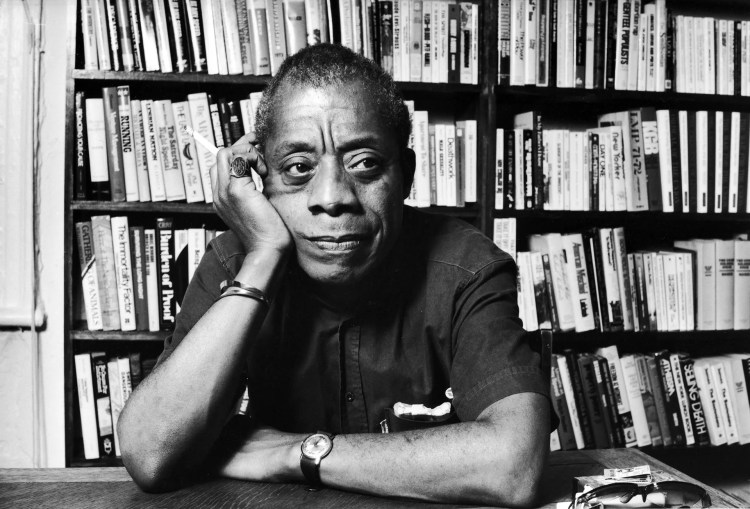
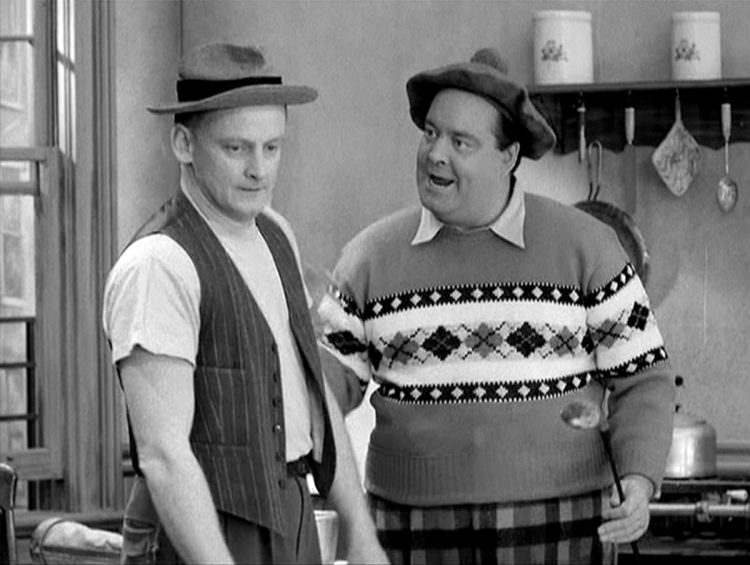

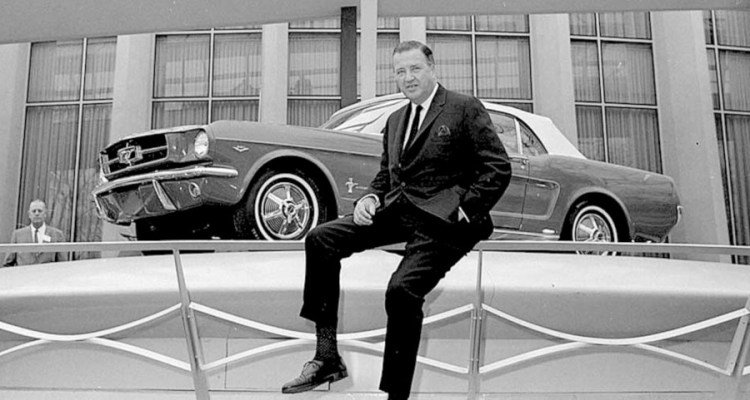
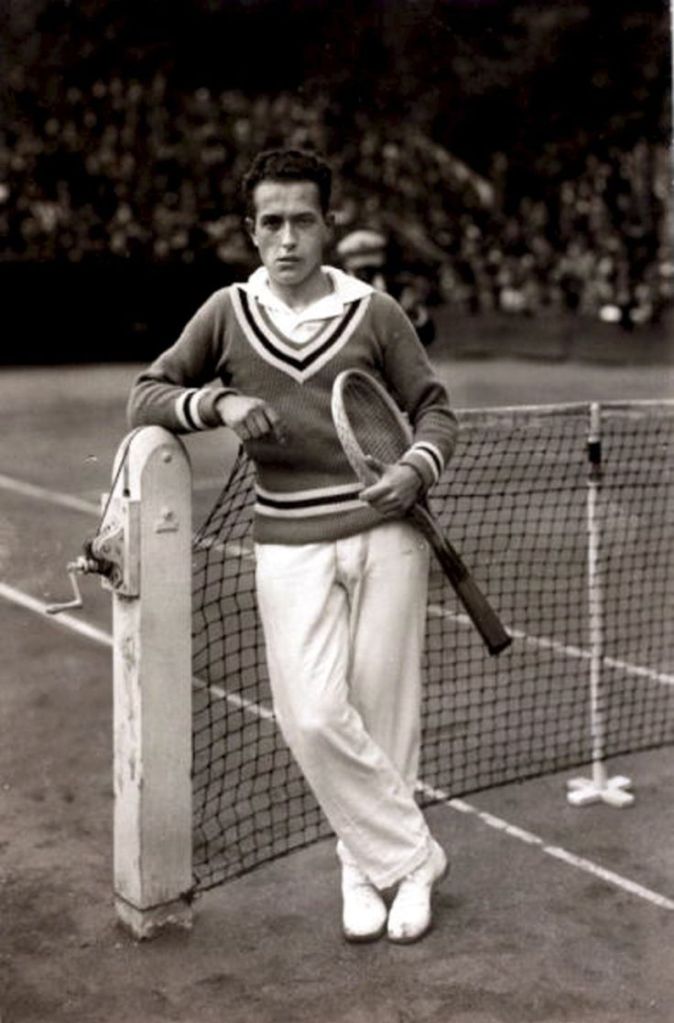


 SCREEN TIME WITH SAM