A lot happened in the year 1987, including the debut of a family-friendly TV sitcom set in San Francisco. The name of the show was Full House, and we’ll be doing a deep dive into this popular comedy over the coming weeks.
But first, to get a sense of the times and trends that helped shape this series, here’s a quick look at the pop culture events that occurred in 1987.
January Beverage brand7 Up released 7 Up Gold, but it was eventually pulled from the shelves due to poor sales and reviews.
January The first Trojan and Lifestyles Condom campaigns aired. They each expanded their campaigns to 6 more markets.
January 31 The last Ohrbach’s department store closes in New York City after 64 years of operation.
March The Human JukeBox was ticketed on the San Francisco Wharf for playing a song 13 decibels over the legal limit. He quit his gig after being ticketed.
March 1 The first Starbucks outside of the US is opened in Vancouver, Canada.
March 2 American Motors Corporation is acquired by the Chrysler Corporation.
March 19 In Charlotte, North Carolina, televangelist Jim Bakker, head of PTL Ministries, resigns after admitting an affair with church secretary Jessica Hahn.
March 24 Michael Eisner, CEO of The Walt Disney Company, and French Prime Minister and future President of France, Jacques Chirac, sign an agreement to construct the 4,800 acres (19 km2) Euro Disney Resort (now called Disneyland Paris) and to develop the Val d’Europe area of the new town Marne-la-Vallée in Paris, France.
March 29 The World Wrestling Federation (later WWE) produces WrestleMania III from the Pontiac Silverdome In Pontiac, Michigan. The event is particularly notable for the record attendance of 93,173, the largest recorded attendance for a live indoor sporting event in North America until February 14, 2010, when the 2010 NBA All-Star Game has an attendance of 108,713 at AT&T Stadium.
March 29 A hybrid solar eclipse was the second hybrid solar eclipse in less than one year, the first being on October 3, 1986. It was annular visible in southern Argentina, Gabon, Equatorial Guinea, Cameroon, Central African Republic, Sudan (part of the path of annularity crossed today’s South Sudan), Ethiopia, Djibouti and northern Somalia and totally visible in the Atlantic Ocean, lasting just 7.57 seconds.
April 5 The Fox Network makes its primetime debut.
May 21 Andrew Wyeth, with his “Helga Pictures,” becomes the first living American painter to have a one-man show of his work in the West Building of the National Gallery of Art in Washington, DC.
May 30 DVD is introduced.
June 17 With the death of the last known dusky seaside sparrow, native to the US state of Florida, the subspecies becomes extinct.
June 19 Teddy Seymour is officially designated the first black man to sail around the world, when he completes his solo sailing circumnavigation in Frederiksted, St. Croix, of the United States Virgin Islands.
June 28 An accidental explosion at Hohenfels Training Area in West Germany kills 3 U.S. troopers.
June 30 Canada introduces a one-dollar coin, nicknamed the “Loonie”.
July 3 Richard Branson and Per Lindstrand pilot aHot Air Balloon crosses the Atlantic Ocean.
July 21 Mary Hart’s legs get insured for 2 million dollars.
July 25 The East Lancashire Railway, a heritage railway in the North West of England, is opened between Bury and Ramsbottom.
July 30 PowerPoint is bought by Microsoft.
July 31 Docklands Light Railway in London, the first driverless railway in Great Britain, is formally opened by Queen Elizabeth II.
August Starbucks is bought by Howard Shultz and a group of investors from Jerry Baldwin.
August 7 The Colombian frigate Caldas enters Venezuelan waters near the Los Monjes Archipelago, sparking the Caldas frigate crisis between both nations.
August 7 American Lynne Cox becomes the first person to swim the Bering Strait, crossing from Little Diomede Island to Big Diomede in 2 hours and 5 minutes.
August 16 The followers of the Harmonic Convergence claim it was observed around the world.
August 19 The Order of the Garter is opened to women.
September 7–21 The world’s first conference on artificial life is held at Los Alamos National Laboratory in the United States.
September 15 Pope John Paul II arrives in Los Angeles for a two-day papal visit, his first one ever to the city, where he makes an arrival day speech to local leaders of the U.S. entertainment industry.
September 17 Pope John Paul II arrives in San Francisco for his first visit to the city, in which he embraces several AIDS sufferers, including an infected child, and proclaims abstinence from illicit sex and drugs are the two main ways to avoid infection.
October 14 A young child, Jessica McClure, falls down a well in Midland, Texas, and is later rescued.
October 22 The pilot of a British Aerospace BAE Harrier GR5 registered ZD325 accidentally ejected from his aircraft. The jet continues to fly until it runs out of fuel and crashes into the Irish Sea.
October 22 Dolphins are deployed to the Persian Gulf to locate mines.
October 23 British champion jockey Lester Piggott is jailed for three years after being convicted of tax evasion.
November 1 The InterCity 125 breaks the world speed record for a diesel-powered train, reaching 238 km/h (147.88 mph).
November 7 Lynne Cox swims between the Diomede Islands from the American Little Diomede Island to the Soviet Big Diomede Island.
November 12 The first Kentucky Fried Chicken restaurant in Mainland China opens in Beijing, near Tiananmen Square.
November 22 The Max Headroom Incident: An unidentified person hijacks two television stations in Chicago, Illinois, and broadcasts video of them wearing a mask in the likeness of the character Max Headroom.
December 1 NASA announces the names of 4 companies awarded contracts to help build Space Station Freedom: Boeing Aerospace, General Electric’s Astro-Space Division, McDonnell Douglas, and the Rocketdyne Division of Rockwell.
December 10 A squirrel closes down the Nasdaq Stock Exchange when it burrows through a telephone line.
December 18 “Final Fantasy” debuts.
December 23 Squeaky Fromme Escapes prison. She was captured 2 days later.
December 30 Pope John Paul II issued the encyclical Sollicitudo rei socialis (On Social Concern).
December 31 An invasive parasite of honeybees is found in the United States.
A lot happened in the year 1987, including the debut of a family-friendly TV sitcom set in San Francisco. The name of the show was Full House, and we’ll be doing a deep dive into this popular comedy over the coming weeks.
But first, to get a sense of the times and trends that helped shape this series, here’s a quick look at the notable sporting events that occurred in 1987.
November 1, 1986 The 1986-1987 NBA season was the final NBA season for Philadelphia’s Julius Erving who announced his retirement that year. NBA arenas paid tribute to Erving’s retirement by staging special events for him. The New Jersey Nets, in particular, retired Erving’s No. 32 jersey for his contributions with the franchise. Thus Erving became the only player to have his number retired by a team while still an active player.
November 26, 1986 During the 1986-1987 NHL season, Toronto’s Borje Salming was accidentally cut in the face by a skate, requiring more than 200 stitches. It was the third injury to his face and Salming returned to play wearing a visor.
January 12 – January 25 The 1987 Australian Open was a tennis tournament played on grass courts at the Kooyong Stadium in Melbourne in Victoria in Australia. It was the 75th edition of the Australian Open; the first tournament to be held after New Year’s Day since the late 1960s and also the last tournament to be played on grass before the change of surface. In the Men’s category, Stefan Edberg defeated Pat Cash 6–3, 6–4, 3–6, 5–7, 6–3. It was Edberg’s 2nd career Grand Slam title and his 2nd Australian Open title. In the women’s category, Hana Mandlíková defeated Martina Navratilova 7–5, 7–6(7–1). It was Mandlíková’s 4th career Grand Slam title and her 2nd and last Australian Open title.
January 22 A massive blizzard resulted in only 334 spectators attending the game between the New Jersey Devils and the Calgary Flames at the Brendan Byrne Arena, leading to the Devils dubbing the spectators the “334 Club”.
February 6 SMU’s faculty athletics representative, religious studies professor Lonnie Kliever, delivered a report to the NCAA which recommended an extension of the school’s probation an additional four years, until 1990. During this period, SMU would be allowed to hire only six assistant coaches, and only four of them would be allowed to participate in off-campus recruiting. It also recommended that SMU’s ban from bowl games and live television be extended until 1989. During those two seasons, SMU proposed dropping two non-conference games from its schedule. SMU’s cooperation so impressed the enforcement staff, led by assistant executive director of enforcement and compliance David Berst, that it recommended that the Infractions Committee accept SMU’s proposed penalties, with the exception of a ban on non-conference play for two years.
It soon became apparent, however, that the infractions committee was not willing to let SMU off lightly, even though both the enforcement staff and SMU had agreed on the above proposed sanctions. Not only did the members subject Kliever to stern questioning after he and Berst delivered their presentations, but the committee stayed in session longer than usual. On February 20, Berst told Kliever that SMU would indeed get a “death penalty. “Ultimately, the committee voted unanimously to cancel SMU’s entire 1987 football season and all four of SMU’s scheduled home games in 1988.
February 8 The 1987 NBA All-Star Game was played at the Kingdome in Seattle, with the West defeating the East 154–149 in overtime. To the delight of the Seattle crowd, the SuperSonics’ Tom Chambers won the game’s MVP award. Michael Jordan won his first Slam Dunk Contest.
March 7 in Las Vegas, Nevada, Mike Tyson adds the WBA heavyweight title to his WBC belt when he beats James Smith in a 12-round decision. Mike Tyson was coming off a dominating victory over Trevor Berbick in which he captured the WBC Heavyweight championship after knocking out Berbick in the second round. Tyson’s next opponent would be the WBA Heavyweight champion James “Bonecrusher” Smith, who had knocked out Tim Witherspoon in the first round to capture the title four months earlier. The stakes for the fight were high as not only would the winner unify the WBA and WBC titles, but they would also get to face undefeated IBF Heavyweight champion Michael Spinks to determine the next Undisputed Heavyweight champion. However, only a month before the fight, Spinks would vacate his IBF title, instead choosing to defend his remaining Lineal Heavyweight championship against Gerry Cooney, temporarily putting plans to find the next Undisputed Heavyweight Champion on hold.
Though Smith became one of the few men to last the entire 12 rounds with Tyson, he offered little offense during the fight, instead constantly grappling with Tyson in an effort to reduce the effectiveness of Tyson’s punches. Because of the excessive holding, referee Mills Lane twice took a point away from Smith, first in the second round, and then again in the eighth. Smith’s best offensive pressure arguably was during the fight’s final seconds in which he was able to land a right hand to the head of Tyson. Tyson would earn the victory by way of unanimous decision, winning every round on all three of the judges’ scorecards. Afterwards, Tyson was critical of Smith’s tactics, “When I was trying to put the punches together he grabbed. This hurts boxing. This is show business. People expect a performance.”
March 12 – March 30 The 1987 NCAA Division I men’s basketball tournament involved 64 schools playing in single-elimination play to determine the national champion of men’s NCAA Division I college basketball. A total of 63 games were played in New Orleans, Louisiana Indiana, coached by Bob Knight, won the national title with a 74–73 victory in the final game over Syracuse, coached by Jim Boeheim. Keith Smart of Indiana, who hit the game-winner in the final seconds, and intercepted the full court pass at the last second, was named the tournament’s Most Outstanding Player. The tournament also featured a “Cinderella team” in the Final Four, as Providence College, led by a then-unknown Rick Pitino, made their first Final Four appearance since 1973. One year after reaching the Final Four, LSU made another deep run in the Midwest region. The Tigers ousted Temple in the second round and DePaul in the Sweet 16 before losing 77-76 to top seeded Indiana in the Elite Eight. This was the last tournament in which teams were allowed to have home court advantage: national runner-up Syracuse, DePaul, Arizona and UAB all opened the tournament playing on their home courts. UAB and Arizona each lost in the first round, while DePaul won twice at the Rosemont Horizon. Under rules adopted in 1988, teams cannot play in a facility in which they play four or more regular season games. The 1987 NCAA men’s basketball tournament was also the first tournament to use the three-point shot.
April 4 The Islanders’ captain Denis Potvin became the first NHL defenseman to reach 1000 points. A shot by the Islanders’ Mikko Makela deflected off Potvin’s arm in a 6–6 shootout between the Islanders and Sabres.
April 6 Sugar Ray Leonard beats Marvin Hagler for boxing’s world Middleweight championship. In the late summer of 1986, negotiations began for a proposed super fight between long-reigning undisputed middleweight champion Marvelous Marvin Hagler and former two-weight champion Sugar Ray Leonard. Leonard had fought only once since his first professional retirement in 1982, defeating Kevin Howard in 1984, retiring again immediately following the fight after being dissatisfied with his performance. In March 1986, Hagler defeated John Mugabi via 11th round knockout, though Mugabi gave Hagler a tough fight and swelled his right eye. Leonard was in attendance at the Hagler–Mugabi fight and after seeing Hagler having slower speed than usual against Mugabi, thought he could beat Hagler, and in May 1986, Leonard announced that he would come out of retirement only to fight Hagler.
In what would go down to be among the most controversial fights in boxing history, Leonard would ultimately earn a split decision victory. Hagler started the fight abandoning his usual southpaw stance in favor of an orthodox stance, which would prove costly as he lost the first two rounds on all three judges’ scorecards. By round three, Hagler switched to starting rounds in his normal southpaw stance. Hagler would spend most of the fight as the aggressor, while Leonard would pepper Hagler with combinations before retreating away. During the last 30 seconds of each round, Leonard would attack Hagler with a flurry of punches in an effort to “steal” the rounds on the scorecards. Overall, Leonard landed 306 of his 629 thrown punches (49%) compared to Hagler’s 291 out of 792 (37%).
April 8 General Manager, Al Campanis, of the LA Dodgers is fired as a result of controversial remarks regarding blacks in baseball made during an interview on Nightline two days earlier.
April 9 – April 12 The 1987 Masters Tournament was the 51st Masters Tournament, held at Augusta National Golf Club in Augusta, Georgia. Augusta native Larry Mize won his only major championship in a sudden-death playoff over Seve Ballesteros and Greg Norman. Norman had barely missed a 20-foot birdie opportunity on the 72nd hole which would have won him the tournament in regulation. The Masters Champions include, Tommy Aaron, Seve Ballesteros (3,8), Gay Brewer, Billy Casper, Charles Coody, Ben Crenshaw (8,9,11,12), Raymond Floyd (2,4,9,11,12,13), Doug Ford, Bernhard Langer (8,9,12), Jack Nicklaus (8,9), Arnold Palmer, Gary Player, Craig Stadler (9,13), Art Wall Jr., Tom Watson (2,3,8,12), and Fuzzy Zoeller (2,8,9,11,12,13).
April 13 At Jack Murphy Stadium, the San Diego Padres set a major league record when the first three batters in the bottom of the first inning hit home runs off San Francisco Giants starter Roger Mason in their home opener. The Padres, trailing 3–0, got homers from Marvell Wynne, Tony Gwynn and John Kruk.
April 15 Juan Nieves of the Milwaukee Brewers pitches a no-hitter against the Baltimore Orioles. Nieves becomes the second-youngest pitcher in major league history to accomplish the feat (22 years, 4 months, 10 days), as well as the first Brewer to do it.
April 17 Mike Schmidt of the Philadelphia Phillies hits the 500th home run of his career. It comes in the ninth inning against the Pittsburgh Pirates’ Don Robinson, giving the Phillies an 8–6 win at Pittsburgh. Schmidt is an American former professional baseball third baseman who played his entire 18-season career in Major League Baseball (MLB) for the Philadelphia Phillies. Schmidt was a 12-time All-Star and a three-time winner of the National League (NL) Most Valuable Player award (MVP), and he was known for his combination of power hitting and strong defense. As a hitter, he compiled 548 home runs and 1,595 runs batted in (RBIs), and led the NL in home runs eight times and in RBIs four times. As a fielder, Schmidt won the National League Gold Glove Award for third basemen ten times. Schmidt was elected to the Baseball Hall of Fame in 1995 and is widely considered to be the greatest third baseman in baseball history.
April 19 Michael Jordan joined Wilt Chamberlain as only the second player in NBA history to score 3000 points in a season. With a 37.1 ppg, Jordan also began a seven-year reign as the NBA’s scoring champion, tied with Chamberlain for the league record.
April 19 Los Angeles Clippers become the second team in NBA history to lose 70 or more games joining the 1972–73 76ers, the latter was (1992–93 Mavericks, 1997–98 Nuggets, 2009–10 Nets (including losing 18 straight games to start the season), and the 2015–16 76ers (including a record–tying 26–game losing streak also including losing 18 straight games to start the season).
April 28 Rod Woodson is drafted by the Pittsburgh Steelers. He is an American former professional football player who was a defensive back in the National Football League (NFL) for 17 seasons. He is currently the head coach of the XFL’s Vegas Vipers. He played his first ten years with the Steelers, and was a key member of the Baltimore Ravens’ Super Bowl XXXV championship team. He also had two shorter stints for the San Francisco 49ers and Oakland Raiders. Widely considered one of the greatest all-time defensive players ever, Woodson holds the NFL record for fumble recoveries (32) by a defensive player, and interceptions returned for touchdown (12), and was named the NFL Defensive Player of the Year in 1993. His 71 career interceptions is the third-most in NFL history. He was an inductee of the Class of 2009 of the Pro Football Hall of Fame in Canton, Ohio on August 8, 2009. Woodson was inducted into the College Football Hall of Fame in 2016. Rod played most of his career as a cornerback then switched to safety during the later part of his career.
April 30 NASCAR driver Bill Elliott sets the record for the all-time fastest lap at Talladega Superspeedway at 212.8 miles per hour (342.5 km/h).
May 2 The 113th Kentucky Derby took place.
May 16 The 1987 Preakness Stakes was the 112th running of the Preakness Stakes thoroughbred horse race. Alysheba won first place.
May 17 – May 31 The 1987 Stanley Cup Finals was the championship series of the National Hockey League’s (NHL) 1986–87 season, and the culmination of the 1987 Stanley Cup playoffs. It was contested between the Edmonton Oilers and the Philadelphia Flyers. The Oilers won the series 4–3, for their third Stanley Cup victory. This was the sixth of nine consecutive Finals contested by a team from Western Canada, the fifth of eight consecutive Finals contested by a team from Alberta (the Oilers appeared in six, the Calgary Flames in two, the Vancouver Canucks in one), and the fourth of five consecutive Finals to end with the Cup presentation on Alberta ice (the Oilers won four times, the Montreal Canadiens once). Game 7 of this series was played on May 31, which at the time was the latest finishing date for an NHL season. The record would be broken five years later when that series ended on June 1.
May 22 The first ever Rugby World Cup kicks off with New Zealand playing Italy at Eden Park, Auckland.
May 24 Five days before his 48th birthday, Al Unser became the oldest winner of the Indianapolis 500 and only the second driver to win the event four times.
May 25 – June 7 The 1987 French Open was a tennis tournament that took place on the outdoor clay courts at the Stade Roland Garros in Paris, France. It was the 91st staging of the French Open, and the second Grand Slam tennis event of 1987. In the men’s category, Van Lendl defeated Mats Wilander, 7–5, 6–2, 3–6, 7–6(7–3). It was Lendl’s 2nd title of the year, and his 64th overall. It was his 5th career Grand Slam title, and his 3rd French Open title. In the women’s category, Steffi Graf defeated Martina Navratilova, 6–4, 4–6, 8–6. It was Graf’s 1st career Grand Slam title.
May 27 At the Prater Stadium of Vienna, Porto of Portugal defeats Bayern München of West Germany 2–1 and wins its first European Cup.
June 2 – June 14 The 1987 NBA Finals was the championship round of the National Basketball Association (NBA)’s 1986–87 season, and the culmination of the season’s playoffs. The Western Conference champion Los Angeles Lakers defeated the Eastern Conference and defending NBA champion Boston Celtics 4 games to 2. The key moment of the series was Magic Johnson’s Junior sky hook in Game 4. This was the tenth time that the Celtics and Lakers met in the NBA Finals (more than any other Finals matchup). It would be the Celtics’ last Finals appearance until the two teams met in 2008.
June 18 – June 21 The 1987 U.S. Open was the 87th U.S. Open, held at the Olympic Club in San Francisco, California. Scott Simpson passed and held off 1982 champion Tom Watson on the Lake Course to win his only major title by one stroke. Eleven former champions were in the field and only four made the 36-hole cut. This was the third U.S. Open at the Lake Course of the Olympic Club, the previous two in 1955 and 1966 ended in playoffs. The U.S. Open returned in 1998 and 2012; both were won by one stroke.
June 22 – July 5 The 1987 Wimbledon Championships was a tennis tournament played on grass courts at the All-England Lawn Tennis and Croquet Club in Wimbledon, London in the United Kingdom. It was the 101st edition of the Wimbledon Championships. In the men’s category, Pat Cash defeated Ivan Lendl, 7–6(7–5), 6–2, 7–5. It was Cash’s only career Grand Slam title. In the women’s category, Martina Navratilova defeated Steffi Graf, 7–5, 6–3. It was Navratilova’s 45th career Grand Slam title and her 8th Wimbledon title.
June 22 The NBA draft is held. David Robinson was the first pick of the first round. Robinson is an American former professional basketball player who played for the San Antonio Spurs in the National Basketball Association (NBA) from 1989 to 2003, and is a minority owner of the Spurs. Nicknamed “the Admiral” for his service with the U.S. Navy, Robinson was a 10-time NBA All-Star, the 1995 NBA MVP, a two-time NBA champion (1999 and 2003), a two-time Olympic Gold Medal winner (1992, 1996), a two-time Naismith Memorial Basketball Hall of Fame inductee (2009 for his individual career, 2010 as a member of the 1992 United States men’s Olympic basketball team), and a two-time U.S. Olympic Hall of Fame inductee (2008 individually, 2009 as a member of the 1992 Olympic team). He was honored as one of the league’s all-time players by being named to the NBA 50th Anniversary (1996) and 75th Anniversary Teams (2021). He is widely considered one of the greatest centers in both college basketball and NBA history
Scottie Pippen was also a first round pick in the 1987 NBA draft. Pippen is an American former professional basketball player. He played 17 seasons in the National Basketball Association (NBA), winning six NBA championships with the Chicago Bulls. Considered one of the greatest small forwards of all time, Pippen, along with Michael Jordan, played an important role in transforming the Bulls into a championship team and in popularizing the NBA around the world during the 1990s.
Pippen was named to the NBA All-Defensive First Team eight consecutive times and the All-NBA First Team three times. He was a seven-time NBA All-Star and was the NBA All-Star Game MVP in 1994. He was named one of the 50 Greatest Players in NBA History during the 1996–97 season, and is one of four players to have his jersey retired by the Chicago Bulls (the others being Jerry Sloan, Bob Love, and Jordan). He played a main role on both the 1992 Chicago Bulls Championship team and the 1996 Chicago Bulls Championship team, which were selected as two of the Top 10 Teams in NBA History. His biography on the Naismith Basketball Hall of Fame’s website states that “the multidimensional Pippen ran the court like a point guard, attacked the boards like a power forward, and swished the nets like a shooting guard”. During his 17-year career, he played 12 seasons with the Bulls, one with the Houston Rockets and four with the Portland Trail Blazers, making the postseason 16 straight times. In October 2021, Pippen was again honored as one of the league’s greatest players of all-time by being named to the NBA 75th Anniversary Team.
Reggie Miller was also a first round draft pick in the 1987 NBA draft. Miller is an American former professional basketball player who played his entire 18-year NBA career with the Indiana Pacers. Miller was known for his precision three-point shooting, especially in pressure situations and most notably against the New York Knicks, for which he earned the nickname “Knick Killer.” When he retired, he held the record for most career 3-point field goals made. He is currently fourth on the list behind Stephen Curry, Ray Allen, and James Harden. A five-time All-Star selection, Miller led the league in free throw percentage five times and won a gold medal in the 1996 Summer Olympics.
Miller is widely regarded as the Pacers’ greatest player of all time. His No. 31 was retired by the team in 2006. Currently, he works as an NBA commentator for TNT and college basketball analyst for CBS Sports. Miller was inducted into the Naismith Memorial Basketball Hall of Fame in 2012 and named to the NBA 75th Anniversary Team in 2021.
July 16 – July 19 The 1987 British Open Championship was a men’s major golf championship and the 116th British Open Championship held at Muirfield Golf Links in Gullane, Scotland. Nick Faldo won the first of his three Open Championships, one stroke ahead of runners-up Paul Azinger and Rodger Davis. It was the first of Faldo’s six major championships. It was the first win at The Open by an Englishman since Tony Jacklin in 1969. This was the thirteenth Open Championship held at Muirfield; the previous was in 1980 and the next in 1992.
July 18 New York Yankees first baseman Don Mattingly home runs in his record-tying eighth straight game, in a 7–2 Texas Rangers win over the Yankees. He tied the record set by Dale Long in 1956.
August 3 Minnesota Twins pitcher Joe Niekro is suspended for 10 days for possessing a nail file on the pitcher’s mound. Niekro claimed he had been filing his nails in the dugout and put the file in his back pocket when the inning started.
August 6 – August 9 The 1987 PGA Championship was the 69th PGA Championship, held at the Champion Course of PGA National Golf Club in Palm Beach Gardens, Florida. In hot and windy conditions, Larry Nelson won his second PGA Championship in a sudden-death playoff over 1977 champion Lanny Wadkins. It was Nelson’s third and final major title. D.A. Weibring, a 54-hole co-leader, shot 76 (+4) and finished a stroke back at even-par 288. The other co-leader, Mark McCumber, posted 77 and finished in a tie for fifth. Two major champions in contention shot high scores and fell back: Seve Ballesteros (78) and Raymond Floyd (80). In the August heat of Florida, the attendance was low. A record high temperature for the day of 97 °F (36 °C) was recorded on Sunday. It was the second major played in Florida, following the PGA Championship in 1971, played in February at the old PGA National. Through 2021, this is the last major tournament played in the state. The purse was the last under $1 million at the PGA Championship. With the win, Nelson gained an automatic bid to the Ryder Cup team in 1987, his third, bumping Don Pooley. Nelson’s record in that competition in late September was 0–3–1, as the U.S. lost the Cup for the first time on home soil. He lost all three pairs matches and halved his singles match. The Champion Course hosted the Ryder Cup in 1983 and the Senior PGA Championship for 19 years (1982–2000). Since 2007, it has been the venue of The Honda Classic on the PGA Tour, played in March.
August 7 Pan American Games are held in Indianapolis.
August 11 Mark McGwire of the Oakland Athletics breaks Al Rosen’s American League rookie record by hitting his 38th home run in an 8–2 loss to the Mariners.
August 16 The Miami Dolphins began playing at their new home, Joe Robbie Stadium, moving from the Miami Orange Bowl. This was also the NFL Saint Louis Cardinals’ final season at Busch Memorial Stadium in St. Louis; the team relocated to Tempe, Arizona, the following season.
August 26 Paul Molitor of the Milwaukee Brewers goes hitless, and ends his 39-game hitting streak. It is the longest American League hitting streak since Joe DiMaggio’s 56-game streak (a major league record) in 1941.
September 1- September 14 The 1987 US Open was a tennis tournament played on outdoor hard courts at the USTA National Tennis Center in New York City. It was the 107th edition of the US Open. As of 2021 it is the last time any player, male or female, has won the Triple Crown as Martina Navratilova won the Women’s Singles, Women’s Doubles and Mixed Doubles events. In the men’s category, Ivan Lendl defeated Mats Wilander 6–7(7–9), 6–0, 7–6(7–4), 6–4. It was Lendl’s 6th career Grand Slam title and his 3rd and final US Open title. In the women’s category, Martina Navratilova defeated Steffi Graf 7–6(7–4), 6–1. It was Navratilova’s 46th career Grand Slam title and her 11th US Open title.
September 9 Nolan Ryan strikes out 16 to pass 4,500 for his career as the Houston Astros beat the San Francisco Giants 4–2. Ryan strikes out 12 of the final 13 batters and fans Mike Aldrete to complete the seventh inning for his 4,500th strikeout.
September 14 In the midst of the Toronto Blue Jays’ 18–3 drubbing of the Baltimore Orioles at Exhibition Stadium, Cal Ripken Jr. is lifted from the lineup and replaced by Ron Washington, stopping Ripken’s consecutive innings played streak at 8,243. In this same game, Toronto hit ten home runs to set a Major League single-game record. Ernie Whitt connects on three of the home runs, Rance Mulliniks and George Bell two each, and Fred McGriff, Lloyd Moseby and Rob Ducey one each.
September 21 Darryl Strawberry steals his 30th base of the season to join the 30–30 club. With teammate Howard Johnson already having joined, it marks the first time that two teammates achieve 30–30 seasons in the same year.
September 22 Wade Boggs of the Boston Red Sox reaches the 200-hit mark for the fifth straight season in an 8–5 loss to the Detroit Tigers.
September 22 A 24-day players’ strike was called in the NFL after Week 2. The games that were scheduled for the third week of the season were canceled, reducing the 16-game season to 15, but the games for Weeks 4, 5 and 6 were played with replacement players. The NFLPA actually ended the strike before the Week 6 slate of games, but the NFL owners’ unanimously nixed their return that week because the union had missed an owner-mandated deadline that week to be eligible to return, and would have to wait until Week 7 to resume playing.
September 25 – September 27 The 27th Ryder Cup Matches were held at Muirfield Village Golf Club in Dublin, Ohio, a suburb north of Columbus. The European team won their second consecutive competition by a score of 15 to 13 points in probably the most historic Ryder Cup. After an unbeaten record of 13–0 spanning sixty years, the U.S. team lost for the first time on home soil. Europe took a lead of 5 points into the Sunday singles matches, but the U.S. fought back strongly to narrow the deficit. Eamonn Darcy, who previously had a very poor Ryder Cup record, defeated Ben Crenshaw at the last hole to get Europe to 13 points. Crenshaw had broken his putter in a moment of frustration after the sixth hole and putted with his 1 iron for the last dozen holes. Bernhard Langer then halved his match with Larry Nelson and when Seve Ballesteros defeated Curtis Strange 2 & 1 to total 141/2 points, the European victory was secured. This was the last Ryder Cup in which the U.S. team did not employ captain’s selections. Europe used captain’s picks in 1979, 1981, 1985, and this year. Muirfield Village, founded and designed by U.S. captain Jack Nicklaus, has hosted the Memorial Tournament on the PGA Tour since 1976. The 2013 Presidents Cup was held at the same course.
October 17 – October 25 The 1987 World Series was the championship series of Major League Baseball’s (MLB) 1987 season. The 84th edition of the World Series, it was a best-of-seven playoff played between the American League (AL) champion Minnesota Twins and the National League (NL) champion St. Louis Cardinals. The Twins defeated the Cardinals four games to three to win the Series, their first in Minnesota and the first since last winning as the Washington Senators in 1924. Twins pitcher Frank Viola was named as the 1987 World Series MVP. This was the first World Series to feature games played indoors, and the first in which the home team won every game; this happened again in 1991 (also a Twins championship, over the Atlanta Braves) and in 2001 with the Arizona Diamondbacks defeating the New York Yankees. This was the third of four World Series played entirely on artificial turf, with the others in 1980, 1985, and 1993. This is the first World Series in which the series logo appeared on the jerseys; only the Cardinals wore it. Both contestants in the following year’s World Series wore a patch.
October 31 After playing just three games for the Rams during the strike-shortened 1987 NFL season, Eric Dickerson was traded to the Indianapolis Colts in one of the NFL’s biggest trades ever at that time. In a three-team deal, the Colts traded linebacker Cornelius Bennett, whom they drafted but were unable to sign to a contract, to the Buffalo Bills for their first-round pick in 1988, first- and second-round picks in 1989, and running back Greg Bell. The Colts in turn traded Bell and the three draft choices from Buffalo plus their own first- and second-round picks in 1988, their second-round pick in 1989, and running back Owen Gill to the Rams for Dickerson. With the picks the Rams took running back Gaston Green, wide receiver Aaron Cox, linebacker Fred Strickland, running back Cleveland Gary, linebacker Frank Stams, and defensive back Darryl Henley. The trade reunited Dickerson with Ron Meyer, who had left SMU after Dickerson’s junior season to take the head coaching position in New England and who was hired by the Colts in 1986 following Rod Dowhower’s firing.
November 30 Raiders/Seahawks game marked the memorable Monday Night Football debut of Bo Jackson, with his 91-yard touchdown run. Prior to that, he ran over Seahawks linebacker Brian Bosworth for another score.
January 2, 1988 The 1987 NCAA Division I-A football season ended with Miami winning its second national championship of the 1980s in an Orange Bowl game featuring a rare No. 1 vs. No. 2 matchup between the top ranked Oklahoma Sooners and the Hurricanes. Miami’s first three games were against ranked opponents in what was labeled a rebuilding year. After some late game theatrics by Michael Irvin against rival Florida State, the Hurricanes were 3–0, the national media started to take notice. Oklahoma was also seen as quite the juggernaut, averaging 428.8 yards rushing per game with their potent wishbone offense. Miami was able to hold Oklahoma to just 179 yards on the ground, winning the game 20–14. Also having notable seasons were Syracuse, LSU and Florida State. Syracuse finished the season 11–0–1 and ranked No. 4 after a controversial Sugar Bowl game in which Auburn kicked a late field goal to end the game in a tie. LSU went 10–1–1, ending the season ranked No. 5. This was LSU’s first ten-win season in 26 years and their highest ranking since 1961. Florida State finished ranked No. 2, their only loss to Miami, and began a streak of 14 years where FSU finished in the top 5. The Seminoles beat Rose Bowl champion Michigan State and SEC champion Auburn on the road and beat Nebraska in the Fiesta Bowl. This would be the first of two years SMU would not field a team due to the NCAA’s death penalty.
January 31, 1988 Super Bowl XXII was an American football game between the National Football Conference (NFC) champion Washington Redskins and American Football Conference (AFC) champion Denver Broncos to decide the National Football League (NFL) champion for the 1987 season. The Redskins defeated the Broncos by the score of 42–10, winning their second Super Bowl. The game was played at Jack Murphy Stadium in San Diego, California, which was the first time that the Super Bowl was played there. It was the second consecutive Super Bowl loss for the Broncos, who had lost to the New York Giants in the Super Bowl the year before.
A lot happened in the year 1987, including the debut of a family-friendly TV sitcom set in San Francisco. The name of the show was Full House, and we’ll be doing a deep dive into this popular comedy over the coming weeks.
But first, to get a sense of the times and trends that helped shape this series, here’s a quick look at the notable music that was published in 1987.
January 3 Aretha Franklin becomes the first woman inducted into the Rock and Roll Hall of Fame. She was the first woman to make it into The Hall. The other inductees this year consist of The Coasters, Eddie Cochran, Bo Diddley, Marvin Gaye, Bill Haley, Clyde McPhatter, Ricky Nelson, Roy Orbison, Carl Perkins, Smokey Robinson and Jackie Wilson.
January 5 Elton John, after several months of voice problems, undergoes throat surgery in an Australian hospital. The outcome would hinder his voice permanently and he would soon start singing in a deep register.
February 14 Bon Jovi’s “Livin’ on a Prayer” reaches #1 in the USA. It would be 1987’s biggest hit song worldwide.
February 14 Los Angeles radio station KMET signs off after nineteen years on the air. The station had been a pioneer of underground progressive rock programming.
March 9 U2 releases The Joshua Tree, an album that launches them into superstar status in the music world. The album would sell over 14 million copies worldwide in 1987 alone and would win the Grammy for “Album of the Year” (at the 1988 ceremony). U2 have two #1 hit songs from this album on the U.S. Billboard Hot 100 charts.
March 9 The career that would end in an infamous appearance at The Brit awards and the burning of a million pounds began in Britain, as The Justified Ancients of Mu Mu released their debut single, “All You Need Is Love”.
April 23 Carole King sues the owner of her record company, Lou Adler, claiming that she is owed more than $400,000 in royalties. King also asks for rights to her old recordings.
May 2“I Wanna Dance with Somebody (Who Loves Me)” was released by American singer Whitney Houston for her second studio album, Whitney (1987). It was released as the lead single by Arista Records. It became the 3rd biggest hit single of 1987. It was produced by Narada Michael Walden, and written by George Merrilland Shannon Rubicam, of the band Boy Meets Girl, who had previously collaborated with Houston on “How Will I Know.” “I Wanna Dance with Somebody (Who Loves Me)” received mixed reviews from music critics, who praised Houston’s vocal performance but critiqued its musical arrangement, comparing it to “How Will I Know” and Cyndi Lauper’s “Girls Just Want to Have Fun.” Despite the mixed critical response, the song became a worldwide success, topping the charts in eighteen countries including Australia, Italy, Germany and the UK. In the US, it became Houston’s fourth consecutive chart topper and is certified 6× platinum with sales of over 6 million copies. At the 30th Annual Grammy Awards, “I Wanna Dance with Somebody (Who Loves Me)” won for Best Female Pop Vocal Performance, marking Houston’s second win in the category.
May 30 Beastie Boys performed at their concert in England that erupted into a riot approximately 10 minutes after the group hit the stage and the arrest of Adam Horovitz by Merseyside Police. He was charged with assault causing grievous bodily harm. Years later, Horovitz stated that he took the blame for another band member that had actually thrown the beer can.
June 15 “It’s a Sin” is released by English synth-pop duo Pet Shop Boys from their second studio album, Actually (1987). The song became the fourth biggest hit single of 1987. Written by Chris Lowe and Neil Tennant, the song was released as the album’s lead single. It became the duo’s second number-one single on the UK Singles Chart, spending three weeks atop the chart. Additionally, the single topped the charts in Austria, Denmark, Finland, Germany, Ireland, Norway, Portugal, Spain, Sweden and Switzerland, while reaching number nine on the US Billboard Hot 100. A demo of the track was first cut in 1984 with Bobby Orlando, and the song’s form in the demo remained intact to the final version, although the released production is far more dramatic.
June 23 “Who’s That Girl” is released by American singer Madonna from the soundtrack album of the 1987 film, Who’s That Girl. It was released by Sire Records as the first album single. While shooting for the film, then called Slammer, Madonna had requested Patrick Leonard to develop an up-tempo song that captured the nature of her film persona. She later added the lyrics and vocals to the demo tape developed by Leonard, and decided to rename the song as well as the film to “Who’s That Girl”. Featuring instrumentation from drums, bass, and stringed instruments, “Who’s That Girl” continued Madonna’s fascination with Hispanic culture by incorporating Spanish lyrics and using the effect of double vocals. Critical reception was mixed to positive; some critics compared it to Madonna’s previous single, “La Isla Bonita”, while others found it forgettable. “Who’s That Girl” became Madonna’s sixth single to top the Billboard Hot 100, while peaking atop the charts in countries like the United Kingdom, Canada, Netherlands, Italy, Ireland and Belgium. It was also nominated for “Best Song Written for Visual Media” at the 1988 Grammy Awards and “Best Original Song” at the 1988 Golden Globe Awards. The music video portrayed a different persona of Madonna, rather than her film character for which it was released. She’s seen as a young boyish lady in search of treasure. Madonna has performed the song on her Who’s That Girl (1987) and Rebel Heart (2015–2016) tours. The song has been covered by many artists and has appeared in compilations and tribute albums. Despite being a worldwide number-one hit, the song was not included in Madonna’s 1990 greatest hits album The Immaculate Collection, but was later included on her 2009 greatest hits album Celebration. The song became the fifth biggest hit single in 1987.
July 4Kylie Minogue’s recording career begins with the release of her cover version of the Little Eva hit The Loco-Motion; the single spends seven weeks at number one in her native Australia and leads to a contract with UK-based record producers Stock Aitken Waterman.
July 4 The first joint rock concert between the United States and the Soviet Union is held in Moscow to promote peace. The Doobie Brothers, James Taylor, Santana and Bonnie Raitt share the bill with Soviet rock group Autograph.
July 21 American rock group Guns N’ Roses release Appetite for Destruction which, after initial slow sales, will become the best-selling debut album of all time, with more than 18 million copies sold in the US alone to date.
July 27 “Never Gonna Give You Up” by Rick Astley is released and ends up becoming the second biggest hit single of 1987. It is Astley’s most famous song. It was written and produced by Stock Aitken Waterman, and was released as the first single from Astley’s debut album, Whenever You Need Somebody (1987). The song was a worldwide number-one hit, initially in the United Kingdom in 1987, where it stayed at the top of the chart for five weeks and was the best-selling single of that year. It eventually topped the charts in 25 countries, including the United States and West Germany and won Best British Single at the 1988 Brit Awards. The song is considered to be Astley’s signature song and it is often played at the end of his live concerts. The music video for the song surged in popularity beginning in 2007 due to the “Rickroll” internet meme, in which a user expecting entirely unrelated content is shown the video. In 2008, Astley won the MTV Europe Music Award for Best Act Ever with the song, as a result of a collective campaign from thousands of people on the Internet. In 2019, Astley recorded and released a ‘Pianoforte’ version of the song for his album The Best of Me, which features a new piano arrangement.
August 27 The Jello Biafra criminal trial is dismissed after ending in a hung jury in Los Angeles court. Biafra and his manager had been charged with distributing harmful material to minors due to a poster included in the Dead Kennedys’ Frankenchrist album of a painting depicting rows of sexual organs.
August 31 Michael Jackson releases Bad, his first studio album since Thriller, the best-selling album of all time. The album would produce five number one singles in the US, a record which has not been broken.
September 7 Pink Floyd released A Momentary Lapse of Reason, their first album after the departure of, and legal battle with, bassist Roger Waters. The subsequent tour grossed around $135 million worldwide, a sum that was only equaled by the earnings of Michael Jackson and U2 combined.
September 11 Reggae musician Peter Tosh is murdered during a robbery in his home.
October 19 Mötley Crüe released the song “You’re All I Need” as a single. MTV refused to play its video because of the level of violence.
October 19 INXS releases KICK.
October 27 White Snakes “Is this love?” is released. The song made it to number 9 on British UK charts and number 2 in the US, blocked by the number 1 spot “Faith” by George Michael.
October 30 George Michael releases his first solo studio album, Faith, which would win the Grammy Award for album of the year and sell 11 million copies in the USA alone.
October 31 The Zorros headline on Halloween for the last-ever show at the Crystal Ballroom, Melbourne’s premier Punk/New Wave venue. The Crystal Ballroom has seen almost ten years of intense musical evolution. The venue has chandeliers, stained glass windows, paisley wallpaper and a tiled foyer.
November 15“La Bamba” by Los Lobos is released and becomes the biggest hit single of the year. “La Bamba” is a Mexican folk song, originally from the state of Veracruz, also known as “La Bomba”.The song is best known from a 1958 adaptation by Ritchie Valens, a Top 40 hit in the U.S. charts. Valens’s version is ranked number 345 on Rolling Stone magazine′s list of the 500 Greatest Songs of All Time. “La Bamba ” has been covered by numerous artists, notably by Los Lobos whose version was the title track of the 1987 film La Bamba, a biopic about Valens; their version reached No. 1 in many charts in the same year. The Belgian Electronic band “Telex”, the trio who made the worldwide successful “Moskow Diskow,” also created a downbeat electronic cover of it, which is the final track in their final album “How Do You Dance?”.
November 18 CBS Records was sold to the Sony Corporation in a deal worth about $2 billion; the company was renamed Sony Music Entertainment in 1991.
November 19 Cher returns to the music after five years of absence – time that she took to dedicate herself to the filmmaking business – with the lead single of her second self-titled album (and eighteenth overall), “I Found Someone”, which peaked at number five in UK and number ten in US.
December 23 Nikki Sixx of the rock band Mötley Crüe suffers a heroin overdose, but is revived shortly thereafter.
December 23 Roger Waters finalizes his departure from British progressive rock band Pink Floyd, after a two-year-long legal dispute over the rights to the band’s name and assets.
A lot happened in the year 1987, including the debut of a family-friendly TV sitcom set in San Francisco. The name of the show was Full House, and we’ll be doing a deep dive into this popular comedy over the coming weeks.
But first, to get a sense of the times and trends that helped shape this series, here’s a quick look at the notable books that were published in 1987.
Watchmen by Alan Moore
Watchmen is an American comic book maxiseries by the British creative team of writer Alan Moore, artist Dave Gibbons and colorist John Higgins. It was published monthly by DC Comics in 1986 and 1987 before being collected in a single-volume edition in 1987. Watchmen originated from a story proposal Moore submitted to DC featuring superhero characters that the company had acquired from Charlton Comics. As Moore’s proposed story would have left many of the characters unusable for future stories, managing editor Dick Giordano convinced Moore to create original characters instead.
Moore used the story as a means to reflect contemporary anxieties, to deconstruct and satirize the superhero concept and political commentary. Watchmen depicts an alternate history in which superheroes emerged in the 1940s and 1960s and their presence changed history so that the United States won the Vietnam War and the Watergate scandal was never exposed. In 1985, the country was edging toward World War III with the Soviet Union, freelance costumed vigilantes were outlawed and most former superheroes were retired or working for the government. The story focuses on the protagonists’ personal development and moral struggles as an investigation into the murder of a government-sponsored superhero pulls them out of retirement.
Gibbons used a nine-panel grid layout throughout the series and added recurring symbols such as a blood-stained smiley face. All but the last issue feature supplemental fictional documents that add to the series’ backstory, and the narrative is intertwined with that of another story, an in-story pirate comic titled Tales of the Black Freighter, which one of the characters reads. Structured at times as a nonlinear narrative, the story skips through space, time and plot. In the same manner, entire scenes and dialogue have parallels with others through synchronicity, coincidence and repeated imagery.
A commercial success, Watchmen has received critical acclaim both in the comics and mainstream press. Watchmen was recognized in Time’s List of the 100 Best Novels as one of the best English language novels published since 1923. In a retrospective review, the BBC’s Nicholas Barber described it as “the moment comic books grew up”. Moore opposed this idea, stating, “I tend to think that, no, comics hadn’t grown up. There were a few titles that were more adult than people were used to. But the majority of comics titles were pretty much the same as they’d ever been. It wasn’t comics growing up. I think it was more comics meeting the emotional age of the audience coming the other way.”
After a number of attempts to adapt the series into a feature film, director Zack Snyder’s Watchmen was released in 2009. A video game series, Watchmen: The End Is Nigh, was released in the same year to coincide with the film’s release.
DC Comics published Before Watchmen, a series of nine prequel miniseries, in 2012, and Doomsday Clock, a 12-issue limited series and sequel to the original Watchmen series, from 2017 to 2019 – both without Moore’s or Gibbons’ involvement. The second series integrated the Watchmen characters within the DC Universe, home to more recognizable DC superheroes like Superman, Batman and Wonder Woman. A television continuation to the original comic, set 34 years after the comic’s timeline, was broadcast on HBO from October to December 2019 with Gibbons’ involvement. A comic continuation of the HBO series, titled Rorschach and written by Tom King, began publication in October 2020. Moore has expressed his displeasure with later adaptations and asked that Watchmen not be adapted for future works
Madame Doubtfire by Anne Fine
Madame Doubtfire, known as Alias Madame Doubtfire in the United States, is a 1987 novel written for teenage and young adult audiences. The novel is based on a family with divorced parents. Well received upon its publication in the UK, it was shortlisted for awards, including the Guardian Children’s Fiction Prize and Whitbread Children’s Book Award. In November 1993, six years after its publication, the novel was adapted into Mrs. Doubtfire, a film starring Robin Williams and Sally Field.
The Whale Rider by Witi Ihimaera
Set in the 1980s in Whangara, a Māori community on the eastern edge of New Zealand’s North Island, the novel The Whale Rider is a retelling of the myth of Paikea. Kahu is the eldest great-grandchild of chieftain Koro Apirana; had she been a boy, she would have been the natural future leader of the tribe. She is attuned to the traditional Māori way of life, and may have inherited the ability to speak to whales. In 2002 it was adapted into a film, Whale Rider, directed by Niki Caro.
The Z was Zapped by Chris Van Allsburg
The Z Was Zapped is a picture book published by Houghton Mifflin. The book tells the story “in 26 acts”, each showing how each letter in the alphabet caught some bad luck. The artwork has a stark look by using black and white pencil drawings. Each destruction of the letters takes place on a proscenium theater stage. Examples include: The A was in an avalanche, The B was badly bitten, The C was cut to ribbons, The Z was zapped.
The Runaways by Ruth Thomas
The Runaways is a children’s novel published by Hutchinson. It features eleven-year-old Julia and Nathan who find “an enormous sum of money”, do not report it, and flee the city when they are threatened with punishment. Opening in the East End of London where Thomas was a primary school teacher, the story moves to places including Brighton and Exmoor. Thomas and The Runaways won the Guardian Children’s Fiction Prize, a once-in-a-lifetime book award judged by a panel of British children’s writers. It drew critical acclaim, with The Guardian declaring it “A first rate novel”. Lippincott published the first U.S. edition in 1989.
Steel Magnolias by Robert Harling
Steel Magnolias is a stage play by Robert Harling, based on his experience with his sister’s death. The play is a comedy-drama about the bond among a group of Southern women in northwest Louisiana. The title suggests the “female characters are as delicate as magnolias but as tough as steel”. The magnolia specifically references a magnolia tree they are arguing about at the beginning.
And the Band Played On: Politics, People, and the AIDS Epidemic by Randy Shilts
This book chronicles the discovery and spread of the human immunodeficiency virus (HIV) and acquired immune deficiency syndrome (AIDS) with a special emphasis on government indifference and political infighting—specifically in the United States—to what was then perceived as a specifically gay disease. Shilts’s premise is that AIDS was allowed to happen: while the disease is caused by a biological agent, incompetence and apathy toward those initially affected allowed its spread to become much worse.
The book is an extensive work of investigative journalism, written in the form of an encompassing timeline; the events that shaped the epidemic are presented as sequential matter-of-fact summaries. Shilts describes the impact and the politics involved in battling the disease on particular individuals in the gay, medical, and political communities. Shilts began his discussion in 1977 with the first confirmed case of AIDS, that of Grethe Rask, a Danish doctor working in Africa. He ends with the announcement by actor Rock Hudson in 1985 that he was dying of AIDS, when international attention on the disease exploded.
And the Band Played On was critically acclaimed and became a best-seller. Judith Eannarino of the Library Journal called it “one of the most important books of the year”, upon its release. It made Shilts both a star and a pariah for his coverage of the disease and the bitter politics in the gay community. He described his motivation to undertake the writing of the book in an interview after its release, saying, “Any good reporter could have done this story, but I think the reason I did it, and no one else did, is because I am gay. It was happening to people I cared about and loved.” The book was later adapted into an HBO film of the same name in 1993. Shilts was tested for HIV while he was writing the book; he died of complications from AIDS in 1994.
Paco’s Story by Larry Heinemann
Paco Sullivan is the only man in Alpha Company to survive a cataclysmic Viet Cong attack on FireBase Harriette in Vietnam. Everyone else is annihilated. When a medic finally rescues Paco almost two days later, he is waiting to die, flies and maggots covering his burnt, shattered body. He winds up back in the US with his legs full of pins, daily rations of Librium and Valium, and no sense of what to do next. One evening, on the tail of a rainstorm, he limps off the bus and into the small town of Boone, determined to find a real job and a real bed—but no matter how hard he works, nothing muffles the anguish in his mind and body. Brilliantly and vividly written, Paco’s Story—winner of a National Book Award—plunges you into the violence and casual cruelty of the Vietnam War, and the ghostly aftermath that often dealt the harshest blows.
Misery by Stephen King
Misery is an American psychological horror thriller novel. The novel’s narrative is based on the relationship of its two main characters – the romance novelist Paul Sheldon and his deranged self-proclaimed number one fan Annie Wilkes. When Paul is seriously injured following a car accident, former nurse Annie brings him to her home, where Paul receives treatment and doses of pain medication. Paul realizes that he is a prisoner and is forced to indulge his captor’s whims.
The novel’s title has two meanings: it is the name carried by the central heroine of Paul’s book series, and King described such a state of emotion during the novel’s writing. He has stated that Annie is a stand-in for cocaine. King has outlined the creation of Misery in his memoirs, and mentioned that the image of Annie Wilkes came to him in a dream. King planned the book to be released under the pseudonym Richard Bachman, but his identity was discovered before the book’s release.
Misery won the first Bram Stoker Award for Novel in 1987 and was nominated for the 1988 World Fantasy Award for Best Novel. Critical reception of Misery was positive – reviewers praised King for avoiding the fantasy elements of his past works, and noted the novel’s parallels with King’s personal life and the study of the relationship between celebrities and their fans. The novel, which took fourth place in the 1987 bestseller list, was adapted into an Academy Award-winning film directed by Rob Reiner in 1990, and into a theatrical production starring Laurie Metcalf and Bruce Willis in 2015.
Patriot Games by Tom Clancy
Patriot Games is a thriller novel. Without Remorse, released six years later, is an indirect prequel, and it is chronologically the first book featuring Jack Ryan, the main character in most of Clancy’s novels. The novel focuses on Ryan being the target of Irish terrorist group Ulster Liberation Army for thwarting their kidnapping attempt on the Prince and Princess of Wales in London. It debuted at number one on the New York Times bestseller list. A film adaptation, starring Harrison Ford as Ryan, premiered on June 5, 1992.
Presumed Innocent by Scott Turrow
Presumed Innocent is Scott Turow’s first novel. It is about a prosecutor charged with the murder of his colleague, an attractive and intelligent prosecutor named Carolyn Polhemus. It is told in the first person by the accused, Rožat “Rusty” Sabich. A motion picture adaptation starring Harrison Ford was released in 1990.
The Black Dahlia by James Ellroy
The Black Dahlia is a crime fiction novel. Its subject is the 1947 murder of Elizabeth Short in Los Angeles, California, which received wide attention because her corpse was horrifically mutilated and discarded in an empty residential lot. The investigation ultimately led to a broad police corruption scandal. While rooted in the facts of the Short murder and featuring many real-life people, places and events, Ellroy’s novel blends facts and fiction, most notably in providing a solution to the crime when in reality it has never been solved.
This book is considered the one that gained Ellroy critical attention as a serious writer of literature, expanding his renown beyond the crime novels of his early career. The Black Dahlia is the first book in Ellroy’s L.A. Quartet, a cycle of novels set in 1940s and 1950s Los Angeles. He portrays the city in this period as a hotbed of political corruption and depravity. The Quartet continues with The Big Nowhere, L.A. Confidential, and White Jazz.
Beloved by Toni Morrison
Set in the period after the American Civil War, the novel Beloved tells the story of a dysfunctional family of formerly enslaved people whose Cincinnati home is haunted by a malevolent spirit. The narrative of Beloved derives from the life of Margaret Garner, an enslaved person in the slave state of Kentucky who escaped and fled to the free state of Ohio in 1856.
Garner was subject to capture under the Fugitive Slave Act of 1850, and when U.S. marshals broke into the cabin where she and her husband had barricaded themselves, she was attempting to kill her children—and had already killed her youngest daughter—in hopes of sparing them from being returned to slavery. Morrison’s main inspiration for the novel was an account of the event titled “A Visit to the Slave Mother who Killed Her Child” in an 1856 newspaper article initially published in the American Baptist and reproduced in The Black Book, an anthology of texts of Black history and culture that Morrison had edited in 1974.
The novel won the Pulitzer Prize for Fiction a year after its publication, and was a finalist for the 1987 National Book Award. A survey of writers and literary critics compiled by The New York Times ranked it as the best work of American fiction from 1981 to 2006. It was adapted as a 1998 movie of the same name, starring Oprah Winfrey.
The Bonfire of the Vanities by Tom Wolfe
The Bonfire of the Vanities is a drama about ambition, racism, social class, politics, and greed in 1980s New York City, and centers on three main characters: WASP bond trader Sherman McCoy, Jewish assistant district attorney Larry Kramer, and British expatriate journalist Peter Fallow.
The novel was originally conceived as a serial in the style of Charles Dickens’ writings: it ran in 27 installments in Rolling Stone starting in 1984. Wolfe heavily revised it before it was published in book form. The novel was a bestseller and a phenomenal success, even in comparison with Wolfe’s other books. It has often been called the quintessential novel of the 1980s, and in 1990 was adapted into a critically maligned film of the same name by Brian De Palma.
World’s End by T. C. Boyle
World’s End is a historical fiction novel. The novel, characterized by dark satire, tells the story of several generations of families in the Hudson River Valley. It was the winner of the 1988 PEN/Faulkner Award for American Fiction.
Trump: The Art of the Deal by Donald Trump and Tony Schwartz
Part memoir and part business-advice book, The Art of the Deal was the first book credited to Trump, and helped to make him a household name. It reached number 1 on The New York Times Best Seller list, stayed there for 13 weeks, and altogether held a position on the list for 48 weeks. The book received additional attention during Trump’s 2016 campaign for the presidency of the United States. Trump cited it as one of his proudest accomplishments and his second-favorite book after the Bible. Schwartz called writing the book his “greatest regret in life, without question,” and both he and the book’s publisher, Howard Kaminsky, alleged that Trump had played no role in the actual writing of the book. Trump has personally given conflicting accounts on the question of authorship
Mort by Terry Pratchet
Mort is a fantasy novel, it is the fourth Discworld novel and the first to focus on the character Death, who only appeared as a side character in the previous novels. The title is the name of its main character, and is also a play on words: in French and Catalan, mort means “death”. The French language edition is titled Mortimer, and the Catalan language edition is titled Morth.
In the BBC’s 2003 Big Read contest, viewers voted on the “Nation’s Best-loved Book”; Mort was among the Top 100 and chosen as the most popular of Pratchett’s novels.
In 2004, Pratchett stated that Mort was the first Discworld novel with which he was “pleased”, stating that in previous books, the plot had existed to support the jokes, but that in Mort, the plot was integral.
A lot happened in the year 1987, including the debut of a family-friendly TV sitcom set in San Francisco. The name of the show was Full House, and we’ll be doing a deep dive into this popular comedy over the coming weeks.
But first, to get a sense of the times and trends that helped shape this series, here’s a quick look at the other notable TV shows that premiered in 1987.
Unsolved Mysteries
Unsolved Mysteries is an American mystery documentary television show, created by John Cosgrove and Terry Dunn Meurer, documenting cold cases and paranormal phenomena. It became a full-fledged series on October 5, 1988, hosted by Robert Stack. After nine seasons on NBC, the series moved to CBS for its 10th season on November 13, 1997. After adding Virginia Madsen as a co-host during season 11 failed to boost slipping ratings, CBS canceled the series after only a two-season, 12-episode run on June 11, 1999. The series was revived by Lifetime in 2000, with season 12 beginning on July 2, 2001. Unsolved Mysteries aired 103 episodes on Lifetime, before ending on September 20, 2002, an end that coincided with Stack’s illness and eventual death.
After a six-year absence, the series was resurrected by Spike in 2007, and began airing on October 13, 2008. This new, revived version was hosted by Dennis Farina, who mainly tied together repackaged segments from the original episodes. Farina hosted 175 episodes before the series ended again on April 27, 2010. On January 18, 2019, Netflix picked up a reboot of the series which premiered on July 1, 2020. The first season of the reboot was split into two volumes containing six episodes each. In September 2022, Netflix announced that a third volume of new episodes would begin streaming in October 2022.
Eyes on the Prize
Eyes on the Prize: America’s Civil Rights Movement is an American television series and 14-part documentary about the 20th-century civil rights movement in the United States. The documentary originally aired on the PBS network, and it also aired in the United Kingdom on BBC2. Created and executive produced by Henry Hampton at his film production company Blackside, and narrated by Julian Bond, the series uses archival footage, stills, and interviews by participants and opponents of the movement. The title of the series is derived from the title of the folk song “Keep Your Eyes on the Prize”, which is used as the opening theme music in each episode.
The series won a number of Emmy Awards, Peabody Awards, and was nominated for an Oscar.
A total of 14 episodes of Eyes on the Prize were produced in two separate parts. The first part, Eyes on the Prize: America’s Civil Rights Years 1954–1965, chronicles the time period between the United States Supreme Court ruling Brown v. Board of Education (1954) to the Selma to Montgomery marches of 1965. It consists of six episodes, which premiered on January 21, 1987, and concluded on February 25, 1987. The second part, Eyes on the Prize II: America at the Racial Crossroads 1965–1985, chronicles the time period between the national emergence of Malcolm X during 1964 to the 1983 election of Harold Washington as the first African-American mayor of Chicago. It consists of eight episodes, which aired on January 15, 1990 and ended on March 5, 1990.
Amerika
Amerika is an American television miniseries that was broadcast in 1987 on ABC. The miniseries inspired a novelization entitled Amerika: The Triumph of the American Spirit. Amerika starred Kris Kristofferson, Mariel Hemingway, Sam Neill, Robert Urich, and a 17-year-old Lara Flynn Boyle in her first major role. Amerika was about life in the United States after a bloodless takeover engineered by the Soviet Union. Not wanting to depict the actual takeover, ABC Entertainment president, Brandon Stoddard, set the miniseries ten years after the event, focusing on the demoralized U.S. people a decade after the Soviet conquest. The intent, he later explained, was to explore the U.S. spirit under such conditions, not to portray the conflict of the Soviet coup.
Described in promotional materials as “the most ambitious American miniseries ever created”, Amerika aired for 14 and a half hours (including commercials) over seven nights and reportedly cost $40 million to produce. The miniseries was filmed in the Golden Horseshoe and southwestern Ontario Canadian cities of Toronto, London, and Hamilton, as well as various locations in Nebraska – most notably the small town of Tecumseh, which served as “Milford”, the fictional setting for most of the series. Donald Wrye was the executive producer, director, and writer of Amerika, while composer Basil Poledouris scored the miniseries, ultimately recording (with the Hollywood Symphony Orchestra) eight hours of music – the equivalent of four feature films.
The Bold and the Beautiful
The Bold and the Beautiful (often referred to as B&B) is an American television soap opera created by William J. Bell and Lee Phillip Bell for CBS. It premiered as a sister show to the Bells’ other soap opera The Young and the Restless; several characters from each of the two shows have crossed over to the other since the early 1990s. Set in Los Angeles, California, the show centers upon the Forrester family and their haute couture business.
The program features an ensemble cast, headed by its longest-serving actors John McCook as Eric Forrester and Katherine Kelly Lang as Brooke Logan. Since its premiere, the show has become the most-watched soap in the world, with an audience of an estimated 26.2 million viewers. As of 2010, it continued to hold on to the second-place position in weekly Nielsen Ratings for daytime dramas. The Bold and the Beautiful has also won 77 Daytime Emmy Awards, including three for Daytime Emmy Award for Outstanding Drama Series, in 2009, 2010, as well as 2011.
On September 7, 2011, the series switched to high-definition television, making it the second-to-last American soap to make the switch, at the time. B&B was the last American soap opera to make the transition due to the cancellation of ABC’s One Life to Live before it returned along with All My Children on April 29, 2013. It is the youngest airing daytime soap opera in the United States, celebrating its thirtieth anniversary on March 23, 2017. The serial aired its 8,000th episode on January 4, 2019. Currently, the series has been renewed by CBS to run through the 2023–2024 television season.
Married… with Children
Married… with Children is an American television sitcom created by Michael G. Moye and Ron Leavitt for Fox. Originally broadcast from April 5, 1987 to June 9, 1997, it is the longest-lasting live-action sitcom that aired on Fox. Married… with Children was the first series to be broadcast in the primetime slot of the then-new fourth network, Fox. In addition to the show’s original run, one episode that was not aired after filming on January 6, 1989, was aired on FX on June 18, 2002, five years after the series’ conclusion.
The show follows the Chicago lives of Al Bundy, a once-glorious high school football player turned hard-luck women’s shoe salesman; his lazy wife, Peggy; their pretty and dim-witted daughter, Kelly; and their smart-aleck son, Bud. The show also prominently features their neighbors, the stuffy Steve and Marcy Rhoades, both of whom Al finds somewhat annoying, although the feeling is mutual from the Rhoades; and later, Marcy’s second husband Jefferson D’Arcy, a white-collar criminal who becomes her “trophy husband” and Al’s sidekick.
The series is one of the longest running sitcoms in television history, comprising eleven seasons with 259 episodes during its run. Its theme song is “Love and Marriage” by Sammy Cahn and Jimmy Van Heusen, performed by Frank Sinatra from the 1955 television production Our Town.
In 2008, the show made the top 100 on Entertainment Weekly’s “New TV Classics” list, placing number 94. In May 2022, it was announced that an animated revival of the series was currently in the works.
The Tracey Ullman Show
The Tracey Ullman Show is an American television variety show starring Tracey Ullman. It debuted as the network’s second original primetime series to air following Married… with Children, and ran until May 26, 1990. The show was produced by Gracie Films. The show blended sketch comedy with musical numbers and dance routines, choreographed by Paula Abdul, along with animated shorts. The format was conceived by creator and executive producer James L. Brooks, who was looking to showcase the show’s multi talented star. Brooks likened the show to producing three pilots a week. Ullman was the first British woman to be offered her own television sketch show in both the United Kingdom and the United States.
The show is also known for producing a series of shorts featuring the Simpson family, which was later adapted into the longest-running American scripted primetime television series, The Simpsons. The Tracey Ullman Show was the first Fox primetime show to win an Emmy Award, winning a total of 10 over its run.
Rolling Stone ranked The Tracey Ullman Show as the 25th-best sketch comedy show in its “40 Greatest Sketch-Comedy TV Shows of All Time” list.
21 Jump Street
21 Jump Street is an American police procedural television series that aired on the Fox network and in first run syndication from April 12, 1987, to April 27, 1991, with a total of 103 episodes. The series focuses on a squad of youthful-looking undercover police officers investigating crimes in high schools, colleges, and other teenage venues. It was originally going to be titled Jump Street Chapel, after the deconsecrated church building in which the unit has its headquarters, but was changed at Fox’s request so as not to mislead viewers into thinking it was a religious program.
Created by Patrick Hasburgh and Stephen J. Cannell, the series was produced by Patrick Hasburgh Productions and Stephen J. Cannell Productions in association with 20th Century Fox Television. Executive Producers included Hasburgh, Cannell, Steve Beers and Bill Nuss. The show was an early hit for the fledgling Fox network, and was created to attract a younger audience. The final season aired in first-run syndication mainly on local Fox affiliates. It was later rerun on the FX cable network from 1996 to 1998.
The series provided a spark to Johnny Depp’s nascent acting career, garnering him national recognition as a teen idol. Depp found this status irritating, but he continued on the series under his contract and was paid $45,000 per episode. Eventually he was released from his contract after the fourth season.
A spin-off series, Booker, was produced for the character of Dennis Booker (Richard Grieco); it ran only one season, from September 24, 1989, to May 6, 1990.
A film adaptation directed by Phil Lord and Christopher Miller was released on March 16, 2012. The film is set in the same continuity as the series, with Johnny Depp, Holly Robinson and Peter DeLuise reprising their characters in cameo appearances. Richard Grieco and Dustin Nguyen also have cameos in the 2014 film sequel 22 Jump Street.
Good Morning, Miss Bliss
Good Morning, Miss Bliss (also retroactively known as Saved by the Bell: The Junior High Years) is an American teen sitcom that aired on the Disney Channel from 1988 to 1989 (and later in syndication as part of the Saved by the Bell rerun package), starring Hayley Mills as a teacher at John F. Kennedy Junior High School in Indianapolis, Indiana. After one season on the air on the Disney Channel, the show was retooled as Saved by the Bell, which aired on NBC. The show was the first program produced by a Big Three network for cable television – in this case, NBC produced it for the Disney Channel.
Showtime at the Apollo
Showtime at the Apollo (formerly It’s Showtime at the Apollo and Apollo Live) is an American variety show that first aired in syndication from September 12, 1987 to May 24, 2008. In 2018, the series returned on Fox with Steve Harvey hosting. Filmed at the legendary Apollo Theater in Harlem, the show features live performances from both professional and up-and-coming artists, and also features the Amateur Night competition. In many cities such as New York (where it aired on WNBC), it often aired after Saturday Night Live during the late Saturday night/early Sunday morning hours, and was often paired with the similarly-syndicated Soul Train. A live non-televised version of the show takes place every Wednesday (which is the original Apollo Amateur Night competition that has been running for over seventy years), with the taped version of the show for television being recorded in advance on other nights for later airing.
Wiseguy
Wiseguy is an American crime drama television series that aired on CBS until December 8, 1990, for a total of 75 episodes over four seasons. The series was produced by Stephen J. Cannell and was filmed in Vancouver, British Columbia, to avoid the higher studio costs associated with filming in Los Angeles.
Wiseguy originally starred Ken Wahl as Vinnie Terranova, a Brooklyn native and Fordham University graduate who was a deep cover operative for the FBI under the supervision of senior agent Frank McPike, played by Jonathan Banks. The primary cast was rounded out by Jim Byrnes, who played an information operative known as Lifeguard (real name Daniel Burroughs) who assisted Vinnie in the field.
After the third season, Wahl departed from the series. Steven Bauer was brought in to replace Wahl as the lead, with Cecil Hoffman joining as a fourth regular cast member alongside Bauer and the returning Banks and Byrnes. Wiseguy ended its run midway through the 1990–1991 television season with three produced episodes left unaired.
DuckTales
DuckTales is an American animated television series produced by Disney Television Animation. The original cartoon series premiered on syndication and on Disney Channel for a total of 100 episodes over four seasons, with its final episode airing on November 28, 1990. Based upon Uncle Scrooge and other Duck universe comic books created by Carl Barks, the show follows Scrooge McDuck, his three grandnephews Huey, Dewey, and Louie, and close friends of the group, on various adventures, most of which either involve seeking out treasure or thwarting the efforts of villains seeking to steal Scrooge’s fortune or his Number One Dime.
DuckTales has inspired video games, merchandise, and comic books, along with an animated theatrical spin-off film entitled DuckTales the Movie: Treasure of the Lost Lamp, that was released to theaters across the United States on August 3, 1990. The series is notable for being the first Disney cartoon to be produced for weekday syndication, with its success paving the way for future Disney cartoons, such as Chip ‘n Dale: Rescue Rangers and TaleSpin, creating the syndication block The Disney Afternoon. The show’s popular theme song was written by Mark Mueller. Also, Launchpad McQuack later returned to appear in another Disney animated series, becoming a main character in Darkwing Duck.
In February 2015, Disney XD announced the revival of the show, with the intention of rebooting the series. The rebooted series premiered on August 12, 2017 and concluded on March 15, 2021.
A Different World
A Different World is an American sitcom television series and a spin-off of The Cosby Show. It aired for six seasons until July 9, 1993. The series originally centered on Denise Huxtable (Lisa Bonet) and the life of students at Hillman College, a fictional historically black college in Virginia. It was inspired by student life at historically black colleges and universities. After Bonet’s departure in the first season, the remainder of the series primarily focused more on Southern belle Whitley Gilbert-Wayne (Jasmine Guy) and math whiz Dwayne Cleophus Wayne (Kadeem Hardison).
Beauty and the Beast
Beauty and the Beast is an American fantasy-drama television series that aired on CBS until August 4, 1990. Creator Ron Koslow’s updated version of the fairy tale has a double focus: the relationship between Vincent (Ron Perlman), a mythic, noble man-beast, and Catherine (Linda Hamilton), a savvy Assistant District Attorney in New York, and a secret utopian community of social outcasts living in a subterranean sanctuary. Through an empathetic bond, Vincent senses Catherine’s emotions, and becomes her guardian.
ALF: The Animated Series
ALF: The Animated Series (also known as ALFon Melmac) is a 30-minute Saturday morning animated series that aired on NBC for 26 episodes until January 7, 1989.
ALF: The Animated Series was a prequel and animated spinoff of the primetime series ALF, which had also aired on NBC from 1986 to 1990. Paul Fusco, the creator and puppeteer of ALF in the live-action series, was the only cast member to reprise his role in voice form; none of the human characters from the primetime ALF appeared in the animated series, due to the show’s premise revolving around ALF (Gordon Shumway) traveling to various places on his home-world of Melmac. ALF Tales was a spin-off from the series that also ran on NBC on Saturdays from September, 1988 to December, 1989. The two ALF animated series ran concurrently during the 1988–89 season as the ALF & ALF Tales Hour.
Star Trek: The Next Generation
Star Trek: The Next Generation (TNG) is an American science fiction television series created by Gene Roddenberry. It originally aired until May 23, 1994, in syndication, spanning 178 episodes over seven seasons. The third series in the Star Trek franchise, it was inspired by Star Trek: The Original Series. Set in the latter third of the 24th century, when Earth is part of the United Federation of Planets, it follows the adventures of a Starfleet starship, the USS Enterprise (NCC-1701-D), in its exploration of the Alpha quadrant in the Milky Way galaxy.
In the 1980s, Roddenberry—who was responsible for the original Star Trek, Star Trek: The Animated Series (1973–1974), and the first of a series of films—was tasked by Paramount Pictures with creating a new series in the franchise. He decided to set it a century after the events of his original series. The Next Generation featured a new crew: Patrick Stewart as Captain Jean-Luc Picard, Jonathan Frakes as William Riker, Brent Spiner as Data, Michael Dorn as Worf, LeVar Burton as Geordi La Forge, Marina Sirtis as Deanna Troi, Gates McFadden as Dr. Beverly Crusher, Denise Crosby as Tasha Yar, Wil Wheaton as Wesley Crusher, and a new Enterprise.
Roddenberry, Maurice Hurley, Rick Berman, Michael Piller, and Jeri Taylor served as executive producers at various times throughout its production. The series was broadcast in first-run syndication with dates and times varying among individual television stations. Stewart’s voice-over introduction during each episode’s opening credits stated the starship’s purpose:
“Space: the final frontier. These are the voyages of the starship Enterprise. Its continuing mission: to explore strange new worlds, to seek out new life and new civilizations, to boldly go where no one has gone before.”
The show was very popular, reaching almost 12 million viewers in its 5th season, with the series finale in 1994 watched by over 30 million viewers. Due to its success, Paramount commissioned Rick Berman and Michael Piller to create a fourth series in the franchise, Star Trek: Deep Space Nine, which launched in 1993. The characters from The Next Generation returned in four films: Star Trek Generations (1994), Star Trek: First Contact (1996), Star Trek: Insurrection (1998), and Star Trek: Nemesis (2002), and in the television series Star Trek: Picard (2020–2023). The series is also the setting of numerous novels, comic books, and video games. It received many accolades, including 19 Emmy Awards, two Hugo Awards, five Saturn Awards, and a Peabody Award.
Thirtysomething
Thirtysomething is an American drama television series created by Edward Zwick and Marshall Herskovitz for United Artists Television (under MGM/UA Television) and aired on ABC until May 28, 1991. It focuses on a group of baby boomers in their thirties who live in Philadelphia, Pennsylvania, and how they handle the lifestyle that dominated American culture during the 1980s given their involvement in the early 1970s counterculture as young adults. It lasted four seasons. It was canceled in May 1991 because the ratings had dropped. Zwick and Herskovitz moved on to other projects. The series won 13 Primetime Emmy Awards, out of 41 nominations, and two Golden Globe Awards.
On January 8, 2020, ABC confirmed that a television pilot, which would serve as a sequel to the series, had been ordered. The pilot was never filmed, but was set to be directed by Zwick, written by Zwick and Herskovitz, and have four members of the original cast (Olin, Harris, Busfield and Wettig) reprising their roles. In June 2020, ABC passed on the series.
Friday the 13th: The Series
Friday the 13th: The Series is a fantasy horror television series that ran for three seasons, until May 26, 1990, in first-run syndication. The series follows Micki and Ryan, cousins who inherit an antiques store; after selling all the antiques, they learn from Jack Marshak that the items are cursed. The trio then work together to recover the objects and return them to the safety of the shop’s vault.
Originally, the series was to be titled The 13th Hour, but producer Frank Mancuso Jr. thought this would turn away viewers and instead took the name Friday the 13th to deliberately draw in audiences. Despite this title, the series has no story connections to the film series of the same title, as Jason Voorhees does not make an appearance, nor does any character connected to the films.
The series and the films have several cast and crew ties, however. The show’s producer, Frank Mancuso Jr., was producer of the film series from Friday the 13th Part 2 (1981) until the final installment distributed by Paramount (Friday the 13th Part VIII: Jason Takes Manhattan in 1989, a year before the TV series ended). One of the show’s stars, John D. LeMay, went on to star in Jason Goes to Hell: The Final Friday, guest star John Shepherd played Tommy Jarvis in Friday the 13th: A New Beginning, and episode director David Cronenberg appeared in Jason X. Fred Mollin, Rob Hedden, and Tom McLoughlin worked behind the scenes of both series.
CBS This Morning
CBS This Morning (CTM) is an American morning television program that aired on CBS until October 29, 1999, and again from January 9, 2012, to September 6, 2021. The program aired from Monday through Saturday. It aired live from 7:00 a.m. to 9:00 a.m. in the Eastern Time Zone. On weekdays, it aired on a tape-delay in the Central and Mountain Time Zones; stations in the Pacific, Alaska and Hawaii Time Zones received an updated feed with a specialized opening and updated live reports. Stations outside the Eastern Time Zone carried the Saturday broadcast at varied times. It was the tenth distinct morning news-features program format that CBS has aired since 1954, having replaced The Early Show on January 9, 2012.
The program emphasized general national and international news stories and in-depth reports throughout each edition, although it also included live in-studio and pre-taped interviews. The format was chosen as an alternative to the soft media and lifestyle-driven formats of competitors Today and Good Morning America following the first hour or half-hour of those broadcasts, in an attempt to give the program a competitive edge with its infotainment format. (CBS has historically placed a distant third in the ratings among the network weekday morning shows.)
On August 31, 2021, CBS announced that the weekday program would be replaced with the reformatted CBS Mornings effective September 7, while the Saturday edition of CTM was renamed CBS Saturday Morning on September 18, 2021, completing the transition.
Teenage Mutant Ninja Turtles
Teenage Mutant Ninja Turtles (initially known as Teenage Mutant Hero Turtles in some European countries) is an American animated television series produced by Fred Wolf Films, and based on the comic book characters created by Kevin Eastman and Peter Laird. Set in New York City, the series follows the adventures of the Teenage Mutant Ninja Turtles and their allies as they battle the Shredder, Krang, and numerous other villains and criminals. The property was changed considerably from the darker-toned comics, to make it more suitable for children and the family.
The pilot was shown during the week of December 14, 1987 in syndication as a five-part miniseries, and the show began its full-time run on October 1, 1988. The series ran until November 2, 1996, when it aired its final episode. The show was the first television appearance of the Teenage Mutant Ninja Turtles, and helped launch the characters into mainstream popularity, becoming one of the most popular animated series in television history. Action figures, breakfast cereals, plush toys, and other merchandise featuring the characters appeared on the market during the late-1980s and early-1990s, and became top-sellers worldwide. By 1990, the series was being shown daily on more than 125 television stations.
Characters from the show have been included in crossovers with later entries of the franchise, including the 2009 film Turtles Forever and cameos in the 2012 TV series.
A lot happened in the year 1987, including the debut of a family-friendly TV sitcom set in San Francisco. The name of the show was Full House, and we’ll be doing a deep dive into this popular comedy over the coming weeks.
But first, to get a sense of the times and trends that helped shape this series, here’s a quick look at the notable films that premiered in 1987.
Wanted: Dead or Alive
January 16thWanted: Dead or Alive is released. Nick Randall is a Los Angeles-based bounty hunter and ex-CIA operative who is asked by a former co-worker to help track down terrorist Malak Al-Rahim, who bombed a movie theater and later planned to release gas from a chemical plant similar to the Bhopal disaster.
Radio Days
January 30thRadio Days is released. The film is an American comedy-drama film written and directed by Woody Allen, who also narrates the story. The film looks back on an American family’s life during the Golden Age of Radio using both music and memories to tell the story. It stars an ensemble cast.
A Nightmare on Elm Street 3: Dream Warriors
February 27thA Nightmare on Elm Street 3: Dream Warriors is released. This film is an American fantasy slasher film directed by Chuck Russell. The story was developed by Wes Craven and Bruce Wagner and is the third installment in the Nightmare on Elm Street franchise and stars Heather Langenkamp, Patricia Arquette, Larry Fishburne, Priscilla Pointer, Craig Wasson, and Robert Englund as Freddy Krueger. Dream Warriors grossed $44.8 million domestically on a budget of over $4 million. It received mostly positive reviews from critics and is considered by many to be one of the best films in the Elm Street series. The film was preceded by A Nightmare on Elm Street 2: Freddy’s Revenge (1985) and followed by A Nightmare on Elm Street 4: The Dream Master (1988).
Lethal Weapon
March 6thLethal Weapon is released. This film is an American buddy cop action comedy film directed and co-produced by Richard Donner, written by Shane Black, and co-produced by Joel Silver. It stars Mel Gibson and Danny Glover alongside Gary Busey, Tom Atkins, Darlene Love, and Mitchell Ryan. In Lethal Weapon, a pair of mismatched LAPD detectives – Martin Riggs (Gibson), a former Green Beret who has become suicidal following the death of his wife, and veteran officer and family man Roger Murtaugh (Glover) – work together as partners. Upon its release, Lethal Weapon grossed over $120 million (against a production budget of $15 million) and was nominated for the Academy Award for Best Sound. It spawned a franchise that includes three sequels and a television series, with a fourth sequel in development.
Raising Arizona
March 18thRaising Arizona is released. This film is an American crime comedy film directed by Joel Coen, produced by Ethan Coen, and written by Joel and Ethan Coen. It stars Nicolas Cage as H.I. “Hi” McDunnough, an ex-convict, and Holly Hunter as Edwina “Ed” McDunnough, a former police officer and his wife. Other members of the cast include Trey Wilson, William Forsythe, John Goodman, Frances McDormand, Sam McMurray, and Randall “Tex” Cobb. The Coen brothers set out to work on the film with the intention of making a film as different from their previous film, the dark thriller Blood Simple, as possible, with a lighter sense of humor and a faster pace. Raising Arizona received mixed reviews at the time of its release. Some criticized it as too self-conscious, manneristic, and unclear as to whether it was fantasy or realism. Other critics praised the film for its originality. The film ranks 31st on the American Film Institute’s 100 Years…100 Laughs list, and 45th on Bravo’s “100 Funniest Movies” list.
Street Smart
March 20thStreet Smart is released. This film is an American dramatic crime thriller film directed by Jerry Schatzberg and starring Christopher Reeve, Morgan Freeman and Kathy Baker. It was shot in New York City and Montreal, Quebec. Despite being well-received by audiences and critics (especially being Morgan Freeman’s first Oscar-nominated performance), the film was a commercial failure.
Police Academy 4: Citizens on Patrol
April 3rd Police Academy 4: Citizens on Patrol is released. This film is an American comedy film. It is the fourth installment in the Police Academy franchise. The original Police Academy cast reprise their roles in the film. This was the last Police Academy film to feature Steve Guttenberg as Carey Mahoney. This film also stars a young David Spade in his feature film debut, as well as featuring a brief appearance from pro skateboarder Tony Hawk as Spade’s double in a skateboarding scene. Despite the commercial success, the sequel was panned by film critics.
The Secret of My Success
April 17thThe Secret of My Success is released. This film is an American comedy film produced and directed by Herbert Ross and starring Michael J. Fox and Helen Slater. The screenplay was written by A.J. Carothers, Jim Cash and Jack Epps Jr. from a story written by Carothers. It was filmed on location in Manhattan.
Ishtar
May 15thIshtar is released. This film is an American adventure-comedy film written and directed by Elaine May and produced by Warren Beatty, who co-starred opposite Dustin Hoffman. The story revolves around a duo of incredibly untalented American songwriters who travel to a booking in Morocco and stumble into a four-party Cold War standoff. Shot on location in Morocco and New York City by cinematographer Vittorio Storaro, the production drew media attention before its release for substantial cost overruns on top of a lavish budget, and reports of clashes between May, Beatty, and Storaro. A change in studio management at Columbia Pictures during post-production also led to professional and personal difficulties that undermined the film’s release. The film polarized critics and became a notorious failure at the box office. Many initially considered it to be one of the worst films ever made, although critical support for the film has grown strongly since its release.
Beverly Hills Cop II
May 20thBeverly Hills Cop II is released. This film is an American buddy-cop action-comedy film directed by Tony Scott, written by Larry Ferguson and Warren Skaaren, and starring Eddie Murphy. Murphy returns as Detroit police detective Axel Foley, who reunites with Beverly Hills detectives Billy Rosewood (Judge Reinhold) and John Taggart (John Ashton) to stop a robbery/gun-running gang after Captain Andrew Bogomil (Ronny Cox) is shot and seriously wounded. Despite making less money than the first film and receiving mixed reviews from critics, the film was still a box office success, grossing $276.6 million. Aside from box office success, the film was nominated for an Oscar and for a Golden Globe Award for Best Original Song, for Bob Seger’s “Shakedown”.
Ernest Goes to Camp
May 22ndErnest Goes to Camp is released. This film is an American comedy film directed by John Cherry and starring Jim Varney. It is the second film to feature the character of Ernest P. Worrell and was shot at Montgomery Bell State Park. It was also the first “Ernest” film to be distributed by Touchstone Pictures. This film also marks Iron Eyes Cody’s final appearance on screen.
The Untouchables
June 3rd The Untouchables is released. This film is an American crime film directed by Brian De Palma, produced by Art Linson, and written by David Mamet. The film is loosely based on the book of the same name (1957) and the real-life events it was based on, but most of its plot is fictionalized. The film stars Kevin Costner, Charles Martin Smith, Andy García, Robert De Niro and Sean Connery, and follows Eliot Ness (Costner) as he forms the Untouchables team to bring Al Capone (De Niro) to justice during Prohibition. The Grammy Award–nominated score was composed by Ennio Morricone and features period music by Duke Ellington. The film grossed $106.2 million worldwide and received generally positive reviews from critics. It was nominated for four Academy Awards; Connery won the Academy Award for Best Supporting Actor.
Harry and the Hendersons
June 5thHarry and the Hendersons is released. This film is an American fantasy comedy film directed and produced by William Dear and starring John Lithgow, Melinda Dillon, Don Ameche, David Suchet, Margaret Langrick, Joshua Rudoy, Lainie Kazan, and Kevin Peter Hall. Steven Spielberg served as its uncredited executive producer, while Rick Baker provided the makeup and the creature designs for Harry. The film tells the story of a Seattle family’s encounter with the cryptozoological creature Bigfoot. Harry and the Hendersons grossed $50 million worldwide. It won an Oscar for Best Makeup at the 60th Academy Awards, and inspired a television spin-off of the same name.
Predator
June 12thPredator is released. This film is an American science fiction horror action film directed by John McTiernan and written by brothers Jim and John Thomas. It is the first installment in the Predator franchise. It stars Arnold Schwarzenegger as the leader of an elite paramilitary rescue team on a mission to save hostages in guerrilla-held territory in a Central American rainforest, who encounter the deadly Predator (Kevin Peter Hall), a skilled, technologically advanced alien who stalks and hunts them down. The film grossed $98 million worldwide. Initial reviews were mixed, but has since been considered a classic of the action and science fiction genres and one of the best films of the 1980s. The success of Predator launched a media franchise of films, novels, comic books, video games, and toys. It spawned four sequels: Predator 2 (1990), Predators (2010), The Predator (2018), and Prey (2022). A crossover with the Alien franchise produced the Alien vs. Predator films, which include Alien vs. Predator (2004) and Aliens vs. Predator: Requiem (2007).
The Witches of Eastwick
June 12thThe Witches of Eastwick is released. This film is an American dark fantasy-comedy film directed by George Miller and starring Jack Nicholson as Daryl Van Horne, alongside Cher, Michelle Pfeiffer and Susan Sarandon as the titular witches. The film is based on John Updike’s 1984 novel of the same name, telling the story of three women who are unaware of the power of the words they speak; as they tell each other their deepest desires, a man arrives just in time and fulfills them, but has a dark side of his own.
Roxanne
June 19thRoxanne is released. This film is an American romantic comedy film directed by Fred Schepisi and starring Steve Martin and Daryl Hannah. It is a modern retelling of Edmond Rostand’s 1897 verse play Cyrano de Bergerac, adapted by Steve Martin.
Spaceballs
June 26thSpaceballs is released. This film is an American space opera parody film co-written, produced and directed by Mel Brooks. It is primarily a parody of the original Star Wars trilogy, but also parodies other sci-fi films and popular franchises including Star Trek, Alien, The Wizard of Oz, 2001: A Space Odyssey, Planet of the Apes, and Transformers. The film stars Bill Pullman, John Candy and Rick Moranis, with the supporting cast including Daphne Zuniga, Dick Van Patten, George Wyner, Lorene Yarnell, and the voice of Joan Rivers. In addition to Brooks playing a dual role, the film also features Brooks regulars Dom DeLuise and Rudy De Luca in cameo appearances. Despite initially getting a mixed reception from critics and audiences, it has since become a cult classic, and is one of Brooks’s most popular and well-known films.
Adventures in Babysitting
July 3rd Adventures in Babysitting is released. This film, which is also known as A Night on the Town in certain countries, is an American teen comedy film written by David Simkins and directed by Chris Columbus in his directorial debut. It stars Elisabeth Shue, Keith Coogan, Anthony Rapp, and Maia Brewton, and features cameos by blues singer/guitarist Albert Collins and singer-songwriter Southside Johnny Lyon.
Full Metal Jacket
July 10thFull Metal Jacket is released. This film is a war drama film directed and produced by Stanley Kubrick, who also co-wrote the screenplay with Michael Herr and Gustav Hasford. The film is based on Hasford’s 1979 novel The Short-Timers and stars Matthew Modine, Lee Ermey, Vincent D’Onofrio and Adam Baldwin. The storyline follows a platoon of U.S. Marines through their boot camp training in Marine Corps and deployment during the Tet Offensive of the Vietnam War. The film’s title refers to the full metal jacket bullet used by military servicemen. It was the last of Kubrick’s films to be released during his lifetime. The film received critical acclaim, grossed $120 million against a budget of $16 million, and was nominated for an Academy Award for Best Adapted Screenplay for Kubrick, Herr, and Hasford. In 2001, the American Film Institute placed the film at number 95 in its poll titled “AFI’s 100 Years…100 Thrills.”
Revenge of the Nerds II: Nerds in Paradise
July 10thRevenge of the Nerds II: Nerds in Paradise is released. This film is an American comedy film and sequel to Revenge of the Nerds. Its cast featured most of the main actors from its predecessor, including Robert Carradine, Anthony Edwards, Curtis Armstrong, Larry B. Scott, Timothy Busfield, Donald Gibb, and Andrew Cassese. This film also provided an early starring role for Courtney Thorne-Smith. Other cast members include Bradley Whitford, Ed Lauter, and Barry Sobel.
Jaws: The Revenge
July 10thJaws: The Revenge is released. This film is an American horror film produced and directed by Joseph Sargent. It is a direct sequel to Jaws, ignoring the events of Jaws 2 and Jaws 3-D, and is the fourth and final film in the franchise. Lorraine Gary reprised her role from the first two films while new cast members include Lance Guest, Mario Van Peebles, Karen Young and Michael Caine. The film focuses on a now-widowed Ellen Brody (Lorraine Gary) after Chief Brody died from a heart attack, her conviction that a great white shark is seeking revenge on her family, particularly when it kills her son, and follows her to the Bahamas. The lowest grossing film of the franchise with only $51.9 million, it was widely panned by critics, who criticized the story, acting and effects. The film introduced the infamous tagline “This time, it’s personal.”
RoboCop
July 17thRoboCop is released. This film is an American science fiction action film directed by Paul Verhoeven and written by Edward Neumeier and Michael Miner. The film stars Peter Weller, Nancy Allen, Daniel O’Herlihy, Ronny Cox, Kurtwood Smith, and Miguel Ferrer. Set in a crime-ridden Detroit, in the near future, RoboCop centers on police officer Alex Murphy (Weller) who is murdered by a gang of criminals and subsequently revived by the megacorporation Omni Consumer Products as the cyborg law enforcer RoboCop. RoboCop was a financial success upon its release, earning $53.4 million. Reviews praised the film as a clever action film with deeper philosophical messages and satire but were more conflicted over the extreme violence throughout. The film was nominated for several awards, and won an Academy Award as well as numerous Saturn Awards. Since its release, RoboCop has been critically reevaluated and it has been hailed as one of the best films of the 1980s and one of the greatest science fiction and action films ever made. The success of RoboCop created a franchise comprising the sequels RoboCop 2 (1990) and RoboCop 3 (1993), children’s animated series, multiple live-action television shows, video games, comic books, toys, clothing, and other merchandise. A remake was released in 2014. A direct sequel to the original 1987 film, tentatively titled RoboCop Returns, is in development as of 2020; it ignores other entries in the series.
Superman IV: The Quest for Peace
July 24th Superman IV: The Quest for Peace is released. This film is a superhero film directed by Sidney J. Furie and written by Lawrence Konner and Mark Rosenthal from a story by Christopher Reeve, Konner, and Rosenthal based on the DC Comics character Superman. The film stars Reeve, Gene Hackman, Jackie Cooper, Marc McClure, Jon Cryer, Sam Wanamaker, Jim Broadbent, Mariel Hemingway, and Margot Kidder. The film marks the final appearance of Reeve as Superman, who agreed to return in exchange for a large salary and a story promoting nuclear disarmament. Upon release, it was widely lambasted by critics and fans alike, with many reviewers citing poor special effects, inconsistencies, and plot holes. Superman IV has often been named one of the worst films ever made. No further Superman films were released until Superman Returns in 2006.
The Lost Boys
July 31st The Lost Boys is released. This film is an American supernatural black comedy horror film directed by Joel Schumacher, produced by Harvey Bernhard with a screenplay written by Jeffrey Boam, Janice Fischer and James Jeremias, from a story by Fischer and Jeremias. The film’s ensemble cast includes Corey Haim, Jason Patric, Kiefer Sutherland, Jami Gertz, Corey Feldman, Dianne Wiest, Edward Herrmann, Billy Wirth, Brooke McCarter, Alex Winter, Jamison Newlander, and Barnard Hughes. The title is a reference to the Lost Boys in J. M. Barrie’s stories about Peter Pan and Neverland, who, like vampires, never grow up. Most of the film was shot in Santa Cruz, California. The Lost Boys was a critical and commercial success, grossing over $32 million against a production budget of $8.5 million. The success of the film has spawned a franchise with two sequels (Lost Boys: The Tribe and Lost Boys: The Thirst), and two comic book series.
Stakeout
August 5thStakeout is released. This film is an American buddy-cop action-comedy film directed by John Badham and starring Richard Dreyfuss, Emilio Estevez, Madeleine Stowe and Aidan Quinn. The screenplay was written by Jim Kouf, who won a 1988 Edgar Award for his work. Although the story is set in Seattle, the film was shot in Vancouver. A sequel, Another Stakeout, followed in 1993.
The Care Bears Adventure in Wonderland
August 7thThe Care Bears Adventure in Wonderland is released. This film is an animated musical fantasy film and the third theatrically released film in the Care Bears franchise. It is based on Lewis Carroll’s Alice stories. It starred the voices of Keith Knight, Bob Dermer, Jim Henshaw, Tracey Moore and Elizabeth Hanna. The film featured a musical score by Patricia Cullen along with songs by pop musicians John Sebastian and Natalie Cole. Upon its North American release, the film opened weakly to mixed reviews, and ended up with a $2.6 million gross; worldwide, it barely made back its $5 million cost.
Masters of the Universe
August 7thMasters of the Universe is released. This film is an American superhero film directed by Gary Goddard, produced by Yoram Globus and by Menahem Golan and written by David Odell. The film stars Dolph Lundgren, Frank Langella, Jon Cypher, Chelsea Field, Billy Barty, Courteney Cox, Robert Duncan McNeill, and Meg Foster. It is based on the Mattel toy line of the same name and tells the story of two teenagers who meet He-Man, the most powerful man in the universe, and his friends, who arrive on Earth by chance from their home planet Eternia and go on a mission to save the universe from He-Man’s archenemy, the evil Skeletor. It was a critical and commercial failure, grossing $17 million worldwide against a budget of $22 million, but is now regarded as a classic cult film.
Dirty Dancing
August 21stDirty Dancing is released. This film is an American romantic drama dance film written by Eleanor Bergstein, produced by Linda Gottlieb, and directed by Emile Ardolino. Starring Patrick Swayze and Jennifer Grey, it tells the story of Frances “Baby” Houseman, a young woman who falls in love with dance instructor Johnny Castle (Swayze) at a vacation resort. Dirty Dancing earned over $214 million worldwide, and was the first film to sell more than a million copies for home video. It earned positive reviews from critics, who particularly praised the performances of Grey and Swayze, and its soundtrack, created by Jimmy Ienner, generated two multi-platinum albums and multiple singles. “(I’ve Had) The Time of My Life”, performed by Bill Medley and Jennifer Warnes, won the Academy Award for Best Original Song, the Golden Globe Award for Best Original Song, and the Grammy Award for Best Pop Performance by a Duo or Group with Vocals. The film’s popularity led to a 2004 prequel, Dirty Dancing: Havana Nights, and a stage version which has had sellout performances in Australia, Europe, and North America. A made-for-TV remake was also released in 2017. A sequel is scheduled to be released in 2024, with Grey reprising her role.
Fatal Attraction
September 18thFatal Attraction is released. This film is an American psychological thriller film directed by Adrian Lyne from a screenplay by James Dearden, based on his 1980 short film Diversion. Starring Michael Douglas, Glenn Close, and Anne Archer, the film centers on a married man who has a weekend affair with a woman who refuses to allow it to end and becomes obsessed with him. It received positive reviews from critics, but generated controversy at the time of its release. The film became a huge box office success, grossing $320 million against a $14 million budget, becoming the highest-grossing film of 1987 worldwide. At the 60th Academy Awards, it received six nominations: Best Picture, Best Director, Best Actress (for Close), Best Supporting Actress (for Archer), Best Adapted Screenplay, and Best Film Editing.
The Princess Bride
October 9thThe Princess Bride is released. This film is an American fantasy adventure comedy film directed and co-produced by Rob Reiner and starring Cary Elwes, Robin Wright, Mandy Patinkin, Chris Sarandon, Wallace Shawn, André the Giant, and Christopher Guest. Adapted by William Goldman from his 1973 novel of the same name, it tells the story of a swashbuckling farmhand named Westley, accompanied by companions befriended along the way, who must rescue his true love Princess Buttercup from the odious Prince Humperdinck. The film was well received by critics at the time. After only having modest success at the box office at first, it has over time become a cult film and been considered as one of the best films of the 1980s, and one of Reiner’s best works. The film is number 50 on Bravo’s “100 Funniest Movies”, number 88 on The American Film Institute’s (AFI) “AFI’s 100 Years…100 Passions” list of the 100 greatest film love stories, and 46 in Channel 4’s 50 Greatest Comedy Films list. The film also won the 1988 Hugo Award for Best Dramatic Presentation. In 2016, the film was selected by the Library of Congress for preservation in the United States National Film Registry as being “culturally, historically or aesthetically significant”.
Gaby: A True Story
October 30th Gaby: A True Story is released. This film is a biographical drama film directed by Luis Mandoki. An international co-production of the United States and Mexico, it stars Rachel Chagall, Norma Aleandro, Liv Ullmann, and Robert Loggia. Written by Michael Love and Martín Salinas, the film chronicles the lives of Gabriela Brimmer, a Mexican writer and disability rights activist, and her caretaker, Florencia Sánchez Morales.
Cry Freedom
November 6thCry Freedom is released. This film is an epic apartheid drama film directed and produced by Richard Attenborough, set in late-1970s apartheid-era South Africa. The screenplay was written by John Briley based on a pair of books by journalist Donald Woods. The film centers on the real-life events involving South African activist Steve Biko and his friend Donald Woods. Denzel Washington stars as Biko, while Kevin Kline portrays Woods. The film was primarily shot on location in Zimbabwe due to not being allowed to film in South Africa at the time of production. South African authorities unexpectedly allowed the film to be screened in cinemas without cuts or restrictions, despite the publication of Biko’s writings being banned at the time of its release. The film was generally met with favorable reviews and earned theatrical rentals of $15 million worldwide. The film was nominated for multiple awards, including Academy Award nominations for Best Actor in a Supporting Role, Best Original Score, and Best Original Song. It also won a number of awards including those from the Berlin International Film Festival and the British Academy Film Awards.
The Running Man
November 13thThe Running Man is released. This film is an American dystopian action film directed by Paul Michael Glaser and starring Arnold Schwarzenegger, María Conchita Alonso, Richard Dawson, Yaphet Kotto, and Jesse Ventura. The film’s story about a television show where convicted criminal “runners” must escape death at the hands of professional killers is very loosely based on the 1982 novel of the same name written by Stephen King and published under the pseudonym Richard Bachman. A lawsuit determined the movie was plagiarized from the French movie Le prix du danger (1983). The 1987 US film is set in a dystopian United States between 2017 and 2019. The Running Man was a moderate box office success in the United States, grossing $38 million on its $27 million budget, but opened to mixed reviews from critics. A new movie adaptation of the novel, announced in early 2021, is in development at Paramount Pictures, with Edgar Wright directing and Michael Bacall writing the script.
Planes, Trains and Automobiles
November 27thPlanes, Trains and Automobiles is released. This film is an American comedy film written, produced and directed by John Hughes and starring Steve Martin and John Candy with supporting roles by Laila Robins and Michael McKean. It tells the story of a high-strung marketing executive and a goodhearted but annoying shower curtain ring salesman who become travel companions when their flight is diverted and share a three-day odyssey of misadventures trying to get to Chicago in time for the executive’s Thanksgiving Day dinner with his family. The film received critical acclaim, with many praising it for Hughes branching out from teen comedies, and for Candy’s and Martin’s performances. It has become a Thanksgiving Day tradition for many.
Three Men and a Baby
November 27thThree Men and a Baby is released. This film is an American comedy film directed by Leonard Nimoy. It stars Tom Selleck, Steve Guttenberg, and Ted Danson as three bachelors as they attempt to adapt their lives to de facto fatherhood with the arrival of the love child of one of the men. The script was based on the 1985 French film Trois hommes et un couffin (Three Men and a Cradle). The film was the biggest American box office hit of that year, surpassing Fatal Attraction and eventually grossing $167 million in the United States and Canada and $240 million worldwide. The film won the 1988 People’s Choice Award for Favorite Comedy Motion Picture. The success of the movie launched a franchise.
Throw Momma from the Train
December 11th Throw Momma from the Train is released. This film is an American crime comedy film starring and directed by Danny DeVito in his theatrical directorial debut. The film co-stars Billy Crystal, Anne Ramsey, Rob Reiner, Branford Marsalis, Kim Greist, and Kate Mulgrew. The title comes from Patti Page’s 1956 hit song, “Mama from the Train (A Kiss, A Kiss)”. The film was inspired by the 1951 Alfred Hitchcock thriller Strangers on a Train, which is also seen in the film. The film received mixed reviews, but was a commercial success. Anne Ramsey was singled out for praise for her portrayal of the overbearing Mrs. Lift; she won a Saturn Award and was nominated for a Golden Globe Award and the Academy Award for Best Supporting Actress.
Wall Street
December 11thWall Street is released. This film is an American drama film, directed and co-written by Oliver Stone, which stars Michael Douglas, Charlie Sheen, Daryl Hannah, and Martin Sheen. The film tells the story of Bud Fox (C. Sheen), a young stockbroker who becomes involved with Gordon Gekko (Douglas), a wealthy, unscrupulous corporate raider. The film was well received among major film critics. Douglas won the Academy Award for Best Actor, and the film has come to be seen as the archetypal portrayal of 1980s excess, with Douglas’ character declaring that “greed, for lack of a better word, is good.” Stone and Douglas reunited for a sequel titled Wall Street: Money Never Sleeps, which was released theatrically on September 24, 2010.
Ironweed
December 18thIronweed is released. This film is an American drama film directed by Héctor Babenco. It is based on the Pulitzer Prize-winning novel of the same name by William Kennedy, who also wrote the screenplay. It stars Jack Nicholson and Meryl Streep, with Carroll Baker, Michael O’Keefe, Diane Venora, Fred Gwynne, Nathan Lane and Tom Waits in supporting roles. The story concerns the relationship of a homeless couple: Francis, an alcoholic, and Helen, a terminally ill woman during the years following the Great Depression. Despite mixed reviews and being a box-office bomb, Ironweed received two nominations at the 60th Academy Awards, Best Actor (for Nicholson), and Best Actress (for Streep).
Moonstruck
December 18thMoonstruck is released. This film is an American romantic comedy-drama film directed and co-produced by Norman Jewison, written by John Patrick Shanley, and starring Cher, Nicolas Cage, Danny Aiello, Olympia Dukakis, and Vincent Gardenia. The film follows Loretta Castorini, a widowed Italian-American woman who falls in love with her fiancé’s hot-tempered, estranged younger brother. Moonstruck had a limited theatrical release on December 18, 1987, and was released nationally on January 15, 1988 by Metro-Goldwyn-Mayer. The film earned critical and commercial success. It received six nominations at the 60th Academy Awards, winning three for Best Actress (Cher), Best Supporting Actress (Dukakis), and Best Original Screenplay (Shanley).
September
December 18thSeptember is released. This film is a drama film written and directed by Woody Allen. The film is modeled on Anton Chekhov’s 1899 play Uncle Vanya, though the gender roles are often subverted. Allen’s intention for September was that it be like “a play on film,” hence the great number of long takes and few camera effects. The film does not use Allen as an actor, and is one of his straightforwardly dramatic films. The cast includes Mia Farrow, Sam Waterston, Dianne Wiest, Elaine Stritch, Jack Warden, and Denholm Elliott. Critical response to September was generally lukewarm.
The Last Emperor
December 23rdThe Last Emperor is released. This film is an epic biographical drama film about the life of Puyi, the final Emperor of China. It is directed by Bernardo Bertolucci from a screenplay he co-wrote with Mark Peploe, which was adapted from Puyi’s 1964 autobiography, and independently produced by Jeremy Thomas. The film depicts Puyi’s life from his ascent to the throne as a small boy to his imprisonment and “political rehabilitation” by the Chinese Communist Party. It stars John Lone in the eponymous role, with Peter O’Toole, Joan Chen, Ruocheng Ying, Victor Wong, Dennis Dun, Vivian Wu, Lisa Lu, and Ryuichi Sakamoto; who also composed the film score with David Byrne and Cong Su. It was the first Western feature film authorized by the People’s Republic of China to film in the Forbidden City in Beijing. It earned widespread positive reviews from critics and was also a commercial success. At the 60th Academy Awards, it won nine Oscars, including Best Picture, Best Director, and Best Adapted Screenplay. It also won several other accolades, including three BAFTA Awards, four Golden Globe Awards, nine David di Donatello Awards, and a Grammy Award for its musical score.
Broadcast News
December 25th Broadcast News is released. This film is an American romantic comedy-drama film written, produced and directed by James L. Brooks. The film concerns a virtuoso television news producer (Holly Hunter) who has daily emotional breakdowns, a brilliant yet prickly reporter (Albert Brooks), and the latter’s charismatic but far less seasoned rival (William Hurt). It also stars Robert Prosky, Lois Chiles, Joan Cusack, and Jack Nicholson. The film was acclaimed by critics and at the 60th Academy Awards received seven nominations, including Best Picture. In 2018, the film was selected for preservation in the United States National Film Registry by the Library of Congress as being “culturally, historically, or aesthetically significant.”
Empire of the Sun
December 25thEmpire of the Sun is released. This film is an American epic coming-of-age war film directed by Steven Spielberg and written by Tom Stoppard, based on J. G. Ballard’s semi-autobiographical 1984 novel of the same name. The film tells the story of Jamie “Jim” Graham (Christian Bale), a young boy who goes from living with his wealthy British family in Shanghai to becoming a prisoner of war in a Japanese internment camp during World War II. The film received positive reviews, but was not initially a box office success, earning only $22 million at the US box office, although it eventually more than recouped its budget through revenues in other markets.
Good Morning, Vietnam
December 25thGood Morning, Vietnam is released. This film is an American war comedy film written by Mitch Markowitz and directed by Barry Levinson. Set in Saigon in 1965, during the Vietnam War, the film stars Robin Williams as a radio DJ on Armed Forces Radio Service, who proves hugely popular with the troops, but infuriates his superiors with what they call his “irreverent tendency”. The story is loosely based on the experiences of AFRS radio DJ Adrian Cronauer. Most of Williams’ performances that portrayed Cronauer’s radio broadcasts were improvisations. The film was released by Buena Vista Pictures (under its Touchstone Pictures banner) to critical and commercial success; for his work in the film, Williams won a Golden Globe Award for Best Actor – Motion Picture Musical or Comedy and was nominated for an Academy Award for Best Actor and a BAFTA Award for Best Actor in a Leading Role. In 2000, the film was number 100 on the American Film Institute’s “100 Years…100 Laughs” list, containing 100 movies considered the funniest in American cinema.
A lot happened in the year 1987, including the debut of a family-friendly TV sitcom set in San Francisco. The name of the show was Full House, and we’ll be doing a deep dive into this popular comedy over the coming weeks.
But first, to get a sense of the times and trends that helped shape this series, here’s a quick look at the world in 1987.
1987: World Events
January 4 Maryland train collision: An Amtrak train en route from Washington, D.C. to Boston collides with Conrail engines at Chase, Maryland killing 16 people.
January 6 Iran-Contra Hearings approved. The committees held joint hearings and issued a joint report.
January 13 New York mafiosi Anthony “Fat Tony” Salerno and Carmine Peruccia are sentenced to 100 years in prison for racketeering.
January 22 Pennsylvania State Treasurer R. Budd Dwyer commits suicide by shooting himself during a press conference. The incident was captured by news cameras and later broadcast on television.
January 24 Forsyth County protests: About 20,000 protestors marched in a civil rights demonstration in Forsyth County, Georgia, United States.
February 6 The Soviet oil tanker Antonio Gramsci suffers a minor shipwreck in Finnish waters en route to the Neste oil refinery in Porvoo, resulting in an oil spill of approximately 570–650 tons.
February 9 Brownsville, Texas receives 7 inches of rain in just two hours; flooding in some parts of the city is worse than that caused by Hurricane Beulah in 1967.
February 11 The United States military detonated an atomic weapon at the Nevada Test Site.
February 11 The new Constitution of the Philippines goes into effect. This new constitution adds Spanish and Arabic as optional languages of the Philippines.
February 20 A second Unabomber bomb explodes at a Salt Lake City computer store in the United States, injuring the owner.
February 26 Iran–Contra affair: The Tower Commission rebukes U.S. President Ronald Reagan for not controlling his National Security Council staff.
March 2 New Zealand’s most destructive earthquake in 19 years hits near the city of Edgecumbe, killing 1 person and leaving 25 injured.
March 4 U.S. President Ronald Reagan addresses the American people on the Iran–Contra affair, acknowledging that his overtures to Iran had “deteriorated” into an arms-for-hostages deal.
March 4 Jonathan Pollard is sentenced to life in prison on one count of espionage.
March 18 Woodstock of physics: The marathon session of the American Physical Society’s meeting features 51 presentations concerning the science of high-temperature superconductors.
March 20 AZT is approved by the United States Food and Drug Administration for use in the treatment of HIV/AIDS.
March 22 A garbage barge traveled from New York to Belize and back again, trying to unload massive amounts of garbage.
April 13 The governments of the Portuguese Republic and the People’s Republic of China sign an agreement in which Macau will be returned to China in 1999.
April 21 In Colombo, Sri Lanka the Central Bus Station Bombing kills 113 civilians.
April 22 Billionaire Boys Club founder Joseph Henry Hunt is convicted of the 1984 murder of main investor Ron Levin and given a life sentence without parole.
April 23 L’Ambiance Plaza collapse: 28 construction workers are killed at a residential project under construction in Bridgeport, Connecticut. It was one of the worst disasters in Connecticut history.
April 27 The United States Department of Justice declares incumbent Austrian president Kurt Waldheim an “undesirable alien”.
April 30 Canadian Prime Minister Brian Mulroney and the Provincial Premiers agree on principle to the Meech Lake Accord which would bring Quebec into the constitution.
May 8 Loughgall ambush: A 24-man unit of the British Army Special Air Service (SAS) ambushed eight members of the Provisional Irish Republican Army (IRA) as they mounted an attack on a Royal Ulster Constabulary (RUC) barracks.
May 8 U.S. Senator Gary Hart drops out of the running for the 1988 Democratic presidential nomination, amid allegations of an extramarital affair with Donna Rice.
May 9 A Soviet-made Ilyushin Il-62 airliner, operated by LOT Polish Airlines, crashes into a forest just outside Warsaw, killing all 183 people on board.
May 11 Klaus Barbie goes on trial in Lyon for war crimes committed during World War II.
May 14 Lieutenant Colonel Sitiveni Rabuka executes a bloodless coup in Fiji.
May 17 USS Stark is hit by two Iraqi-owned Exocet AM39 air-to-surface missiles killing 37 sailors.
May 22 The Hashimpura massacre occurs in Meerut, India.
May 27 In one of the densest concentrations of humanity in history, a crowd of 800,000+ packed shoulder-to-shoulder onto the Golden Gate Bridge and its approaches for its 50th Anniversary celebration.
May 28 Eighteen-year-old West German pilot Mathias Rust evades Soviet air defenses and lands a private plane on Red Square in Moscow.
June 8 The New Zealand Nuclear Free Zone, Disarmament, and Arms Control Act is passed, the first of its kind in the world.
June 9 Large amounts of tires caught on fire after being struck by lightning in Colorado. The fire burned for over a week, producing toxic smoke that could be seen from 150 miles away.
June 11 The Conservative Party of the United Kingdom, led by Margaret Thatcher, is re-elected for a third term at the 1987 general election.
June 12 During a visit to Berlin, West Germany, U.S. President Ronald Reagan challenges Soviet general secretary Mikhail Gorbachev to tear down the Berlin Wall.
June 16 Bernhard Goetz is exonerated on 12 of 13 counts by a jury in the case against him stemming from the 1984 shootings of four youths in a New York subway car.
June 19 The Supreme Court ruled that a Louisiana law constituted an unconstitutional infringement on the Establishment Clause of the First Amendment in Edwards v. Aguillard.
June 19 Hipercor bombing: the Basque terrorist group ETA perpetrated a car-bomb attack at an Hipercor market in Barcelona, killing 21 and hurting 45.
June 27 Philippine Airlines Flight 206 crashes near Baguio, Philippines, killing 50.
June 28 Iraqi warplanes drop mustard-gas bombs on the Iranian town of Sardasht. This is the first time a civilian town was targeted by chemical weapons.
July 3 Greater Manchester Police recover the body of 16-year-old Pauline Reade from Saddleworth Moor, after her killers Ian Brady and Myra Hindley help them in their search.
July 7 Oliver North testifies before Congress on national television about his involvement in the Iran-Contra scandal. He earned 16 felony counts after being found to have lied before Congress.
July 11 World population is estimated to have reached five billion people, according to the United Nations.
July 15 Martial law in Taiwan ends after 38 years.
July 17 The Dow Jones Industrial Average closes above the 2,500 mark for the first time, at 2,510.04.
July 22 Palestinian cartoonist Naji Salim al-Ali is shot in London; he dies August 28.
July 25 United States Secretary of Commerce Malcolm Baldrige Jr. dies in a rodeo accident at a California ranch.
July 31 Four hundred pilgrims are killed in clashes between demonstrating Iranian pilgrims and Saudi Arabian security forces in Mecca.
July 31 An F4-rated tornado devastates eastern Edmonton, Alberta.
August 4 The Federal Communications Commission rescinds the Fairness Doctrine, which had required radio and television stations to present alternative views on controversial issues.
August 9 Hoddle Street massacre in Australia: Julian Knight, 19, goes on a shooting rampage in the Melbourne suburb of Clifton Hill, Victoria, killing 7 people and injuring 19 before surrendering to police.
August 14 All the children held at Kai Lama, a rural property on Lake Eildon, Australia, run by the Santiniketan Park Association, are released after a police raid.
August 16 Northwest Airlines Flight 255 crashes on takeoff from Detroit Metropolitan Airport in Romulus, Michigan just west of Detroit killing all but one of the 156 people on board.
August 17 Former Nazi Rudolf Hess is found dead in his cell in Spandau Prison. Hess, 93, is believed to have committed suicide by hanging himself with an electrical flex.
August 19 Hungerford massacre: Sixteen people die in an apparently motiveless mass shooting in the United Kingdom, carried out by Michael Ryan.
August 19 ABC News chief Middle East correspondent Charles Glass escapes his Hezbollah kidnappers in Beirut, Lebanon, after 62 days in captivity.
September 3 In a coup d’état in Burundi, President Jean-Baptiste Bagaza is deposed by Major Pierre Buyoya.
September 13 Goiânia accident: Metal scrappers open an old radiation source abandoned in a hospital in Goiânia, Brazil, causing the worst radiation accident ever in an urban area.
September 25 Varroa destructor, an invasive parasite, is found for the first time in the U.S.
October 1 The unemployment rate drops below 6% for the first time since 1979.
October 1 The Whittier Narrows earthquake affected the Los Angeles Area with a maximum Mercalli intensity of VIII (Severe), killing eight and injuring 200.
October 3 The Canada–United States Free Trade Agreement is reached but still requires ratification. This agreement would be a precursor to NAFTA.
October 6 Fiji becomes a republic.
October 7 Sikh nationalists declare the independence of Khalistan from India.
October 11 The first National Coming Out Day is held in celebration of the second National March on Washington for Lesbian and Gay Rights. The AIDS quilt made its debut appearance.
October 15 In Burkina Faso, a military coup is orchestrated by Blaise Compaoré against incumbent President Thomas Sankara.
October 15 to 16 Great Storm of 1987: Hurricane-force winds hit much of southern England, killing 23 people.
October 19 Black Monday: Stock market levels fall sharply on Wall Street and around the world.
October 19 US warships destroy two Iranian oil platforms in the Persian Gulf.
October 19 Two commuter trains collide head-on on the outskirts of Jakarta, Indonesia; 102 are killed.
October 22 The pilot of a British Aerospace BAE Harrier accidentally ejects from his aircraft. The jet continues to fly until it runs out of fuel and crashes into the Irish Sea.
October 23 On a vote of 58–42, the United States Senate rejects President Ronald Reagan’s nomination of Robert Bork to the Supreme Court.
October 26 The Dow Jones Industrial Average goes down 156.83 points.
November 6 Florida rapist Tommy Lee Andrews is the first person to be convicted as a result of DNA fingerprinting: he is sentenced to 22 years in prison.
November 7 Zine El Abidine Ben Ali assumes the Presidency of Tunisia.
November 8 Enniskillen bombing: Twelve people are killed by a Provisional Irish Republican Army bomb at a Remembrance Day service at Enniskillen.
November 15 In Brașov, Romania, workers rebel against the communist regime led by Nicolae Ceaușescu.
November 17 A tsunami hits the Gulf of Alaska.
November 18 The King’s Cross fire on the London Underground kills 31 people and injures a further 100.
November 18 Iran–Contra affair: U.S. Senate and House panels release reports charging President Ronald Reagan with ‘ultimate responsibility’ for the affair.
November 23 Frank Carlucci is sworn in as the new Secretary of Defense, succeeding Caspar Weinberger.
November 25 Category 5 Typhoon Nina smashes the Philippines with 165 mph winds and a devastating storm surge, causing destruction and 812 deaths.
November 28 South African Airways Flight 295 crashes into the Indian Ocean off Mauritius, due to a fire in the cargo hold; the 159 passengers and crew perish.
November 29 Korean Air Flight 858 is blown up over the Andaman Sea, killing 115 crew and passengers. North Korean agents are responsible for the bombing.
December 1 Fluoxetine, marketed as Prozac, is approved for use as an antidepressant in the United States by the Food and Drug Administration.
December 1 The unemployment rate drops to 5.7%, the lowest since July 1979.
December 2 Hustler Magazine v. Falwell is argued before the U.S. Supreme Court.
December 6 Steven Newberry was murdered by a couple of teens, influenced by the so-called Satanic Panic.
December 7 Pacific Southwest Airlines Flight 1771 crashes near Paso Robles, California, United States, killing all 43 on board, after a disgruntled passenger shoots his ex-supervisor on the flight, then shoots both pilots.
December 8 Israeli–Palestinian conflict: The First Intifada begins in the Gaza Strip and West Bank.
December 8 Queen Street massacre: In Melbourne, Australia, 22-year-old Frank Vitkovic kills 8 people and injures another 5 in a Post Office building before committing suicide by jumping from the eleventh floor.
December 8 The Intermediate-Range Nuclear Forces Treaty is signed in Washington, D.C. by U.S. President Ronald Reagan and Soviet leader Mikhail Gorbachev.
December 8 Alianza Lima air disaster: A Peruvian Navy Fokker F27 crashes near Ventanilla, Peru, killing 43.
December 18 Ivan Boeksy was sentenced to 3 years in prison and had to pay back 1 million dollars in penalties.
December 20 In history’s worst peacetime sea disaster, the passenger ferry MV Doña Paz sinks after colliding with the oil tanker Vector 1 in the Tablas Strait in the Philippines, killing an estimated 4,000 people.
December 22 to December 28 Ronald Gene Simmons goes on a 6-day killing spree in Russellville, Arkansas, first killing his wife, children, and grandchildren as they arrived to celebrate the holidays at his home.
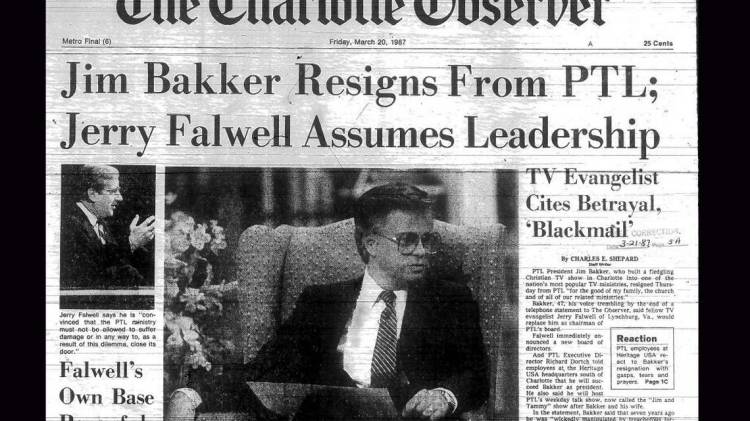


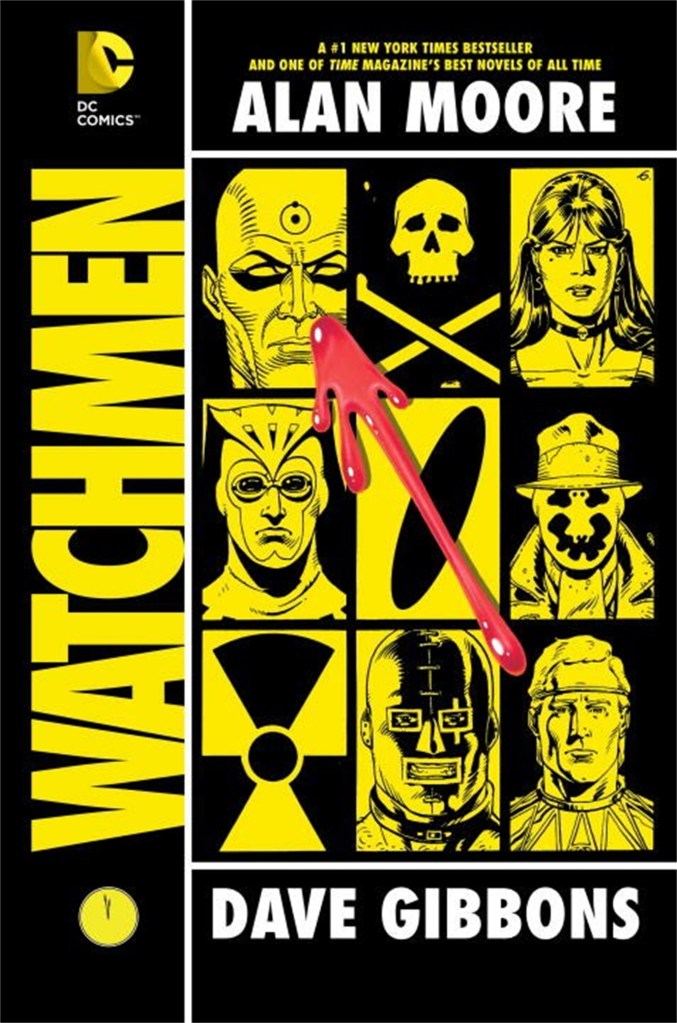


 SCREEN TIME WITH SAM