Top 20 Overrated Actors and TV Shows

Here’s my list of the top twenty most overrated actors and TV shows since the 1990s. This list isn’t a reflection on them or their work, but rather how I feel it has held up during their career or run. This is all my personal opinion, and you’re welcome to disagree. Let me know what you think in the comments below!

Actors

  • Matthew Perry
  • Melissa McCarthy
  • Sterling K.  Brown
  • Neil Patrick Harris
  • Kevin James
  • Sarah Jessica Parker
  • Lena Dunham
  • Ashton Kutcher
  • Kerry Washington
  • Anthony Anderson
  • Katherine Heigl
  • Aziz Ansari
  • Jane Krakowski
  • John Goodman
  • Brad Garrett
  • Kelsey Grammer
  • Chris Colfer
  • David Duchovny
  • Sam Heughan
  • Debra Messing

Shows

  • The Walking Dead
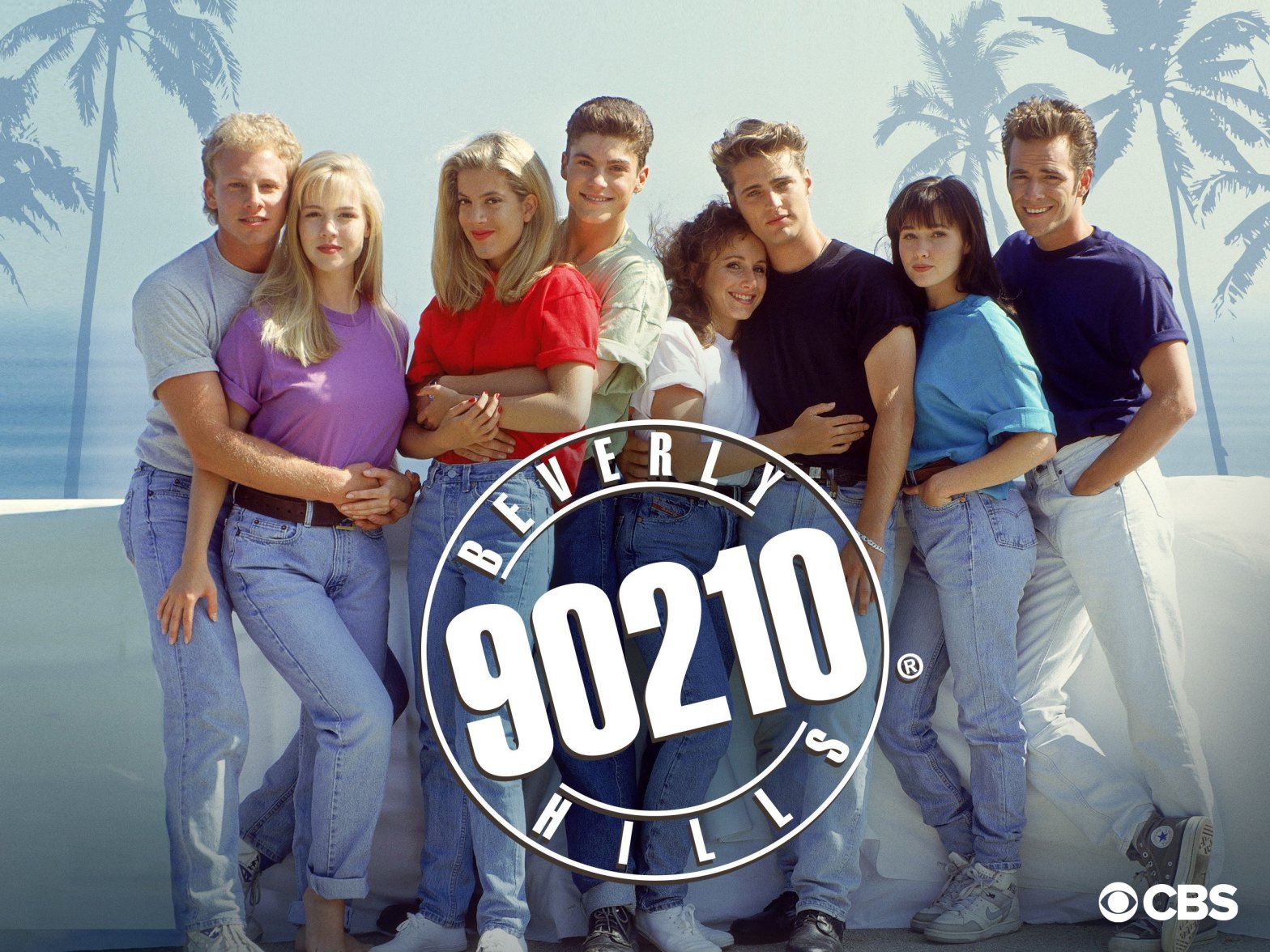
  • Sex And The City/ And Just Like That
  • Will And Grace
  • Family Guy
  • The Simpsons
  • The Big Bang Theory/Young Sheldon
  • Friends
  • Glee
  • Modern Family
  • Full House/Fuller House
  • Grey’s Anatomy
  • The West Wing
  • Empire
  • Desperate Housewives
  • How I Met Your Mother
  • Two and a Half Men
  • Unbreakable Kimmy Schmidt
  • House of Cards
  • Girls
  • Entourage

Rugrats: Bigger and Better Than Ever

When the series came back in 1997 after a Chanukah episode in December 1996, it came back without Paul Germain and his writing staff.  A few years earlier, in between the seasons, Rugrats was shown on constant reruns on Nickelodeon during the break, which helped make the show more popular and resulted in its comeback on the air. The series got praise from Steven Spielberg, who in a 1995 interview referred to the show as “one of several shows that were the best children’s programming at the time,” and described Rugrats as “sort of a TV Peanuts of our time.” This was when the show became the monumental force and gained the popularity it had. In 1996 alone, Rugrats aired 655 times on Nickelodeon, becoming the most-watched cable show that year. The show picked up pretty much where it was when it ended in 1994, and began to explode in popularity around this time.

Cultural Impact

During its run on Nickelodeon, it had merchandise including comics and video games, and live performances, in addition to subsequent films and spinoffs. Rugrats merchandise, by March 1999, had generated 1.4 billion dollars in sales. They had their own cereal by Post called Reptar Crunch Cereal. In addition, they also made fast food appearances, mostly at Burger King. Hardee’s offered a collection of Nicktoons toys as premiums with the kid’s meals in 1994, with the four shows being Doug, Rugrats, Ren and Stimpy, and Rocko’s Modern Life. They were also on fruit snacks, macaroni and cheese, bubble gum, and Campbell’s soup, among other food-related things (See this video for a Rugrats advert collection). Between 1997 and 2001, Rugrats also had a balloon at the Macy’s Thanksgiving Day Parade. The franchise appeared to be invincible, as in 2001 it got a star on the Hollywood walk of fame, becoming the first, and so far the only, Nickelodeon show to have one.

As just about everybody who watched Rugrats knows, Tommy Pickles is half Jewish, so it was only natural that there would be Jewish themed episodes of Rugrats, and that Judaism would play a major role in the series. The episodes of Passover and Chanukah are two of the most popular episodes in the show’s run. The show’s Passover episode was the sixth most watched cable broadcast that week. The series received accolades for the Jewish themes it used, including 3 for its Passover episode that year alone. However, at the same time, the Anti-Defamation League criticized the look of Grandpa Boris and charged it as antisemitic. The controversy began in 1998 during publication of a Rugrats comic strip, because the design resembled a Nazi-era depiction of Jews. Nickelodeon president, Herb Scannell, that year promised that the strip nor the character would be published again. In 2001 Nickelodeon celebrated ten years on the air for Rugrats. To celebrate the anniversary, Nickelodeon released Decade in Diapers on VHS, DVD, and a part of a marathon on the network. This was the first time the original pilot was seen by the public, and it was included as a bonus feature on the DVD and VHS. Rugrats gained over twenty awards during its run, and was Nickelodeon’s longest running show, until SpongeBob SquarePants surpassed it in 2012.

The Movies

Rugrats Movie Triple Feature 3 - DVD Set by nbtitanic on DeviantArt

On November 20th 1998, The Rugrats Movie opened at number one at the box office, and became the first non-Disney animated movie to gross 100 million dollars. It was a box office success of 140 million dollars, considering its modest 24-million-dollar budget. However, the film earned many mixed reviews, and it currently has a 59% on Rotten Tomatoes. It remained the highest grossing animated film based on a TV show, until 2007 when it was surpassed by The Simpsons Movie. This film is notable for the introduction of Tommy’s baby brother, Dil. Production on the movie started back in 1995, and there were video games, books, and a soundtrack based on the film. Tara Strong started voicing Dil, which she would do for the rest of the show’s run, including subsequent movies and spinoffs. The film was so successful that two years later, in 2000, Rugrats in Paris was released. This film is significant because it introduced us to several brand-new characters, who would become mainstays on the show for the rest of its run. These include Kimi and her mother Kira, and Fifi, the family dog the Finsters decide to adopt when they are in Paris. In the episode “Mother’s Day,” we get the first signs that Chuckie wants a mom and feels lonely because he is just with his dad, and everybody else, except Angelica, has siblings by the time of Rugrats in Paris. That becomes reality in Rugrats in Paris. We also see more of Grandpa Lou’s new wife, Lulu, who made her first overall appearance at the end of the previous season. The movie made 103.3 million dollars worldwide. It holds a 76% on Rotten Tomatoes, and is the best reviewed film from both fans and critics. Julia Kato became the voice of Kira. Dionne Quan, who was blind and was given scripts in braille, started voicing Kimi. Debbie Reynolds, who was towards the end of her career, began voicing Lulu. In 2003, Rugrats Go Wild was released, which was a crossover between Rugrats and The Wild Thornberrys. It became the least successful movie for the series, just gaining $55.4 million dollars and receiving mixed to negative reviews. This is the only Rugrats film that was rated PG for mild crude humor, while the other two were both rated G.

The Rugrats Are All Grown Up

All Grown Up! | Apple TV

In addition to the films, various spinoffs were being discussed, one of these being “Rugrats Preschool Daze,” which revolved around Susie and Angelica in preschool. Another possible spinoff centered on Susie and her family moving to Atlanta to help their grandmother run the family restaurant. While Rugrats Preschool Daze did get made, it was cancelled after four episodes out of the planned 13. To commemorate the 10th anniversary of Rugrats in 2001, Nickelodeon aired the special “All Growed Up,” which depicted the babies 10 years older. In what was supposed to be the series finale, the episode had 11,900,000 viewers, which made it the highest rated premiere for the show as well as the highest rating for Nickelodeon in general. With such high ratings from the special, it came as no surprise that it was a very successful backdoor pilot from Nickelodeon. This episode was so popular and successful that a spinoff series, All Grown Up, started in 2003 and lasted for 5 seasons, ending in 2008.

All Grown Up was the most successful spinoff there was throughout the run of the show. The spinoff was created in an effort to keep the Rugrats franchise going after it was beat up in the ratings by newer shows such as SpongeBob SquarePants and Jimmy Neutron. Production began in September 2002, and the show premiered in April 2003 as a preview, before starting its regular run in late November. When it did start its regular run, more than 3.2 million viewers tuned in, which made it the highest premiere in Nickelodeon’s history at the time. Originally, potential titles were “All Growed Up,” which was the name of the pilot, as well as “Rugrats: All Growed Up.” The series documents the lives of Tommy, Chuckie, Angelica, Phil, Lil, Dill, Kimi, and Susie as they navigate being pre-teens and teenagers. It allowed characters such as Phil, Lil, Kimi, Dill, and even Susie to have a more prominent role, as well as introduced new characters. Unlike the original series, where most of the episodes revolved around Tommy, Chuckie, Angelica, and sometimes Susie, All Grown Up gives room for the other characters to have major storylines throughout the series. The existing voice cast from Rugrats continued voicing the characters, sounding more like pre-teens to teenagers.

All Grown Up attracted 30 million viewers a month, including a large number of 12- to 14-year-olds. This was in sharp contrast to Klasky Csupo and Nickelodeon’s show As Told by Ginger, which was more serious and teen-focused in terms of the themes the series explored. By the time season four came around, episodes started airing sporadically between 2005 to 2008, which they didn’t do for the first three seasons. Unlike the original series, the episodes were one 22-minute story, as opposed to the traditional Rugrats format of two stories that were 11 minutes per episode, which fits the tone of the show. This show is notable because it is the last time the original voice cast for the adults was used, even though Kath Soucie came back in the reboot to voice Phil and Lil, but not their mother, Betty. Even though the series felt different from the original because they were preteens, the characters’ overall personalities were in line with who they were in the original. This show is also the last time certain characters have been mentioned and/or seen, including Howard DeVille, Dill, Kimi, Kira, Boris, Minka, and Lulu. The last episode aired on August 17th, 2008, 17 years after the first episode of Rugrats first aired. It appeared that the Rugrats franchise was finished after Preschool Daze ended, and there weren’t going to be any movies after the two made-for-DVD specials, but it’s legacy and place in popular culture wasn’t quite complete.         

Coming to An End

              After being on the air for 9 seasons, around 170 episodes, 3 movies, a successful spinoff, as well as numerous merchandise products, Rugrats eventually became the victim of its own success. By the late 90s through the mid-2000s, the series began losing popularity, and it was no longer the same series for a variety of reasons. Its popularity had started to wane from the heights it enjoyed during its golden age. Klasky Csupo did everything they could to help regain interest in the series within reason. In addition to the movies, All Grown Up, and the additions of new characters, Rugrats tried things such as having popular Nickelodeon stars voice characters, especially Amanda Bynes as Lulu’s grand-niece Taffy, who is hired as a regular babysitter after Didi decides to go back to school. They also tried having three stories instead of the regular two for season seven, changing the opening credits, and doing a critically acclaimed Kwanzaa special that was a pilot for a series that never materialized. Even an appearance in Jimmy Neutron’s Nicktoon Blast at Universal Studios Florida, and appearing in various video games did nothing, reinforcing the idea that the franchise was running out of steam and was approaching the end of its popularity. Around this time, the other remaining Klasky Csupo shows were starting to end as well. They had also produced Aaahh!! Real Monsters, The Wild Thornberrys, Rocket Power, and As Told by Ginger during the run of Rugrats and All Grown Up on Nickelodeon. As the show’s voice cast moved on to other things, the Rugrats world they had been a part of moved on without them, even though some of them became quite successful after Rugrats ended. Despite being one of the first successful and popular shows on the network, it was becoming obsolete, especially with newer shows on such as SpongeBob SquarePants and The Fairly OddParents. With its legacy firmly in place, Rugrats began to fade away after nearly 20 years.

Reboot

Rugrats Reboot: Series Premiere Review - "Second Time Around" and "Lady  De-Clutter" / "New Puppy" - IGN

In mid-July 2018, Nickelodeon gave a series order to a 26-episode revival of Rugrats, which would be produced by Klasky Csupo and Germain. It’s important to note that the last time Klasky and Germain worked together on Rugrats back in the 90s, they had very different philosophies towards the series. Originally, Paramount also announced in July 2018 that there would be a live-action film with CGI characters as part of the revival, but in November 2019, they decided to cancel the film. Major storylines, characters, and plot details from the rest of Rugrats that Germain wasn’t a part of, as well as from the movies and All Grown Up, had to change because they were going to be starting over again. Targeted for a 2020 release, the series was delayed production until 2021, where it would be on the newly rebranded Paramount Plus, and on May 27th 2021, the series premiered on the streaming platform. One of the most notable changes from the original series to this reboot is the CGI animation, as opposed to the original 2D style. Among the other significant changes from the original series, Susie is a more prominent character than in the original series, and she is also closer to Chuckie’s age than Angelica’s. In addition, the writers made Betty a lesbian, and wrote out Howard, which I don’t really mind that much. Even though the babies have the same personalities, they are on similar adventures that we have seen them on before, whether they are exactly alike or not.

So far, this show hasn’t found it’s new voice to separate it from the original series. The new voice cast for the adults includes Tommy Dewey as Stu Pickles, Ashley Rae Spillers as Didi, Anna Chlumsky as Charlotte, Timothy Simons as Drew, Natalie Morales as Betty, Tony Hale as Chas, Michael McKean as Grandpa Lou, Nicole Byer as Lucy Carmichael, and Omar Benson Miller as Randy Carmichael. The fact that these are people that are very high-profile celebrity voices for the most part shouldn’t be a negative automatically if they don’t rely so much on their appeal to get people to watch the revival. Take the Rugrats movies for example, particularly Rugrats in Paris, when they cast Oscar winning actress Susan Sarandon and Emmy winning actor John Lithgow, as well as in Rugrats Go Wild when they cast Bruce Willis as the voice of Spike. They weren’t just being used because of their celebrity, but they were also making characters that could exist in the Rugrats universe and be as effective as somebody who wasn’t well known before it began. They weren’t profiting solely off of their celebrity. In my opinion, I hope this series finds its voice someway or somehow so that it will continue on, but if it doesn’t work out, we’ll always have the original series and the memories attached to it that a new audience can discover again.            

Image Credits:

Thanksgiving Day Parade Balloon: https://the-new-macys-parade.fandom.com/wiki/Rugrats_(IAmaBoomer_Version)

Walk of Fame: https://commons.wikimedia.org/wiki/File:Rugrats_on_the_Hollywood_Walk_of_Fame.jpg

All Grown Up: https://tv.apple.com/us/show/all-grown-up/umc.cmc.74n1rnhtbr2zzzqqr122p2u0e

Reboot Photo: https://www.ign.com/articles/rugrats-reboot-premiere-review-paramount-plus

“A Baby’s Gotta Do What a Baby’s Gotta Do” – Rugrats: The Original Series Overview

Have you ever wondered what babies do when they aren’t around adults? This is the main question at the heart of the show Rugrats, and what made it become as popular and successful as it became. In the words of Tommy Pickles, “A baby’s gotta do what a baby’s gotta do.”

Rugrats shows the adventures of Tommy Pickles and other babies when they are toddlers, who can’t really talk to adults. The series ran from 1991 to 2004, and it had a break between seasons 3 and 4 that included some specials from 1994 to 1997. During this time, there were also two Jewish specials in 1995 and 1996 about Passover and Chanukah. The core cast, at least early on, consisted of Tommy Pickles who was 1, his cousin Angelica who was 3, his best friend Chuckie who was 2, and the twins Phil and Lil Deville who were 1 ¼ years old. The supporting cast included Tommy’s dog Spike, his parents Stu and Didi, Grandpa Lou, Grandpa Boris, Grandma Minka, his aunt Charlotte and Uncle Drew, as well as Phil and Lil’s parents Betty and Howard, and Chuckie’s dad Chaz.

Main Cast and Setting

One of the main characters is Tommy, who is a baby who wants to explore and see the world, and who is very helpful and morally upstanding for a baby. Tommy’s best friend Chuckie is the opposite of him, since he is easily scared and afraid to do new things, and is also the only person who can talk Tommy out of any bad ideas he might have in mind. Phil and Lil are troublemakers willing to go along with whatever Tommy suggests they do most of the time, and who like being in dirty and smelly places and doing things of that note, such as eating and playing with bugs and worms, among other things. Angelica is the most spoiled character on the show, because her parents Drew and Charlotte are incredibly busy to devote actual time with her and thus, she acts out against the babies. She is also the only one, at least early on, who can talk to adults as well as the babies.

The series is mostly set at the babies’ homes, particularly Tommy’s and Chuckie’s, although Phil and Lil’s and Angelica’s are sometimes featured. However, there are plenty of episodes that take place outside one of their houses, either because their parents took them somewhere or they accidently left their parents sight particularly with Tommy, as well as episodes where everybody goes on a trip with each other. Stu and Didi seem to be the most responsible and understanding parents, even though Stu sometimes gets on Didi’s nerves because he is an inventor. Grandpa Lou who lives with them talks as an ornery old man, but is very much loving towards all the babies, but in particular Tommy and Angelica. Drew and Charlotte come across as very self-centered, egotistical people who don’t understand being around children that much, and they treat taking care of the babies as an unwanted chore they want to get over with, which helps to explain why Angelica is such a spoiled child compared with the other babies on the show. Betty and Howard share a similar purpose with Stu and Didi that Phil and Lil share with Tommy, Chuckie, and Angelica. They are very close with the Pickles, but they don’t do that much without one of the other main characters being in the episode and having an important role in it. Chaz, Chuckie’s father, is initially a widower and thus is very protective of him. Like Betty and Howard, he is very close with Stu and Didi and has Tommy, Phil, and Lil over more times than any of the other parents besides Stu and Didi. He is a bureaucrat who, like Chuckie with the babies, is often the voice of reason against the other parents. Later on in season two, the writers introduce their first major characters who aren’t from the well-established pilot group of kids and adults in the episode “Meet the Carmichaels.” The addition of the Carmichaels helps to create a rival with Angelica, Drew, and Charlotte as they are very much the opposite of the family. This is in addition to the fact that they are the first African American family on the show as well. The relationship between Angelica and Susie is incredibly complex, because they are similar characters with very different personalities, and thus they have a natural rivalry between them that is different than any other pairing on the show. In season three’s episode, “Dummi Bear Dinner Disaster,” Susie is worried she will have to move again if the Dummi Bear man who comes over for dinner likes her father, because it happened the last time they had dinner, and they moved as a result.

During the run of the series, as well as the films in most instances, the adults aren’t the best at keeping an eye on the kids, with a few exceptions, which has the kids being in situations they shouldn’t be in because the adults are extremely incompetent at properly supervising their children. In Charlotte’s first episode in “The Santa Experience,” she acted as if she was working and on the phone, and ignored what Angelica and the other kids were doing. By the time Susie and her family were incorporated into the cast, there wasn’t another major addition to the cast until Dil in The Rugrats Movie. The bulk of the storylines revolved around Tommy, Chuckie, Angelica, Grandpa Lou, Stu, Drew, Charlotte, and Chaz. Even though characters such as Phil and Lil were major characters, they didn’t really have that much to do that was distinctive. Each character has their distinct personality, which helps set each character up into different roles, some more prominent than others. Despite Lil being female, her gender is rarely a major discussion point, unlike Susie and Angelica or even Kimi in later seasons. It isn’t brought up that much in both Rugrats and the adults especially with her parents. One of the few exceptions to this is “A Very McNulty Birthday,” when Timmy McNulty doesn’t want to be around the girls that come to his party because of “cooties,” and this is one of the few times Lil isn’t thought of as just one of the boys throughout the entire run of the show, as well as All Grown Up. It is implied that Lil has a crush on Chuckie in certain episodes of both Rugrats and All Grown Up.  

Series Overview

When Rugrats premiered on August 11th, 1991 on Nickelodeon, it was one of the first three Nicktoons alongside Doug, and Ren & Stimpy that same day. The show created by Arlene Klasky and Gabor Cuspo, whose own children gave them inspiration. One person was brought on to help with the show whose relationship with the series would be fraught with tension and complaints from Arlene Klasky: fellow Simpsons writer Paul Germain. It is important to know that they got their start with The Simpsons, which they were a part of until 1992. One of the show’s most popular characters would cause tension between Klasky and Germain throughout Germain’s time on the show writing. The character that caused tension was Angelica, which looking back at it seems odd because of her popularity and success. When the series pilot was submitted to Nickelodeon in 1990, it was tested with children and got positive feedback, however, there was a conflict of what Klasky and Germain wanted Rugrats to be. According to this video, Germain wanted “intelligent stories for intelligent children,” whereas Klasky wanted them to remain as babies. In addition, Klasky and Germain didn’t see eye to eye regarding Angelica. Angelica was based off of a bully Germain had known growing up. With episodes such as “Barbecue Story” and “The Trial,” Klasky just saw Angelica as a villain being mean to the babies and she wasn’t interested in her character development, because this wasn’t something that was going to be in her plans for the show. Klasky didn’t like the bullying from Angelica and since Angelica wasn’t in her original plans, she didn’t feel any connection to the character, unlike Tommy, Chuckie, Phil, and Lil who she created the show around. Even though I very much enjoy the episodes Paul Germain did, I have to side with Klasky because that is what the show should be about, and also his writing was a little bit too mature for the show (see this video for more of Germain’s opinion on the show).

The show’s initial voice cast included E.G Daily as Tommy, replacing Tami Holbrook who voiced Tommy in the unaired pilot. Christine Cavanaugh voiced Chuckie up until 2002, when she was replaced by The Simpsons voice actress Nancy Cartwright, better known as the voice of Bart Simpson. Phil and Lil, as well as their mother Betty, were voiced by Kath Soucie. Cheryl Chase voiced Angelica. Susie was voiced by Cree Summer. Didi was voiced by Melanie Chartoff. Stu was voiced by Jack Riley. Charlotte was voiced by Tress MacNeille. Drew and Chas were both voiced by Michael Bell. Howard was voiced by Phil Proctor, and Grandpa Lou was voiced first by David Doyle, and Joe Alaskey took over the role after he died in 1997.

Image Credits:

Feature/Cover Image: https://nerdbot.com/wp-content/uploads/2020/05/lseuxpzwkntjf0coatv2.jpg

Rugrats Babies: https://www.flickr.com/photos/osca_vb/3364316658

Tommy and Susie: https://thumbnails.cbsig.net/CBS_Production_Entertainment_VMS/2020/05/24/1741873731528/NICKELODEON_RUGRATS_031_198658_1920x1080.jpg