A lot happened in the year 1987, including the debut of a family-friendly TV sitcom set in San Francisco. The name of the show was Full House, and we’ll be doing a deep dive into this popular comedy over the coming weeks.
But first, to get a sense of the times and trends that helped shape this series, here’s a notable obituary from 1987 — Liberace.
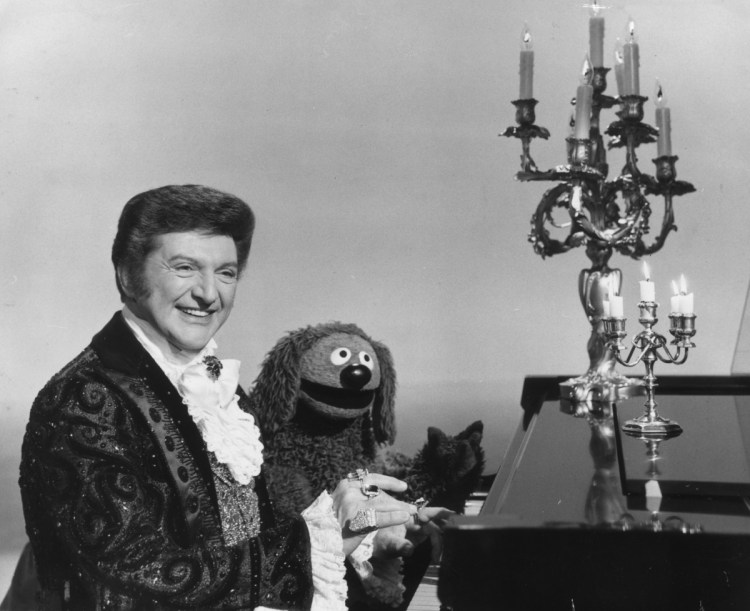
Liberace was an American pianist, singer, and actor. A child prodigy born in Wisconsin to parents of Italian and Polish origin, he enjoyed a career spanning four decades of concerts, recordings, television, motion pictures, and endorsements. At the height of his fame from the 1950s to 1970s, he was the highest-paid entertainer in the world with established concert residencies in Las Vegas and an international touring schedule. He embraced a lifestyle of flamboyant excess both on and off stage.
Liberace was conservative in his political and religious beliefs. He believed fervently in capitalism and was fascinated with royalty, ceremony, and luxury. He loved to socialize and was fascinated by the rich and famous. However, he still presented himself to his fans as one of them, a Midwesterner who had earned his success through hard work, and who invited them to enjoy it with him.
In the later years of his life, having earned sudden wealth, Liberace spent lavishly, displaying extravagant materialism in his life and his act. In 1953, he designed and built his first celebrity house in Sherman Oaks, California on Valley Vista Blvd., located in the San Fernando Valley region of Los Angeles. The house featured a piano theme throughout, including a piano-shaped swimming pool which remains today. His dream home, with its lavish furnishings, elaborate bath, and antiques, added to his image. He leveraged his fame through hundreds of promotional tie-ins with banks, insurance companies, automobile companies, food companies, and even morticians. Liberace was an experienced pitchman and relied on the support of his vast audience of housewives. Sponsors sent him complimentary products, including his white Cadillac limousine, and he reciprocated enthusiastically: “If I am selling tuna fish, I believe in tuna fish.”
Others criticized his flashy but proficient piano playing, his non-stop promotions, and his gaudy display of success. Outwardly, he remained undeterred, once sending a letter to a critic, “Thank you for your very amusing review. After reading it, in fact, my brother George and I laughed all the way to the bank.” He responded similarly to subsequent poor reviews, famously modifying it to “I cried all the way to the bank.” In an appearance on The Tonight Show some years later, Liberace retold the anecdote to Johnny Carson, and finished by saying, “I don’t cry all the way to the bank any more – I bought the bank!”
Liberace was recognized during his career with two Emmy Awards, six gold albums, and two stars on the Hollywood Walk of Fame. Liberace performed 56 sold-out shows at Radio City Music Hall, which set box-office records a few months before his death.
At the time of his death Liberace was said to be worth around $110 million and to have bequeathed $88 million to the Liberace Foundation. The story was perpetuated by the officers of the Liberace Foundation often and as late as 2013. Only in 2015 did Liberace Foundation Chairman Jonathan Warren reveal in a lecture at the Mob Museum in Las Vegas that these figures were all part of the showmanship of Liberace, and that the real figures were closer to one tenth of those amounts.
The Liberace Foundation saw the sunset of its in-house endowment fund in 2011. University endowment funds provided by it continue to offer scholarships annually. The original Liberace museum closed its doors in 2010, citing the recession and an outdated, outmoded facility.
In November 2013, a dozen of Liberace’s famous costumes, together with one of his stage cars and a piano went on display for a six-week period at the Cosmopolitan Las Vegas in an exhibition titled “Too Much of a Good Thing Is Wonderful”, Liberace’s unofficial motto, and an often-used one-liner from his act. The exhibition was extended by seven months.
Liberace’s fame in the United States was matched for a time in the United Kingdom. In 1956, an article in the Daily Mirror by columnist Cassandra (William Connor) described Liberace as “the summit of sex—the pinnacle of masculine, feminine and neuter. Everything that he, she and it can ever want… a deadly, winking, sniggering, snuggling, chromium-plated, scent-impregnated, luminous, quivering, giggling, fruit-flavored, mincing, ice-covered heap of mother love”, a description which strongly suggested that he was homosexual.
Liberace sent a telegram that read: “What you said hurt me very much. I cried all the way to the bank.” He sued the newspaper for libel, testifying in a London court that he was not homosexual and that he had never taken part in homosexual acts. He was represented in court by one of the great barristers of the period, 75-year-old Gilbert Beyfus, QC. They won the suit, partly on the basis of Connor’s use of the derogatory expression “fruit-flavored”. The case partly hinged on whether Connor knew that ‘fruit’ was American slang implying that an individual is a homosexual. After a three-week civil trial, a jury ruled in Liberace’s favor on June 16, 1959, and awarded him £8,000 (around $22,400) in damages (worth about £198,000 or $208,200 today) which led Liberace to repeat the catchphrase to reporters: “I cried all the way to the bank!” Liberace’s popularization of the phrase inspired the title Crying All the Way to the Bank, for a detailed report of the trial based on transcripts, court reports, and interviews, by the former Daily Mirror journalist Revel Barker.
Liberace sued and settled a similar case in the United States against Confidential. Rumors and gossip magazines frequently implied that Liberace was homosexual throughout his career, which he continued to vehemently deny. A typical issue of Confidential in 1957 shouted, “Why Liberace’s Theme Song Should Be ‘Mad About the Boy!'”
In 1982, Scott Thorson, Liberace’s 22-year-old former chauffeur and alleged live-in lover of five years, sued the pianist for $113 million in palimony after he was dismissed by Liberace. Liberace continued to deny that he was homosexual, and during court depositions in 1984, he insisted that Thorson was never his lover. The case was settled out of court in 1986, with Thorson receiving a $75,000 cash settlement, plus three cars and three pet dogs worth another $20,000. Thorson stated after Liberace’s death that he settled because he knew that Liberace was dying and that he had intended to sue based on conversion of property rather than palimony. He later attested that Liberace was a “boring guy” in his private life and mostly preferred to spend his free time cooking, decorating, and playing with his dogs, and that he never played the piano outside of his public performances. According to Thorson: “He (Liberace) had several decorated, ornamental pianos in the various rooms of his house, but he never played them.”
Because Liberace never publicly acknowledged that he was gay, knowledge of his true sexuality was muddled by stories of his friendships and romantic links with women. He further obscured his sexuality in articles like “Mature Women Are Best: TV’s Top Pianist Reveals What Kind of Woman He’d Marry”.
In a 2011 interview, actress and close friend Betty White confirmed that Liberace was indeed gay and that she was often used as a “beard” by his managers to counter public rumors of the musician’s homosexuality.
Liberace was secretly diagnosed HIV positive in August 1985 by his private physician in Las Vegas. Aside from his long-term manager, Seymour Heller, and a few family members and associates, Liberace kept his terminal illness a secret until the day he died and did not seek medical treatment. Scott Thorson remarked that he was not aware that Liberace had any health issues prior to acquired immunodeficiency syndrome (AIDS) and up until one year before his death that “he was in overall excellent shape for his age; barrel-chested and powerfully built.”
In August 1986, during one of his last interviews, with the TV news program Good Morning America, Liberace hinted of his failing health when he remarked, “How can you enjoy life if you don’t have your health?” He was hospitalized for pneumonia from January 23 to January 27, 1987, at the Palm Springs county hospital.
At the age of 67, Liberace died the morning of February 4, 1987, at his retreat home in Palm Springs, California. A devout Roman Catholic to the end, he had a priest administer the last rites to him the day before his death.
At the time of Liberace’s death, his press agent said he had died of pernicious anemia, emphysema, and heart disease. Liberace’s physician, Ronald Daniels, said he had died of heart failure caused by subacute encephalopathy, a degenerative brain disease. The Riverside County coroner performed an autopsy and determined that Liberace’s cause of death was cytomegalovirus pneumonia, a frequent cause of death in people with AIDS. The coroner also determined that, at the time of his death, Liberace was HIV-positive, had pulmonary heart disease, and calcification of a heart valve. The coroner said that Liberace’s doctor had deliberately claimed a false cause of death, as heart failure is never caused by encephalopathy. Author Darden Asbury Pyron wrote that Liberace had been HIV-positive and symptomatic from 1985 until his death.
Cary James Wyman, his alleged lover of seven years, had HIV and died in May 1997 at age 34. Another alleged lover, Chris Adler, came forward after Liberace’s death and claimed that Liberace had infected him with HIV. Adler died in 1990 at age 30.
Liberace’s body is entombed along with those of his mother and brother at Forest Lawn, Hollywood Hills Cemetery in Los Angeles. In 1994, the Palm Springs Walk of Stars dedicated a Golden Palm Star to him.


Fab
Wow, this blog post about Liberace was really interesting! It’s amazing to learn about his flamboyant lifestyle and his impact on the entertainment industry. I have a question, did Liberace’s extravagant image ever affect his popularity or audience perception of him? Great blog post! I would love to hear your thoughts on this question.
Anette
https://bestdogsstuff.com/
LikeLiked by 1 person
Thanks Anette! I believe that his larger-than-life persona and personality overcame much of the controversy during his life. He was certainly very popular for many years. Sam
LikeLike