A lot happened in the year 1987, including the debut of a family-friendly TV sitcom set in San Francisco. The name of the show was Full House, and we’ll be doing a deep dive into this popular comedy over the coming weeks.
But first, to get a sense of the times and trends that helped shape this series, here’s a notable obituary from 1987 — Richard Marquand.
Richard Marquand was a British film and television director active in both US and UK film productions, best known for directing the 1983 space opera Return of the Jedi, the final film in the original Star Wars trilogy. He also directed the critically acclaimed 1981 drama film Eye of the Needle, the quiet Paris set romance Until September, and the hit 1985 thriller Jagged Edge.
By the late 1960s, Marquand had begun a career directing television documentaries for the BBC, where he worked on projects such as the 1972 series Search for the Nile and an edition of One Pair of Eyes (1968), about the novelist Margaret Drabble who had been a friend of his at Cambridge. He collaborated with the celebrated foreign correspondent James Cameron on a long-running series called Cameron Country for BBC television and also with John Pilger on a series of films for ITV. In 1979, Marquand incorporated many of his documentary techniques in his biographical television movie Birth of the Beatles. He directed several films specifically for children including the 1977 Emmy winning Big Henry and the Polka Dot Kid.
On the strength of his direction of the 1981 feature, Eye of the Needle, Marquand was hired by writer-producer George Lucas to direct Return of the Jedi. In his commentary track on the DVD, Lucas explains that Marquand “had done some great suspense films and was really good with actors. Eye of the Needle was the film I’d seen that he had done that impressed me the most, it was really nicely done and had a lot of energy and suspense.” For his work on the film, Marquand won a Hugo Award for Best Dramatic Presentation in 1984.
In 1960, Marquand married screenwriter Josephine Elwyn-Jones, the daughter of Labour MP Elwyn Jones and author and illustrator Pearl Binder. They had two children, Hannah Rachel and James Elwyn, before they divorced in 1970. James Marquand is a film editor who has also worked as a director. In 1981, Marquand married fellow film director Carol Bell, with whom he had another two children, Sam Adair and Molly Joyce. Marquand was a fan of Liverpool Football Club.
According to a 2014 Wales Online interview with his son James, Marquand wrote a screenplay for “a Welsh western” in the late 1970s at the South Wales branch of Pinewood Studios. The screenplay told the story of a young orphan girl in Victorian Mid Wales who enlists two local men to help her wreak revenge on those who killed her father; Marquand used to tell the story to his children when they were on holiday at the family’s cottage near Tregaron. Marquand reportedly pitched it to Hollywood producers who expressed interest in making it into a film; however, Marquand declined the offer because the producers insisted the story be relocated to the Rocky Mountains in the United States. In the interview, James Marquand expressed interest in adapting his father’s screenplay into a film. Marquand was driving his children home when he suffered a stroke brought on by an embolism. He reached the destination before collapsing and died in hospital in Tunbridge Wells, Kent, on September 4, 1987 at the age of 49. His last film, Hearts of Fire, starring Bob Dylan, was released posthumously.
A lot happened in the year 1987, including the debut of a family-friendly TV sitcom set in San Francisco. The name of the show was Full House, and we’ll be doing a deep dive into this popular comedy over the coming weeks.
But first, to get a sense of the times and trends that helped shape this series, here’s a notable obituary from 1987 — Ray Bolger.
Ray Bolger was an American actor, dancer, singer, vaudevillian, and stage performer (particularly musical theater) who started his movie career in the silent-film era.
Bolger was a major Broadway performer in the 1930s and beyond. He is best known for his roles in The Wizard of Oz (1939) as the Scarecrow and in Walt Disney’s holiday musical fantasy Babes in Toyland in 1961 as the villainous Barnaby. Bolger was the host of The Ray Bolger Show on TV from 1953 to 1955, originally titled Where’s Raymond?
His entertainment aspirations evolved from the vaudeville shows of his youth. He began his career in a vaudeville tap show, creating the act “Sanford & Bolger” with his dance partner. In 1926, he danced at New York City’s legendary Palace Theatre, the premier vaudeville theater in the United States. His limber body and improvisational dance movements won him many leading roles on Broadway in the 1930s. Eventually, his career also encompassed film, television, and nightclub work. In 1932 he was elected to the theater club, The Lambs and performed on opening night at Radio City Music Hall in December 1932.
Bolger signed his first cinema contract with MGM in 1936, and although The Wizard of Oz was early in his film career, he appeared in other movies of note. His best known pre-Oz appearance was The Great Ziegfeld (1936), in which he portrayed himself. He also appeared in Sweethearts (1938), the first MGM film in Technicolor, starring Nelson Eddy and Jeanette MacDonald. He also appeared in the Eleanor Powell vehicle Rosalie (1937), which also starred Eddy and Frank Morgan.
Bolger’s MGM contract stipulated that he would play any part the studio chose. However, he was unhappy when he was originally cast as the Tin Woodman in the studio’s 1939 feature-film adaptation of The Wizard of Oz. The role of the Scarecrow had already been assigned to another dancing, studio-contract player, Buddy Ebsen. In time, the roles were shuffled around. Bolger’s face was permanently lined by wearing the Scarecrow’s makeup.
Following The Wizard of Oz, Bolger moved to RKO Pictures. In 1941, he was a featured act at the Paramount Theatre in New York, working with the Harry James Band. He would do tap dance routines, sometimes in a mock-challenge dance with the band’s pianist, Al Lerner. On December 7, 1941, the Japanese attacked Pearl Harbor, and Bolger’s performance was interrupted by President Roosevelt’s announcement of the news of the attack. Bolger toured in USO shows in the Pacific Theater during World War II, and appeared in the United Artists wartime film Stage Door Canteen (1943).
In 1946, he returned to MGM for a featured role in The Harvey Girls. Also that year, he recorded a children’s album, The Churkendoose, featuring the story of a misfit fowl (“part chicken, turkey, duck, and goose”), which teaches children that beauty is in the eye of the beholder and it “all depends on how you look at things”.
Bolger’s Broadway credits included Life Begins at 8:40 (1934), On Your Toes (1936), By Jupiter (1942), All American (1962) and Where’s Charley? (1948), for which he won the Tony Award for Best Performance by a Leading Actor in a Musical and in which he introduced “Once in Love with Amy”, the song often connected with him. He repeated his stage role in the 1952 film version of the musical.
Bolger appeared in his own ABC television sitcom with a variety show theme, Where’s Raymond? (1953–1954), renamed the second year as The Ray Bolger Show (1954–55). He continued to star in several films, including Walt Disney’s remake of Babes in Toyland (1961) and smaller cameos throughout the 1960s and 1970.
Bolger made frequent guest appearances on television, including the episode “Rich Man, Poor Man” of the short-lived The Jean Arthur Show in 1966. In the 1970s, he had a recurring role as Fred Renfrew, the father of Shirley Partridge (Shirley Jones) on The Partridge Family, and appeared in Little House on the Prairie as Toby Noe and also guest-starred on other television series, such as Battlestar Galactica, Fantasy Island, and The Love Boat. In the late 1970s, Bolger played in a commercial for Safeway Supermarket’s “Scotch Buy” brand, in which he popularized the jingle, “Scotch Buy – ‘taint fancy, but its shore is good.” His last television appearance was on Diff’rent Strokes in 1984, three years before his death.
In 1998, a Golden Palm Star on the Palm Springs, California, Walk of Stars was dedicated to him. In 2016, the City of Boston commissioned a mural in Ray Bolger’s honor in the Codman Square section of the Dorchester neighborhood
In his later years, he danced in a Dr Pepper television commercial, and in 1985, he and Liza Minnelli, the daughter of his Oz costar Judy Garland, starred in That’s Dancing!, a film written by Jack Haley, Jr., the son of Jack Haley, who portrayed the Tin Woodman in The Wizard of Oz.
Bolger was diagnosed with bladder cancer in 1986, and at the end of that year, his health deteriorated and he left his Beverly Hills home to live at a nursing home in Los Angeles, where he died on January 15, 1987, five days after his 83rd birthday. He was interred at Holy Cross Cemetery, Culver City.
At the time of his death, Bolger was the last surviving main credited cast member of The Wizard of Oz. At Judy Garland’s funeral, Bolger was the only one of her Oz co-stars who attended. He joined Harold Arlen, the composer of “Over the Rainbow”, and his wife, Anya Taranda. They were reported as among the last remaining guests at the conclusion of the service.
Whenever asked whether he had received any residuals from telecasts of The Wizard of Oz, Bolger would reply: “No, just immortality. I’ll settle for that.” Bolger’s Scarecrow is ranked among the “most beloved movie characters of all time” by AMC and the American Film Institute.
For his contributions to the film industry, Bolger received a motion picture star on the Hollywood Walk of Fame in 1960. It is located at 6788 Hollywood Boulevard.
In 2019, the first comprehensive biography of Bolger, More Than a Scarecrow by Holly Van Leuven, was published.
A lot happened in the year 1987, including the debut of a family-friendly TV sitcom set in San Francisco. The name of the show was Full House, and we’ll be doing a deep dive into this popular comedy over the coming weeks.
But first, to get a sense of the times and trends that helped shape this series, here’s a notable obituary from 1987 — Randolph Scott.
Randolph Scott was an American film actor whose career spanned the years from 1928 to 1962. As a leading man for all but the first three years of his cinematic career, Scott appeared in a variety of genres, including social dramas, crime dramas, comedies, musicals (albeit in non-singing and non-dancing roles), adventure tales, war films, and a few horror and fantasy films. However, his most enduring image is that of the tall-in-the-saddle Western hero. Out of his more than 100 film appearances over 60 were in Westerns. According to editor Edward Boscombe, “…Of all the major stars whose name was associated with the Western, Scott [was] most closely identified with it.”
Scott’s more than 30 years as a motion picture actor resulted in his working with many acclaimed screen directors, including Henry King, Rouben Mamoulian, Michael Curtiz, John Cromwell, King Vidor, Allan Dwan, Fritz Lang, Sam Peckinpah, Henry Hathaway (eight times), Ray Enright (seven), Edwin L. Marin (seven), Andre DeToth (six), and most notably, his seven film collaborations with Budd Boetticher. Scott also worked with a diverse array of cinematic leading ladies, from Shirley Temple and Irene Dunne to Mae West and Marlene Dietrich. His profile was incorporated into the original logo of the Las Vegas Raiders.
At 6 ft 2 in (188 cm), lanky, muscular, and handsome, Scott displayed what was seen as an easygoing charm and courtly Southern drawl in his early films that helped offset his limitations as an actor, where he was frequently found to be stiff or “lumbering”. As he matured, however, Scott’s acting was viewed as having improved, while his features became burnished and leathery, allowing him to portray a “strong, silent” type of stoic hero.
During the early 1950s, Scott was a consistent box-office draw. In the annual Motion Picture Herald Top Ten Polls, he ranked 10th in 1950, seventh in 1951, and 10th in both 1952 and 1953. Scott also appeared in Quigley’s Top Ten Money Makers Poll from 1950 to 1953.
Scott’s face was also the model for the pirate in the Las Vegas Raiders logo since 1960 when the Raiders were originally located in Oakland, California.
Although Scott achieved fame as a motion picture actor, he managed to stay fairly low profile with his private life. Offscreen he was a good friend of Fred Astaire and Cary Grant. He met Grant on the set of Hot Saturday (1932), and shortly afterwards, they moved in together and shared a beach house in Malibu that became known as “Bachelor Hall”. It is widely rumored, on scant circumstantial evidence, that the two were in a romantic relationship at the time. But both men and their wives and families have repeatedly denied these rumors. In 1944, Scott and Grant stopped living together, but they remained close friends for the rest of their lives.
Scott died of heart and lung ailments in 1987 at the age of 89 in Beverly Hills, California. He was interred at Elmwood Cemetery in Charlotte, North Carolina. He and his wife Patricia had been married for 43 years. She died in 2004 and is buried next to her husband. Their mid-century modern home was torn down in 2008. The Randolph Scott papers, which includes photos, scrapbooks, notes, letters, articles and house plans were left to the UCLA Library Special Collections.
A lot happened in the year 1987, including the debut of a family-friendly TV sitcom set in San Francisco. The name of the show was Full House, and we’ll be doing a deep dive into this popular comedy over the coming weeks.
But first, to get a sense of the times and trends that helped shape this series, here’s a notable obituary from 1987 — Pola Negri.
Pola Negri was a Polish stage and film actress and singer. She achieved worldwide fame during the silent and golden eras of Hollywood and European film for her tragedienne and femme fatale roles and was acknowledged as a sex symbol.
Raised in the Congress Kingdom of Poland, Negri’s childhood was marked by several personal hardships: After her father was sent to Siberia, she was raised by her single mother in poverty, and suffered tuberculosis as a teenager. Negri recovered, and went on to study ballet and acting in Warsaw, becoming a well-known stage actress there. In 1917, she relocated to Germany, where she began appearing in silent films for the Berlin-based UFA studio. Her film performances for UFA came to the attention of Hollywood executives at Paramount Pictures, who offered her a film contract.
Negri signed with Paramount in 1922, making her the first European actress in history to be contracted in Hollywood. She spent much of the 1920s working in the United States appearing in numerous films for Paramount, establishing herself as one of the most popular actresses in American silent film. In the 1930s, during the emergence of sound film, Negri returned to Europe, where she appeared in multiple films for Pathé Films and UFA, and also began a career as a recording artist. She made only two films after 1940, her last screen credit being in Walt Disney’s The Moon-Spinners (1964).
Negri spent her later life largely outside the public sphere. She became a naturalized U.S. citizen in 1951, and spent the remainder of her life living in San Antonio, Texas, where she died of pneumonia secondary to a brain tumor for which she refused treatment, in 1987, aged 90.
“Pola Negri is very temperamental, but she has her temper under tight control. She, like other high-strung actresses such as Norma Talmadge and Anna Q. Nilsson, resorts to tears if anything goes wrong. These three women I rate as the best on the screen today. It is a joy to direct them: they are so sensitive to impressions. But if any of them is asked to portray a character in a way that she thinks is alien to the part, she will not be able to go on”. — Director Herbert Brenon (1880-1958) in Motion Picture Magazine, February 1926.
After Negri returned from the sanatorium, she successfully auditioned at the Warsaw Imperial Academy of Dramatic Arts. Alongside her formal schooling at the academy, she took private classes outside with renowned Polish stage actress and professor Honorata Leszczyńska. She made her theatrical debut before her graduation at The Small Theatre in Warsaw on October 2, 1912.
She made her stage debut in 1913 in Gerhardt Hauptmann’s Hannele in Warsaw and appeared the following year in her first film, Niewolnica zmysłów. She continued to perform there while finishing her studies at the academy, graduating in 1914. Her graduating performance was as Hedwig in Ibsen’s The Wild Duck, which resulted in offers to join a number of the prominent theaters in Warsaw.
By the end of World War I, Negri had established herself as a popular stage actress. She made an appearance at the Grand Theatre in Sumurun, as well as in the Small Theatre (Aleksander Fredro’s Śluby panieńskie), and at the Summer Theatre in the Saxon Garden. She debuted in film in 1914 in Slave to her Senses (Niewolnica zmysłów). She appeared in a variety of films made by the Warsaw film industry, including Bestia (Beast, released in the US as The Polish Dancer), Room No. 13 (Pokój nr 13), His Last Gesture (Jego ostatni czyn), Students (Studenci), and The Wife (Żona).
Negri’s popularity in Poland provided her with an opportunity to move to Berlin, Germany in 1917, to appear as the dancing girl in a German revival of Max Reinhardt’s theater production of Sumurun. In this production, she met Ernst Lubitsch, who at the time was producing comedies for the German film studio UFA. Negri was first signed with Saturn Films, making six films with them, including Wenn das Herz in Haß erglüht (If the Heart Burns With Hate, 1917). After this, she signed to UFA’s roster; some of the films that she made with UFA include Mania (1918), Der Gelbe Schein (The Yellow Ticket, also 1918), and Komtesse Doddy (1919).
In 1918, Lubitsch convinced UFA to let him create a large-scale film with Negri as the main character. The result was Die Augen der Mumie Ma (The Eyes of the Mummy Ma, 1918), which was a popular success and led to a series of Lubitsch/Negri collaborations, each larger in scale than the previous film. The next was Carmen (1918, reissued in the United States in 1921 as Gypsy Blood), which was followed by Madame DuBarry (1919, released in the U.S. as Passion). Madame DuBarry became a huge international success, brought down the American embargo on German films, and launched a demand that briefly threatened to dislodge Hollywood’s dominance in the international film market. Negri and Lubitsch made three German films together after this, Sumurun (aka One Arabian Night, 1920), Die Bergkatze (aka The Mountain Cat or The Wildcat, 1921), and Die Flamme (The Flame, 1922), and UFA employed Negri for films with other directors, including Vendetta (1919) and Sappho (1921), many of which were purchased by American distributors and shown in the United States.
Hollywood responded to this new threat by buying out key German talent, beginning with the procuration of the services of Lubitsch and Negri. Lubitsch was the first director to be brought to Hollywood, with Mary Pickford calling for his services in her costume film Rosita (1923). Paramount Pictures mogul Jesse Lasky saw the premiere of Madame DuBarry in Berlin in 1919, and Paramount invited Negri to come to Hollywood in 1921. She signed a $3,000 a week contract with Paramount and arrived in New York in a flurry of publicity on September 12, 1922. This made Negri the first-ever Continental star to be imported into Hollywood, setting a precedent for imported European stars that included Vilma Bánky, Greta Garbo, and Marlene Dietrich, among many others. The Hot Dog, a Cleveland monthly publication, in its own promotional advertisement for Paramount in February 1922 claimed Negri’s true name was Paula Schwartz, and that she was Jewish, which was completely untrue.
Negri ended up becoming one of the most popular Hollywood actresses of the era, and certainly the richest woman of the film industry at the time, living in a mansion in Los Angeles modeled after the White House. While in Hollywood, she started several ladies’ fashion trends, some of which are still fashion staples today, including red painted toenails, fur boots, and turbans. Negri was a frequent photography subject of Hollywood portrait photographer Eugene Robert Richee, and several photographs of her were taken during this period.
Negri’s first two Paramount films were Bella Donna (1923) and The Cheat (1923), both of which were directed by George Fitzmaurice and were remakes of Paramount films from 1915. Her first spectacle film was the Herbert Brenon-directed The Spanish Dancer (1923), based on the Victor Hugo novel Don César de Bazan. The initial screenplay was intended as a vehicle for Rudolph Valentino before he left Paramount and was reworked for Negri. Rosita, Lubitsch’s film with Mary Pickford, was released the same year and happened to be based on Don César de Bazan. According to the book Paramount Pictures and the People Who Made Them, “Critics had a field day comparing the two. The general opinion was that the Pickford film was more polished, but the Negri film was more entertaining.”
Initially Paramount used Negri as a mysterious European femme fatale and a clotheshorse as they had done with Gloria Swanson and staged an ongoing feud between the two actresses, which actor Charlie Chaplin recalled in his autobiography as “a mélange of cooked-up jealousies and quarrels.” Negri was concerned that Paramount was mishandling her career and image and arranged for her former director Ernst Lubitsch to direct her in the critically acclaimed Forbidden Paradise (1924). It was the last time the two worked together in any film. By 1925, Negri’s on-screen continental opulence was starting to wear thin with some segments of the American audience, a situation parodied in the Mal St. Clair-directed comedy A Woman of the World (1925), in which Negri starred.
In 1926, Negri starred in The Crown of Lies and Good and Naughty, the former of which earned an unfavorable review in Photoplay magazine, which deemed it an “impossible Pola Negri vehicle. If you have nothing else to do—see this and suffer with Pola.” Paramount transitioned into casting Negri in international peasant roles the following year in films such as the Mauritz Stiller-directed and Erich Pommer-produced Hotel Imperial (1927), in an apparent effort to give her a more down-to-earth, relatable image. Although Hotel Imperial reportedly fared well at the box office, her next film Barbed Wire (1927), directed by Rowland V. Lee, and a number of subsequent films did not, reportedly due to negative publicity about her behavior at Rudolph Valentino’s funeral (she fainted a few times and cried exaggeratedly) and her rebound marriage to Georgian prince Serge Mdivani, although her films continued to fare well internationally. Negri defended herself, saying: “It is difficult for a foreigner coming to America…I had been told so much what not to do. It was particularly difficult for me, a Slav. My emotion seemed exaggerated to Americans. I cannot help that I haven’t the Anglo-Saxon restraint and tact.”
In 1928 Negri was earning $10,000 a week, and was directed by Rowland V. Lee in another three films (The Secret Hour, Three Sinners, and Loves of an Actress), before making her last film for Paramount Pictures, The Woman from Moscow, with Norman Kerry. Negri claimed in her autobiography she opted not to renew her contract with Paramount, choosing to retire from films and live as a wife at the Château de Rueil-Seraincourt, near Vigny that she owned and where she had married her second husband. The same year, her short volume featuring reflections on art and film, La Vie et Le Rêve au Cinéma (lit. English: Life and Dreams of the Cinema), edited by Albin Michel, was published. By 1929, she had reportedly earned $5 million.
Negri’s initial 1928 retirement turned out to be short-lived. Negri miscarried her pregnancy and later learned that her husband was gambling her fortune away on speculative business ventures, which strained their relationship. She went back to acting when an independent production company offered her work in a British film production that was to be distributed by Gaumont-British. Initially the film was to be a filmed version of George Bernard Shaw’s Caesar and Cleopatra, and Shaw offered to alter the play to suit the film. When the rights proved to be too expensive, the company settled on an original story and hired German Kammerspielfilm director Paul Czinner to direct. The resulting film, The Way of Lost Souls (also known as The Woman He Scorned), was released in 1929; it was Negri’s final silent film.
Negri returned to Hollywood in 1931 to begin filming her first talking film, A Woman Commands (1932). The film itself was poorly received, but Negri’s rendition of the song “Paradise”, the centerpiece of the film, became a sizable hit in the sheet music format. The song became a minor standard and was covered by many other performers, including Russ Columbo, Louis Prima and Keely Smith. Negri went on a successful vaudeville tour to promote the song. She then was employed in the leading role of the touring theater production A Trip to Pressburg, which premiered at the Shubert Theatre in New York. However, she collapsed after the final curtain at the production’s stop in Pittsburgh, Pennsylvania, due to gallbladder inflammation, and was unable to complete the tour. Negri returned to France to appear in Fanatisme (Fanaticism, 1934), a historical costume film about Napoleon III. The film was directed by the directorial team of Tony Lekain and Gaston Ravel and released by Pathé. It was her only French film.
After this, actor-director Willi Forst brought Negri to Germany to appear in the film Mazurka (1935). The film was considered “artistically valuable” (German: künstlerisch wertvoll) by the Reich Film Kammer. Mazurka gained much popularity in Germany and abroad and became one of Adolf Hitler’s favorite films, a fact that, along with her admiring comments about the efficiency of the German film industry, gave birth to a rumor in 1937 of Negri having had an affair with Hitler. Negri sued Pour Vous, the French magazine which had circulated the rumor, for libel, and won. Mazurka was remade (almost shot-for-shot) in the U.S. as Confession (1937), starring Kay Francis.
After the success of Mazurka, Negri’s former studio, the now Joseph Goebbels-controlled UFA, signed Negri to a new contract. Negri lived in France while working for UFA, making five films with the company: Moscow–Shanghai (1936), Madame Bovary, Tango Notturno (both 1937), Die fromme Lüge (“The Secret Lie”, 1938), and Die Nacht der Entscheidung (“The Night of Decision”, 1938).
After the Nazis took over France, Negri fled back to the United States. During her flight, she spent some days in Portugal. She stayed in Monte Estoril, at the Hotel Atlântico, between June 28-30, 1940. The following day she moved to Estoril’s Hotel Palácio. She sailed to New York from Lisbon, Portugal, and initially lived by selling off jewelry. She was hired in a supporting role as the temperamental opera singer Genya Smetana for the 1943 comedy Hi Diddle Diddle. After the success of this film, Negri was offered numerous roles which were essentially rehashes of her role in Hi Diddle Diddle, all of which she turned down as derivative. In 1944, Negri was engaged by booking agent Miles Ingalls for a nationwide vaudeville tour. According to her autobiography, she also appeared in a Boston supper club engagement in 1945 for a repertoire centered around the song “Paradise”, and retired from the entertainment business altogether.
In 1948, director Billy Wilder approached Negri to appear as Norma Desmond in the film Sunset Boulevard (1950), after Mae Murray, Mae West, Greta Garbo, Norma Shearer, and Mary Pickford declined the role. Negri reportedly declined the role because she felt that the screenplay was not ready and that Montgomery Clift, who was slated to play the Joe Gillis character at the time, was not a good choice for the character. The role of Gillis eventually went to William Holden, and Gloria Swanson accepted the role of Norma Desmond.
Negri came out of retirement to appear in the Walt Disney film The Moon-Spinners (1964), which starred Hayley Mills and Eli Wallach. Negri’s appearance in the film as eccentric jewel collector Madame Habib was shot in London over the course of two weeks. While she was filming The Moon-Spinners she made a sensation by appearing before the London press at her hotel in the company of a feisty cheetah, which had also appeared in the film, on a steel chain leash. The same year, she received an honorary award from the German film industry for her film work, followed by a Hemis-Film award in San Antonio in 1968. In 1970 she published her autobiography Memoirs of a Star, published by Doubleday. She made an appearance at the Museum of Modern Art on April 30, 1970, for a screening event in her honor, which featured her film A Woman of the World (1925) and selections from her films. Negri was a guest of honor at the 1972 screening of Carmen held at the Witte Museum in San Antonio.
In 1975, director Vincente Minnelli approached Negri to appear as the Contessa Sanziani in A Matter of Time, but Negri did not accept due to poor health. In 1978, Billy Wilder directed Fedora, and although Negri does not appear in the film, the title character was reportedly based largely on her. Her final high-profile coverage in her lifetime was for a “Where Are They Now?” feature on silent film stars, which appeared in Life magazine in 1980.
Pola Negri died on August 1, 1987, aged 90 at the Northeast Baptist Hospital in San Antonio, Texas. Her death was caused by pneumonia for which she had been rushed to the hospital a week earlier; however, she was also suffering from a brain tumor, for which she had refused treatment for two years. At her wake at the Porter Loring Funeral Home in San Antonio, her body was placed on view wearing a yellow golden chiffon dress with a golden turban to match. Her death received extensive coverage in her hometown newspapers San Antonio Light, and San Antonio Express-News, and in publications such as Los Angeles Times, The New York Times, and Variety.
Negri was interred in Calvary Cemetery, East Los Angeles next to her mother Eleonora, who died in 1954 from pancreatic cancer. As Negri had no children or siblings, she left most of her estate to St. Mary’s University, in Texas, including a collection of memorabilia and several rare prints of her films. St. Mary’s University also set up a scholarship in her name. In addition, a generous portion of her estate was given to the Polish nuns of the Seraphic Order; a large black and white portrait hangs in the small chapel next to Poland’s patron, Our Lady of Częstochowa, in San Antonio.
Negri has a star on the Hollywood Walk of Fame for her contribution to Motion Pictures at 6933 Hollywood Boulevard. She was the 11th star in Hollywood history to place her hand and footprints in front of Grauman’s Chinese Theatre. She received a star in Poland’s Walk of Fame in Łódź and Poland’s post office issued a postage stamp honoring her in 1996. The Polish Film Festival of Los Angeles remembered her with the Pola Negri Award, given to outstanding film artists, and the Pola Negri Museum in Lipno gives a Polita award for outstanding artist achievement.
Negri, with Theda Bara and Mae Murray, were the actresses whose eyes were combined to form the Chicago International Film Festival’s logo, a stark, black and white close up of the composite eyes set as repeated frames in a strip of film. It was created by Festival Founder and Artistic Director Michael Kutza.
In 2006, a feature-length documentary about Negri’s life, Pola Negri: Life Is a Dream in Cinema, premiered at the Seventh Annual Polish Film Festival of Los Angeles. The film was directed by Negri’s biographer, Mariusz Kotowski, and includes in-depth interviews with Hayley Mills and Eli Wallach, who starred in Negri’s final film The Moon-Spinners (1964). Pola Negri: Life Is a Dream in Cinema has played at Negri retrospective screenings in Europe and the U.S., most notably at the Museum of Modern Art in New York and at the Cinémathèque Française in Paris.
Kotowski wrote a Polish-language biography of Negri titled Pola Negri: Legenda Hollywood (English title: Pola Negri: Hollywood Legend), released in Poland on February 24, 2011, and an English-language biography Pola Negri: Hollywood’s First Femme Fatale, published by the University Press of Kentucky on April 8, 2014. Kotowski produced a 3-disc DVD compilation of early Negri films, Pola Negri, The Iconic Collection: The Early Years (2011).
A lot happened in the year 1987, including the debut of a family-friendly TV sitcom set in San Francisco. The name of the show was Full House, and we’ll be doing a deep dive into this popular comedy over the coming weeks.
But first, to get a sense of the times and trends that helped shape this series, here’s a notable obituary from 1987 — Mervyn LeRoy
Mervyn LeRoy was an American film director and producer. In his youth he played juvenile roles in vaudeville and silent film comedies.
During the 1930s, LeRoy was one of the two great practitioners of economical and effective film directing at Warner Brothers studios, the other being his cohort Michael Curtiz. LeRoy’s most acclaimed films of his tenure at Warners include Little Caesar (1931), I Am a Fugitive From a Chain Gang (1932), Gold Diggers of 1933 (1933) and They Won’t Forget (1937).
LeRoy left Warners and moved to Metro-Goldwyn-Mayer studios in 1939 to serve as both director and producer. Perhaps his most notable achievement as a producer is the 1939 classic The Wizard of Oz.
Selling newspapers near the Alcazar Theatre, LeRoy was spotted by stage star Theodore Roberts. A personable and attractive youth at age fourteen, LeRoy was engaged for a bit part in a 1914 stage production of Barbara Frietchie. Gratified by “that lovely feeling—audience approval”, he performed in productions with the Liberty Theater in Oakland, playing the lead juvenile roles in Tom Sawyer and Little Lord Fauntleroy.
As a 14-year-old, LeRoy carefully observed emerging screen star Charlie Chaplin at a number of film sets in the greater San Francisco area. From these studies, LeRoy devised a burlesque of the comedian, and perfected his imitation on the local amateur circuit. In 1915 he won a competition that hosted almost a thousand Chaplin imitators at the Pantages Theater. His outstanding performance earned him a slot as “The Singing Newsboy” in Sid Grauman’s vaudeville show at the Panama–Pacific International Exposition titled “Chinatown by Night”.
Now a show-business professional, LeRoy left his newsboy job. Pairing with the 16-year-old actor-pianist Clyde Cooper, they formed a vaudeville routine “LeRoy and Cooper: Two Kids and a Piano.” The duo struggled to find engagements, and LeRoy recalled “we would have played toilets if they had offered us some money.” Soon they were discovered by the premier vaudeville circuits – Pantages, Gus Sun and Orpheum – and provided with regular bookings on national tours. LeRoy relished the lifestyle of a vaudevillian, occasionally appearing in shows that featured iconic performers of the era, among them Sarah Bernhardt, Harry Houdini and Jack Benny. After three years, and now “a fairly well-established act” in theater listings, the duo amicably disbanded after an unexpected death in Cooper’s family.
LeRoy joined George Choos’s mostly female troupe in musical comedies, and Gus Edwards act billed “The Nine Country Kids” in 1922. LeRoy’s enthusiasm for the stage gradually waned and he left the troupe in 1923.
LeRoy accepted a bit role in a scene with former The Perils of Pauline (1914) star Pearl White filmed at Fort Lee, New Jersey. LeRoy was “thoroughly intrigued” by the filmmaking process, recalling “I knew I was finished with vaudeville. I knew, just as positively that I wanted to get into the movie business.”
In October 1919 LeRoy, just turned 19, approached his cousin Jesse L. Lasky, a former vaudevillian who was twenty years his senior. Lasky was a partner with rising movie moguls Samuel Goldwyn and Adolf Zukor at its New York headquarters at Famous Players-Lasky. Lasky furnished LeRoy with a note to the employment department at their Hollywood studios. A week later LeRoy began working in the Wardrobe Unit folding costumes for the American Civil War picture Secret Service (1919), earning $12.50 a week.
According to film historian Kingley Canham, Leroy’s “enthusiasm, energy and push”, in addition to a further appeal to Jesse Lasky, earned LeRoy promotion to lab technician in the film tinting unit.
LeRoy’s next advancement was achieved through his own initiative. Discovering that director William DeMille wished to create an illusion of moonlight shimmering on a lake to produce a romantic effect, LeRoy devised a technique in the lab:
“I had an idea. That night I stayed late in the lab…I got a big wooden box about twelve feet square and lined it with tar paper. Then I filled it with distilled water…I got a spotlight and carefully set it up so the light played upon the surface of the water…I took one of the studio’s Pathé cameras, found a supply of raw film and shot some five-thousand feet of my pseudo-moonlight-on-the-water.”
Despite LeRoy suffering a stern reprimand, DeMille was delighted with the effect and used the footage in the film. LeRoy was immediately promoted to assistant cameraman.
After six months behind the camera, LeRoy experienced a disastrous contretemps when he improperly adjusted the camera focus settings, ruining footage on several scenes on a DeMille production. LeRoy describes it as “a horrible mess” which led to his dismissal in 1921 as cameraman.
LeRoy was soon hired as an extra on Cecil B. DeMille’s 1923 epic The Ten Commandments. LeRoy credits Cecil B. DeMille, for inspiring him to become a director: “As the top director of the era, DeMille had been the magnet that had drawn me to his set as often as I could go.” LeRoy also credits DeMille for teaching him the directing techniques required to make his own films.
LeRoy worked intermittently in small supporting roles in film during the early 1920s. The youthful and diminutive LeRoy was consistently cast in juvenile roles. Appearing with film stars Wallace Reid, Betty Compson and Gloria Swanson. He performed his last role in The Chorus Lady (1924) as “Duke”.
During the filming of The Ghost Breaker (1922), actor LeRoy suggested a number of humorous skits, which were incorporated into the picture by director Alfred E. Green. Green offered him a position as “gag man”. LeRoy recalled:
“I didn’t have to think twice. That was what I wanted—a chance to be in on the creative aspect of movie-making. It wasn’t directing, but it was getting closer. It was inventing, not interpreting…I abandoned my acting career with no regrets.”
While working at First National Pictures, LeRoy wrote gags for comedienne Colleen Moore in several films including Sally (1925), The Desert Flower (1925), We Moderns (1925) and Ella Cinders (1926). LeRoy served as acting advisor and confidant to Moore. In 1927 her husband John McCormick, studio head at First National in Hollywood, asked LeRoy to direct Moore in a version of Peg O’ My Heart. When the project was canceled studio president Richard A. Rowland, with Moore advocating, authorized LeRoy to direct a comedy, No Place to Go, starring Mary Astor and Lloyd Hughes and launching LeRoy’s filmmaking career at age twenty-seven.
His success with No Place to Go (1927), was followed by “a string of comedies and jazz-baby dramas” that served as vehicles for actress Alice White and allowed LeRoy to hone his skills as director. His prolific output in the final years of the silent film era included the box-office successes Harold Teen with Arthur Lake and Oh, Kay! with Colleen Moore.
Warner Brothers acquired First National in 1925 as a subsidiary studio and producer Jack Warner became a mentor and in-law to LeRoy in subsequent years.
LeRoy eagerly anticipated his first sound picture assignment, Naughty Baby (1929):
“My fifth picture, in 1929, was my first with sound. I had been watching the experiments with talkies with tremendous excitement…As a veteran of stage and vaudeville, I knew the value of the spoken and sung word. I understood dialogue, because I had been an actor…I couldn’t wait until I had a chance to direct a talking picture.”
LeRoy’s early directing efforts at First National were largely limited to comedies. His movies from this period include Gentleman’s Fate (1931) with John Gilbert, Tonight or Never (1931), with Gloria Swanson, High Pressure, a proto-screwball comedy with William Powell and Evelyn Brent, and The Heart of New York (1932) with Joe Smith.
LeRoy embarked on a period of enormous productivity and inventiveness at Warner Studios, creating “some the most polished and ambitious” films of the Thirties. His only rival at Warner’s was fellow director Michael Curtiz. Film historian John Baxter observes:
“Warners films were the most perfectly economical exercises in cinematic mechanics of which Hollywood was capable. There was no fat on them, either as art or entertainment…as a filmmaking tool, it functioned best in the hands of two great directors, Mervyn Leroy and Michael Curtiz.”
In the studio’s competitive crucible produced by the Great Depression demanding profitable entertainment, LeRoy directed 36 pictures during the decade. Baxter adds: “No genius could function without variation under such pressure.” The social perspective of films favored at Warner Brothers was distinct from those of its chief rivals: Metro-Goldwyn-Mayer, uncontested for its “technical virtuosity” aimed to serve “middle-class tastes” and Paramount studios identified for its “sophisticated dialogue and baroque settings” that catered to European sensibilities. In contrast, Warner Brothers films carried themes appealing to the working classes. Leroy biographer Kingsley Canham wrote:
“The topicality of Warner’s material and its direct appeal to the working classes set it apart from other studios. What their film lacked in gloss in comparison to M-G-M or the sophistication of Paramount was more than adequately compensated for by their presentation of everyday material…the working classes could identify with people, the situations and surroundings…”
LeRoy’s output in the early thirties was prodigious. The director attests to the rate of film production at the studios:
“If the poorer Curtiz films are disappointing, LeRoy’s failures are impossible to watch. When his initial concept was faulty or failed through heavy-handed scripting he could be as banal as Henry King at his worst. It needed a firm central theme to sustain LeRoy, a solid anchor for his speculation, and it was when he had this that his films reached heights at least as lofty as those scaled by Curtiz.”
“…While the world was struggling out of the depression, I turned out film after film after film. It a period of tremendous activity for me—and for Hollywood in general…I threw myself into my work…we had to keep working to stay up with the demand. The public was voracious in its appetite for movies…Neighborhood theaters had double features, and the bill usually changed twice a week. That means they were showing four new pictures a week, 208 a year, and that’s only one theater.”
LeRoy admits in retrospect that “I shot them so often and so fast that they tend to blend together in my memory.”
LeRoy first departed from his comedy-romance themed films with his drama Numbered Men (1930), a character study of convicts shot on location at San Quentin prison. The depiction of criminal elements had enjoyed popularity with Josef von Sternberg’s silent classic Underworld (1927), a fantasy treatment of his lone Byronic gangster “Bull” Weed. The gangster film as a genre was not achieved until LeRoy’s 1930 Little Caesar, starring Edward G. Robinson, the first time that “any real attempt was made by Hollywood to describe the brutal reality of the criminal world.”
LeRoy’s Little Caesar established the iconography of subsequent films on organized crime, emphasizing the hierarchy of family loyalties and the function of violence in advancing criminal careers. LeRoy’s adroit cinematic handling of Robinson’s Rico incrementally shifts initial audience response from revulsion at the character’s homicidal acts to a “grudging admiration” that provides for a measure of sympathy when the gangster meets his sordid death in a back alley. LeRoy recalled the topicality of his subject in 1930: “Al Capone was a household word and the Saint Valentine’s Day Massacre had happened only a year before.”
LeRoy further demonstrated his talent for delivering fast-paced and competently executed social commentary and entertainment with Five Star Final (1931), an exposé of tabloid journalism, and Two Seconds (1932), a “vicious and disenchanted” cautionary tale of a death row inmate, each starring Robinson.
Warner Brothers’ most explosive social critique of the 1930s appeared with LeRoy’s I Am a Fugitive from a Chain Gang, dramatizing the harsh penal codes in Georgia and starring Paul Muni as the hunted fugitive James Allen.
Historian John Baxter observes that “no director has managed to close his film on so cold a note as LeRoy.” Muni’s escaped convict, falsely condemned to hard labor, is reduced to furtive prey: Asked by his estranged sweetheart “how do you get along, how do you live?” he hisses “I steal” and retreats into the night. Muni continued to work effectively with LeRoy in The World Changes (1933) with Aline MacMahon and in Hi, Nellie! (1934) with Glenda Farrell.
The versatile LeRoy portrayed both hard-boiled and clownish characters at Warner Brothers. His Hard to Handle (1933), James Cagney plays a fast-talking and remorselessly unscrupulous con-man, often to comic effect. His 1933 pictures TugboatAnnie, with Marie Dressler and Elmer, theGreat, the final of three pictures that LeRoy made with comic Joe E. Brown stands in contrast with the director’s gangster melodramas.
LeRoy’s socially-themed narrative is evident in his Three on a Match (1932) which follows the fates of three young women: a stenographer, a showgirl and a socialite played by Bette Davis, Joan Blondell and Ann Dvorak, respectively. His adroit transitions and cross-cutting provide quick and effective insights into his characters’ social rise and fall. The “pitiless milieu of grimy backstreets and cheap motels” serve as an implicit social critique without making this the theme of the picture.
The musical Gold Diggers of 1933 is one of the outstanding examples of the genre released by Warner Brothers in the Thirties. While the dance stagings—”surreal, geometric, often erotically charged” by choreographer Busby Berkeley dominate the picture, Warner’s musicals, according to historian John Baxter “are distinguished enough to be worth considering outside any discussion of Berkeley’s dance direction. The Gold Diggers of 1933 certainly deserves such attention.” Offering more than mere depression era escapism, the musical depicts the mass unemployment of veterans of World War I and alludes to the recent Washington D.C. Bonus Army protests, violently suppressed by police and U.S. Army units. The movie closes with the “dark and pessimistic” number “Remember My Forgotten Man”.
LeRoy’s control of the comedic elements and his direction of a cast endowed with “hard-boiled” heroines Ruby Keeler, Joan Blondell, Aline MacMahon and Ginger Rogers, would provide stand alone entertainment even if unencumbered by Berkeley’s choreographed numbers. MacMahon, who plays the “ruthless” Trixie was later cast in the lead for LeRoy’s dramatic Heat Lightning (1934) as a murderess. a picture which prefigures director Archie Mayo’s The Petrified Forest (1936).
LeRoy followed with musical-like comedies for Warners in 1934 Happiness Ahead with Dick Powell and Josephine Hutchinson, about a society heiress who woos a window washer.
Oil for the Lamps of China, an adaption of the Alice Tisdale Hobart novel, is an examination of an American oil company in China, centering on its paternalistic and humiliating treatment of an ambitious company man played by Pat O’Brien. Josephine Hutchinson portrays his long-suffering wife. LeRoy effectively employed cinematic techniques of montage, structural parallels in settings, chiaroscuro lighting and musical leitmotifs to develop atmosphere and convey O’Brien’s struggle, ending in his vindication.
LeRoy returned to light comedy and romance in 1935 with a film adaption of the 1929 Jerome Kern and Oscar Hammerstein II stage production of the same name starring Irene Dunne and a Marion Davies vehicle Page Miss Glory and I Found Stella Parish, with a sentimental “tour-de-force” performance by Kay Francis.
Based on the popular twelve-hundred page historical romance by Hervey Allen, Warner’s Anthony Adverse (1936) was LeRoy’s most prestigious undertaking to date. Only two-thirds of the vast and unwieldy picaresque tale, set during the Napoleonic era, is depicted on screen. The sheer scale of the project remains impressive, and Leroy’s ability to handle a film with high production values that possessed a “Metro-like glossiness” recommended him to Metro-Goldwyn-Mayer as a prospective executive producer.
The “lively performances” from a large cast including Fredric March, Olivia de Havilland, Claude Rains, Anita Louise and Gale Sondergaard, as well as LeRoy’s “technical excellence” was rewarded with five Academy Award nominations.
LeRoy reports in his 1974 memoir that “by the time 1936 arrived, I was slowing my pace somewhat. Gone were the assembly-line tactics, the grinding-them-out methods of a few years before…I was working slower, trying to achieve more beauty on film, looking for cinematic perfection.”
In 1936, Warners began tasking LeRoy with both directing and producing assignments. LeRoy served as producer-director on Three Men on a Horse (1936), a “madcap” comedy starring Frank McHugh and a screenplay co-written by Groucho Marx. This was followed in 1937 with The King and the Chorus Girl, starring French actor Fernand Gravet. Both films costarred Joan Blondell.
Leroy also produced director James Whale’s The Great Garrick (1937), a historical comedy with Brian Aherne who plays the renowned English actor.
Film historian John Baxter stated, “LeRoy’s Thirties reputation rests today on two films: They Won’t Forget (1937), and Edward G. Robinson vehicle Little Caesar (1931).”
LeRoy’s penultimate film for Warners was They Won’t Forget (1937), a harsh indictment of lynch law based on the Ward Greene novel, Death in the Deep South (1936). According to critic Kingsley Canham, LeRoy’s handling of tracking and low-angle shots, overhead composition, close-ups and dissolves possess a “visual power” that “retains its impact for modern audiences.” LeRoy’s unmitigated condemnation of lynching rejects misanthropy and adopts a tone of “righteous anger”, in which there “is no forgiveness” for the instigators of mob law.
LeRoy was poised to move to M-G-M as head of production in 1938, with the fulsome support of the studio’s Louis B. Mayer where “[LeRoy] would establish himself as a major force in Forties cinema.” Before departing Warners, Leroy directed and produced his final film Fools for Scandal (1938), the studio’s second – and failed attempt – to launch the American film career of French actor Fernand Gravet.
LeRoy arrived at M-G-M fully expecting to finish his career as the studio’s chief production executive. His first assignments were modest:
Dramatic School (1938) directed by Robert B. Sinclair: A romantic drama starring Luise Rainer and Paulette Goddard and LeRoy’s first picture at M-G-M. Biographer John Baxter attributes Rainer’s “coherent, moving and truthful” performance to producer LeRoy and “a fitting to [the filmmakers] rich Thirties career.”
Stand Up and Fight (1938), directed by W. S. Van Dyke: A Wallace Beery vehicle, with costars Robert Taylor and Florence Rice. The screenplay was co-written by crime fiction writer James M. Cain, and Jane Murfin, who wrote the adaption of Booth Tarkington’s novel the Katharine Hepburn vehicle Alice Adams (1935).
LeRoy had long desired to adapt the Frank Baum books to film and reminisced that “the dream remained merely a dream until I found myself at M-G-M and Louis B. Mayer asked me what I wanted to make.” “The Wizard of Oz,” I said.
He didn’t look pained or upset or anything. “Okay,” he said. “Do it.”
In 1938, LeRoy proposed a film version of The Wonderful Wizard of Oz (1900). Louis B. Mayer purchased the rights to the property from Samuel Goldwyn for $50,000. Mayer limited LeRoy’s role to producer and ultimately Victor Fleming was enlisted as credited director. LeRoy recalled the scope of the project:
“The preparations were enormous. Nothing like it had ever been done before… [art directors] Cedric Gibbons [and] William A. Horning built a model of the set that was one-fourth life size…it took months to finish that alone, and some of the statistics boggle the mind…when the full set was built it covered 25 acres of the studio backlot…we had 65 different sets in the picture, and each of them was concocted out of whole cloth and hard work.”
LeRoy added that “it took six months to prepare the picture, six months to shoot it, and then a lengthy post-production schedule for editing and scoring. Altogether The Wizard of Oz was many months in the making…”
Though LeRoy was earning $3000 week ($600,000 per year), after completing The Wizard of Oz, he requested a release from his contract so as to return to directing, and Mayer complied:
“…I quickly became disenchanted with my new job [as producer]… I found myself chafing at the executive’s desk. It didn’t take long to realize that the fun of the movie business was in the actual directing…About a year after getting to [M-G-M] I went to Mayer and said I wanted out.”
LeRoy accepted a cut in salary to $4000 a week as a director at M-G-M and “never again functioned only as a producer.”
The onset of war in Europe in 1939 created anxiety in the Hollywood film industry as the overseas movie market contracted and currency restrictions mounted in Great Britain. Hollywood studios implemented salary reductions and limits on film content were imposed, particularly at M-G-M. Film historians Charles Higham and Joel Greenberg describe these developments persisting “almost to the end of the decade”:
“At Metro, the idea was to concentrate on nice people involved in heartbreak, finding their happiness at last in each other’s arms, and all in settings of an idealized and antiseptic beauty: an England full of sunshine and chintz and doves, an America full of white fences and rambler roses around the door. Hagiographies of inventors and reformers glowed with optimistic charm…”
Critic Andrew Sarris disparages the “sentimental piety and conformist cant” that characterized M-G-M studios, as well as Warner Brothers in Hollywood’s Golden Age.
LeRoy limited himself to directing features at M-G-M for the next 9 years, delivering 11 pictures. The quality of his output during this period is generally viewed as a decline creatively compared to his early work at Warner Brothers during the Thirties.
He resumed directorial duties with an adaption of Robert E. Sherwood’s romantic play Waterloo Bridge (1930).
Metro-Goldwyn-Mayer purchased the rights to Waterloo Bridge from Universal Studios, which had produced an adaption filmed in 1931 by James Whale and starring Mae Clarke as the fallen woman, Myra.
LeRoy’s Waterloo Bridge (1940), served as a vehicle to capitalize upon the meteoric rise of Vivien Leigh, heroine of David O. Selznick’s epic Gone with the Wind (1939). In a period when foreign markets were in jeopardy, profitable films were at a premium.
A silent film era technician and director in his early Hollywood career, LeRoy utilized silent film methods to film a key nightclub love scene with Leigh and co-star Robert Taylor. LeRoy describes his epiphany:
“No dialogue!…No dialogue at all!…I realized at that moment what all silent directors had always known…in great emotional moments, there are no words. A look, a gesture, a touch can convey much more meaning than spoken sentences [and] that’s the way we played the scene…”
LeRoy directed Robert Taylor, Norma Shearer and Conrad Veidt in the 1940 film Escape, the first of a number of anti-Nazi features suppressed by Hitler and which ultimately led to the banning of all M-G-M pictures in Germany.
LeRoy completed four features with English actress Greer Garson, an enormously profitable property cultivated by M-G-M to appeal to their British markets during WWII.
Blossoms in the Dust (1941): The screenplay by Anita Loos portrays the struggle by social reformer Edna Gladney to redeem children stigmatized by illegitimacy. Termed “highly romanticized” and “shamelessly sentimental” by film historian Kingley Canham, LeRoy defended the picture as virtuous and socially significant:
“Blossoms in the Dust began my association with Greer Garson…the picture made an immediate and profound contribution to the world we live in. Between it and Fugitive, I think I have contributed toward making this a better country.”
The pairing of Garson with Walter Pidgeon proved particularly appealing to their fans. They would appear together in a number of pictures, including LeRoy’s 1943 biopic of Madame Curie.
As Leroy’s first color film, Blossoms in the Dust demonstrates an aesthetically pleasing and an adroit handling of the new Technicolor technology.
Random Harvest (1942): Leroy and producer Sydney Franklin paired Garson with fellow Briton Ronald Colman in a romance that dramatizes clinical amnesia suffered by a WWI combat veteran. Garson’s genteel and largely desexualized screen image – “M-G-M’s First Lady of Saintly Virtue” – favored by Louis B. Mayer, is countered by LeRoy’s less inhibited Garson as the “impulsive Scottish lass” Paula.
LeRoy’s leisurely narrative pace, the lavishness of the settings, the fulsome musical score and the balanced editing demonstrate his embrace of M-G-M production values and distinguishing the stylish Random Harvest from his work at Warner Brothers.
Madame Curie (1943): Apropos LeRoy’s “lavish and lengthy biography” portraying the Nobel prize-winning scientist Marie Curie, critics Higham and Greenberg make these observations:
“With money rolling in and attendance at all-time highs, studios in the Forties could afford to indulge in ‘prestige productions’ as never before. Lives of the great and famous proved, as always, tempting material: authors, saints, politicians, scientists, inventors and tycoons received solid if none too accurate tributes…”
LeRoy and producer Sydney Franklin made a genuine effort to make the “highbrow” subject of the film – the heroic discovery of radium isotopes – engaging to the public, resorting to romanticizing and simplifying the topic.
Madame Curie was one of nine pictures in which Garson was cast with leading man Pidgeon. Married to Buddy Fogelson, Garson earned the title “the daytime Mrs. Pidgeon” on M-G-M sets.
Desire Me (1946): LeRoy attempted to reshoot an uncompleted George Cukor project starring Garson and Robert Mitchum, Desire Me, but abandoned the film, disparaging the “rotten script, a script that made absolutely no sense.”. Neither Cukor nor LeRoy appeared in the credits.
Strange Lady in Town (1955): LeRoy’s first film after returning to Warner Brothers studios as a director-producer. Garson, passed over by M-G-M to star as opera diva Marjorie Lawrence in Interrupted Melody (1955), signed with Warners to make Strange Lady in Town, a western set in Santa Fe, New Mexico and endowed to Garson’s satisfaction “with horses and sunsets.” Dana Andrews co-stars.
In the final years of World War II, LeRoy directed propaganda films dramatizing the American war efforts at home and overseas.
Thirty Seconds Over Tokyo (1944) recounts the 1942 U.S. bombing mission over Tokyo by sixteen B-25s, coordinated by Lieutenant-Colonel James H. Doolittle. LeRoy employs flashbacks in an effort to present the personal lives of the airmen and their spouses, including an emotionally wrought scene in which the wounded Lieutenant Ted W. Lawson has his leg amputated.
Conceived as a morale-builder for the home-front, Thirty Seconds Over Tokyo, with a script written by Dalton Trumbo “lacks the scope and organization” and compares unfavorably to director John Cromwell’s 1943 Since You Went Away according to critic Kingsley Canham. The rescue sequences of the downed American flyers’ by Chinese guerrillas was designed “to foster closer relations ‘between the American People and their courageous Chinese allies'” and includes a scene with Chinese children at a mission hospital honoring the airmen with a rendition of Katherine Lee Bates’ patriotic anthem America the Beautiful.
The House I Live In (1945), Documentary short: LeRoy reports in his memoir Take One that Frank Sinatra approached him in 1945 with the idea of making a short movie version based on the song by Abel Meeropol The House I Live In. LeRoy thought it a worthy project and “a good thing to do during the wartime years.” The script was written by Albert Maltz and produced by Frank Ross and Leroy, who also directed.
The House I Live In garnered LeRoy a special Oscar for his role as producer in the short film, the only Academy Award he would ever receive. In appreciation for LeRoy’s contributions to The House I Live In, Frank Sinatra presented him with a medallion bearing the Jewish Star of David on one side and a Saint Christopher medal on the obverse.
The Hollywood film industry reached its zenith in productivity, profitability, and popularity at the end of World War II. The studios collectively enjoyed their most lucrative year in 1946, with gross earnings reaching 1.75 billion dollars. In the closing years of the decade, organized labor won wage increases of 25% through protracted strikes. Overseas markets imposed substantial taxes on Hollywood films. Studios reacted by cutting expenses on film production and ordering mass layoffs. Historians Higham and Greenberg describe the qualitative impact on Hollywood films:
“Sudden economy waves threw thousands out of work. Budgets were cut, crowd scenes minimized, epics involving large and expensive sets abandoned in favor of stories emphasizing ‘story’ and ‘realism’ rather than lavish production values…efficiency was the keynote everywhere…”
The formerly “glossy” productions were often replaced with lower budget black-and-white films, employing smaller casts and using indoor stages, rather than expensive on location sites.
Compounding the financial crisis was the Red Scare launched against purported Communist influence in Hollywood. The leading studio executives expelled many of the most talented figures in collaboration with House Un-American Activities Committee (HUAC). Accused of introducing Communist content into productions, the departure of Leftist screenwriters, directors and actors removed a creative element that had for years contributed to the high caliber and profitability of Hollywood pictures. These purgings were considered, in some financial circles and the anti-Communist establishment, a necessary corrective to labor militancy in the industry: “To some observers, [the blacklist] represented a long overdue house cleaning process; to others it meant the beginning of an era of fear, betrayal and witch-hunting hysteria.”
“I am strongly pro-American and I had come to recognize that some Communist propaganda was creeping into movies. I felt it was a good thing to root that out, but I deplored that excesses that went into the rooting-out process…there were writers who were supposedly on the Hollywood blacklist that I trusted…I had used Dalton Trumbo, one of the Hollywood Ten, as writer on Thirty Seconds Over Tokyo in 1945. He turned out to be a great American story for me, and it had not the slightest hint of anything subversive in it… [The Red Scare] was a sorry period for human relations. Out of fear and self-preservation, men and women informed on their friends, even on their husbands or wives.”
By the close of the Forties, the drain of artistic talent, the emerging television industry, and litigation that led to the weakening of studio monopolies destabilized the film industry, initiating a decline in the heretofore unlimited power and profitability of the Hollywood movie empire.
Without Reservations (1946): LeRoy’s post-war pictures began with a Claudette Colbert vehicle (reminiscent of her role in It Happened One Night (1934)), with John Wayne as “Rusty” in an uncharacteristic romantic-comedic role. Colbert, as “Kit”, utters the memorable and mildly impious phrase “Thanks, God. I’ll take it from here”. This is also the title of the book, by Jane Allen and Mae Livingston on which the movie is based.
Homecoming (1948): Like director William Wyler’s 1946 The Best Years of Our Lives, LeRoy’s Homecoming dramatizes an ex-servicemen’s readjustment to civilian life. The gravity of the treatment is established in the title of Sidney Kingsley novel on which the film is based, The Homecoming of Ulysses (1944), invoking Homer’s ancient Greek epic. Clark Gable plays Ulysses “Lee” Johnson, a recently discharged war surgeon whose self-complacency is shaken by his personal and professional combat experiences, softening his misanthropy and easing a nexus with his estranged wife. Anne Baxter. In the third of her three film pairings with Gable, Lana Turner plays an “uncharacteristically unglamorous” Lt. Jane “Snapshot” McCall.
Little Women: One of several film adaptations of Louisa May Alcott’s Civil War era literary classic. The M-G-M Technicolor production offers “a picture postcard prettiness” in lieu of credible performances by June Allyson, Janet Leigh, Elizabeth Taylor and Margaret O’Brien.
Any Number Can Play (1949): Based on an Edward Harris Heth novel, the film describes the personal and professional crisis of a casino owner of high rectitude Clark Gable who also plays for high stakes, with his family relations in the balance. LeRoy was perplexed that the compelling screenplay by Richard Brooks and excellent performances delivered by Gable and Alexis Smith did not register at the box-office. LeRoy reflected on the picture: “I don’t know what went wrong. You start out with what you think is a good script and you get a good cast…[but] you end up with a film that is less than you expect. Something happened or, more likely, something didn’t happen – the chemistry didn’t work and the emotions didn’t explode. Whatever the reason, Any Number Can Play was a disappointment to me.”
East Side, West Side (1949): A “dramatic social melodrama”, the east-side, west-side refers to the class differences that define and divide the “superlative cast” in this M-G-M “high gloss” production. Barbara Stanwyck, plays the betrayed spouse, supported by co-stars James Mason, Ava Gardner and Van Heflin.
Metro-Goldwyn-Mayer’s Quo Vadis (1950) dramatizes an episode in the apocrypha Acts of Peter. The Latin title translates as “Where are you going?”, adapted from a novel by Nobel Laureate author Henryk Sienkiewicz.
LeRoy’s recognized that the Hollywood film industry would be best served by “accommodating” the emerging popularity of television, envisioning a division of mass entertainment function: TV would do small scale, low-budget productions dealing with “intimate things”, while the motion picture studios would provide “the bigger, broader type of film.” LeRoy’s turn to “gigantic spectacle” coincided with the early onset of Hollywood’s relative decline, as described by film historians Charles Higham and Joel Greenberg:
“At the close of the Forties, something vital seemed to be ebbing away ever more swiftly from the films of Hollywood, a process accelerating in the early Fifties, reaching a climax with the introduction of CinemaScope…the Forties may now be seen as the apotheosis of the U.S. feature film, its last great show of confidence and skill before it succumbed artistically to the paralyzing effects of bigger and bigger screens and the collapse of the star system.”
Cecil B. DeMille, director of the silent film The Ten Commandments, counseled LeRoy on the worthiness of cinematic biblical epics:
“I’ll tell you Mervyn, the Bible has been a best-seller for centuries. Why let two thousand years of publicity go to waste?”
Logistically, Quo Vadis presented an “enormity.” Filmed at the Cinecittà Studios in Rome, the production required the mobilization of tens-of thousands of extras, over nine months of shooting and an immense financial risk for M-G-M.
The huge investment in time and money paid off: Second only to Gone with the Wind (1939) in gross earnings, Quo Vadis garnered eight Academy Award nominations in 1952.
Leroy welcomed the services of an American Jesuit priest assigned to act as a technical advisor on the production. The director was granted a personal audience with Pope Pius XII and upon LeRoy’s request, the Pope blessed the script of Quo Vadis.
In the aftermath of his successful epic Quo Vadis, LeRoy turned away from spectacles to lighter productions:
Lovely to Look At (1952): A re-make of the 1935 Astaire-Rogers musical scored by Jerome Kern, Roberta, directed by William A. Seiter. Vincente Minnelli organized the extravagant fashion show finale, with costumes by Adrian
Million Dollar Mermaid (1952): An aquatic-themed biopic loosely based on the life of Australian swimmer Annette Kellerman, portrayed by Esther Williams and aided by LeRoy’s “competent direction.” Busby Berkeley stages his lavishly produced underwater Oyster ballet.
Latin Lovers (1953): A romantic musical comedy starring Lana Turner and Ricardo Montalbán.
Rose Marie (1954): An adaption of a stage operetta by Otto Harbach and previously filmed by M-G-M in silent and sound versions, the Leroy adaption starred Ann Blyth and Howard Keel. His final effort with M-G-M before he returned to Warner Brothers.
LeRoy attributes his disaffection from M-G-M to a professional incompatibility with Dore Schary, who had recently replaced Louis B. Mayer as head of production: “[Schary] and I never really did see eye-to-eye on most things…since he was then running the studio, it didn’t seem to make much sense for me to stick around.”
After completing his last production featuring Greer Garson in Strange Lady in Town (1955), LeRoy turned largely to adapting Broadway successes, serving as producer and director and often enlisting casts from the original stage productions.
Warners tasked LeRoy and Joshua Logan with completing Mister Roberts after the original director John Ford was hospitalized with a gallbladder disorder and removed from the production. Ford’s departure and substitution proved to be fortuitous. Henry Fonda, who played the lead character, was a screen star in several Ford pictures as well as the lead actor in the highly acclaimed Mister Roberts 1948 Broadway production, was at odds with Ford’s film adaptation: the two engaged in a demoralizing contretemps that threatened to undermine the project.
Mister Roberts enjoyed immense popular and financial film success for Warners and earned supporting actor Jack Lemmon his first Oscar.
LeRoy assumed the dual role of director-producer in the late Fifties and Sixties- the declining period of the Hollywood Golden Age, primarily serving at Warner Studios, but also 20th Century Fox, Columbia and Universal. Critic Kingsley Canham offers the following appraisal of LeRoy’s work in this period:
“Leroy’s work in the later half of the Fifties and Sixties has been largely confined to adaptations of stage successes, interspersed with the odd drama such as The FBI Story (1959), The Devil at 4 O’Clock (1961) and Moment to Moment (1966). Many of the former displayed an unhappy tendency toward excessive length or they padded out a basically funny situation beyond its endurance (e.g. A Majority of One [1961] and Wake Me When it’s Over [1960]), tending to make one feel that LeRoy was better off in the Thirties when he had to work in the more restricted confines of the old Hollywood system when it was at its peak…whereas [the] Fifties signaled the death knell of the Old Hollywood, leaving directors like LeRoy to struggle with unsuitable material, assigned to them by virtue of their past reputations.”
Despite these developments, LeRoy remained a profitable asset in the film industry.
The Bad Seed (1956): The film is based on a story by William March about a disturbed eleven-year-old girl whose murderous behavior is credited to her genetic heritage: she is the granddaughter of a notorious serial killer. Maxwell Anderson’s 1954 stage production enjoyed success and Leroy imported most of the cast for his film adaption, including child actor Patty McCormick. The Motion Picture Production Code required that the child murderess perish for her crimes, and LeRoy dispatches her with a lightning bolt. Leroy recounts his struggle with censors:
“I couldn’t budge the Johnston Office people…In those days, long before the rating system, there was no halfway about it…You either got a seal of approval or you didn’t, and Jack Warner wasn’t about to release the film without that seal. So we had to change the ending. John Lee Mahin dreamed up the idea of having the child killed by a bolt of lightning. The Johnson Office gave us their blessing when we showed them the revised script.”
The highly profitable Bad Seed garnered Academy Award nominations for several of the principal cast and cinematographer Harold Rosson.
Toward the Unknown (1956): A sympathetic dramatization post-Korean War of a former Korean war POW William Holden, who struggles to recover from post-traumatic stress disorder (PTSD) and return to service as a test pilot in the U.S. Air Force.
No Time for Sergeants (1958): Novelist Mac Hyman’s hillbilly protagonist Will Stockdale gained popularity in comic book form and was adapted to the stage by Ira Levin. Andy Griffith played the lead and Nick Adams his sidekick in LeRoy’s film adaption.
Home Before Dark (1958): Based on a story and screenplay by Robert and Eileen Bassing, LeRoy examines the struggle of a former mental patient to normalize her relationships with her husband who she suspects of having an affair with her half-sister.
The FBI Story (1959): A hagiographic review of federal law enforcement figure Chip Hardesty, vetted by the LeRoy’s close personal friend and FBI director J. Edgar Hoover and starring James Stewart. For his services in directing and producing The FBI Story, the agency honored LeRoy with its Distinguished Service Award.
Wake Me When It’s Over (1960), 20th Century Fox: A comedy-of-errors involving the appropriation of post-WWII era army surplus to build a resort on a remote Japanese island occupied by US troops. Starring Ernie Kovacs and Dick Shawn.
The Devil at 4 O’Clock (1961), Columbia Pictures: A priest and a convict join forces to rescue children from a leper colony when a volcano eruption threatens their Polynesian island.
A Majority of One (1961): Warner Brothers: An adaption of the successful Leonard Spigelgass play directed by Dore Schary. Stage actors Gertrude Berg and Cedric Hardwicke were replaced by producer Jack L. Warner with film stars Rosalind Russell and Alec Guinness as the romantic leads, set in Japan.
Gypsy (1962), Warner Brothers: LeRoy returned to musicals with a portrayal of the young Gypsy Rose Lee in her early career as a burlesque stripper, played by Natalie Wood and Rosalind Russell as her domineering stage mother.
Moment to Moment (1965), Universal: LeRoy’s last credited directorial effort, Moment to Moment starring Jean Seberg and Honor Blackman.
Following Moment to Moment, disputes with Universal production head Edward Muhl over studio-proposed screenplays led to Leroy’s return to Warner Brothers under Jack Warner’s auspices. There he embarked on several projects, including pre-production for an adaption of James Thurber’s The 13 Clocks, a tale that Leroy believed “had the makings of another The Wizard of Oz.” When Warners was purchased by The McKinney Company, executives canceled the project and Leroy quit the studio.
LeRoy served for over five months as an uncredited advisor on the 1968 The Green Berets, co-directed by Ray Kellogg and John Wayne and based on Robin Moore’s 1965 collection of short stories.
The studio producing The Green Berets, Seven Arts, after recently acquiring Warners, were concerned that Wayne’s dual role as actor-director was beyond his abilities. LeRoy describes his enlistment in the project and the suggests the extent of his contribution:
“Eliot Hyman [head of Seven Stars operations] told me that I had a free hand with the picture. I could do anything I wanted – even close it down if I felt it should be shut down…When I got to Fort Benning, Duke [Wayne] and I had a long talk and straightened out the question as to how I could help him. Then I took over and assisted Duke with the directing whenever he thought he needed me…”
Leroy added that he “was on the picture for five and a half months…I didn’t do it for nothing of course, but I wouldn’t let them put my name on it, as I didn’t think that would be fair to Duke.” LeRoy retired from Warners-Seven Arts shortly after completing The Green Berets, representing his directorial swan song.
LeRoy received an honorary Oscar in 1946 for The House I Live In, “for tolerance short subject”, and the Irving G. Thalberg Memorial Award in 1976.
A total of eight movies Mervyn LeRoy directed or co-directed were nominated for Best Picture at the Oscars, one of the highest numbers among all directors.
On February 8, 1960, he received a star on the Hollywood Walk of Fame at 1560 Vine Street, for his contributions to the motion pictures industry.
LeRoy has been credited with launching or advancing the careers of numerous actors in Hollywood films when he served as director or producer at Warner Brothers and Metro-Goldwyn-Mayer studios. Biographer Kingsley Canham makes these observations:
“LeRoy’s undoubted talent as a producer and a star-maker, and his knack for recognizing potential [in actors], made him an outstanding success, both critically and financially… …in the competitive and highly-charged atmosphere [in the old Hollywood system], LeRoy spotted stars like Lana Turner, Jane Wyman, Loretta Young, Audrey Hepburn and the Dead End Kids…[and] was able to promote them in scripts that suited their personalities.”
LeRoy’s discovery of Loretta Young (then Gretchen Young) presents at least two distinct origin tales: Ronald L. Bowers in Film Review [April 1969]) reported that Leroy had directly solicited the 13-year-old Young in 1926 to play a juvenile part in Naughty but Nice (1927), a Colleen Moore vehicle for which Young received $80.00.
LeRoy, in his memoir Take One, offers a variation of this origin story: In 1930, Leroy reports that he recruited Young through the auspices of her mother. Leroy needed a leading lady to play opposite Grant Withers in Too Young to Marry (1931). Young’s older half-sister was engaged on another film, and her mother offered the younger daughter, Gretchen, as a substitute. LeRoy agreed, but changed her name to Loretta.
Warner Brothers studio cast Edward G. Robinson in the role of gangster Rico Bandello in Little Caesar (1930), but Leroy was anxious to cast the part of racketeer Joe Masara. Rejecting Warners offer of Douglas Fairbanks, Jr., LeRoy spotted Gable in a touring production of The Last Mile at the Majestic Theatre in Los Angeles in the role of Killer Mears, and arranged a screen test with the stage actor. Pleased with the results, LeRoy championed Gable to producers Darryl Zanuck and Jack L. Warner for the part: they emphatically rejected the prospect, objecting to his relatively large ears. LeRoy declined the opportunity to sign Gable in a personal contract, which he would later regret. Despite this, Gable credited LeRoy for elevating his prospects in Hollywood: “He always gave me credit for discovering him.” As Leroy shared in an interview with John Gillett in 1970: “I always tried to help young players- Clark Gable would have been in Little Caesar, but the front office thought his ears were too big.”
LeRoy claims Jane Wyman as one of his discoveries, though she had already been signed by Jack L. Warner at the age of 16, though not yet cast in a production. She was selected by LeRoy to play a bit part in his 1933 Elmer, the Great. LeRoy recalled his first encounter with the actress:
“…I found [Wyman] on the [Warners] lot. Although Jack Warner had signed her, he hadn’t used her in anything. I saw her walking around the lot one day in a yellow polo coat—I decided she’d be right for Elmer and put her in it. She did a beautiful job, and her career was launched.”
At age fifteen, the then Judy Turner was auditioned by LeRoy in his effort to cast an actor to play Mary Clay in the 1937 social drama They Won’t Forget. According to LeRoy’s recollections, Turner was introduced to him as a prospect by Warner Brothers casting director Solly Baianno. LeRoy changed her name to Lana Turner and personally groomed Turner for stardom. Leroy would also direct Turner in his 1948 Homecoming co-starring Clark Gable.
During casting for M-G-M’s 1950 biblical epic Quo Vadis LeRoy sought an unknown actress for the role of Lygia, the young Christian loved by centurion Marcus Vinicius, played by (Robert Taylor). Audrey Hepburn was among hundreds of aspirants who were tested for the part. LeRoy reports in his memoir that he personally championed Hepburn as a “sensational” pick for the role, but the studio declined.
LeRoy singled out 27-year-old Robert Mitchum among the extras during the shooting of Thirty Seconds Over Tokyo (1944), casting him to play one of the crew of the “Ruptured Duck”, a B-25 bomber. This was Mitchum’s first role on screen, but M-G-M declined to sign him, despite LeRoy’s urging. Mitchum starred with Greer Garson in Desire Me (1947), for which LeRoy’s directorial contribution went uncredited.
According to LeRoy, actress Sophia Loren credits him with launching her film career. LeRoy had noticed the 16-year-old Loren among the extras assembled for a crowd scene in Quo Vadis, placing her in a prominent position where his cameras would “pick up this tall, Italian dark-eyed beauty.” Years later, Loren personally thanked him: “My Mother and I needed the money and you hired us. None of [my film career] would have happened except for you.”
LeRoy married three times and had many relationships with Hollywood actresses. He was first married to Elizabeth Edna Murphy in 1927, which ended in divorce in 1933. During their separation, LeRoy dated Ginger Rogers, but they ended the relationship and stayed lifelong friends. In 1934, he married Doris Warner, the daughter of Warner Bros. founder, Harry Warner. The couple had one son, Warner LeRoy and one daughter, Linda LeRoy Janklow, who is married to Morton L. Janklow. His son, Warner LeRoy, became a restaurateur. The marriage ended in divorce in 1942. In 1946, he married Kathryn “Kitty” Priest Rand, who had been previously married to Sidney M. Spiegel; and restaurateur Ernie Byfield. They remained married until his death. LeRoy also sold his Bel Air, Los Angeles, home to Johnny Carson.
A fan of thoroughbred horse racing, Mervyn LeRoy was a founding member of the Hollywood Turf Club, operator of the Hollywood Park Racetrack and a member of the track’s board of directors from 1941 until his death in 1987. In partnership with father-in-law, Harry Warner, he operated a racing stable, W-L Ranch Co., during the 1940s/50s.
After being bedridden for six months, LeRoy died of heart issues complicated by Alzheimer’s disease in Beverly Hills, California on September 13, 1987, at the age of 86. He was interred in the Forest Lawn Memorial Park Cemetery in Glendale, California.
A lot happened in the year 1987, including the debut of a family-friendly TV sitcom set in San Francisco. The name of the show was Full House, and we’ll be doing a deep dive into this popular comedy over the coming weeks.
But first, to get a sense of the times and trends that helped shape this series, here’s a notable obituary from 1987 — Maxwell Taylor
Maxwell Taylor was a senior United States Army officer and diplomat of the mid-20th century. He served with distinction in World War II, most notably as commander of the 101st Airborne Division, nicknamed “The Screaming Eagles.” After the war, he served as the fifth chairman of the Joint Chiefs of Staff, having been appointed by President John F. Kennedy. He is the father of biographer and historian John Maxwell Taylor and of military historian and author Thomas Happer Taylor. A controversial figure, Taylor, was considered, along with Secretary of Defense Robert McNamara, to have played a major role during the early days of the Vietnam War in the decision to deploy US combat troops to Vietnam and to escalate the conflict more generally.
Born in Keytesville, Missouri, and raised in Kansas City, Taylor graduated from Northeast High School and attended Kansas City Polytechnic Institute. In 1918, he passed competitive examinations for Congressional appointment by William Patterson Borland to either the United States Military Academy or United States Naval Academy and then passed the Military Academy entrance examination. Taylor attended West Point, graduated fourth in the Class of 1922, and was commissioned as a second lieutenant in the U.S. Army Corps of Engineers. He served in Hawaii with the 3rd Engineers from 1923 to 1926.
Taylor transferred to the Field Artillery and, from 1926 to 1927, served with the 10th Field Artillery, receiving promotion to first lieutenant. Having demonstrated a facility for foreign languages, he studied French in Paris and was then assigned to West Point as an instructor in French and Spanish. He graduated from the Field Artillery School in 1933, and he completed the course at the United States Army Command and General Staff College in 1935.
Taylor was promoted to captain in August 1935 and served at the American embassy in Tokyo from 1935 to 1939, including attaché duty in China in 1937. He graduated from the United States Army War College in 1940 and was promoted to major in July 1940.
Taylor served on the War Plans Division staff in 1940 and took part in a defense cooperation mission to Latin American countries. He commanded the 1st Battalion of the 12th Field Artillery Regiment from 1940 to 1941, and then served in the Office of the Secretary of the General Staff until 1942. He received temporary promotions to lieutenant colonel in December 1941, colonel in February 1942, and brigadier general in December 1942.
In 1942, Taylor became chief of staff of the 82nd Airborne Division, followed by command of the 82nd Airborne Division Artillery, and took part in combat in Sicily and Italy. In 1943, during the planning for the Allied invasion of Italy, Taylor’s diplomatic and language skills resulted in his secret mission to Rome to coordinate an 82nd airdrop with Italian forces. General Dwight D. Eisenhower later said that “the risks he ran were greater than I asked any other agent or emissary to take during the war.”
Hundreds of miles behind the front lines of battle, Taylor was forced by the rules of engagement to wear his American military uniform to prevent himself, if captured, from being shot as a spy. He met with the new Italian prime minister, Marshal Pietro Badoglio, and General Carboni. The air drop near Rome to capture the city was called off at the last minute since Taylor realized that German forces were already moving in to cover the intended drop zones. Transport planes were already in the air when Taylor’s message canceled the drop, preventing the mission. His efforts behind enemy lines got Taylor noticed at the highest levels of the Allied command.
After the campaigns in the Mediterranean, Taylor was assigned to become the Commanding General (CG) of the 101st Airborne Division, nicknamed “The Screaming Eagles”, which was then training in England in preparation for the Allied invasion of Normandy, after the division’s first commander, Major General William Lee, suffered a heart attack. Taylor received temporary promotion to major general in May 1944.
Taylor took part in the division’s parachute jump into Normandy on June 6, 1944 (D-Day), the first Allied general officer to land in France on D-Day. He subsequently commanded the 101st in the Battle of Normandy, including in the capture of Carentan on June 13, and the division continued to fight in the campaign as regular infantry. The 101st Airborne Division was pulled out of the line in late June, having been in almost continuous action for nearly a month, and in early July, he returned to England to rest and refit and absorb replacements, after having suffered over 4,600 casualties.
Having been brought up to strength, Taylor led the 101st in Operation Market Garden in the Netherlands in September 1944. He was not present for the division’s action during the Siege of Bastogne as part of the Battle of the Bulge since he was attending a staff conference in the United States. The Divisional Artillery commander, Brigadier General Anthony McAuliffe, exercised command in his absence. Taylor called the defense of Bastogne the 101st Airborne Division’s “finest hour” of the war and stated that his absence was one of his greatest disappointments of the war. After Bastogne, Taylor’s 101st saw little further service in the war and was sent to the United States in late 1945, where it was deactivated in November.
On September 4, 1945, Taylor became superintendent of the United States Military Academy. In 1947, he drafted the first official Honor Code publication marking the beginning of the written “Cadet Honor Code” at West Point. He was succeeded by Bryant Moore on January 28, 1949. Afterwards he was the commander of allied troops in West Berlin from 1949 to 1951; when he left that post, he felt like a “Berliner,” more than a decade before John F. Kennedy gave his famous “Ich bin ein Berliner” speech in the city. In July 1951 he was promoted to lieutenant general and assigned as the U.S. Army Deputy Chief of Staff for Operations and Administration at the Pentagon.
In June 1953, he was sent to Korea, where he commanded the Eighth United States Army during the final combat operations of the Korean War. From 1955 to 1959, he was the Army Chief of Staff, succeeding his former mentor, Matthew B. Ridgway. During his tenure, Taylor attempted to guide the service into the age of nuclear weapons by restructuring the infantry division into a Pentomic formation. Observers such as Colonel David Hackworth have written that the effort gutted the role of US Army company and field grade officers, rendering it unable to adapt to the dynamics of combat in Vietnam.
During 1957, President Dwight D. Eisenhower ordered Taylor to deploy 1,000 troops from the 101st Airborne Division to Little Rock, Arkansas to enforce federal court orders to desegregate Central High School during the Little Rock Crisis.
As Army Chief of Staff, Taylor was an outspoken critic of the Eisenhower administration’s “New Look” defense policy, which he viewed as dangerously over reliant on nuclear arms and neglectful of conventional forces; Taylor also criticized the inadequacies of the Joint Chiefs of Staff system. Frustrated with the administration’s failure to heed his arguments, Taylor retired from active service in July 1959. He campaigned publicly against the “New Look,” culminating in the publication in January 1960 of a highly critical book, The Uncertain Trumpet.
As the 1960 presidential campaign unfolded, Democratic nominee John F. Kennedy criticized Eisenhower’s defense policy and championed a muscular “flexible response” policy intentionally aligned with Taylor’s views as described in The Uncertain Trumpet. After the April 1961 failure of the Bay of Pigs Invasion, Kennedy, who felt the Joint Chiefs of Staff had failed to provide him with satisfactory military advice, appointed Taylor to head a task force to investigate the failure of the invasion.
Both President Kennedy and his brother, Attorney General Robert F. Kennedy, had immense regard for Taylor, whom they saw as a man of unquestionable integrity, sincerity, intelligence, and diplomacy. The Cuba Study Group met for six weeks from April to May 1961 to perform an “autopsy” on the disastrous events surrounding the Bay of Pigs Invasion. In the course of their work together, Taylor developed a deep regard and a personal affection for Robert F. Kennedy, a friendship that was wholly mutual and which remained firm until RFK’s assassination in 1968.
Taylor spoke of Robert Kennedy glowingly: “He is always on the lookout for a ‘snow job,’ impatient with evasion and imprecision, and relentless in his determination to get at the truth.” In January, 1965 Robert Kennedy named his next-to-last son Matthew Maxwell Taylor Kennedy (better known as an adult as “Max”).
Shortly after the investigation concluded, the Kennedys’ warm feelings for Taylor and the President’s lack of confidence in the Joint Chiefs of Staff led John Kennedy to recall Taylor to active duty and install him in the newly created post of military representative to the president. His close personal relationship with the President and White House access effectively made Taylor the President’s primary military adviser, cutting out the Joint Chiefs. On October 1, 1962, Kennedy ended this uncomfortable arrangement by appointing Taylor as Chairman of the Joint Chiefs of Staff, a position in which he served until 1964.
Taylor was of crucial importance during the first few years of the Vietnam War, during his time as the Chairman of the Joint Chiefs of Staff, and later being appointed Ambassador to the Republic of Vietnam. Whereas Kennedy told Taylor in October 1961 that “the independence of South Vietnam rests with the people and government of that country”, Taylor soon recommended that 8,000 American combat troops be sent to the region at once. After making his report to the Cabinet and the Chiefs of Staff (with Deputy National Security Adviser Walt Rostow), Taylor reflected on the decision to send troops to South Vietnam: “I don’t recall anyone who was strongly against, except one man, and that was the President. The President just didn’t want to be convinced that this was the right thing to do…. It was really the President’s personal conviction that U.S. ground troops shouldn’t go in.”
In May 1963, mass protests and civil disobedience broke out in South Vietnam in response to President Ngo Dinh Diem’s persecution of the Buddhist majority, which was met with military crackdowns, culminating in nationwide raids on Buddhist temples. In the wake of the raids, the US sent out Cable 243, which called for Ambassador Henry Cabot Lodge Jr. to lobby for the removal from influence of Diem’s younger brother and chief political adviser Ngo Dinh Nhu, and to look for alternative leadership options if Diem refused. As it was known that Diem would never sideline Nhu, it was effectively an authorization for Lodge to encourage a military coup. The cable was prepared and sent out over a weekend when many leading Washington figures were away, under the misunderstanding that higher authorization had been given. Marine General Victor Krulak signed off on behalf of the military without showing Taylor, who was a supporter of Diem. On Monday August 26, at the White House, Kennedy was met with angry comments by Secretary of State Dean Rusk, Secretary of Defense Robert S. McNamara, CIA Director John McCone and Taylor, all of whom denied authorizing the cable. Kennedy was reported to have said “My God! My government’s coming apart.” Taylor felt insulted by the final line of the cable which asserted that only the “minimum essential people” had seen its contents. During the acrimonious exchange, he condemned the cable as an “egregious end run” by an anti-Diem faction. Roger Hilsman rebutted Taylor by asserting that Kennedy and representatives of departments and agencies had approved the message. Years afterward, Taylor declared “The anti-Diem group centered in State [department] had taken advantage of the absence of the principal officials to get out instructions which would never have been approved as written under normal circumstances”. Taylor claimed that the message was reflective of Forrestal and Hilsman “well-known compulsion” to remove Diem. He accused them of pulling “a fast one”. Kennedy asked his advisers if they wanted to retract the cable, but they agreed to stand by the original decision to maintain consistency. Taylor said that “You can’t change American policy in twenty-four hours and expect anyone to ever believe you again.” Taylor also objected to two phone calls on August 24 to Washington from Admiral Harry D. Felt, the commander of US forces in the Pacific, calling for backing to the generals to remove Nhu. Felt said that the mid-level officers would not fight if Nhu was not removed. Taylor became angry that Felt had advised the State Department to move against Diem without first consulting the Joint Chiefs of Staff. Taylor then told Kennedy that Americans would not tolerate their officers selecting the president, and thus they should not usurp the cabinet in doing the same in South Vietnam.
Taylor remained opposed to any moves towards the disposal of Diem. Years afterward, he said that Diem was “a terrible pain in the neck”, but was a devoted servant of his country. Taylor called on Kennedy to support Diem until a better leader had been lined up, pointing out that the officers were divided and therefore could not be relied on to plot and stage a coup.
The junta led by General Duong Van Minh following Diem’s removal lasted three months until General Nguyen Khanh toppled Minh in January 1964. Taylor and other military officials had disagreed with Minh’s reluctance to carry out large-scale offensives against the communists and wanted a more aggressive approach. He was known to regard Khanh as the more competent ARVN general. However, Taylor changed his opinion upon being made Ambassador to South Vietnam in July 1964 when Lodge returned to the US.
In August, following widespread Buddhist protests, some senior officers, particularly the Catholic Generals Tran Thien Khiem and Nguyễn Văn Thiệu, decried Khanh’s concessions to the Buddhists. They plotted Khánh’s removal and sought out Taylor for a private endorsement, but Taylor did not want any more changes, fearing a corrosive effect on the already-unstable government. This deterred Khiêm’s group from acting on their plans. On September 13, another coup attempt led by Catholic Generals Duong Van Duc and Lam Van Phat started while Taylor was on a flight from the US—back to Saigon and catching him off-guard. The coup failed, and Taylor helped organize for Khiêm to be made Saigon’s representative in Washington. During the coup, Minh had remained silent, angering Khánh and keeping their long-running rivalry going. By the end of October, the Johnson administration had become more supportive of Taylor’s negative opinion of Minh and eventually paid for Minh to go on a “good will tour” to remove him from the political scene.
Taylor received fierce criticism in Major (later Lieutenant General and National Security Advisor) H.R. McMaster’s book Dereliction of Duty. Specifically, Taylor was accused of intentionally misrepresenting the views of the Joint Chiefs to Defense Secretary Robert McNamara and of cutting the Joint Chiefs out of the decision-making process.
Whereas the Chiefs felt that it was their duty to offer unbiased assessments and recommendations on military matters, Taylor was of the firm belief that the chairman should not only support the president’s decisions but also be a true believer in them. That discrepancy manifested itself during the early planning phases of the war while it was still being decided what the nature of American involvement should be. McNamara and the civilians of the office of the secretary of defense were firmly behind the idea of graduated pressure: to escalate pressure slowly against North Vietnam in order to demonstrate U.S. resolve. The Joint Chiefs, however, strenuously disagreed with that and believed that if the US got involved further in Vietnam, it should be with the clear intention of winning and through the use of overwhelming force. McMaster contends that using a variety of political maneuvering, including liberal use of outright deception, Taylor succeeded in keeping the Joint Chiefs’ opinions away from the President and helped set the stage for McNamara to begin to systematically dominate the U.S. decision making process in Vietnam.
Taylor was also criticized by Tom Ricks in his book The Generals (2012): “Maxwell Taylor arguably was the most destructive general in American history. As Army chief of staff in the 1950s, he steered the US military toward engaging in ‘brushfire wars.’ As White House military adviser during the early 1960s, he encouraged President John F. Kennedy to deepen American involvement in Vietnam. As chairman of the Joint Chiefs, he poisoned relations between the military and civilian leadership. He was also key in picking Gen. William Westmoreland to command the war there.”
Taylor again retired from the Army on July 1, 1964, having been succeeded as Chairman of the Joint Chief of Staff by General Earle Wheeler, and became Ambassador to South Vietnam from 1964 to 1965, succeeding Henry Cabot Lodge Jr. Taylor served in the Pentagon during parts of 1965 as “SACSA”, the Special Advisor for Counterinsurgency Affairs”. He was Special Consultant to the President and Chairman of the Foreign Intelligence Advisory Board (1965–1969) and President of the Institute for Defense Analyses (1966–1969).
Afflicted with amyotrophic lateral sclerosis (also called “Lou Gehrig’s disease”), Taylor spent his last three months at Walter Reed Army Medical Center in Washington, DC, and died at 85 years of age on April 19, 1987. He was interred at Arlington National Cemetery.
A lot happened in the year 1987, including the debut of a family-friendly TV sitcom set in San Francisco. The name of the show was Full House, and we’ll be doing a deep dive into this popular comedy over the coming weeks.
But first, to get a sense of the times and trends that helped shape this series, here’s a notable obituary from 1987 — Mary Astor.
Mary Astor was an American actress. Although her career spanned several decades, she may be best remembered for her performance as Brigid O’Shaughnessy in The Maltese Falcon (1941).
Astor began her long motion picture career as a teenager in the silent movies of the early 1920s. When talkies arrived, her voice was initially considered too masculine and she was off the screen for a year. After she appeared in a play with friend Florence Eldridge, film offers returned, and she resumed her career in sound pictures.
In 1936, Astor’s career was nearly destroyed by scandal. She had an affair with playwright George S. Kaufman and was branded an adulterous wife by her ex-husband during a custody fight over their daughter. Overcoming these stumbling blocks in her private life, she went on to greater film success, eventually winning an Academy Award for Best Supporting Actress for her portrayal of concert pianist Sandra Kovak in The Great Lie (1941).
Astor was a Metro-Goldwyn-Mayer contract player through most of the 1940s and continued to work in film, television and on stage until her retirement in 1964. She authored five novels. Her autobiography was a bestseller, as was her later book, A Life on Film, which was about her career.
Director Lindsay Anderson wrote of Astor in 1990 that when “two or three who love the cinema are gathered together, the name of Mary Astor always comes up, and everybody agrees that she was an actress of special attraction, whose qualities of depth and reality always seemed to illuminate the parts she played
In 1919, Astor sent a photograph of herself to a beauty contest in Motion Picture Magazine, becoming a semifinalist. When Astor was 15, the family moved to Chicago, Illinois, with her father teaching German in public schools. Astor took drama lessons and appeared in various amateur stage productions. The following year, she sent another photograph to Motion Picture Magazine, this time becoming a finalist and then runner-up in the national contest. Her father then moved the family to New York City, in order for his daughter to act in motion pictures. He managed her affairs from September 1920 to June 1930.
A Manhattan photographer, Charles Albin, saw her photograph and asked the young girl with haunting eyes and long auburn hair whose nickname was “Rusty” to pose for him. The Albin photographs were seen by Harry Durant of Famous Players-Lasky and Astor was signed to a six-month contract with Paramount Pictures. Her name was changed to Mary Astor during a conference among Paramount Pictures chief Jesse Lasky, film producer Walter Wanger, and gossip columnist Louella Parsons.
Astor’s first screen test was directed by Lillian Gish, who was so impressed with her recitation of Shakespeare that she shot a thousand feet of her. She made her debut at age 14 in the 1921 film Sentimental Tommy, but her small part in a dream sequence wound up on the cutting room floor. Paramount let her contract lapse. She then appeared in some movie shorts with sequences based on famous paintings. She received critical recognition for the 1921 two-reeler The Beggar Maid. Her first feature-length movie was John Smith (1922), followed that same year by The Man Who Played God. In 1923, she and her parents moved to Hollywood.
After appearing in several larger roles at various studios, she was again signed by Paramount, this time to a one-year contract at $500 a week. After she appeared in several more movies, John Barrymore saw her photograph in a magazine and wanted her cast in his upcoming movie. On loan-out to Warner Bros., she starred with him in Beau Brummel (1924). The older actor wooed the young actress, but their relationship was severely constrained by Astor’s parents’ unwillingness to let the couple spend time alone together; Mary was only seventeen and legally underage. It was only after Barrymore convinced the Langhankes that his acting lessons required privacy that the couple managed to be alone at all. Their secret engagement ended largely because of the Langhankes’ interference and Astor’s inability to escape their heavy-handed authority, and because Barrymore became involved with Astor’s fellow WAMPAS Baby Star Dolores Costello, whom he later married. In 1925, Astor’s parents bought a Moorish style mansion with 1 acre (4,000 m2) of land known as “Moorcrest” in the hills above Hollywood. The Langhankes not only lived lavishly off of Astor’s earnings, but kept her a virtual prisoner inside Moorcrest. Moorcrest is known not only for its ornate style, but its place as the most lavish residence associated with the Krotona Colony, a utopian society founded by the Theosophical Society in 1912. Built by Marie Russak Hotchener, a Theosophist who had no formal architectural training, the house combines Moorish and Mission Revival styles and contains such Arts and Crafts features as art-glass windows (whose red lotus design Astor called “unfortunate”), and Batchelder tiles. Moorcrest, which has since undergone a multimillion-dollar renovation, remains standing. Before the Langhankes bought it, it was rented by Charlie Chaplin, whose tenure is memorialized by an art glass window featuring the Little Tramp.
Astor’s parents were not Theosophists, though the family was friendly with both Marie Hotchener and her husband Harry, prominent Theosophical Society members. Marie Hotchener negotiated Astor’s right to a $5 a week allowance (at a time when she was making $2,500 a week) and the right to go to work unchaperoned by her mother. The following year when she was 19, Astor, fed up with her father’s constant physical and psychological abuse as well as his control of her money, climbed from her second floor bedroom window and escaped to a hotel in Hollywood, as recounted in her memoirs. Hotchener facilitated her return by persuading Otto Langhanke to give Astor a savings account with $500 and the freedom to come and go as she pleased. Nevertheless, she did not gain control of her salary until she was 26 years old, at which point her parents sued her for financial support. Astor settled the case by agreeing to pay her parents $100 a month. Otto Langhanke put Moorcrest up for auction in the early 1930s, hoping to realize more than the $80,000 he had been offered for it; it sold for $25,000.
Astor continued to appear in movies at various studios. When her Paramount contract ended in 1925, she was signed at Warner Bros. Among her assignments was another role with John Barrymore, this time in Don Juan (1926). She was named one of the WAMPAS Baby Stars in 1926, along with Mary Brian, Dolores Costello, Joan Crawford, Dolores del Río, Janet Gaynor, and Fay Wray. On loan to Fox Film Corporation, Astor starred in Dressed to Kill (1928), which received good reviews, and the sophisticated comedy Dry Martini (also 1928). She later said that, while working on the latter, she “absorbed and assumed something of the atmosphere and emotional climate of the picture.” She said it offered “a new and exciting point of view; with its specious doctrine of self-indulgence, it rushed into the vacuum of my moral sense and captivated me completely.” When her Warner Bros. contract ended, she signed a contract with Fox for $3,750 a week. In 1928, she married director Kenneth Hawks at her family home, Moorcrest. He gave her a Packard automobile as a wedding present and the couple moved into a home high up on Lookout Mountain in Los Angeles above Beverly Hills. As the film industry made the transition to talkies, Fox gave her a sound test, which she failed because the studio found her voice to be too deep. Though this result was probably due to early sound equipment and inexperienced technicians, the studio released her from her contract and she found herself out of work for eight months in 1929.
During her time off, Astor took voice training and singing lessons with Francis Stuart, an exponent of Francesco Lamperti, but no roles were offered. Her acting career was then given a boost by her friend, Florence Eldridge, in whom she confided. Eldridge, who was to star in the stage play Among the Married at the Majestic Theatre in Downtown Los Angeles, recommended Astor for the second female lead. The play was a success, and her voice was deemed suitable, being described as low and vibrant. She was happy to work again, but her happiness soon ended. On January 2, 1930, while filming sequences for the Fox movie Such Men Are Dangerous, Kenneth Hawks was killed in a mid-air plane crash over the Pacific. Astor had just finished a matinee performance at the Majestic when Florence Eldridge gave her the news. She was rushed from the theater to Eldridge’s apartment. A replacement, Doris Lloyd, stepped in for the next show. Astor remained with Eldridge at her apartment for some time, then soon returned to work. Shortly after her husband’s death, she debuted in her first talkie, Ladies Love Brutes (1930) at Paramount, in which she co-starred with her friend Fredric March. While her career picked up, her private life remained difficult. After working on several more movies, she suffered delayed shock over her husband’s death and had a nervous breakdown. During the months of her illness, she was attended to by Dr. Franklyn Thorpe, whom she married on June 29, 1931. That year, she starred as Nancy Gibson in Smart Woman, playing a woman determined to retrieve her husband from a gold-digging flirtation.
In May 1932, the Thorpes purchased a yacht and sailed to Hawaii. Astor was expecting a baby in August, but gave birth in June in Honolulu. The child, a daughter, was named Marylyn Hauoli Thorpe: her first name combined her parents’ names, and her middle name is Hawaiian. When they returned to Southern California, Astor freelanced and gained the pivotal role of Barbara Willis in MGM’s Red Dust (1932) with Clark Gable and Jean Harlow. In late 1932, Astor signed a featured player contract with Warner Bros. Meanwhile, besides spending lavishly, her parents invested in the stock market, which often turned out unprofitable. While they remained in Moorcrest, Astor dubbed it a “white elephant”, and she refused to maintain the house. She had to turn to the Motion Picture Relief Fund in 1933 to pay her bills. She appeared as the female lead, Hilda Lake, niece of the murder victims, in The Kennel Murder Case (1933), co-starring with William Powell as detective Philo Vance. Film critic William K. Everson pronounced it a “masterpiece” in the August 1984 issue of Films in Review.
Soon unhappy with her marriage, due to Thorpe having a short temper and a habit of listing her faults, Astor wanted a divorce by 1933. At a friend’s suggestion, she took a break from movie-making in 1933 and visited New York alone. While there, enjoying a whirlwind social life, she met the playwright George S. Kaufman, who was in a strong, but open marriage. She documented their affair in her diary. Thorpe, by now making use of his wife’s income, had discovered Astor’s diary. He indicated her liaisons with other men, including Kaufman, would be used to claim she was an unfit mother in any divorce proceedings.
Dr. Franklyn Thorpe divorced Astor in April 1935. A custody battle over their four-year-old daughter, Marylyn, drew press attention to Astor in 1936. Astor’s diary was never formally offered as evidence during the trial, but Thorpe and his lawyers constantly referred to it, and its notoriety grew. Astor admitted that the diary existed and that she had documented her affair with Kaufman, but maintained that many of the parts that had been referred to were forgeries, following the theft of the diary from her desk. The diary was deemed inadmissible as a mutilated document because Thorpe had removed pages referring to himself and had fabricated content. The trial judge, Goodwin J. Knight ordered it sealed and impounded. Florabel Muir, then with the New York Daily News is known to have invented fabricated diary passages in her articles. Interestingly, the plot in a 1934 Perry Mason film in which Astor had recently co-starred, The Case of the Howling Dog, featured an attempt to access the incriminating diary kept by a woman suspect in a murder case who was having an affair with her married boss.
News of the diary became public when Astor’s role in Dodsworth (1936), as Edith Cortwright, was beginning to be filmed. Producer Samuel Goldwyn was urged to fire her, as her contract included a morality clause, but Goldwyn refused. With Walter Huston in the title role, Dodsworth received rave reviews on release, and the public’s acceptance assured the studios that casting Astor remained a viable proposition. Ultimately, the scandals caused minimal harm to Astor’s career, which was actually revitalized because of the custody fight and the publicity it generated.
In 1952, by court order, Astor’s diary was removed from the bank vault where it had been sequestered for 16 years and destroyed.
In 1937, she returned to the stage in well-received productions of Noël Coward’s Tonight at 8.30, The Astonished Heart, and Still Life. She also began performing regularly on radio. Over the next few years, she had roles in The Prisoner of Zenda (1937), John Ford’s The Hurricane (1937), Midnight (1939) and Brigham Young (1940). In John Huston’s all time classic The Maltese Falcon (1941), Astor played scheming temptress Brigid O’Shaughnessy. The film, based upon the novel by Dashiell Hammett, also starred Humphrey Bogart and featured Peter Lorre and Sydney Greenstreet. For her performance in The Great Lie (also 1941) she won an Oscar as Best Supporting Actress in the 14th Academy Awards. As Sandra Kovak, the self absorbed concert pianist who relinquishes her unborn child, her intermittent love interest was played by George Brent, but the film’s star was Bette Davis. Davis wanted Astor cast in the role after watching her screen test and seeing her play Tchaikovsky’s Piano Concerto No. 1. She then recruited Astor to collaborate on rewriting the script, which Davis felt was mediocre and needed work to make it more interesting. Astor further followed Davis’s advice and sported a bobbed hairdo for the role.
The soundtrack of the movie in the scenes where she plays the concerto, with violent hand movements on the piano keyboard, was dubbed by pianist Max Rabinovitch. Davis deliberately stepped back to allow Astor to shine in her key scenes. In her Oscar acceptance speech, Astor thanked Bette Davis and Tchaikovsky. Astor and Davis became good friends.
Astor was not propelled into the upper echelon of movie stars by these successes, however. She always declined offers of starring in her own right. Not wanting the responsibility of top billing and having to carry the picture, she preferred the security of being a featured player. She reunited with Humphrey Bogart and Sydney Greenstreet in John Huston’s Across the Pacific (1942). Though usually cast in dramatic or melodramatic roles, Astor showed a flair for comedy as The Princess Centimillia in the Preston Sturges film, The Palm Beach Story (also 1942) for Paramount. In February 1943, Astor’s father, Otto Langhanke, died in Cedars of Lebanon Hospital as a result of a heart attack complicated by influenza. His wife and daughter were at his bedside.
That same year, Astor signed a seven-year contract with Metro-Goldwyn-Mayer (MGM), a move she soon came to regret. She was kept busy, playing what appeared to be under-written and largely interchangeable supporting roles, a category Astor later dubbed “Mothers for Metro”. After Meet Me in St. Louis (1944), the studio allowed her to debut on Broadway in Many Happy Returns (1945). The play was a failure, but Astor received good reviews. On loan-out to 20th Century Fox, she played a wealthy widow in Claudia and David (1946). She was also loaned to Paramount to play Fritzi Haller in Desert Fury (1947), the tough owner of a saloon and casino in a small mining town. Before Helen Langhanke died of a heart ailment in January 1947, Astor said she sat in the hospital room with her mother, who was delirious and did not know her, and listened quietly as Helen told her all about terrible, selfish Lucile. After her death, Astor said she spent countless hours copying her mother’s diary so she could read it and was surprised to learn how much she was hated. Back at MGM, Astor continued being cast in undistinguished, colorless mother roles. One exception was when she played a prostitute in the film noir Act of Violence (1948). The last straw came when she was cast as Marmee March in Little Women (1949). Astor found no redemption in playing what she considered another humdrum mother and grew despondent. She later described her disappointment with her cast members and the shoot in her memoir A Life on Film:
“The girls all giggled and chattered and made a game of every scene. Taylor was engaged, and in love, and talking on the telephone most of the time (which is fine normally, but not when the production clock is ticking away the company’s money). June Allyson chewed gum constantly and irritatingly, and Maggie O’Brien looked at me as though she were planning something very unpleasant.”
The studio wanted to renew her contract, promising better roles, but she declined the offer.
At the same time, Astor’s drinking was growing troublesome. She admitted to alcoholism as far back as the 1930s, but it had never interfered with her work schedule or performance. She hit bottom in 1949 and went into a sanitarium for alcoholics.
In 1951, she made a frantic call to her doctor and said that she had taken too many sleeping pills. She was taken to a hospital and the police reported that she had attempted suicide, this being her third overdose in two years. The story made headline news. She maintained it had been an accident.
That same year, she joined Alcoholics Anonymous and converted to Roman Catholicism. She credited her recovery to a priest, Peter Ciklic, also a practicing psychologist, who encouraged her to write about her experiences as part of therapy. She also separated from her fourth husband, Thomas Wheelock, but did not actually divorce him until 1955.
In 1952, she was cast in the leading role of the play The Time of the Cuckoo, which was later made into the movie Summertime (1955), and subsequently toured with it. After the tour, Astor lived in New York for four years and worked in the theater and on television. During the 1952 presidential election, Astor, a lifelong Democrat, supported the campaign of Adlai Stevenson.
Her TV debut was in The Missing Years (1954) for Kraft Television Theatre. She acted frequently in TV during the ensuing years and appeared on many big shows of the time, including The United States Steel Hour, Alfred Hitchcock Presents, Rawhide, Dr. Kildare, Burke’s Law, and Ben Casey. In 1954, she appeared in the episode “Fearful Hour” of the Gary Merrill NBC series Justice in the role of a desperately poor and aging film star who attempts suicide to avoid exposure as a thief. She also played an ex-film star on the Boris Karloff-hosted Thriller in an episode titled “Rose’s Last Summer.”
She starred on Broadway again in The Starcross Story (1954), another failure, and returned to southern California in 1956. She then went on a successful theater tour of Don Juan in Hell directed by Agnes Moorehead and co-starring Ricardo Montalbán.
Astor’s memoir, My Story: An Autobiography, was published in 1959, becoming a sensation in its day and a bestseller. It was the result of Father Ciklic urging her to write. Though she spoke of her troubled personal life, her parents, her marriages, the scandals, her battle with alcoholism, and other areas of her life, she did not mention the movie industry or her career in detail. In 1971, a second book was published, A Life on Film, where she discussed her career. It, too, became a bestseller. Astor also tried her hand at fiction, writing the novels The Incredible Charley Carewe (1960), The Image of Kate (1962), which was published in 1964 in a German translation as Jahre und Tage, The O’Conners (1964), Goodbye, Darling, be Happy (1965), and A Place Called Saturday (1968).
She appeared in several movies during this time, including Stranger in My Arms (1959). She made a comeback in Return to Peyton Place (1961) playing Roberta Carter, the domineering mother who insists the “shocking” novel written by Allison Mackenzie should be banned from the school library, and received good reviews for her performance. According to film scholar Gavin Lambert, Astor invented memorable bits of business in her last scene of that film, where Roberta’s vindictive motives are exposed.
After a trip around the world in 1964, Astor was lured away from her Malibu, California home, where she was gardening and working on her third novel, to make what she decided would be her final film. She was offered the small role as a key figure, Jewel Mayhew, in the murder mystery Hush…Hush, Sweet Charlotte (1964), starring her friend Bette Davis. She filmed her final scene with Cecil Kellaway at Oak Alley Plantation in southern Louisiana. In A Life on Film, she described her character as “a little old lady, waiting to die”. Astor decided it would serve as her swan song in the movie business. After 109 movies in a career spanning 45 years, she turned in her Screen Actors Guild card and retired.
Astor later moved to Fountain Valley, California, where she lived near her son, Anthony del Campo, and his family, until 1971. That same year, suffering from a chronic heart condition, she moved to a small cottage on the grounds of the Motion Picture & Television Country House, the industry’s retirement facility in Woodland Hills, Los Angeles, where she had a private table when she chose to eat in the resident dining room. She appeared in the television documentary series Hollywood: A Celebration of the American Silent Film (1980), co-produced by Kevin Brownlow, in which she discussed her roles during the silent film period. After years of retirement, she had been urged to appear in Brownlow’s documentary by a former sister-in-law Bessie Love who also appeared in the series.
Astor died on September 25, 1987, at age 81, of respiratory failure due to pulmonary emphysema while in the hospital at the Motion Picture House complex. She is interred in Holy Cross Cemetery in Culver City, California. Astor has a motion picture star on the Hollywood Walk of Fame at 6701 Hollywood Boulevard.
A lot happened in the year 1987, including the debut of a family-friendly TV sitcom set in San Francisco. The name of the show was Full House, and we’ll be doing a deep dive into this popular comedy over the coming weeks.
But first, to get a sense of the times and trends that helped shape this series, here’s a notable obituary from 1987 — Maria Von Trapp.
Maria Von Trapp was the stepmother and matriarch of the Trapp Family Singers. She wrote The Story of the Trapp Family Singers, which was published in 1949 and was the inspiration for the 1956 West German film The Trapp Family, which in turn inspired the 1959 Broadway musical The Sound of Music and its 1965 film version.
Maria was born on 26 January 1905 to Augusta (née Rainer) and Karl Kutschera. She was delivered on a train heading from her parents’ village in Tyrol to a hospital in Vienna, Austria. Her mother died of pneumonia when she was two. Her father, grief-stricken, left Maria with his cousin (her foster mother) who had cared for Maria’s half-brother after his mother died. Maria’s father then traveled the world, although Maria would visit him upon occasion at his apartment in Vienna. When she was nine, her father died. Her foster mother’s son-in-law, Uncle Franz, then became her guardian.
Uncle Franz did not treat Maria well and punished her for things she did not do. (He later was found to be mentally ill.) This changed Maria from the shy child she was and, as a teenager, she became the “class cut-up”, figuring she may as well have fun if she was going to get in trouble either way. Despite this change, Maria continued to get good grades. After graduating from high school at 15, Maria ran away to stay with a friend with the intent to become a tutor for children staying at nearby hotels. As she looked so young, no one took her seriously. Finally, a hotel manager asked her to be the umpire for a tennis tournament. Although she did not know what an umpire was and had never played tennis, she took the job.
From this job, she saved enough money to enter the State Teachers College for Progressive Education in Vienna, where she also received a scholarship. She graduated from there at age 18, in 1923. In 1924, she entered Nonnberg Abbey, a Benedictine monastery in Salzburg, as a postulant intending to become a nun.
Maria was asked to teach one of the seven children (Maria Franziska) of widowed naval commander Georg von Trapp in 1926, while she was still a schoolteacher at the abbey. His wife, Agathe Whitehead, had died in 1922 from scarlet fever. Eventually, Maria began to look after the other children (Rupert, Agathe, Werner, Hedwig, Johanna and Martina), as well.
Captain von Trapp saw how much she cared about his children and asked her to marry him, although he was 25 years her senior. She was frightened and fled back to Nonnberg Abbey to seek guidance from the mother abbess, Virgilia Lütz, who advised her that it was God’s will that she should marry him. She then returned to the family and accepted his proposal. She wrote in her autobiography that she was very angry on her wedding day, both at God and at her new husband, because what she really wanted was to be a nun. “I really and truly was not in love. I liked him but didn’t love him. However, I loved the children, so in a way I really married the children. I learned to love him more than I have ever loved before or after.” They were married on 26 November 1927 and had three children together: Rosmarie (1929-2022), Eleonore (“Lorli”) (1931-2021) and Johannes (born 1939).
The Von Trapps enjoyed hiking. On one outing, they stayed overnight at a farmer’s house. The next morning, they were informed that Maria and two of Georg’s daughters, Johanna and Martina, had scarlet fever. Johanna and Martina recovered, but the older Maria developed kidney stones, due to dehydration. Her stepdaughter, Maria, accompanied her to Vienna for a successful surgery, but Maria experienced lifelong kidney problems.
The family met with financial ruin in 1935. Georg had transferred his savings from a bank in London to an Austrian bank run by a friend named Frau Lammer. Austria was experiencing economic difficulties during a worldwide depression because of the Crash of 1929 and Lammer’s bank failed. To survive, the Trapps discharged most of their servants, moved into the top floor of their house, and rented out the other rooms. The Archbishop of Salzburg, Sigismund Waitz, sent Father Franz Wasner to stay with them as their chaplain and this began their singing career.
Soprano Lotte Lehmann heard the family sing, and she suggested they perform at concerts. When the Austrian Chancellor Kurt Schuschnigg heard them over the radio, he invited them to perform in Vienna. After performing at a festival in 1935, they became a popular touring act. They experienced life under the Nazis after the annexation of Austria by Germany in March 1938. Life became increasingly difficult as they witnessed hostility toward Jewish children by their classmates, the use of children against their parents, the advocacy of abortion both by Maria’s doctor and by her son’s school and finally by the induction of Georg into the German Navy. They visited Munich in the summer of 1938 and encountered Hitler at a restaurant. In September, the family left Austria and traveled to Italy, then to England and finally the United States. The Nazis made use of their abandoned home as Heinrich Himmler’s headquarters.
Initially calling themselves the “Trapp Family Choir”, the von Trapps began to perform in the United States and Canada. They performed in New York City at The Town Hall on 10 December 1938. The New York Times wrote:
There was something unusually lovable and appealing about the modest, serious singers of this little family aggregation as they formed a close semicircle about their self-effacing director for their initial offering, the handsome Mme. von Trapp in simple black, and the youthful sisters garbed in black and white Austrian folk costumes enlivened with red ribbons. It was only natural to expect work of exceeding refinement from them, and one was not disappointed in this.
Charles Wagner was their first booking agent, then they signed on with Frederick Christian Schang. Thinking the name “Trapp Family Choir” too churchy, Schang Americanized their repertoire and, following his suggestion, the group changed its name to the “Trapp Family Singers”. The family, which by then included ten children, was soon touring the world giving concert performances. Alix Williamson served as the group’s publicist for over two decades. After the war, they founded the Trapp Family Austrian Relief fund, which sent food and clothing to people impoverished in Austria.
In the 1940s, the family moved to Stowe, Vermont, where they ran a music camp when they were not touring. In 1944, Maria Augusta, Maria Franziska, Johanna, Martina, Hedwig and Agathe applied for U.S. citizenship, whereas Georg never applied to become a citizen. Rupert and Werner became citizens by serving during World War II, while Rosmarie and Eleonore became citizens by virtue of their mother’s citizenship. Johannes was born in the United States in Philadelphia on the 17th January 1939 during a concert tour. Georg von Trapp died in 1947 in Vermont after suffering lung cancer.
The family made a series of 78-rpm records for RCA Victor in the 1950s, some of which were later issued on RCA Camden LPs. There were also a few later recordings released on LPs, including some stereo sessions. In 1957, the Trapp Family Singers disbanded and went their separate ways. Maria and three of her children became missionaries in Papua New Guinea. In 1965, Maria moved back to Vermont to manage the Trapp Family Lodge, which had been named Cor Unum. She began turning over management of the lodge to her son Johannes, although she was initially reluctant to do so. Hedwig returned to Austria and worked as a teacher in Umhausen.
Maria von Trapp’s book, The Story of the Trapp Family Singers, published in 1949, was a best-seller. It was made into two successful German / Austrian films: The Trapp Family (1956) and The Trapp Family in America (1958)
The book was then adapted into The Sound of Music, a 1959 Broadway musical by Rodgers and Hammerstein, starring Mary Martin and Theodore Bikel. It was a success, running for more than three years. The musical was adapted in 1965 as a motion picture of the same name, starring Julie Andrews. The film version set US box office records, and Maria von Trapp received about $500,000 ($4.7 million today) in royalties.
Maria von Trapp made a cameo appearance in the movie version of The Sound of Music (1965). For an instant, she, her daughter Rosmarie, and Werner’s daughter Barbara can be seen walking past an archway during the song, “I Have Confidence”, at the line, “I must stop these doubts, all these worries / If I don’t, I just know I’ll turn back.”
Maria von Trapp sang “Edelweiss” with Andrews on The Julie Andrews Hour in 1973. In 1991, a 40-episode anime series, titled Trapp Family Story aired in Japan, her character referred to by her maiden name (Maria Kutschera), voiced by Masako Katsuki. She was portrayed in the 2015 film The von Trapp Family: A Life of Music by Yvonne Catterfeld.
A lot happened in the year 1987, including the debut of a family-friendly TV sitcom set in San Francisco. The name of the show was Full House, and we’ll be doing a deep dive into this popular comedy over the coming weeks.
But first, to get a sense of the times and trends that helped shape this series, here’s a notable obituary from 1987 — Liberace.
Liberace was an American pianist, singer, and actor. A child prodigy born in Wisconsin to parents of Italian and Polish origin, he enjoyed a career spanning four decades of concerts, recordings, television, motion pictures, and endorsements. At the height of his fame from the 1950s to 1970s, he was the highest-paid entertainer in the world with established concert residencies in Las Vegas and an international touring schedule. He embraced a lifestyle of flamboyant excess both on and off stage.
Liberace was conservative in his political and religious beliefs. He believed fervently in capitalism and was fascinated with royalty, ceremony, and luxury. He loved to socialize and was fascinated by the rich and famous. However, he still presented himself to his fans as one of them, a Midwesterner who had earned his success through hard work, and who invited them to enjoy it with him.
In the later years of his life, having earned sudden wealth, Liberace spent lavishly, displaying extravagant materialism in his life and his act. In 1953, he designed and built his first celebrity house in Sherman Oaks, California on Valley Vista Blvd., located in the San Fernando Valley region of Los Angeles. The house featured a piano theme throughout, including a piano-shaped swimming pool which remains today. His dream home, with its lavish furnishings, elaborate bath, and antiques, added to his image. He leveraged his fame through hundreds of promotional tie-ins with banks, insurance companies, automobile companies, food companies, and even morticians. Liberace was an experienced pitchman and relied on the support of his vast audience of housewives. Sponsors sent him complimentary products, including his white Cadillac limousine, and he reciprocated enthusiastically: “If I am selling tuna fish, I believe in tuna fish.”
Others criticized his flashy but proficient piano playing, his non-stop promotions, and his gaudy display of success. Outwardly, he remained undeterred, once sending a letter to a critic, “Thank you for your very amusing review. After reading it, in fact, my brother George and I laughed all the way to the bank.” He responded similarly to subsequent poor reviews, famously modifying it to “I cried all the way to the bank.” In an appearance on The Tonight Show some years later, Liberace retold the anecdote to Johnny Carson, and finished by saying, “I don’t cry all the way to the bank any more – I bought the bank!”
Liberace was recognized during his career with two Emmy Awards, six gold albums, and two stars on the Hollywood Walk of Fame. Liberace performed 56 sold-out shows at Radio City Music Hall, which set box-office records a few months before his death.
At the time of his death Liberace was said to be worth around $110 million and to have bequeathed $88 million to the Liberace Foundation. The story was perpetuated by the officers of the Liberace Foundation often and as late as 2013. Only in 2015 did Liberace Foundation Chairman Jonathan Warren reveal in a lecture at the Mob Museum in Las Vegas that these figures were all part of the showmanship of Liberace, and that the real figures were closer to one tenth of those amounts.
The Liberace Foundation saw the sunset of its in-house endowment fund in 2011. University endowment funds provided by it continue to offer scholarships annually. The original Liberace museum closed its doors in 2010, citing the recession and an outdated, outmoded facility.
In November 2013, a dozen of Liberace’s famous costumes, together with one of his stage cars and a piano went on display for a six-week period at the Cosmopolitan Las Vegas in an exhibition titled “Too Much of a Good Thing Is Wonderful”, Liberace’s unofficial motto, and an often-used one-liner from his act. The exhibition was extended by seven months.
Liberace’s fame in the United States was matched for a time in the United Kingdom. In 1956, an article in the Daily Mirror by columnist Cassandra (William Connor) described Liberace as “the summit of sex—the pinnacle of masculine, feminine and neuter. Everything that he, she and it can ever want… a deadly, winking, sniggering, snuggling, chromium-plated, scent-impregnated, luminous, quivering, giggling, fruit-flavored, mincing, ice-covered heap of mother love”, a description which strongly suggested that he was homosexual.
Liberace sent a telegram that read: “What you said hurt me very much. I cried all the way to the bank.” He sued the newspaper for libel, testifying in a London court that he was not homosexual and that he had never taken part in homosexual acts. He was represented in court by one of the great barristers of the period, 75-year-old Gilbert Beyfus, QC. They won the suit, partly on the basis of Connor’s use of the derogatory expression “fruit-flavored”. The case partly hinged on whether Connor knew that ‘fruit’ was American slang implying that an individual is a homosexual. After a three-week civil trial, a jury ruled in Liberace’s favor on June 16, 1959, and awarded him £8,000 (around $22,400) in damages (worth about £198,000 or $208,200 today) which led Liberace to repeat the catchphrase to reporters: “I cried all the way to the bank!” Liberace’s popularization of the phrase inspired the title Crying All the Way to the Bank, for a detailed report of the trial based on transcripts, court reports, and interviews, by the former Daily Mirror journalist Revel Barker.
Liberace sued and settled a similar case in the United States against Confidential. Rumors and gossip magazines frequently implied that Liberace was homosexual throughout his career, which he continued to vehemently deny. A typical issue of Confidential in 1957 shouted, “Why Liberace’s Theme Song Should Be ‘Mad About the Boy!'”
In 1982, Scott Thorson, Liberace’s 22-year-old former chauffeur and alleged live-in lover of five years, sued the pianist for $113 million in palimony after he was dismissed by Liberace. Liberace continued to deny that he was homosexual, and during court depositions in 1984, he insisted that Thorson was never his lover. The case was settled out of court in 1986, with Thorson receiving a $75,000 cash settlement, plus three cars and three pet dogs worth another $20,000. Thorson stated after Liberace’s death that he settled because he knew that Liberace was dying and that he had intended to sue based on conversion of property rather than palimony. He later attested that Liberace was a “boring guy” in his private life and mostly preferred to spend his free time cooking, decorating, and playing with his dogs, and that he never played the piano outside of his public performances. According to Thorson: “He (Liberace) had several decorated, ornamental pianos in the various rooms of his house, but he never played them.”
Because Liberace never publicly acknowledged that he was gay, knowledge of his true sexuality was muddled by stories of his friendships and romantic links with women. He further obscured his sexuality in articles like “Mature Women Are Best: TV’s Top Pianist Reveals What Kind of Woman He’d Marry”.
In a 2011 interview, actress and close friend Betty White confirmed that Liberace was indeed gay and that she was often used as a “beard” by his managers to counter public rumors of the musician’s homosexuality.
Liberace was secretly diagnosed HIV positive in August 1985 by his private physician in Las Vegas. Aside from his long-term manager, Seymour Heller, and a few family members and associates, Liberace kept his terminal illness a secret until the day he died and did not seek medical treatment. Scott Thorson remarked that he was not aware that Liberace had any health issues prior to acquired immunodeficiency syndrome (AIDS) and up until one year before his death that “he was in overall excellent shape for his age; barrel-chested and powerfully built.”
In August 1986, during one of his last interviews, with the TV news program Good Morning America, Liberace hinted of his failing health when he remarked, “How can you enjoy life if you don’t have your health?” He was hospitalized for pneumonia from January 23 to January 27, 1987, at the Palm Springs county hospital.
At the age of 67, Liberace died the morning of February 4, 1987, at his retreat home in Palm Springs, California. A devout Roman Catholic to the end, he had a priest administer the last rites to him the day before his death.
At the time of Liberace’s death, his press agent said he had died of pernicious anemia, emphysema, and heart disease. Liberace’s physician, Ronald Daniels, said he had died of heart failure caused by subacute encephalopathy, a degenerative brain disease. The Riverside County coroner performed an autopsy and determined that Liberace’s cause of death was cytomegalovirus pneumonia, a frequent cause of death in people with AIDS. The coroner also determined that, at the time of his death, Liberace was HIV-positive, had pulmonary heart disease, and calcification of a heart valve. The coroner said that Liberace’s doctor had deliberately claimed a false cause of death, as heart failure is never caused by encephalopathy. Author Darden Asbury Pyron wrote that Liberace had been HIV-positive and symptomatic from 1985 until his death.
Cary James Wyman, his alleged lover of seven years, had HIV and died in May 1997 at age 34. Another alleged lover, Chris Adler, came forward after Liberace’s death and claimed that Liberace had infected him with HIV. Adler died in 1990 at age 30.
Liberace’s body is entombed along with those of his mother and brother at Forest Lawn, Hollywood Hills Cemetery in Los Angeles. In 1994, the Palm Springs Walk of Stars dedicated a Golden Palm Star to him.
A lot happened in the year 1987, including the debut of a family-friendly TV sitcom set in San Francisco. The name of the show was Full House, and we’ll be doing a deep dive into this popular comedy over the coming weeks.
But first, to get a sense of the times and trends that helped shape this series, here’s a notable obituary from 1987 — Lee Marvin.
Lee Marvin was an American film and television actor. Known for his bass voice and premature white hair, he is best remembered for playing hardboiled “tough guy” characters. Although initially typecast as the “heavy” he later gained prominence for portraying anti-heroes, such as Detective Lieutenant Frank Ballinger on the television series M Squad (1957–1960). Marvin’s notable roles in film included Charlie Strom in The Killers (1964), Rico Fardan in The Professionals (1966), Major John Reisman in The Dirty Dozen (1967), Ben Rumson in Paint Your Wagon (1969), Walker in Point Blank (1967), and the Sergeant in The Big Red One (1980).
Marvin achieved numerous accolades when he portrayed both gunfighter Kid Shelleen and criminal Tim Strawn in a dual role for the comedy Western film Cat Ballou (1965), alongside Jane Fonda, a surprise hit which won him the Academy Award for Best Actor, along with a BAFTA Award, a Golden Globe Award, an NBR Award, and the Silver Bear for Best Actor.
Marvin enlisted in the United States Marine Corps on August 12, 1942. Before finishing School of Infantry, he was a quartermaster. Lee served in the 4th Marine Division as a scout sniper in the Pacific Theater during World War II, including assaults on Eniwetok and Saipan-Tinian. While serving as a member of “I” Company, 3rd Battalion, 24th Marines, 4th Marine Division, Lee participated in 21 Japanese islands landings and was wounded in action on June 18, 1944, during the assault on Mount Tapochau in the Battle of Saipan, during which most of his company were casualties. He was hit by machine gun fire, which severed his sciatic nerve, and then was hit again in the foot by a sniper. After over a year of medical treatment in naval hospitals, Marvin was given a medical discharge with the rank of private first class. He previously held the rank of corporal, but had been demoted for troublemaking.
Marvin’s decorations include the Purple Heart Medal, the Presidential Unit Citation, the American Campaign Medal, the Asiatic-Pacific Campaign Medal, the World War II Victory Medal, and the Combat Action Ribbon.
After the war, while working as a plumber’s assistant at a local community theatre in upstate New York, Marvin was asked to replace an actor who had fallen ill during rehearsals. He caught the acting bug and got a job with the company at $7 a week. He moved to Greenwich Village and used the G.I. Bill to study at the American Theatre Wing.
He appeared on stage in a production of Uniform of Flesh, the original version of Billy Budd (1949). It was performed at the Experimental Theatre, where a few months later, Marvin also appeared in The Nineteenth Hole of Europe (1949).
Marvin began appearing on television shows like Escape, The Big Story, and Treasury Men in Action.
He made it to Broadway with a small role in a production of Uniform of Flesh, now titled Billy Budd, in February 1951.
Marvin’s film debut was in You’re in the Navy Now (1951), directed by Henry Hathaway, a movie that also marked the debuts of Charles Bronson and Jack Warden. This required some filming in Hollywood. Marvin decided to stay in California.
He had a similar small part in Teresa (1951), directed by Fred Zinnemann. As a decorated combat veteran, Marvin was a natural in war dramas, where he frequently assisted the director and other actors in realistically portraying infantry movement, arranging costumes, and the use of firearms.
He guest starred on episodes of Fireside Theatre, Suspense and Rebound. Hathaway used him again on Diplomatic Courier (1952) and he could be seen in Down Among the Sheltering Palms (1952), directed by Edmund Goulding, We’re Not Married! (1952), also for Goulding, The Duel at Silver Creek (1952) directed by Don Siegel, and Hangman’s Knot (1952), directed by Roy Huggins.
He also guest starred on Biff Baker, U.S.A. and Dragnet, and had a showcase role as the squad leader in a feature titled Eight Iron Men (1952), a war film directed by Edward Dmytryk and produced by Stanley Kramer.
He was a sergeant in Seminole (1953), a Western directed by Budd Boetticher, and was a corporal in The Glory Brigade (1953), a Korean War film.
Marvin guest starred in The Doctor, The Revlon Mirror Theater, Suspense again and The Motorola Television Hour.
He was now in much demand for Westerns: The Stranger Wore a Gun (1953) with Randolph Scott, and Gun Fury (1953) with Rock Hudson.
Marvin received much acclaim for his portrayal as villains in two films: The Big Heat (1953) where he played Gloria Grahame’s vicious boyfriend, directed by Fritz Lang; and The Wild One (1953) opposite Marlon Brando produced by Kramer.
He continued in TV shows such as The Plymouth Playhouse and The Pepsi-Cola Playhouse. He had support roles in Gorilla at Large (1954) and had a notable small role as smart-aleck sailor Meatball in The Caine Mutiny (1954), produced by Kramer.
He had a part as Hector, the small-town hood in Bad Day at Black Rock (1955) with Spencer Tracy. Also in 1955, he played a conflicted, brutal bank-robber in Violent Saturday. A critic wrote of the character, “Marvin brings a multi-faceted complexity to the role and gives a great example of the early promise that launched his long and successful career.”
Marvin played Robert Mitchum’s and Frank Sinatra’s friend in Not as a Stranger (1955), a medical drama produced and directed by Stanley Kramer. He had good supporting roles in A Life in the Balance (1955) (he was third billed), and Pete Kelly’s Blues (1955) and appeared on TV in Jane Wyman Presents The Fireside Theatre and Studio One in Hollywood.
Marvin was in I Died a Thousand Times (1955) with Jack Palance, Shack Out on 101 (1955), Kraft Theatre, and Front Row Center.
Marvin was the villain in Seven Men from Now (1956) with Randolph Scott directed by Boetticher. He was second-billed to Palance in Attack (1956) directed by Robert Aldrich.
Marvin had roles in Pillars of the Sky (1956) with Jeff Chandler, The Rack (1956) with Paul Newman, Raintree County (1957) with Elizabeth Taylor and Montgomery Clift and a leading role in The Missouri Traveler (1958). He also guest starred on Climax! (several times), Studio 57, The United States Steel Hour and Schlitz Playhouse.
Marvin debuted as a leading man in M Squad as Chicago cop Frank Ballinger in 100 episodes of the successful 1957–1960 television series. One critic described the show as “a hyped-up, violent Dragnet … with a hard-as-nails Marvin” playing a tough police lieutenant. Marvin received the role after guest-starring in a Dragnet episode as a serial killer.
When the series ended Marvin appeared on Westinghouse Desilu Playhouse, Sunday Showcase, The Barbara Stanwyck Show, The Americans, Wagon Train, Checkmate, General Electric Theater, Alcoa Premiere, The Investigators, Route 66 (he was injured during a fight scene), Ben Casey, Bonanza, The Untouchables (several times), The Virginian, The Twilight Zone (“The Grave” and “Steel”), The Dick Powell Theatre, and The Investigators.
Marvin returned to feature films with a prominent role in The Comancheros (1961) starring John Wayne and Stuart Whitman. He played in two more films with Wayne, both directed by John Ford: The Man Who Shot Liberty Valance (1962), and Donovan’s Reef (1963). As the vicious Liberty Valance, Marvin played his first title role and held his own with two of the screen’s biggest stars (Wayne and James Stewart).
In 1962 Marvin appeared as Martin Kalig on the TV western The Virginian in the episode titled “It Tolls for Thee.” He continued to guest star on shows like Combat!, Dr. Kildare and The Great Adventure. He did The Case Against Paul Ryker for Kraft Suspense Theatre.
For director Don Siegel, Marvin appeared in The Killers (1964) playing an efficient professional assassin alongside Clu Gulager, grappling with villain Ronald Reagan and Angie Dickinson. The Killers was the first film in which Marvin received top billing. Originally made as a TV-movie, the film was deemed so entertaining that it was exhibited in theatres instead.
Marvin finally became a star for his comic role in the offbeat Western Cat Ballou (1965) starring Jane Fonda. This was a surprise hit and Marvin won the Academy Award for Best Actor. He also won the Silver Bear for Best Actor at the 15th Berlin International Film Festival in 1965.
Playing alongside Vivien Leigh and Simone Signoret, Marvin won the 1966 National Board of Review Award for male actors for his role in Ship of Fools (1965) directed by Kramer.
Marvin next performed in the highly regarded Western The Professionals (1966), in which he played the leader of a small band of skilled mercenaries (Burt Lancaster, Robert Ryan, and Woody Strode) rescuing a kidnap victim (Claudia Cardinale) shortly after the Mexican Revolution. He had second billing to Lancaster but his part was almost as large.
He followed that film with the hugely successful World War II epic The Dirty Dozen (1967) in which top-billed Marvin again portrayed an intrepid commander of a colorful group performing an almost impossible mission. Robert Aldrich directed. In an interview, Marvin stated his time in the Marine Corps helped shape that role “for playing an officer how I felt it should have been seen, from the bias of an enlisted man’s viewpoint”.
In the wake of these films and after having received his Oscar, Marvin was a huge star, given enormous control over his next film Point Blank. In Point Blank, an influential film from director John Boorman, he portrayed a hard-nosed criminal bent on revenge. Marvin, who had selected Boorman for the director’s slot, had a central role in the film’s development, plot, and staging.
In 1968, Marvin also appeared in another Boorman film, the critically acclaimed but commercially unsuccessful World War II character study Hell in the Pacific, also starring famed Japanese actor Toshiro Mifune. Boorman recounted his work with Lee Marvin on these two films and Marvin’s influence on his career in the 1998 documentary Lee Marvin: A Personal Portrait by John Boorman. The Case Against Paul Ryker with Bradford Dillman, which Marvin shot for TV’s Kraft Suspense Theatre and had been telecast in 1963, was released theatrically as Sergeant Ryker in 1968 after the runaway success of The Dirty Dozen.
Marvin was originally cast as Pike Bishop (later played by William Holden) in The Wild Bunch (1969), but fell out with director Sam Peckinpah and pulled out to star in the Western musical Paint Your Wagon (1969), in which he was top-billed over a singing Clint Eastwood. Despite his limited singing ability, he had a hit with the song “Wand’rin’ Star”. By this time, he was getting paid $1 million per film, $200,000 less than top star Paul Newman was making at the time, yet he was ambivalent about the movie business, even with its financial rewards:
You spend the first forty years of your life trying to get in this business, and the next forty years trying to get out. And then when you’re making the bread, who needs it?
Marvin had a much greater variety of roles in the 1970s, with fewer ‘bad-guy’ roles than in earlier years. His 1970s movies included Monte Walsh (1970), a Western with Palance and Jeanne Moreau; the violent Prime Cut (1972) with Gene Hackman; Pocket Money (1972) with Paul Newman, for Stuart Rosenberg; Emperor of the North (1973) opposite Ernest Borgnine for Aldrich; as Hickey in The Iceman Cometh (1973) with Fredric March and Robert Ryan, for John Frankenheimer; The Spikes Gang (1974) with Noah Beery Jr. for Richard Fleischer; The Klansman (1974) with Richard Burton; Shout at the Devil (1976), a World War I adventure with Roger Moore, directed by Peter Hunt; The Great Scout & Cathouse Thursday (1976), a comic Western with Oliver Reed; and Avalanche Express (1979), a Cold War thriller with Robert Shaw who died during production, as did the film’s director, both from heart attacks. None of these films were big box-office hits.
Marvin was offered the role of Quint in Jaws (1975) but declined, stating “What would I tell my fishing friends who’d see me come off a hero against a dummy shark?”
Marvin’s last big role was in Samuel Fuller’s The Big Red One (1980), a war film based on Fuller’s own war experiences.
His remaining films were Death Hunt (1981), a Canadian action movie with Charles Bronson, directed by Hunt; Gorky Park (1983) with William Hurt; and Dog Day (1984), shot in France.
For TV he did The Dirty Dozen: Next Mission (1985; a sequel with Marvin, Ernest Borgnine, and Richard Jaeckel picking up where they had left off despite being 18 years older).
His final appearance was in The Delta Force (1986) with Chuck Norris, playing a role turned down by Charles Bronson.
Marvin was a Democrat. He publicly endorsed John F. Kennedy in the 1960 presidential election. Due to injuries that he sustained in the war, that led to PTSD, Lee became anti-war minded and opposed the Vietnam War. In a 1969 Playboy interview, Marvin said he supported gay rights.
Marvin married Betty Ebeling in April 1952 and together they had four children, son Christopher Lamont, and three daughters: Courtenay Lee, Cynthia Louise, and Claudia Leslie. After a separation of two years, they divorced in January 1967. In her 2010 book, Tales of a Hollywood Housewife: A Memoir by the First Mrs. Lee Marvin, Betty claimed that Lee had an affair with actress Anne Bancroft.
He married Pamela Feeley in 1970 following his famous relationship with Michelle Triola. Pamela had four children from three previous marriages; they had no children together and remained married until his death in 1987.
In 1971, Marvin was sued by Michelle Triola, his live-in girlfriend from 1965 to 1970, who legally changed her surname to “Marvin”. Although the couple never married, she sought financial compensation similar to that available to spouses under California’s alimony and community property laws. Triola claimed Marvin made her pregnant three times and paid for two abortions, while one pregnancy ended in miscarriage. She claimed the second abortion left her unable to bear children. The result was the landmark “palimony” case, Marvin v. Marvin.
In 1979, Marvin was ordered to pay $104,000 to Triola for “rehabilitation purposes”, but the court denied her community property claim for one-half of the $3.6 million which Marvin had earned during their six years of cohabitation – distinguishing nonmarital relationship contracts from marriage, with community property rights only attaching to the latter by operation of law. Rights equivalent to community property only apply in nonmarital relationship contracts when the parties expressly, whether orally or in writing, contract for such rights to operate between them. In August 1981, the California Court of Appeal found that no such contract existed between them and nullified the award she had received. Michelle Triola died of lung cancer on October 30, 2009, having been with actor Dick Van Dyke since 1976.
Later there was controversy after Marvin characterized the trial as a “circus”, saying “everyone was lying, even I lied”. There were official comments about possibly charging Marvin with perjury, but no charges were filed.
This case was used as fodder for a mock debate skit on Saturday Night Live called “Point Counterpoint” and a skit on The Tonight Show Starring Johnny Carson with Carson as Adam, and Betty White as Eve.
A heavy smoker and drinker, Marvin had health problems by the end of his life. In December 1986, Marvin was hospitalized for more than two weeks because of a condition related to coccidioidomycosis. He went into respiratory distress and was administered steroids to help his breathing. He had major intestinal ruptures as a result, and underwent a colectomy. Marvin died of a heart attack on August 29, 1987, aged 63. He was buried with full military honors at Arlington National Cemetery.


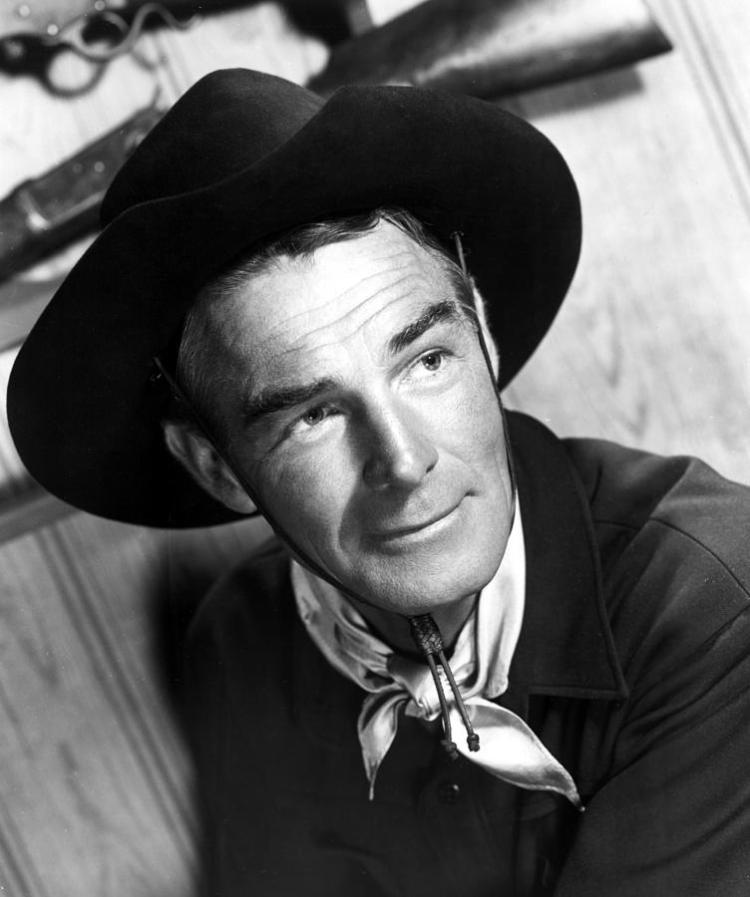
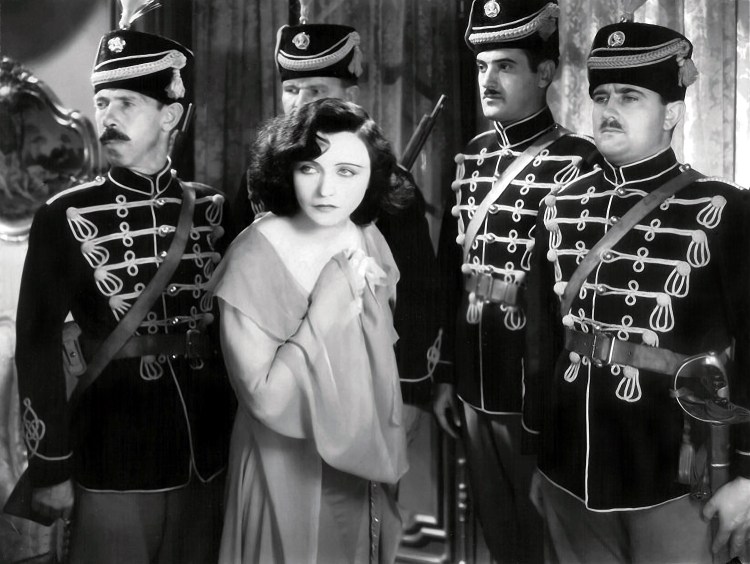
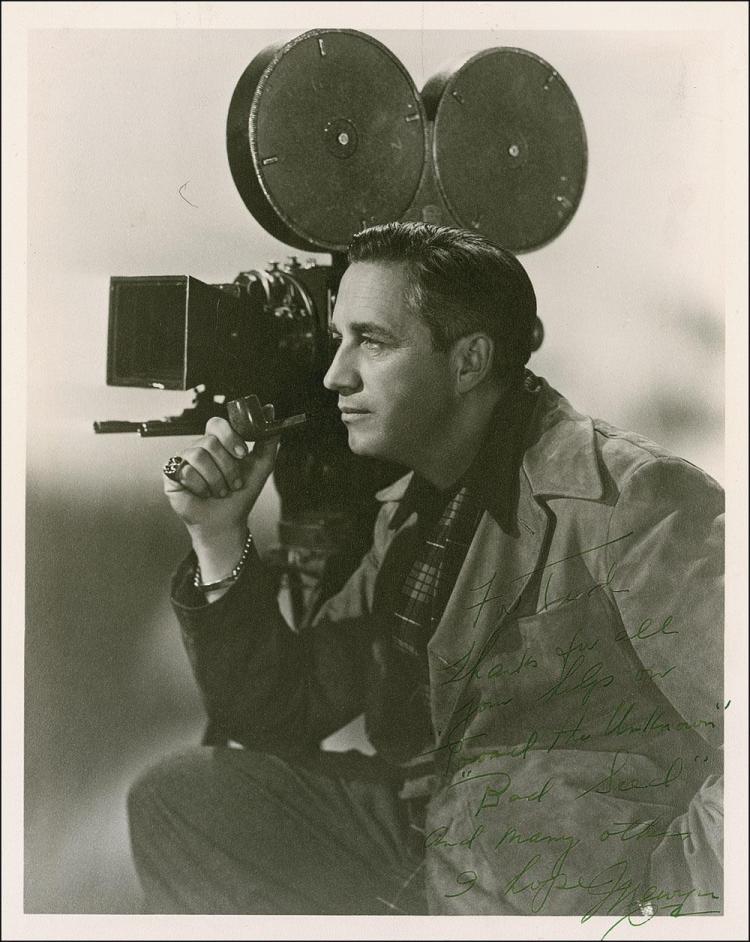
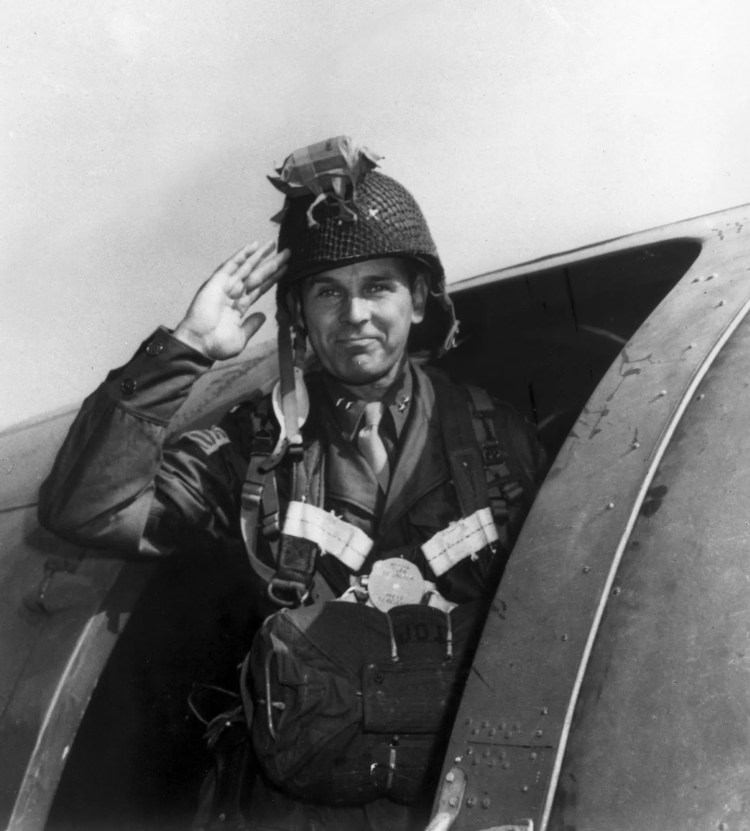
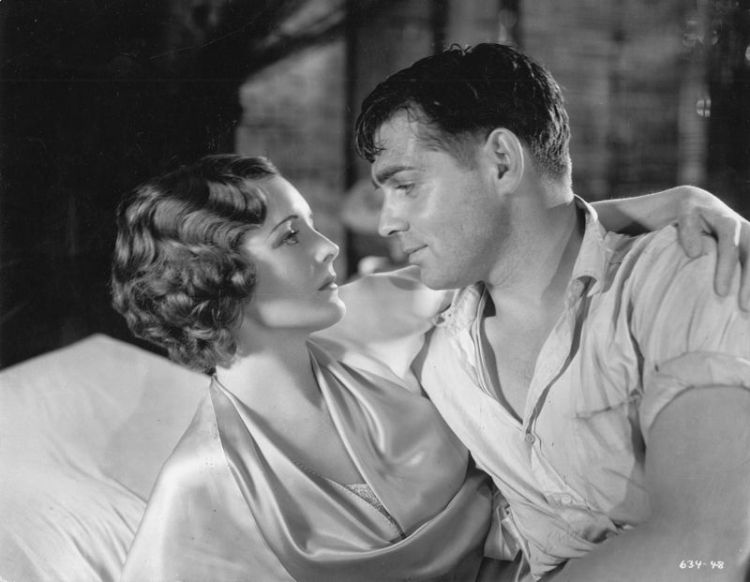

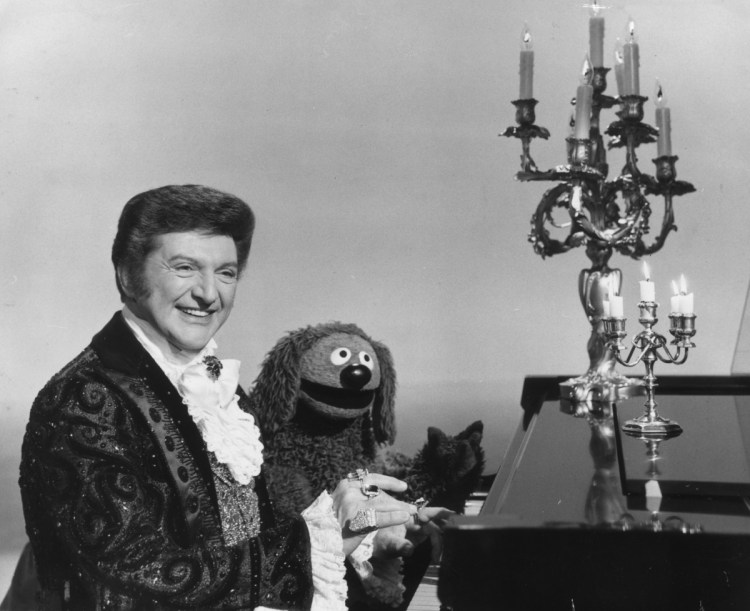
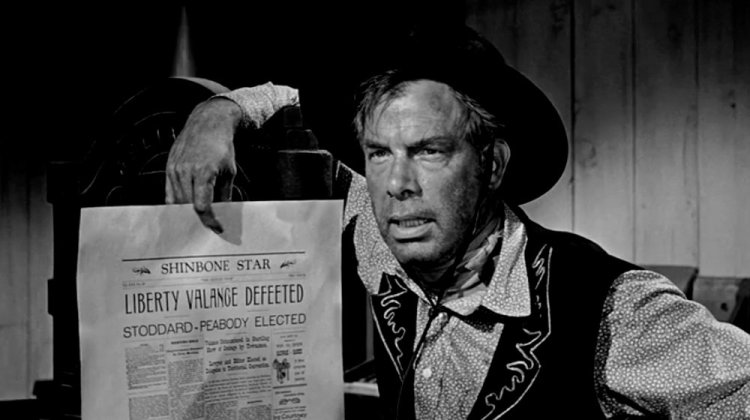
 SCREEN TIME WITH SAM