A lot happened in the year 1987, including the debut of a family-friendly TV sitcom set in San Francisco. The name of the show was Full House, and we’ll be doing a deep dive into this popular comedy over the coming weeks.
But first, to get a sense of the times and trends that helped shape this series, here’s a notable obituary from 1987 — Dick Shawn
Dick Shawn was an American actor and comedian. He played a wide variety of supporting roles and was a prolific character actor. During the 1960s, he played small roles in madcap comedies, usually portraying caricatures of counter culture personalities, such as the hedonistic but mother-obsessed Sylvester Marcus in It’s a Mad, Mad, Mad, Mad World (1963), and the hippie actor Lorenzo Saint DuBois (“L.S.D.”) in The Producers (1967). Besides his film work, he appeared in numerous television shows from the 1960s through the 1980s.
Born in Buffalo, New York and raised in nearby Lackawanna, Shawn performed his stand-up comedy act for over 35 years in nightclubs around the world. His award-winning one-man stage show, The Second Greatest Entertainer in the Whole Wide World, was sometimes performed with a unique opening. When the audience entered the theater, they saw a bare stage with a pile of bricks in the stage center. When the play began, Shawn emerged from the pile of bricks. The startling effect of this required complete concentration and breath control because the slightest movement of the bricks could ruin the surprise appearance.
In addition to roles in more than 30 movies and seven Broadway productions, Shawn made television appearances, toured often, and periodically performed a one-man show that mixed songs, sketches, and pantomime. He was a speaker at the Friars Club Roasts in Los Angeles and New York. At one of the X-rated roasts (a 1986 Playboy roast of Tommy Chong) that had overdosed on tasteless routines by previous speakers, Shawn walked up to the microphone, took a long pause, and “vomited” pea soup onto himself and other speakers at the dais.
In the Mel Brooks 1967 movie The Producers, Shawn won accolades for his portrayal of Lorenzo St. DuBois, whose “friends call” him LSD, an actor auditioning for and winning the part of Hitler in a theatrical production that was intentionally meant to fail.
Shawn’s television appearances included The Ed Sullivan Show, TV movies, sitcoms (including Three’s Company on which he played Jack Tripper’s father), dramas including St. Elsewhere and Magnum, P.I., and a music video for “Dance” by the hair metal band Ratt (1986). In the UK he appeared in Sunday Night at the London Palladium in 1958.
Amongst his roles in anthology TV series, he starred in an Amazing Stories episode “Miss Stardust”, directed by Tobe Hooper, about a bizarre intergalactic beauty pageant, and played the Emperor in The Emperor’s New Clothes for Shelley Duvall’s Faerie Tale Theatre. He filled in for vacationing Johnny Carson as guest host on The Tonight Show Starring Johnny Carson on January 1, 1971, which saw the airing of the last cigarette commercial on American television (for Virginia Slims), one minute before the cigarette ads were banned.
On April 17, 1987, during a performance at University of California, San Diego’s Mandeville Hall, Shawn suffered a heart attack and collapsed face-down on the stage. The audience initially assumed that it was part of his act; but after he had remained motionless on the stage for several minutes, a stagehand examined him and asked if a physician was present.
After CPR had been initiated, the audience was asked to leave the auditorium. Most in attendance remained, still assuming that it was all part of Shawn’s act and only began leaving after paramedics arrived. A notice in the following day’s San Diego Union newspaper announced that Shawn had died during the performance at the age of 63. Shawn was interred at Hillside Memorial Park, a Jewish cemetery in Culver City, California. Jim Knipfel claims that Andy Kaufman was inspired by Shawn and actor Matthew Glave portrayed Shawn in Leave ‘Em Laughing, a short film surrounding his final moments.
A lot happened in the year 1987, including the debut of a family-friendly TV sitcom set in San Francisco. The name of the show was Full House, and we’ll be doing a deep dive into this popular comedy over the coming weeks.
But first, to get a sense of the times and trends that helped shape this series, here’s a notable obituary from 1987 — Danny Kaye.
Danny Kaye was an American actor, comedian, singer and dancer. His performances featured physical comedy, idiosyncratic pantomimes, and rapid-fire novelty songs. Kaye starred in 17 films, notably Wonder Man (1945), The Kid from Brooklyn (1946), The Secret Life of Walter Mitty (1947), The Inspector General (1949), Hans Christian Andersen (1952), White Christmas (1954), and The Court Jester (1955). His films were popular, especially for his performances of patter songs and favorites such as “Inchworm” and “The Ugly Duckling”. He was the first ambassador-at-large of UNICEF in 1954 and received the French Legion of Honour in 1986 for his years of work with the organization.
In 1937, Kaye’s film debut came from a contract with New York-based Educational Pictures for a series of two-reel comedies. He usually played a manic, dark-haired, fast-talking Russian in these low-budget shorts, opposite young hopefuls June Allyson and Imogene Coca. The Kaye series ended abruptly when the studio shut down in 1938. He was working in the Catskills in 1937 under the name Danny Kolbin.
His next venture was a short-lived Broadway show with Sylvia Fine as the pianist, lyricist, and composer. The Straw Hat Revue opened on September 29, 1939, and closed after ten weeks, but critics noticed Kaye’s work. The reviews brought an offer for both Kaye and his bride Sylvia to work at La Martinique, a New York City nightclub. Kaye performed with Sylvia as his accompanist. At La Martinique, playwright Moss Hart saw Danny perform, and that led to Hart’s casting him in his hit Broadway comedy Lady in the Dark.
In 1941, aged 30, Kaye scored a triumph playing Russell Paxton in Lady in the Dark, starring Gertrude Lawrence. His show-stopping number was “Tschaikowsky (and Other Russians)” by Kurt Weill and Ira Gershwin in which he sang the names of a string of Russian composers at breakneck speed, seemingly without taking a breath. In the next Broadway season, he was the star of a show about a young man who is drafted called Let’s Face It!.
His feature film debut was in producer Samuel Goldwyn’s Technicolor 1944 comedy Up in Arms, a remake of Goldwyn’s Eddie Cantor comedy Whoopee! (1930). Rival producer Robert M. Savini cashed in by compiling three of Kaye’s Educational Pictures shorts into a patchwork feature entitled The Birth of a Star (1945). Studio mogul Goldwyn wanted Kaye’s prominent nose fixed to look less Jewish; Kaye refused, but he did allow his red hair to be dyed blond, apparently because it looked better in Technicolor.
Kaye starred in a radio program, The Danny Kaye Show, on CBS from 1945–46. The program’s popularity rose quickly. Within a year, he tied with Jimmy Durante for fifth place in the Radio Daily popularity poll. Kaye was asked to participate in a USO tour following the end of World War II. It meant that he would be absent from his radio show for nearly two months at the beginning of the season. Kaye’s friends filled in with a different guest host each week. Kaye was the first American actor to visit postwar Tokyo. He had toured there some ten years before with the vaudeville troupe. When Kaye asked to be released from his radio contract in mid-1946, he agreed not to accept a regular radio show for one year and only limited guest appearances on other radio programs. Many of the show’s episodes survive today, notable for Kaye’s opening signature patter (“Git gat gittle, giddle-di-ap, giddle-de-tommy, riddle de biddle de roop, da-reep, fa-san, skeedle de woo-da, fiddle de wada, reep!”).
Kaye starred in several movies with actress Virginia Mayo in the 1940s and is known for films such as The Secret Life of Walter Mitty (1947), The Inspector General (1949), On the Riviera (1951) co-starring Gene Tierney, Knock on Wood (1954), White Christmas (1954), The Court Jester (1956), and Merry Andrew (1958). Kaye starred in two pictures based on biographies, Hans Christian Andersen (1952) the Danish storyteller and The Five Pennies (1959) about jazz pioneer Red Nichols. His wife, writer/lyricist Sylvia Fine, wrote many tongue-twisting songs for which Kaye became famous. She was also an associate film producer. Some of Kaye’s films included the theme of doubles, two people who look identical (both Danny Kaye) being mistaken for each other to comic effect.
While his wife wrote most of Kaye’s material, he created much of it himself, often while performing. Kaye had one character he never shared with the public; Kaplan, the owner of a rubber company, came to life only for family and friends. His wife, Sylvia, described the Kaplan character:
He doesn’t have any first name. Even his wife calls him just Kaplan. He’s an illiterate, pompous character who advertises his philanthropies. Jack Benny or Dore Schary might say, “Kaplan, why do you hate unions so?” If Danny feels like doing Kaplan that night, he might be off on Kaplan for two hours.
When he appeared at the London Palladium in 1948, he “roused the Royal family to laughter and was the first of many performers who have turned British variety into an American preserve.” Life magazine described his reception as “worshipful hysteria” and noted that the royal family, for the first time, left the royal box to watch from the front row of the orchestra. He related that he had no idea of the familial connections when the Marquess of Milford Haven introduced himself after a show and said he would like his cousins to see Kaye perform. Kaye stated he never returned to the venue because there was no way to recreate the magic of that time. Kaye had an invitation to return to London for a Royal Variety Performance in November of the same year. When the invitation arrived, Kaye was busy with The Inspector General (which had a working title of Happy Times). Warner Bros. stopped the film to allow their star to attend. When his Decca labelmates The Andrews Sisters began their engagement at the London Palladium on the heels of Kaye’s successful 1948 appearance there, the trio was well received and David Lewin of the Daily Express declared: “The audience gave the Andrews Sisters the Danny Kaye roar!”
He hosted the 24th Academy Awards in 1952. The program was broadcast on radio; telecasts of the Oscar ceremony came later. During the 1950s, Kaye visited Australia, where he played Buttons in a production of Cinderella in Sydney. In 1953, Kaye started a production company, Dena Pictures, named for his daughter. Knock on Wood was the first film produced by his firm. The firm expanded into television in 1960 under the name Belmont Television.
Kaye entered television in 1956, on the CBS show See It Now with Edward R. Murrow. The Secret Life of Danny Kaye combined his 50,000-mile, ten-country tour as UNICEF ambassador with music and humor. His first solo effort was in 1960 with a one-hour special produced by Sylvia and sponsored by General Motors, with similar specials in 1961 and 1962.
He hosted The Danny Kaye Show from 1963 to 1967; it won four Emmy awards and a Peabody award. His last cinematic starring role came in 1963’s The Man from the Diners’ Club.
Beginning in 1964, he acted as television host to the CBS telecasts of MGM’s The Wizard of Oz. Kaye did a stint as a What’s My Line? mystery guest on the Sunday-night CBS-TV quiz program. Kaye was later a guest panelist on that show. He also appeared on the interview program Here’s Hollywood. In the 1970s, Kaye tore a ligament in his leg during the run of the Richard Rodgers musical Two by Two, but went on with the show, appearing with his leg in a cast and cavorting on stage in a wheelchair. He had done much the same on his television show in 1964, when his right leg and foot were burned from a cooking accident. Camera shots were planned so television viewers did not see Kaye in his wheelchair.
In 1976, he played Geppetto in a television musical adaptation of Pinocchio with Sandy Duncan in the title role. Kaye portrayed Captain Hook opposite Mia Farrow in a musical version of Peter Pan featuring songs by Anthony Newley and Leslie Bricusse. He later guest-starred in episodes of The Muppet Show and The Cosby Show, and in the 1980s revival The Twilight Zone.
In many films, as well as on stage, Kaye proved to be an able actor, singer, dancer, and comedian. He showed his serious side as ambassador for UNICEF and in his dramatic role in the memorable TV film Skokie, when he played a Holocaust survivor. Before his death in 1987, Kaye conducted an orchestra during a comical series of concerts organized for UNICEF fundraising. Kaye received two Academy Awards: an Academy Honorary Award in 1955 and the Jean Hersholt Humanitarian Award in 1982. That year he received the Screen Actors Guild Annual Award.
In 1980, Kaye hosted and sang in the 25th anniversary of Disneyland celebration and hosted the opening celebration for Epcot in 1982 (EPCOT Center at the time). Both were aired on primetime television in the U.S.
While Kaye claimed he could not read music, he was said to have perfect pitch. A flamboyant performer with his own distinctive style, “easily adapting from outrageous novelty songs to tender ballads” (according to critic Jason Ankeny), in 1945 Kaye began hosting his own CBS radio program, in which he performed a number of hit songs, including “Dinah” and “Minnie the Moocher”.
In 1947, Kaye teamed up with The Andrews Sisters (Patty, Maxene, and LaVerne) on Decca Records, producing the No. 3 Billboard hit “Civilization (Bongo, Bongo, Bongo)”. The success of the pairing prompted both acts to record through 1950, producing such rhythmically comical fare as “The Woody Woodpecker Song” (based on the bird from the Walter Lantz cartoons and a Billboard hit for the quartet), “Put ’em in a Box, Tie ’em with a Ribbon (And Throw ’em in the Deep Blue Sea)”, “The Big Brass Band from Brazil”, “It’s a Quiet Town (In Crossbone County)”, “Amelia Cordelia McHugh (Mc Who?)”, “Ching-a-ra-sa-sa”, and a duet by Danny and Patty Andrews of “Orange Colored Sky”. The acts teamed for two yuletide favorites: a frantic, harmonic rendition of “A Merry Christmas at Grandmother’s House (Over the River and Through the Woods)” and a duet by Danny and Patty, “All I Want for Christmas Is My Two Front Teeth”.
Kaye’s debut album, Columbia Presents Danny Kaye, had been released in 1942 by Columbia Records with songs performed to the accompaniment of Maurice Abravanel and Johnny Green. The album was reissued as a Columbia LP in 1949 and is described by the critic Bruce Eder as “a bit tamer than some of the stuff that Kaye hit with later in the ’40s and in the ’50s and, for reasons best understood by the public, doesn’t attract nearly the interest of his kids’ records and overt comedy routines”.
In 1950, a Decca single, “I’ve Got a Lovely Bunch of Coconuts”, was released, and became another chart hit for him. His second Columbia LP album Danny Kaye Entertains (1953, Columbia) included five songs recorded in 1941 from his Broadway musical Lady in the Dark, most notably “Tschaikowsky (and Other Russians)”.
Following the success of the film Hans Christian Andersen (1952), two of its songs written by Frank Loesser and sung by Kaye, “Thumbelina” and “Wonderful Copenhagen”, reached the charts: the former title became a minor US hit, and the latter reached No. 5 on the UK Singles Chart. In 1953, Decca released Danny at the Palace, a live recording made at the New York Palace Theater, followed by Knock On Wood (Decca, 1954) a set of songs from the movie of the same name sung by Kaye, accompanied by Victor Young and His Singing Strings.
In 1956, Kaye signed a three-year recording contract with Capitol Records, which released his single “Love Me Do” in December of that year. The B-side, “Ciu Ciu Bella”, with lyrics written by Sylvia Fine, was inspired by an episode in Rome when Kaye, on a mission for UNICEF, befriended a 7-year-old polio victim in a children’s hospital, who sang this song for him in Italian.
In 1958, Saul Chaplin and Johnny Mercer wrote songs for Merry Andrew, a film starring Kaye as a British teacher attracted to the circus. The score added up to six numbers, all sung by Kaye; conductor Billy May’s 1950 composition “Bozo’s Circus Band” (renamed “Music of the Big Top Circus Band”) was deposited on the second side of the Merry Andrew soundtrack, released in 1958. A year later, another soundtrack came out, for The Five Pennies (in which Kaye starred as 1920s cornet player Red Nichols), featuring Louis Armstrong.
In the 1960s and 1970s, Kaye regularly conducted world-famous orchestras, although he had to learn the scores by ear. Kaye’s style, even if accompanied by unpredictable antics (he once traded the baton for a fly swatter to conduct “The Flight of the Bumblebee”) was praised by the likes of Zubin Mehta, who once stated that Kaye “has a very efficient conducting style”. His ability with an orchestra was mentioned by Dimitri Mitropoulos, then conductor of the New York Philharmonic Orchestra. After Kaye’s appearance Mitropoulos remarked, “Here is a man who is not musically trained, who cannot even read music and he gets more out of my orchestra than I have.” Kaye was invited to conduct symphonies as charity fundraisers and was the conductor of the all-city marching band at the season opener of the Los Angeles Dodgers in 1984. Over his career, he raised over US$5 million in support of musician pension funds.
In 1958, Kaye and partner Lester Smith formed Kaye–Smith Enterprises. The company owned a chain of radio stations, mostly in the Pacific Northwest. Other Kaye–Smith divisions included a concert promotion company, a video production company, and a recording studio. Kaye sold his share of the company to the Smith family in 1985.
A lifelong Dodgers fan, Kaye recorded a song called “The D-O-D-G-E-R-S Song (Oh really? No, O’Malley!)”, describing a fictitious encounter with the San Francisco Giants, a hit during the real-life pennant chase of 1962. That song is included on Baseball’s Greatest Hits compact discs. A good friend of Leo Durocher, he often traveled with the team. He also possessed an encyclopedic knowledge of the game and was an accomplished second baseman.
Kaye and his business partner Lester Smith also led an investment group which was awarded the American League’s thirteenth franchise, which became the Seattle Mariners for US$6.2 million on February 7, 1976. The ownership percentages of Kaye, Smith and two other remaining original investors were reduced to 5 percent each when George Argyros purchased 80 percent of the Mariners for $10.4 million on January 30, 1981. Kaye sold all of his business interests to Smith’s family in 1985.
Kaye was also an honorary member of the American College of Surgeons and the American Academy of Pediatrics.
Working alongside UNICEF’s Halloween fundraiser founder, Ward Simon Kimball Jr., the actor educated the public on impoverished children in deplorable living conditions overseas and assisted in the distribution of donated goods and funds. His involvement with UNICEF came about in an unusual way. Kaye was flying home from London in 1949 when one of the plane’s four engines lost its propeller and caught fire. The problem was initially thought serious enough that it might make an ocean landing; life jackets and life rafts were made ready. The plane was able to head back over 500 miles (804.67 km) to land at Shannon Airport, Ireland. On the way back to Shannon, the head of the Children’s Fund, Maurice Pate, had the seat next to Danny Kaye and spoke at length about the need for recognition for the fund. Their discussion continued on the flight from Shannon to New York; it was the beginning of the actor’s long association with UNICEF.
“For all of his success as a performer (…) his greatest legacy remains his tireless humanitarian work—so close were his ties to the United Nations International Children’s Emergency Fund (UNICEF) that when the organization received the Nobel Peace Prize, Kaye was tapped to accept it”, according to music critic Jason Ankeny.
A lot happened in the year 1987, including the debut of a family-friendly TV sitcom set in San Francisco. The name of the show was Full House, and we’ll be doing a deep dive into this popular comedy over the coming weeks.
But first, to get a sense of the times and trends that helped shape this series, here’s a notable obituary from 1987 — Clarence Brown.
Clarence Brown was an American film director. After serving as a fighter pilot and flight instructor in the United States Army Air Service during World War I, Brown was given his first co-directing credit (with Maurice Tourneur) for The Great Redeemer (1920). Later that year, he directed a major portion of The Last of the Mohicans after Tourneur was injured in a fall.
Brown moved to Universal in 1924, and then to Metro-Goldwyn-Mayer, where he remained until the mid-1950s. At MGM he was one of the main directors of their major female stars; he directed Joan Crawford six times and Greta Garbo seven.
Brown was nominated six times for an Academy Award as a director, but he never received an Oscar. However, he won Best Foreign Film for Anna Karenina, starring Garbo at the 1935 Venice International Film Festival.
Brown’s films gained a total of 38 Academy Award nominations and earned nine Oscars. Brown himself received six Academy Award nominations and in 1949, he won the British Academy Award for the film version of William Faulkner’s Intruder in the Dust.
In 1957, Brown was awarded The George Eastman Award, given by George Eastman House for distinguished contribution to the art of film. Brown retired a wealthy man due to his real estate investments, but refused to watch new movies, as he feared they might cause him to restart his career.
The Clarence Brown Theater, on the campus of the University of Tennessee, is named in his honor. He holds the record for most nominations for the Academy Award for Best Director without a win, with six.
During the Academy Awards for 1929-1930, Brown was nominated for Best Director for Anna Christie and Romance, but ultimately lost to Lewis Milestone for All Quiet on the Western Front. He was nominated for the same award during the 1930-1931 Academy Awards for A Free Soul, but lost to Norman Taurog for Skippy. Again, Brown was nominated in 1943 for The Human Comedy but lost to Michael Curtiz for Casablanca. He lost again in 1945, when he nominated for National Velvet; The winner for Best Director being Billy Wilder for The Lost Weekend. Finally, Brown was nominated for Best Director one last time in 1946 for The Yearling but lost to William Wyler for The Best Years of Our Lives.
Brown died at the Saint John’s Health Center in Santa Monica, California from kidney failure on August 17, 1987, at the age of 97. He is interred at Forest Lawn Memorial Park in Glendale, California. On February 8, 1960, Brown received a star on the Hollywood Walk of Fame at 1752 Vine Street, for his contributions to the motion pictures industry.
A lot happened in the year 1987, including the debut of a family-friendly TV sitcom set in San Francisco. The name of the show was Full House, and we’ll be doing a deep dive into this popular comedy over the coming weeks.
But first, to get a sense of the times and trends that helped shape this series, here’s a notable obituary from 1987 — Clare Boothe Luce.
Clare Boothe Luce was an American writer, politician, U.S. ambassador, and public conservative figure. A versatile author, she is best known for her 1936 hit play The Women, which had an all-female cast. Her writings extended from drama and screen scenarios to fiction, journalism, and war reportage. She was married to Henry Luce, publisher of Time, Life, Fortune, and Sports Illustrated.
Politically, Luce was a leading conservative in later life and was well known for her anti-communism. In her youth, she briefly aligned herself with the liberalism of President Franklin Roosevelt as a protégé of Bernard Baruch but later became an outspoken critic of Roosevelt. Although she was a strong supporter of the Anglo-American alliance in World War II, she remained outspokenly critical of British colonialism in India.
Known as a charismatic and forceful public speaker, especially after her conversion to Roman Catholicism in 1946, she campaigned for every Republican presidential candidate from Wendell Willkie to Ronald Reagan.
In 1973, President Richard Nixon named her to the President’s Foreign Intelligence Advisory Board (PFIAB). She remained on the board until President Jimmy Carter succeeded President Gerald Ford in 1977. By then, she had put down roots in Washington, D.C., that would become permanent in her last years. In 1979, she was the first woman to be awarded the Sylvanus Thayer Award by the United States Military Academy at West Point.
President Reagan reappointed Luce to PFIAB. She served on the board until 1983.
In 1986, Luce was the recipient of the Golden Plate Award of the American Academy of Achievement.
President Reagan awarded her the Presidential Medal of Freedom in 1983. She was the first female member of Congress to receive this award. Upon presenting her with the Presidential Medal of Freedom, Reagan said this of Luce:
“A novelist, playwright, politician, diplomat, and advisor to Presidents, Clare Boothe Luce has served and enriched her country in many fields. Her brilliance of mind, gracious warmth and great fortitude have propelled her to exceptional heights of accomplishment. As a Congresswoman, Ambassador, and Member of the President’s Foreign Intelligence Advisory Board, Clare Boothe Luce has been a persistent and effective advocate of freedom, both at home and abroad. She has earned the respect of people from all over the world, and the love of her fellow Americans.”
Luce died of brain cancer on October 9, 1987, at age 84, at her Watergate apartment in Washington, D.C. She is buried at Mepkin Abbey, South Carolina, a plantation that she and Henry Luce had once owned and given to a community of Trappist monks. She lies in a grave adjoining her mother, daughter, and husband.
Revered in her later years as a heroine of the feminist movement, Luce had mixed feelings about the role of women in society. As a congresswoman in 1943, she was invited to co-sponsor a submission of the Equal Rights Amendment, offered by Representative Louis Ludlow of Indiana, but claimed that the invitation got lost in her mail. Luce never ceased to advise women to marry and provide supportive homes for their husbands. (During her ambassadorial years, at a dinner in Luxembourg attended by many European dignitaries, Luce was heard declaring that all women wanted from men was “babies and security”.) Yet, her own professional career as a successful editor, writer, playwright, reporter, legislator, and diplomat remarkably showed how a woman of humble origins and no college education could raise herself to an escalating series of public heights. Luce bequeathed a large part of her personal fortune of some $50 million to an academic program, the Clare Boothe Luce Program, designed to encourage the entry of women into technological fields traditionally dominated by men. Because of her determination and unwillingness to let her gender stand in the way of her personal and professional achievements, Luce is considered to be an influential role model by many women. Starting from humble beginnings, Luce never allowed her initial poverty or her male counterparts’ lack of respect to keep her from achieving as much as if not more than many of the men surrounding her. In 2017, she was inducted into the National Women’s Hall of Fame.
Since 1989, the Clare Boothe Luce Program (CBLP) has become a significant source of private funding support for women in science, mathematics, and engineering. All awards must be used exclusively in the United States (not applicable for travel or study abroad). Student recipients must be U.S. citizens and faculty recipients must be citizens or permanent residents. Thus far, the program has supported more than 1,500 women. The terms of the bequest require the following criteria: at least fifty percent of the awards go to Roman Catholic colleges, universities, and one high school (Villanova Preparatory School); grants are made only to four-year degree-granting institutions, not directly to individuals.
The program is divided into three distinct categories: undergraduate scholarships and research awards; graduate and postdoctoral fellowships; tenure-track appointment support at the assistant or associate professorship level.
The Clare Boothe Luce Policy Institute (CBLPI) was founded in 1993 by Michelle Easton. The non-profit think tank seeks to advance American women through conservative ideas and espouses much the same philosophy as that of Clare Boothe Luce, in terms of both foreign and domestic policy. The CBLPI sponsors a program that brings conservative speakers to college campuses such as conservative commentator Ann Coulter. The Clare Boothe Luce Award, established in 1991, is The Heritage Foundation’s highest award for distinguished contributions to the conservative movement. Prominent recipients include Ronald Reagan, Margaret Thatcher, and William F. Buckley Jr.
A lot happened in the year 1987, including the debut of a family-friendly TV sitcom set in San Francisco. The name of the show was Full House, and we’ll be doing a deep dive into this popular comedy over the coming weeks.
But first, to get a sense of the times and trends that helped shape this series, here’s a notable obituary from 1987 — Cathryn Damon.
Cathryn Damon was an American actress known for her roles in sitcoms in the 1970s and 1980s. She was best known as Mary Campbell in Soap, for which she was nominated three times for the Primetime Emmy Award for Outstanding Lead Actress in a Comedy Series, winning in 1980.
Damon was the elder daughter of Lee Frank Damon and Mary Cathryn Atwood. Her parents divorced and her mother married Walter A. Springer.
Damon was born in Seattle and raised in Tacoma and graduated from Stadium High School. As a child, she felt insecure, saying: “I never thought I was attractive enough. I never thought I was good enough.” She also felt as a child she was responsible for her parents’ divorce. She moved to New York City at age 16 to pursue ballet.
Damon began her career as a ballerina, dancing in the Jacob’s Pillow Dance Festival in Lee, Massachusetts, and performing with the Metropolitan Opera’s dance company.
Off-Broadway plays in which Damon appeared included The Boys From Syracuse and The Secret Life of Walter Mitty. She appeared in several Broadway productions, including Shinbone Alley; Foxy; Flora, The Red Menace; The Boys from Syracuse; The Last of the Red Hot Lovers; Sweet Bird of Youth; and The Cherry Orchard. During the 1967-68 season, she understudied the roles of both Mame Dennis and Vera Charles in Angela Lansbury’s national tour of Mame.
Damon became familiar to television viewers as middle-class Mary Campbell on the primetime spoof of daytime soap operas aptly entitled Soap from 1977-81. However, many fans may not know that she was the third and final actress cast in the role. Producer Tony Thomas said, “Cathryn Damon was brilliant. A lot of people don’t know this, but we recast that to put her in it.” She later appeared with Soap co-star Eugene Roche on Webster from 1984-86. The pair played Cassie and Bill Parker, Webster’s landlords, on the hit series. Other television credits included guest roles on The Love Boat, Fantasy Island, Murder, She Wrote, Matlock, and Mike Hammer.
Damon, along with co-star and TV husband Richard Mulligan, won an Emmy Award for Soap in 1980 but could not appear in person to receive the award in person or give her speech, owing to an actors’ strike. Mulligan referred to his late co-star (whom he affectionately called “Toots”) and her strike-related absence when he received his second Best Actor Emmy more than a decade later for his role as Dr. Weston on the television series Empty Nest.
In 1986, Damon was diagnosed with ovarian cancer, but continued acting in small roles up until shortly before her death a year later at age 56, on May 4, 1987. She died in Los Angeles at Cedars-Sinai Medical Center. Her final role, as Elizabeth McGovern’s mother in the movie She’s Having a Baby with Kevin Bacon, was released posthumously. She is interred in Acacia Memorial Park near Seattle.
A lot happened in the year 1987, including the debut of a family-friendly TV sitcom set in San Francisco. The name of the show was Full House, and we’ll be doing a deep dive into this popular comedy over the coming weeks.
But first, to get a sense of the times and trends that helped shape this series, here’s a notable obituary from 1987 — Buddy Rich.
Buddy Rich was an American jazz drummer, songwriter, conductor, and bandleader. He is considered one of the most influential drummers of all time.
Rich was born and raised in Brooklyn, New York, United States. He discovered his affinity for jazz music at a young age and began drumming at the age of two. He began playing jazz in 1937, working with acts such as Bunny Berigan, Artie Shaw, Tommy Dorsey, Count Basie, and Harry James. From 1942 to 1944, Rich served in the U.S. Marines. From 1945 to 1948, he led the Buddy Rich Orchestra. In 1966, he recorded a big-band style arrangement of songs from West Side Story. He found lasting success in 1966 with the formation of the Buddy Rich Big Band, also billed as the Buddy Rich Band and The Big Band Machine.
Rich was known for his virtuoso technique, power, and speed. He was an advocate of the traditional grip, though he occasionally used matched grip when playing the toms. Despite his commercial success and musical talent, Rich never learned how to read sheet music, preferring to listen to drum parts and play them from memory.
His jazz career began in 1937 with clarinetist Joe Marsala. He became a member of big bands led by Bunny Berigan and Artie Shaw. When he was home from touring with Shaw, he gave drum lessons to a 14-year-old Mel Brooks for six months. At 21, he participated in his first major recording with the Vic Schoen Orchestra who backed the Andrews Sisters.
In 1942, Rich left the Dorsey band to join the United States Marine Corps, in which he served as a judo instructor and never saw combat. He was discharged in 1944 for medical reasons. After leaving the Marines, he returned to the Dorsey band. In 1946, with financial support from Frank Sinatra, he formed a band and continued to lead bands intermittently until the early 1950s.
Following the war, Rich formed his own big band, which often played at the Apollo Theater and featured backing vocals from Frank Sinatra.
In addition to playing with Tommy Dorsey (1939–42, 1945, 1954–55), Rich played with Benny Carter (1942), Harry James (1953–56–62, 1964, 1965), Les Brown, Charlie Ventura, Jazz at the Philharmonic, and Charlie Parker (Bird and Diz, 1950).
In 1955, Gene Krupa and Buddy Rich recorded the collaboration album titled Krupa and Rich, which featured the song “Bernie’s Tune”, in which they traded drum solos for a total of six minutes.
From 1966 until his death, he led successful big bands in an era when their popularity had waned. He continued to play clubs but stated in interviews that the majority of his band’s performances were at high schools, colleges, and universities rather than clubs. He was a session drummer for many recordings, where his playing was often less prominent than in his big-band performances. Especially notable were sessions for Ella Fitzgerald and Louis Armstrong, and the Oscar Peterson trio with bassist Ray Brown and guitarist Herb Ellis. In 1968, Rich collaborated with the Indian tabla player Ustad Alla Rakha on the album Rich à la Rakha.
He performed a big-band arrangement of a medley from West Side Story that was released on the 1966 album Swingin’ New Big Band. The “West Side Story Medley”, arranged by Bill Reddie, highlighted Rich’s ability to blend his drumming into the band. Rich received the West Side Story arrangement of Leonard Bernstein’s melodies from the musical in the mid-1960s; he found the music quite challenging and it took him almost a month of constant rehearsal to perfect. It later became a staple of his live performances. A six-minute performance of “Prologue/Jet Song” from the suite, performed during Frank Sinatra’s portion of the Concert for the Americas on August 20, 1982, is on the DVD “Frank Sinatra: Concert for the Americas”. In 2002, a DVD was released called The Lost West Side Story Tapes that captured a 1985 performance of this along with other numbers.
In the 1950s, Rich was a frequent guest on The Steve Allen Show and other television variety shows, most notably on The Tonight Show Starring Johnny Carson. Rich and Johnny were lifelong friends, and Johnny Carson was himself a drum enthusiast.
In 1973 PBS broadcast and syndicated Rich’s February 6, 1973, performance at the Top of the Plaza in Rochester, New York. It was the first-time thousands of drummers were exposed to Buddy in a full-length concert setting, and many drummers continue to name this program as a prime influence on their own playing. One of his most widely seen television performances was in a 1981 episode of The Muppet Show in which he engaged Muppet drummer Animal (performed by Frank Oz, drums played by Ronnie Verrell) in a drum battle. Rich’s famous televised drum battles also included Gene Krupa, Ed Shaughnessy and Louie Bellson. Perhaps the most viewed television appearance was on “Here’s Lucy” in the 1970 episode “Lucy And The Drum Contest”.
He usually held his sticks with the traditional grip. He used the matched grip when playing floor toms around the drum set while performing cross-stickings (crossing arm over arm), which was one of his party tricks, often leading to loud cheers from the audience. Another technique he used to impress was the stick-trick, a fast roll performed by slapping two drumsticks together in a circular motion using “taps’ ‘ or single-stroke stickings. He often used contrasting techniques to keep long drum solos from getting mundane. Aside from his energetic, explosive displays, he would go into quieter passages.
One passage he would use in most solos started with a simple single-stroke roll on the snare drum picking up speed and power, then slowly moving his sticks closer to the rim as he got quieter, and eventually playing on the rim itself while still maintaining speed. Then he would reverse the effect and slowly move towards the center of the snare while increasing power. Though well known as a powerful drummer, he did use brushes. On the album The Lionel Hampton Art Tatum Buddy Rich Trio (1955) he played with brushes almost exclusively.
In 1942, Rich and Henry Adler wrote Buddy Rich’s Modern Interpretation of Snare Drum Rudiments, which is regarded as one of the more popular snare drum rudiment books. Adler met Rich through a former student. Adler said, “The kid told me he played better than Krupa. Buddy was only in his teens at the time and his friend was my first pupil. Buddy played and I watched his hands. Well, he knocked me right out. He did everything I wanted to do, and he did it with such ease. When I met his folks, I asked them who his teacher was. ‘He never studied’, they told me. That made me feel very good. I realized that it was something physical, not only mental, that you had to have.”
Adler denied the rumor that he taught Rich how to play. “Sure, he studied with me, but he didn’t come to me to learn how to hold the drumsticks. I set out to teach Buddy to read. He’d take six lessons, go on the road for six weeks and come back. He didn’t practice. He couldn’t, because wherever the guy went, he was followed around by admiring drummers. He didn’t have time to practice. …Tommy Dorsey wanted Buddy to write a book and he told him to get in touch with me. I did the book and Tommy wrote the foreword. Technically, I was Buddy’s teacher, but I came along after he had already acquired his technique.”
When asked if Rich could read music, Bobby Shew, lead trumpeter in Rich’s mid-1960s big band replied, “No. He’d always have a drummer there during rehearsals to read and play the parts initially on new arrangements. Buddy would just sit in the empty audience seats in the afternoon and listen to the band. … He’d only have to listen to a chart once and he’d have it memorized. We’d run through it and he’d know exactly how it went, how many measures it ran and what he’d have to do to drive it.”
In a Modern Drummer interview, Buddy had this to say about practicing: “I don’t put much emphasis on practice anyhow. I think it’s a fallacy to believe that the more you practice, the better you become. You can only get better by playing. You can sit in a basement with a set of drums and practice rudiments all day long, but if you don’t play with a band, you won’t learn style, technique, and taste, and you won’t learn how to play for a band and with a band. It’s like getting a job, any kind of job, it’s an opportunity to develop. And practice, besides that, is boring. I know teachers who tell their students to practice three, four, six hours a day. If you can’t get what you want after an hour of practice, you’re not going to get it in four days.”
In the same article, Rich also discourages playing drums with one’s bare hands. When asked if he could do such a thing, he replied, ‘Yes, but why destroy your hands? I could think of a hundred ways to use my hands rather than to break them on the rim of a drum.
Rich’s technique, including speed, smooth execution and precision, is one of the most coveted in drumming and has become a common standard. Gene Krupa described him as “the greatest drummer ever to have drawn breath”. Roger Taylor, drummer of Queen, acknowledged Rich as the best drummer he ever saw for sheer technique. Blink-182 drummer Travis Barker has credited Rich as the greatest drummer of all time.
Rich’s influence extends from jazz to rock music, including drummers such as Dave Weckl, Vinnie Colaiuta, Adam Nussbaum, Simon Phillips, Hal Blaine, John Bonham, Carl Palmer, Ian Paice, Gregg Bissonette, Jojo Mayer, Tré Cool, and Bill Ward. Phil Collins stopped using two bass drums and started playing the hi-hat after reading Rich’s opinion on the importance of the hi-hat.
In 1980, Rich was awarded an honorary doctorate of music from Berklee College of Music. In 1986, a year before his death, Rich was elected into the Percussive Arts Society Hall of Fame in the category of bandleader, and drum set player.
On September 30, 2017, Rich was honored with a Star on the Palm Springs Walk of Stars. And in 2016, readers of Rolling Stone magazine ranked Rich No. 15 in their list of the 100 Greatest Drummers of all time. In a readers’ poll in 2011, he ranked No. 6.
Rich was notoriously short-tempered. Singer Dusty Springfield slapped him after several days of “putting up with Rich’s insults and show-biz sabotage”. He held a rivalry with Frank Sinatra which sometimes ended in brawls when both were members of Tommy Dorsey’s band. Nevertheless, they remained lifelong friends, and Sinatra delivered a eulogy at Rich’s funeral in 1987. In 1983, Rich underwent quadruple bypass surgery, and was often visited by Sinatra in the hospital. Billy Cobham said that he met Rich in a club as a youth asking him to sign his snare drum, but Rich “dropped it down the stairs”.
Rich held a black belt in karate, which proved beneficial to him, his temper, and his health. At the time, Rich was prone to heart attacks and poor back structure following a surgery removing two of his spinal disks.
Rich had a strong dislike of bandleaders. He claimed that the musicians “hardly look at the bandleader”, and that the drummer is the real “quarterback” of the band.
According to bassist Bill Crow, Rich reacted strongly to Max Roach’s increasing popularity when he was the drummer for Charlie Parker, especially when a jazz critic stated Roach had topped Rich as the world’s greatest drummer. Drummer John JR Robinson told Crow he was with Roach when Rich drove by with a beautiful woman seated next to him and yelled, “Hey, Max! Top this!” Nonetheless, the two worked together on the 1959 album Rich Versus Roach, and Roach appeared on the 1994 Rich tribute album Burning for Buddy.
Rich’s temper was documented in a series of secret recordings made on tour buses and in dressing rooms by pianist Lee Musiker, who concealed a compact tape recorder in his clothing while on tour with Rich in the early 1980s. On one recording, Rich threatens to fire trombonist Dave Panichi for having a beard. Although he threatened many times to fire members of his band, he seldom did so and, for the most part, praised his musicians in television and print interviews. The day before his death, April 1, 1987, Rich was visited by Mel Tormé, who claimed that one of Rich’s last requests was to hear the tapes of his angry outbursts. Tormé was working on an authorized biography of Rich and included excerpts of the tapes in the book, but he never played the tapes for Rich.
In Mel Tormé’s biography of Buddy, he notes that while Buddy was tough on his band, there were a few instances when some members stood up to him. One departing musician told Rich, “I came to this band to play music, not join the Marines!” Another instance was when an Australian musician loudly debated with Buddy on the bus.
Tormé also was familiar with Buddy’s dislike of rock, but he states that “when some of these rock drummers came to greet Buddy after a show, he was always charming and polite. And he never, at least in my presence, disparaged them in any way.” Rich held a low opinion of country music, considered “a giant step backwards” and “the young people … need to realize that there’s a lot more to music than just playing one chord or two chords”. During medical therapy before his death, a nurse asked Rich whether he was allergic to anything, to which he replied, “Yes, country and western music.”
Rich toured and performed until the end of his life. In early March 1987, he was touring in New York when he was hospitalized after suffering a paralysis on his left side that physicians believed had been caused by a stroke. He was transferred to California to UCLA Medical Center in Los Angeles for tests, where doctors discovered and removed a brain tumor on March 16. He was discharged a week later, but continued to receive daily chemotherapy treatments at the hospital. On April 2, 1987, he died of unexpected respiratory and cardiac failure after a treatment related to the malignant brain tumor. His wife Marie and daughter Cathy buried him in Westwood Village Memorial Park Cemetery in Los Angeles. He was 69. Since Rich’s death, a number of memorial concerts have been held. In 1994, the Rich tribute album Burning for Buddy: A Tribute to the Music of Buddy Rich was released. Produced by Rush drummer/lyricist Neil Peart, the album features performances of Rich staples by a number of jazz and rock drummers such as Joe Morello, Steve Gadd, Max Roach, Billy Cobham, Dave Weckl, Simon Phillips, Steve Smith and Peart, accompanied by the Buddy Rich Big Band. A second volume was issued in 1997. Phil Collins was featured in a DVD tribute organized by Rich’s daughter, A Salute to Buddy Rich, which included Steve Smith and Dennis Chambers.
A lot happened in the year 1987, including the debut of a family-friendly TV sitcom set in San Francisco. The name of the show was Full House, and we’ll be doing a deep dive into this popular comedy over the coming weeks.
But first, to get a sense of the times and trends that helped shape this series, here’s a notable obituary from 1987 — Bob Fosse.
Bob Fosse was an American actor, choreographer, dancer, and film and stage director. He directed and choreographed musical works on stage and screen, including the stage musicals The Pajama Game, Damn Yankees, How to Succeed in Business Without Really Trying, Sweet Charity, Pippin, and Chicago. He directed the films Sweet Charity, Cabaret, Lenny, All That Jazz, and Star 80.
Fosse’s distinctive style of choreography included turned-in knees and “jazz hands”. He is the only person ever to have won Oscar, Emmy, and Tony awards in the same year. He was nominated for four Academy Awards, winning Best Director for Cabaret, and won the Palme D’Or in 1980 for All That Jazz. He won a record eight Tonys for his choreography, as well as one for direction for Pippin.
He was drawn to dance and took lessons. When he was 13 years old, Fosse performed professionally in Chicago with Charles Grass, as “The Riff Brothers”. They toured vaudeville and movie houses in Chicago, as well as USO theaters and Eagles Clubs. Many of these performances included shows at burlesque clubs, such as the Silver Cloud and Cave of Winds. Fosse himself is quoted with saying “I was sixteen years old, and I played the whole burlesque wheel.” However, many of the women and promoters did not care that Fosse was underage working in adult clubs or that he would be exposed to sexual harassment from the burlesque women. Much of the erotica he saw would inspire his future work. In 1943, at age 15. Fosse would come to choreograph his first dance number and earn his first full credit as a choreographer in a film, Hold Evry’thing! A Streamlined Extravaganza in Two Parts, which featured showgirls wearing strapless dresses and performing a fan dance, inspired by his time in burlesque houses.
After graduating from high school in 1945, Fosse was recruited into the United States Navy toward the end of World War II at Naval Station Great Lakes, where he was sent to be prepared for combat. Fosse petitioned his manager, Frederick Weaver, to advocate on his behalf to his superiors after his own failed attempts to be placed in the Special Services Entertainment Division. Fosse was soon placed in the variety show Tough Situation, which toured military and naval bases in the Pacific.
After his discharge, Fosse moved to New York City in 1947 with the ambition of being the new Fred Astaire. He began to study acting at the American Theatre Wing, where he met his first wife and dance partner, Mary Ann Niles. His first stage role was in Call Me Mister, along with Niles. Fosse and Niles were regular performers on Your Hit Parade in its 1950–1951 season. Dean Martin and Jerry Lewis saw their act in New York’s Pierre Hotel and scheduled the couple to appear on The Colgate Comedy Hour in 1951.
In a 1986 interview Fosse told an interviewer, “Jerry started me doing choreography. He gave me my first job as a choreographer and I’m grateful for that.”
Fosse was signed to an MGM contract in 1953. His early screen appearances as a dancer included Give a Girl a Break, The Affairs of Dobie Gillis and Kiss Me Kate, all released in 1953. Fosse’s choreography of a short dance sequence in Kiss Me Kate and dance with Carol Haney brought him to the attention of Broadway producers.
During the late 1940s and early 1950s, Fosse transitioned from film to theater. In 1948, Tony Charmoli danced in Make Mine Manhattan, but gave the part to Fosse when the show toured nationally. Charmoli also found Fosse work as a dancer on the TV shows he was working on when Fosse returned from the tour.
In 1953, Fosse appeared in the M-G-M musical Kiss Me Kate, starring Howard Keel, Kathryn Grayson, and Ann Miller. Fosse played Hortensio within The Taming of the Shrew dance sequences.
In 1954, Fosse choreographed his first musical, The Pajama Game, followed by My Sister Eileen and George Abbott’s Damn Yankees in 1955. It was while working on Damn Yankees that he first met rising star Gwen Verdon, whom he married in 1960. For her work in Damn Yankees, Verdon won her first Tony Award for Best Actress in a Musical in 1956. She had previously won a Tony for Best Performance by a Featured Actress in a Musical for Can-Can. In 1957, Fosse choreographed New Girl in Town, also directed by Abbott, and Verdon won her second Tony Award for Best Actress in a Musical in 1958.
In 1957, Fosse choreographed the film version of The Pajama Game starring Doris Day. The next year, Fosse appeared in and choreographed the film version of Damn Yankees, in which Verdon reprised her stage triumph as the character Lola. Fosse and Verdon were partners in the mambo number “Who’s Got the Pain”.
In 1959, Fosse directed and choreographed the musical Redhead. For his work on Redhead, Fosse won the Tony Award for Best Choreography while Verdon won her third Tony Award for Best Actress in a Musical. Redhead won the Tony Award for best musical. Fosse’s next feature was supposed to be the musical The Conquering Hero based on a book by Larry Gelbart, but he was replaced as director/choreographer.
In 1961, Fosse choreographed the satirical Broadway musical How to Succeed in Business Without Really Trying starring Robert Morse. The story revolves around an ambitious man, J. Pierrepont Finch (Morse), who, with the help of the book How to Succeed in Business Without Really Trying, rises from window washer to chairman of the board of the World Wide Wicket Company. The musical was an instant hit.
In 1963, Fosse was nominated for two Tony Awards for Best Choreography and Best Direction of a Musical for the musical Little Me, winning the former.
He choreographed and directed Verdon in Sweet Charity in 1966. Fosse directed five feature films. His first, Sweet Charity starring Shirley MacLaine, is an adaptation of the Broadway musical he had directed and choreographed.
In 1972, Fosse directed his second theatrical film, Cabaret, starring Liza Minnelli, Michael York and Joel Grey. The film is based on the 1966 musical of the same name. In the traditional manner of musical theater, called an “integrated musical”, every significant character in the stage version sings to express his or her own emotion and to advance the plot. In the film version, the musical numbers are entirely diegetic. The film focuses on a young romance between Sally Bowles (Minnelli), who performs at the Kit Kat Klub, and a young British idealist played by York. The story set at the backdrop of the rise of Nazi Germany. The film was an immediate success among audiences and critics alike. The film won eight Academy Awards, including Best Director. Liza Minnelli and Joel Grey both won Oscars for their roles in Cabaret.
Also in 1972, Fosse and Minnelli joined once again to create her TV Special Liza with a Z, earning Fosse an Emmy Award for both direction and choreography.
In 1973, Fosse’s work on Pippin won him the Tony Award for Best Direction of a Musical. He was director and choreographer of Chicago in 1975, which also starred Verdon.
In 1974, Fosse directed Lenny, a biographical movie about comedian Lenny Bruce starring Dustin Hoffman. Fosse was again nominated for Best Director, Hoffman also received a nomination for Best Actor.
Fosse performed a song and dance in Stanley Donen’s 1974 film version of The Little Prince. According to AllMusic, “Bob Fosse stops the show with a slithery dance routine.” In 1977, Fosse had a small role in the romantic comedy Thieves.
In 1979, Fosse co-wrote and directed a semi-autobiographical film All That Jazz, starring Roy Scheider, which portrayed the life of a womanizing, drug-addicted choreographer and director in the midst of triumph and failure. Ann Reinking appears in the film as the protagonist’s lover, protégée and domestic partner. All That Jazz won four Academy Awards, earning Fosse his third Oscar nomination for Best Director. It also won the Palme d’Or at the 1980 Cannes Film Festival. In 1980, Fosse commissioned documentary research for a follow-up feature exploring the motivations of people who become performers.
Fosse’s final film, Star 80, was a biographical movie about Dorothy Stratten, a Playboy Playmate who was murdered. The film is based on a Pulitzer Prize-winning article. The film was screened out of competition at the 34th Berlin International Film Festival.
In 1986, Fosse wrote, choreographed and directed the Broadway production of Big Deal, which was nominated for five Tony awards, winning for best choreography, as well as five more for the revival of Sweet Charity at the nearby Minskoff Theater, winning a Tony for Best Revival.
Fosse began work on a film about gossip columnist Walter Winchell that would have starred Robert De Niro as Winchell. The Winchell script was written by Michael Herr. Fosse died before starting the Winchell project.
Notable distinctions of Fosse’s style included the use of turned-in knees, the “Fosse Amoeba”, sideways shuffling, rolled shoulders and jazz hands. With Astaire as an influence, Fosse used props such as bowler hats, canes and chairs. His trademark use of hats was influenced by his own self-consciousness, according to Martin Gottfried in his biography of Fosse, “His baldness was the reason that he wore hats, and was doubtless why he put hats on his dancers.” Fosse used gloves in his performances because he did not like his hands. Some of his most popular numbers include “Steam Heat” (The Pajama Game) and “Big Spender” (Sweet Charity). The “Rich Man’s Frug” scene (starring a young Ben Vereen) in Sweet Charity is another example of his signature style.
For Damn Yankees, Fosse was inspired by the “father of theatrical jazz dance”, Jack Cole. In 1957, Verdon and Fosse studied with Sanford Meisner to develop a better acting technique. According to Michael Joosten, Fosse once said: “The time to sing is when your emotional level is too high to just speak anymore, and the time to dance is when your emotions are just too strong to only sing about how you ‘feel.'” In Redhead, Fosse used one of the first ballet sequences in a show that contained five different styles of dance: Fosse’s jazz, a cancan, a gypsy dance, a march and an old-fashioned English music hall number. During Pippin, Fosse made the first television commercial for a Broadway show.
Fosse married dance partner Mary Ann Niles (1923–1987) on May 3, 1947, in Detroit. In 1952, a year after he divorced Niles, he married dancer Joan McCracken in New York City; this marriage lasted until 1959, when it also ended in divorce.
His third wife was dancer and actress Gwen Verdon, whom he met choreographing Damn Yankees, in which she starred. In 1963, they had a daughter, Nicole Fosse, who later became a dancer and actress. Fosse’s extramarital affairs put a strain on the marriage and by 1971 they were separated, although they remained legally married until his death in 1987. Verdon never remarried.
Fosse met dancer Ann Reinking during the run of Pippin in 1972. According to Reinking, their romantic relationship ended “toward the end of the run of Dancin'” (1978).
In 1961, Fosse’s epilepsy was revealed when he had a seizure onstage during rehearsals for The Conquering Hero.
Fosse’s time outside of the rehearsal studio or theater was seldom spent alone. As stated in the biography Fosse by Sam Wasson, “nights alone were murder on Fosse”. To alleviate loneliness and insomnia brought on by his prescribed amphetamines, Fosse would often contact dancers he would work with and try to date them, making it hard for many to refuse his advances, but also giving him the affirmation of success he sought.
During their joint career, Fosse would continually take blame from critics while Gwen Verdon would get praise, no matter how much influence Verdon had on a production. However, Verdon always looked out for him and the Fosse family image, hosting grandiose cast parties and being Fosse’s personal press secretary throughout their marriage.
Fosse died of a heart attack on September 23, 1987, at George Washington University Hospital while the revival of Sweet Charity was opening at the nearby National Theatre. He had collapsed in Verdon’s arms near the Willard Hotel.
As he had requested, Verdon and Nicole Fosse scattered his ashes in the Atlantic Ocean off Quogue, Long Island, where Fosse had been living with his girlfriend of four years.
A month after his death, Verdon fulfilled Fosse’s request for his friends to “go out and have dinner on me” by hosting a star-studded, celebrity-filled evening at Tavern on the Green.
At the 1973 Academy Awards, Fosse won the Academy Award for Best Director for Cabaret. That same year he won Tony Awards for directing and choreographing Pippin and Primetime Emmy Awards for producing, choreographing and directing Liza Minnelli’s television special Liza with a Z. Fosse was the only person to win all three major industry awards in the same year.
Fosse was inducted into the National Museum of Dance in Saratoga Springs, New York on April 27, 2007. The Los Angeles Dance Awards, founded in 1994, were called the “Fosse Awards”, and are now called the American Choreography Awards. The Bob Fosse-Gwen Verdon Fellowship was established by their daughter, Nicole Fosse, in 2003 at the Alvin Ailey American Dance Theater.
Reinking and Verdon kept Fosse’s unique choreography alive after his death. Reinking played the role of Roxie Hart in the New York revival of Chicago, which opened in 1996. She choreographed the dances in Fosse style for that revival. In 1999, Verdon served as artistic consultant on a Broadway musical designed to showcase examples of classic Fosse choreography. Called simply Fosse, the three-act musical revue was conceived and directed by Richard Maltby, Jr. and Reinking, and choreographed by Reinking and Chet Walker. Verdon and Fosse’s daughter, Nicole, received a special thanks credit. The show won a Tony for best musical.
Fosse/Verdon is an eight-part American miniseries starring Sam Rockwell as Fosse and Michelle Williams as Verdon. The series, which tells the story of the couple’s troubled personal and professional relationship, is based on the biography Fosse by Sam Wasson. It premiered in eight parts on April 9, 2019, on FX. At the 71st Primetime Emmy Awards, Fosse/Verdon received seventeen nominations, including Outstanding Limited Series and acting nominations for Rockwell, Williams, and Qualley. Williams won the Emmy for Outstanding Actress in a Limited Series.
A lot happened in the year 1987, including the debut of a family-friendly TV sitcom set in San Francisco. The name of the show was Full House, and we’ll be doing a deep dive into this popular comedy over the coming weeks.
But first, to get a sense of the times and trends that helped shape this series, here’s a notable obituary from 1987 — Bayard Rustin.
Bayard Rustin was an African American leader in social movements for civil rights, socialism, nonviolence, and gay rights.
Rustin worked with A. Philip Randolph on the March on Washington Movement, in 1941, to press for an end to racial discrimination in employment. Rustin later organized Freedom Rides, and helped to organize the Southern Christian Leadership Conference to strengthen Martin Luther King Jr.’s leadership and teaching King about nonviolence; he later served as an organizer for the March on Washington for Jobs and Freedom. Rustin worked alongside Ella Baker, a co-director of the Crusade for Citizenship, in 1954; and before the Montgomery bus boycott, he helped organize a group, called “In Friendship”, amongst Baker, Stanley Levison of the American Jewish Congress, and some other labor leaders. “In Friendship” provided material and legal assistance to those being evicted from their tenant farms and households in Clarendon County, Yazoo, and other places. Rustin became the head of the AFL–CIO’s A. Philip Randolph Institute, which promoted the integration of formerly all-white unions and promoted the unionization of African Americans. During the 1970s and 1980s, Rustin served on many humanitarian missions, such as aiding refugees from Vietnam and Cambodia. At the time of his death in 1987, he was on a humanitarian mission in Haiti.
Rustin was a gay man and, due to criticism over his sexuality, he usually acted as an influential adviser behind the scenes to civil-rights leaders. In the 1980s, he became a public advocate on behalf of gay causes, speaking at events as an activist and supporter of human rights.
Later in life, while still devoted to securing workers’ rights, Rustin joined other union leaders in aligning with ideological neoconservatism, and President Ronald Reagan praised him. On November 20, 2013, President Barack Obama posthumously awarded Rustin the Presidential Medal of Freedom.
Rustin was born in 1912 in West Chester, Pennsylvania, to Florence Rustin and Archie Hopkins, but raised by his maternal grandparents, Julia and Janifer Rustin, as the ninth of their twelve children; growing up he believed his biological mother was his older sister. His grandparents were relatively wealthy local caterers who raised Rustin in a large house. Julia Rustin was a Quaker, although she attended her husband’s African Methodist Episcopal Church. She was also a member of the National Association for the Advancement of Colored People. NAACP leaders such as W.E.B. Du Bois and James Weldon Johnson were frequent guests in the Rustin home. With these influences in his early life, in his youth Rustin campaigned against racially discriminatory Jim Crow laws.
One of the first documented realizations Rustin had of his sexuality was when he mentioned to his grandmother that he preferred to spend time with males rather than females. She responded, “I suppose that’s what you need to do”.
In 1932, Rustin entered Wilberforce College, a historically black college in Ohio operated by the AME Church. Rustin was active in a number of campus organizations, including the Omega Psi Phi fraternity. He was expelled from Wilberforce in 1936 after organizing a strike, and later attended Cheyney State Teachers College. Cheyney honored Rustin with a posthumous “Doctor of Humane Letters” degree at its 2013 commencement.
After completing an activist training program conducted by the American Friends Service Committee, Rustin moved to Harlem in 1937 and began studying at City College of New York. There he became involved in efforts to defend and free the Scottsboro Boys, nine young black men in Alabama who were accused of raping two white women. He joined the Young Communist League for a small period of time in 1936, before becoming disillusioned with the part. Soon after arriving in New York City, he became a member of Fifteenth Street Meeting of the Religious Society of Friends.
Rustin was an accomplished tenor vocalist, an asset that earned him admission to both Wilberforce University and Cheyney State Teachers College with music scholarships. In 1939, he was in the chorus of the short-lived Broadway musical John Henry that starred Paul Robeson. Blues singer Josh White was also a cast member and later invited Rustin to join his gospel and vocal harmony group Josh White and the Carolinians, with whom he made several recordings. With this opportunity, Rustin became a regular performer at the Café Society nightclub in Greenwich Village, widening his social and intellectual contacts. A few albums on Fellowship Records featuring his singing, such as Bayard Rustin Sings a Program of Spirituals, were produced from the 1950s through the 1970s.
At the direction of the Soviet Union, the Communist Party USA and its members were active in supporting civil rights for African Americans. The CPUSA, at the time following Stalin’s “theory of nationalism”, favored the creation of a separate nation for African Americans to be located in the American Southeast where the greatest proportion of the black population was concentrated. In 1941, after Germany invaded the Soviet Union, Communist International ordered the CPUSA to abandon civil rights work and focus on supporting U.S. entry into World War II.
Disillusioned, Rustin began working with members of the Socialist Party of Norman Thomas, particularly A. Philip Randolph, the head of the Brotherhood of Sleeping Car Porters. Another socialist mentor was the pacifist A. J. Muste, leader of the Fellowship of Reconciliation (FOR). FOR hired Rustin as a race relations secretary in the late summer of 1941
The three of them proposed a march on Washington, D.C., in 1941 to protest racial segregation in the armed forces and widespread discrimination in employment. Meeting with President Roosevelt in the Oval Office, Randolph respectfully and politely, but firmly told President Roosevelt that African Americans would march in the capital unless desegregation occurred. To prove their good faith, the organizers canceled the planned march after Roosevelt issued Executive Order 8802 which banned discrimination in defense industries and federal agencies. The leader of the organizers, Randolph, canceled the march against Rustin’s advisement. The armed forces, in which Black troops typically had white commanding officers, were not desegregated until 1948, under an Executive Order issued by President Harry S. Truman, although the various branches took years to abide by the order, with the U.S. Marines Corps in 1960 being the last to desegregated.
Randolph felt that FOR had succeeded in their goal and wanted to dissolve the committee. Again, Rustin disagreed with him and voiced his differing opinion in a national press conference, which he later said he regretted.
Rustin traveled to California to help protect the property of the more than 120,000 Japanese-Americans who had been imprisoned in internment camps. In the 6-3 Korematsu Decision, the Supreme Court upheld the forcible internment. Impressed with Rustin’s organizational skills, A.J. Muste appointed him as FOR’s secretary for student and general affairs.
Rustin was also a pioneer in the movement to desegregate interstate bus travel. In 1942, he boarded a bus in Louisville, bound for Nashville, and sat in the second row. A number of drivers asked him to move to the back, according to Southern practice of Jim Crow, but Rustin refused. The bus was stopped by police 13 miles north of Nashville and Rustin was arrested. He was beaten and taken to a police station but was released uncharged.
He spoke about his decision to be arrested, and how that moment also clarified his witness as a gay person, in an interview with the Washington Blade:
As I was going by the second seat to go to the rear, a white child reached out for the ring necktie I was wearing and pulled it, whereupon its mother said, “Don’t touch a [n-word].”
If I go and sit quietly at the back of that bus now, that child, who was so innocent of race relations that it was going to play with me, will have seen so many blacks go in the back and sit down quietly that it’s going to end up saying, “They like it back there, I’ve never seen anybody protest against it.” I owe it to that child, not only to my own dignity, I owe it to that child, that it should be educated to know that blacks do not want to sit in the back, and therefore I should get arrested, letting all these white people in the bus know that I do not accept that.
It occurred to me shortly after that that it was an absolute necessity for me to declare homosexuality because if I didn’t I was a part of the prejudice. I was aiding and abetting the prejudice that was a part of the effort to destroy me.
In 1942, Rustin assisted two other FOR staffers, George Houser and James Farmer, and activist Bernice Fisher as they formed the Congress of Racial Equality (CORE). Rustin was not a direct founder, but was later described as “an uncle of CORE”. CORE had been conceived as a pacifist organization based on the writings of Mohandas Gandhi, who used non-violent resistance against British rule in India. CORE was also influenced by his protégé Krishnalal Shridharani’s book War without Violence.
As declared conscientious objectors who refused induction into the military, Rustin, Houser, and other members of FOR and CORE were convicted of violating the Selective Service Act. From 1944 to 1946, Rustin was imprisoned in Ashland Federal Prison in Kentucky, and later the Lewisburg Federal Penitentiary, in Pennsylvania. At both, he organized protests against racially segregated housing and dining facilities. During his incarceration, he also organized FOR’s Free India Committee. After his release from prison, he was frequently arrested for protesting against British colonial rule, in both India and Africa.
Just before a trip to Africa while college secretary of the FOR, Rustin recorded a 10-inch LP for the Fellowship Records label. He sang spirituals and Elizabethan songs, accompanied on the harpsichord by Margaret Davison.
Rustin and Houser organized the Journey of Reconciliation in 1947. This was the first of the Freedom Rides to test the 1946 ruling of the Supreme Court of the United States in Morgan v. Commonwealth of Virginia that banned racial discrimination in interstate travel as unconstitutional. Rustin and CORE executive secretary George Houser recruited a team of fourteen men, divided equally by race, to ride in pairs through Virginia, North Carolina, Tennessee, and Kentucky. The NAACP opposed CORE’s Gandhian tactics as too meek. Participants in the Journey of Reconciliation were arrested several times. Arrested with Igal Roodenko and Joe Felmet, Rustin served twenty-two days on a chain gang in North Carolina for violating state Jim Crow laws regarding segregated seating on public transportation. On June 17, 2022, Chapel Hill Superior Court Judge Allen Baddour, with full consent of the state, dismissed the 1947 North Carolina charges against the four Freedom Riders, with members of the exonerees’ families in attendance.
In 1948, Rustin traveled to India to learn techniques of nonviolent civil resistance directly from the leaders of the Gandhian movement. The conference had been organized before Gandhi’s assassination earlier that year. Between 1947 and 1952, Rustin also met with leaders of independence movements in Ghana and Nigeria. In 1951, he formed the committee to Support South African Resistance, which later became the American Committee on Africa.
Rustin was arrested in Pasadena, California, in January 1953 for sexual activity with two men in their 20s, in a parked car. Originally charged with vagrancy and lewd conduct, he pleaded guilty to a single, lesser charge of “sex perversion” The Pasadena arrest was the first time that Rustin’s homosexuality had come to public attention. He had been and remained candid in private about his sexuality, although homosexual activity was still criminalized throughout the United States. Rustin resigned from the Fellowship of Reconciliation (FOR) because of his convictions. They also greatly affected Rustin’s relationship with A. J. Muste, the director of the FOR. Muste had already tried to change Rustin’s sexuality earlier in their relationship with no success. Later in Rustin’s life, they continued their relationship with more tension than they had previously. Rustin became the executive secretary of the War Resisters League. Later, in Montana, an American Legion chapter made his conviction in Pasadena public to try to cancel his lectures in the state.
Rustin served as an unidentified member of the American Friends Service Committee’s task force to write “Speak Truth to Power: A Quaker Search for an Alternative to Violence”, published in 1955. This was one of the most influential and widely commented upon pacifist essays in the United States. Rustin had wanted to keep his participation quiet, as he believed that his known sexual orientation would be used by critics as an excuse to compromise the 71-page pamphlet when it was published. It analyzed the Cold War and the American response to it, and recommended non-violent solutions.
Rustin took leave from the War Resisters League in 1956 to advise minister Martin Luther King Jr. of the Baptist Church on Gandhian tactics. King was organizing the public transportation boycott in Montgomery, Alabama, which became known as the Montgomery bus boycott. According to Rustin, “I think it’s fair to say that Dr. King’s view of non-violent tactics was almost non-existent when the boycott began. In other words, Dr. King was permitting himself and his children and his home to be protected by guns.” Rustin convinced King to abandon the armed protection, including a personal handgun. In a 1964 interview with Robert Penn Warren for the book Who Speaks for the Negro?, Rustin also reflected that his integrative ideology began to differ from King’s. He believed a social movement “has to be based on the collective needs of people at this time, regardless of color, creed, race.
The following year, Rustin and King began organizing the Southern Christian Leadership Conference (SCLC). Many African American leaders were concerned that Rustin’s sexual orientation and past Communist membership would undermine support for the civil rights movement. After the organization of the SCLC, Rustin and King planned a civil rights march adjacent to the 1960 Democratic National Convention in Los Angeles. This did not sit well with U.S. Representative Adam Clayton Powell Jr. Powell threatened to leak to the press rumors of a fake affair between Rustin and King. King, acting in his interests, canceled the march, and Rustin left his position in the SCLC. King received criticism for this action from Harper’s magazine, which wrote about him, “Lost much moral credit … in the eyes of the young”. Although Rustin was open about his sexual orientation and his convictions were a matter of public record, the events had not been discussed widely beyond the civil rights leadership. Rustin did not let this setback change his direction in the movement.
Despite shunning from some civil rights leaders the moment came for an unprecedented mass gathering in Washington, Randolph pushed Rustin forward as the logical choice to organize it.
A few weeks before the March on Washington for Jobs and Freedom in August 1963, South Carolina Senator Strom Thurmond railed against Rustin as a “Communist, draft-dodger, and homosexual”, and had his entire Pasadena arrest file entered in the record. Thurmond also produced a Federal Bureau of Investigation photograph of Rustin talking to King while King was bathing, to imply that there was a same-sex relationship between the two. Both men denied the allegation of an affair.
Rustin became involved in the March on Washington in 1962 when he was recruited by A. Philip Randolph. The march was planned to be a commemoration of the Emancipation Proclamation one hundred years earlier. Rustin was instrumental in organizing the march. He drilled off-duty police officers as marshals, bus captains to direct traffic, and scheduled the podium speakers. Eleanor Holmes Norton and Rachelle Horowitz were aides. Despite King’s support, NAACP chairman Roy Wilkins did not want Rustin to receive any public credit for his role in planning the march. Roy Wilkins said, “This march is of such importance that we must not put a person of his liabilities at the head.” Because of this conflict, Randolph served as the director of the march and Rustin as his deputy. During the planning of the march, Rustin feared his previous legal issues would pose a threat to the march. Nevertheless, Rustin did become well known. On September 6, 1963, a photograph of Rustin and Randolph appeared on the cover of Life magazine, identifying them as “the leaders” of the March.
At the beginning of 1964, Reverend Milton Galamison and other Harlem community leaders invited Rustin to coordinate a citywide boycott of public schools to protest their de facto segregation. Prior to the boycott, the organizers asked the United Federation of Teachers Executive Board to join the boycott or ask teachers to join the picket lines. The union declined, promising only to protect from reprisals any teachers who participated. More than 400,000 New Yorkers participated in a one-day February 3, 1964 boycott. Historian Daniel Perlstein notes that “newspapers were astounded both by the numbers of black and Puerto Rican parents and children who boycotted and by the complete absence of violence or disorder from the protesters.” It was, Rustin stated, and newspapers reported, “the largest civil rights demonstration” in American history. Rustin said that “the movement to integrate the schools will create far-reaching benefits” for teachers as well as students.
The protest demanded complete integration of the city’s schools, and it challenged the coalition between African Americans and white liberals. An ensuing white backlash affected relations among the black leaders. Writing to black labor leaders, Rustin denounced Galamison for seeking to conduct another boycott in the spring and soon abandoned the coalition.
Rustin organized a May 18 March which called for “maximum possible” integration. Perlstein recounts. “This goal was to be achieved through such modest programs as the construction of larger schools and the replacement of junior high schools with middle schools. The UFT and other white moderates endorsed the May rally, yet only four thousand protesters showed up, and the Board of Education was no more responsive to the conciliatory May demonstration than to the earlier, more confrontational boycott.”
When Rustin was invited to speak at the University of Virginia in 1964, school administrators tried to ban him, out of fear that he would organize a school boycott there.
In the spring of 1964, Martin Luther King was considering hiring Rustin as executive director of SCLC but was advised against it by Stanley Levison, a longtime activist friend of Rustin’s. He opposed the hire because of what he considered Rustin’s growing devotion to the political theorist Max Shachtman. “Shachtmanites” have been described as an ideologically cultish group with ardently anti-communist positions, and attachments to the Democratic Party and the AFL–CIO.
At the 1964 Democratic National Convention, which followed Freedom Summer in Mississippi, Rustin became an adviser to the Mississippi Freedom Democratic Party (MFDP); they were trying to gain recognition as the legitimate, non-Jim Crow delegation from their state, where blacks had been officially disenfranchised since the turn of the century (as they were generally throughout the South) and excluded from the official political system. DNC leaders Lyndon Johnson and Hubert Humphrey offered only two non-voting seats to the MFDP, with the official seating going to the regular segregationist Mississippi delegation. Rustin, following a line set by Shachtman and AFL–CIO leaders, urged the MFDP to take the offer. MFDP leaders, including Fannie Lou Hamer and Bob Moses, angrily rejected the arrangement; many of their supporters became highly suspicious of Rustin. Rustin’s attempt to compromise appealed to the Democratic Party leadership.
After the passage of the Civil Rights Act of 1964, Rustin advocated closer ties between the civil rights movement and the Democratic Party, specifically the party’s base among the white working class, many of whom still had strong union affiliations. With Tom Kahn, Rustin wrote an influential article in 1964 called “From Protest to Politics”, published in Commentary magazine; it analyzed the changing economy and its implications for African Americans. Rustin wrote presciently that the rise of automation would reduce the demand for low-skill high-paying jobs, which would jeopardize the position of the urban African American working class, particularly in northern states. He believed that the working class had to collaborate across racial lines for common economic goals. His prophecy has been proven right in the dislocation and loss of jobs for many urban African Americans due to the restructuring of industry in the coming decades. Rustin believed that the African American community needed to change its political strategy, building and strengthening a political alliance with predominately white unions and other organizations (churches, synagogues, etc.) to pursue a common economic agenda. He wrote that it was time to move from protest to politics. Rustin’s analysis of the economic problems of the Black community was widely influential.
Rustin argued that since black people could now legally sit in the restaurant after the passage of the Civil Rights Act of 1964, they needed to be able to afford service financially. He believed that a coalition of progressive forces to move the Democratic Party forward was needed to change the economic structure.
He also argued that the African American community was threatened by the appeal of identity politics, particularly the rise of “Black power”. He thought this position was a fantasy of middle-class black people that repeated the political and moral errors of previous black nationalists, while alienating the white allies needed by the African American community. Nation editor and Harvard Law Professor Randall Kennedy noted later that, while Rustin had a general “disdain of nationalism”, he had a “very different attitude toward Jewish nationalism” and was “unflaggingly supportive of Zionism”.
Commentary editor-in-chief Norman Podhoretz had commissioned the article from Rustin, and the two men remained intellectually and personally aligned for the next 20 years. Podhoretz and the magazine promoted the neoconservative movement, which had implications for civil rights initiatives as well as other economic aspects of the society. In 1985, Rustin publicly praised Podhoretz for his refusal to “pander to minority groups” and for opposing affirmative action quotas in hiring as well as black studies programs in colleges.
Because of these positions, Rustin was criticized as a “sell-out” by many of his former colleagues in the civil rights movement, especially those connected to grassroots organizing. They charged that he was lured by the material comforts that came with a less radical and more professional type of activism. Biographer John D’Emilio rejects these characterizations, and “portrays the final third of Rustin’s life as one in which his reputation among his former allies was routinely questioned. After decades of working outside the system, they simply could not accept working within the system.” However, Randall Kennedy wrote in a 2003 article that descriptions of Rustin as “a bought man” are “at least partly true”, noting that his sponsorship by the AFL–CIO brought him some financial stability but imposed boundaries on his politics.
Kennedy notes that despite Rustin’s conservative turn in the mid-1960s, he remained a lifelong socialist, and D’Emilio argues that in the final phase of his life, Rustin remained on the left: “D’Emilio explains, even as Rustin was taking what appeared to be a more “conservative” turn, he remained committed to social justice. Rustin was making radical and ambitious demands for a basic redistribution of wealth in American society, including universal healthcare, the abolition of poverty, and full employment.”
Rustin increasingly worked to strengthen the labor movement, which he saw as the champion of empowerment for the African American community and for economic justice for all Americans. He contributed to the labor movement’s two sides, economic and political, through the support of labor unions and social-democratic politics. He was the founder and became the Director of the A. Philip Randolph Institute, which coordinated the AFL-CIO’s work on civil rights and economic justice. He became a regular columnist for the AFL-CIO newspaper.
On the political side of the labor movement, Rustin increased his visibility as a leader of the American movement for social democracy. In early 1972, he became a national co-chairman of the Socialist Party of America. In December 1972, when the Socialist Party changed its name to Social Democrats, USA (SDUSA) by a vote of 73–34, Rustin continued to serve as national co-chairman, along with Charles S. Zimmerman of the International Ladies Garment Workers’ Union (ILGWU). In his opening speech to the December 1972 Convention, Co-Chairman Rustin called for SDUSA to organize against the “reactionary policies of the Nixon Administration”; Rustin also criticized the “irresponsibility and élitism of the ‘New Politics’ liberals”. In later years, Rustin served as the national chairman of SDUSA.
During the 1960s, Rustin was a member of the League for Industrial Democracy. He would remain a member for years, and became vice president during the 1980s.
Like many liberals and some socialists, Rustin supported President Lyndon B. Johnson’s containment policy against communism, while criticizing specific conduct of this policy. In particular, to maintain independent labor unions and political opposition in Vietnam, Rustin and others gave critical support to U.S. military intervention in the Vietnam War, while calling for a negotiated peace treaty and democratic elections. Rustin criticized the specific conduct of the war, though. For instance, in a fundraising letter sent to War Resisters League supporters in 1964, Rustin wrote of being “angered and humiliated by the kind of war being waged, a war of torture, a war in which civilians are being machine-gunned from the air, and in which American napalm bombs are being dropped on the villages”
Along with Allard Lowenstein and Norman Thomas, Rustin worked with the CIA-sponsored Committee on Free Elections in the Dominican Republic, which lent international credibility to a 1966 ballot effectively rigged against the socialist former president, Juan Bosch.
Throughout the 1970s and 1980s, Rustin worked as a human rights and election monitor for Freedom House.
In 1970, Rustin called for the U.S. to send military jets in the fight against Arab states by Israel; referring to a New York Times article he wrote, Rustin wrote to Prime Minister Golda Meir “…I hope that the ad will also have an effect on a serious domestic question: namely, the relations between the Jewish and the Negro communities in America.” Rustin was concerned about unity between two groups that he argued faced discrimination in America and abroad, and also believed that Israel’s democratic ideals were proof that justice and equality would prevail in the Arab territories despite the atrocities of war. His former colleagues in the peace movement considered it to be a profound betrayal of Rustin’s nonviolent ideals.
Rustin maintained his strongly anti-Soviet and anti-communist views later in his life, especially with regard to Africa. Rustin co-wrote with Carl Gershman (a former director of Social Democrats, USA and future Ronald Reagan appointee) an essay entitled “Africa, Soviet Imperialism & the Retreat of American Power”, in which he decried Russian and Cuban involvement in the Angolan Civil War and defended the military intervention by apartheid South Africa on behalf of the National Liberation Front of Angola and National Union for the Total Independence of Angola. “And if a South African force did intervene at the urging of black leaders and on the side of the forces that clearly represent the black majority in Angola, to counter a non-African army of Cubans ten times its size, by what standard of political judgment is this immoral?” Rustin accused the Soviet Union of a classic imperialist agenda in Africa in pursuit of economic resources and vital sea lanes, and called the Carter Administration “hypocritical” for claiming to be committed to the welfare of blacks while doing too little to thwart Russian and Cuban expansion throughout Africa.
In 1976, Rustin was a member of the anti-communist Committee on the Present Danger (CPD), founded by politician Paul Nitze. Nitze was a member of Team B, the independent analysts commissioned by George Bush to scrutinize the CIA’s assessments of the Soviet nuclear threat. CPD promoted Team B’s controversial intelligence claims about Soviet foreign policy, using them as an argument against arms control agreements such as SALT II. This cemented Rustin’s leading role in the neoconservative movement.
The plight of Jews in the Soviet Union reminded Rustin of the struggles that blacks faced in the United States. Soviet Jews faced many of the same forms of discrimination in employment, education, and housing, while also being prisoners within their own country by being denied the chance to emigrate by Soviet authorities. After seeing the injustice that Soviet Jews faced, Rustin became a leading voice in advocating for the movement of Jews from the Soviet Union to Israel. He worked closely with Senator Henry Jackson of Washington, who introduced legislation that tied trade relations with the Soviet Union to their treatment of Jews. In 1966 he chaired the historic Ad hoc Commission on Rights of Soviet Jews organized by the Conference on the Status of Soviet Jews, leading a panel of six jurors in the commission’s public tribunal on Jewish life in the Soviet Union. Members of the panel included Telford Taylor, the Nuremberg war trial prosecutor and Columbia University professor of law, Dr. John C. Bennett, president of the Union Theological Seminary; Reverend George B. Ford, pastor emeritus of the Corpus Christi Church; Samuel Fishman representing United Automobile Workers; and Norman Thomas, veteran Socialist leader. The commission collected testimonies from Soviet Jews and compiled them into a report that was delivered to the secretary-general of the United Nations. The report urged the international community to demand that the Soviet authorities allow Jews to practice their religion, preserve their culture, and emigrate from the USSR at their will. The testimonies from Soviet Jews were published by Moshe Decter, the executive secretary of the Conference on the Status of Soviet Jews, in a book—Redemption! Jewish freedom letters from Russia, with a foreword by Rustin. Through the 1970s and 1980s Rustin wrote several articles on the subject of Soviet Jewry and appeared at Soviet Jewry movement rallies, demonstrations, vigils, and conferences, in the United States and abroad. He co-sponsored the National Interreligious Task Force on Soviet Jewry. Rustin allied with Senator Daniel Patrick Moynihan, an outspoken advocate for Soviet Jewry, and worked closely with Senator Henry Jackson, informing the Jackson–Vanik amendment, vital legislation that restricted United States trade with the Soviet Union in relation to its treatment of Jews.
Davis Platt, Bayard’s partner from the 1940s said “I never had any sense at all that Bayard felt any shame or guilt about his homosexuality. That was rare in those days. Rare.”
Rustin did not engage in any gay rights activism until the 1980s. He was urged to do so by his partner Walter Naegle, who has said that “I think that if I hadn’t been in the office at that time, when these invitations [from gay organizations] came in, he probably wouldn’t have done them.”
Due to the lack of marriage equality at the time, Rustin and Naegle took the then not unusual step to solidify their partnership and protect their union legally through adoption: in 1982 Rustin adopted Naegle, 30 years old at the time. Naegle explained that Bayard:
… was concerned about protecting my rights, because gay people had no protection. At that time, marriage between a same-sex couple was inconceivable. And so he adopted me, legally adopted me, in 1982.
That was the only thing we could do to kind of legalize our relationship. We actually had to go through a process as if Bayard was adopting a small child. My biological mother had to sign a legal paper, a paper disowning me. They had to send a social worker to our home. When the social worker arrived, she had to sit us down to talk to us to make sure that this was a fit home.
Rustin testified in favor of New York State’s Gay Rights Bill. In 1986, he gave a speech “The New [N-words] Are Gays” in which he asserted
Today, blacks are no longer the litmus paper or the barometer of social change. Blacks are in every segment of society and there are laws that help to protect them from racial discrimination. The new “[n-words]” are gays… It is in this sense that gay people are the new barometer for social change… The question of social change should be framed with the most vulnerable group in mind: gay people.
Also in 1986, Rustin was invited to contribute to the book In the Life: A Black Gay Anthology. He declined, explaining:
I was not involved in the struggle for gay rights as a youth … I did not “come out of the closet” voluntarily—circumstances forced me out. While I have no problem with being publicly identified as homosexual, it would be dishonest of me to present myself as one who was in the forefront of the struggle for gay rights … I fundamentally consider sexual orientation to be a private matter. As such, it has not been a factor which has greatly influenced my role as an activist.
Rustin died on August 24, 1987, of a perforated appendix. An obituary in The New York Times reported, “Looking back at his career, Mr. Rustin, a Quaker, once wrote: ‘The principal factors which influenced my life are nonviolent tactics; constitutional means; democratic procedures; respect for human personality; a belief that all people are one.'” Rustin was survived by Walter Naegle, his partner of ten years.
Rustin’s personal philosophy is said to have been inspired by combining Quaker pacifism with socialism (as taught by A. Philip Randolph), and the theory of non-violent protest popularized by Mahatma Gandhi.
President Ronald Reagan issued a statement on Rustin’s death, praising his work for civil rights and “for human rights throughout the world”. He added that Rustin “was denounced by former friends, because he never gave up his conviction that minorities in America could and would succeed based on their individual merit”
According to journalist Steve Hendrix, Rustin “faded from the shortlist of well-known civil rights lions”, in part because he was active behind the scenes, and also because of public discomfort with his sexual orientation and former communist membership. In addition, Rustin’s tilt toward neo-conservatism in the late 1960s led him into a disagreement with most civil rights leaders. But, the 2003 documentary film Brother Outsider: The Life of Bayard Rustin, a Sundance Festival Grand Jury Prize nominee and the March 2012 centennial of Rustin’s birth have contributed to renewed recognition of his extensive contributions.
Rustin served as chairman of Social Democrats, USA, which, The Washington Post wrote in 2013, “was a breeding ground for many neoconservatives”. French historian Justin Vaïsse classifies him as a “right-wing socialist” and “second age neoconservative”, citing his role as vice-chair of the Coalition for a Democratic Majority, which was involved in the second incarnation of the Committee on the Present Danger.
According to Daniel Richman, former clerk for United States Supreme Court justice Thurgood Marshall, Marshall’s friendship with Rustin, who was open about his homosexuality, played a significant role in Marshall’s dissent from the court’s 5–4 decision upholding the constitutionality of state sodomy laws in the later overturned 1986 case Bowers v. Hardwick.
Several buildings have been named in honor of Rustin, including the Bayard Rustin Educational Complex located in Chelsea, Manhattan; Bayard Rustin High School in his hometown of West Chester, Pennsylvania; Bayard Rustin Library at the Affirmations Gay/Lesbian Community Center in Ferndale, Michigan; the Bayard Rustin Social Justice Center in Conway, Arkansas, and the Bayard Rustin Center for Social Justice in Princeton, New Jersey; the Bayard Rustin Room at Friends House, London, UK.
Rustin is one of two men who have both participated in the Penn Relays and had a school, West Chester Rustin High School, named in his honor that participates in the relays. In 1985, Haverford College awarded Rustin an honorary doctorate in law.
In 1995, a Pennsylvania State Historical Marker was placed at Lincoln and Montgomery Avenues, West Chester, Pennsylvania, on the grounds of Henderson High School, which he attended.
A 1998 anthology movie, Out of the Past, featured letters and archival footage of Rustin.
The West Chester Area School District voted in 2002 to approve the creation of Bayard Rustin High School in a 6–3 vote. Those in favor mentioned Rustin’s involvement in the civil rights movement, and opposition was tied to Rustin’s sexuality and political views. The school opened in 2006.
In July 2007 after a year’s collaboration starting in June 2006, a group of San Francisco Bay Area Black LGBT community leaders officially formed the Bayard Rustin Coalition (BRC), with the permission of the Estate of Bayard Rustin. The BRC promotes greater Black participation in the electoral process, advances civil and human rights issues, and promotes the legacy of Rustin.
In 2011, the Bayard Rustin Center for LGBTQA Activism, Awareness, and Reconciliation was announced at Guilford College, a Quaker school.] Formerly the Queer and Allied Resource Center, the center was rededicated in March 2011 with the permission of the Estate of Bayard Rustin and featured a keynote address by social justice activist Mandy Carter.
In 2012, Rustin was inducted into the Legacy Walk, an outdoor public display which celebrates LGBTQ history and people. In 2013, Rustin was selected as an honoree in the United States Department of Labor Hall of Honor.
On August 8, 2013, President Barack Obama posthumously awarded Rustin the Presidential Medal of Freedom, the highest civilian award in the United States. The citation in the press release stated:
Bayard Rustin was an unyielding activist for civil rights, dignity, and equality for all. An advisor to the Reverend Dr. Martin Luther King, Jr., he promoted nonviolent resistance, participated in one of the first Freedom Rides, organized the 1963 March on Washington for Jobs and Freedom, and fought tirelessly for marginalized communities at home and abroad. As an openly gay African American, Mr. Rustin stood at the intersection of several of the fights for equal rights.
At the White House ceremony on November 20, 2013, President Obama presented Rustin’s award to Walter Naegle, his partner of ten years at the time of Rustin’s death.
In 2014, Rustin was one of the inaugural honorees in the Rainbow Honor Walk, a walk of fame in San Francisco’s Castro neighborhood noting LGBTQ people who have “made significant contributions in their fields”. In April 2018, the Montgomery County Board of Education in Maryland voted to name the Bayard Rustin Elementary School after Rustin.
Canadian writer Steven Elliott Jackson wrote a play that stages an imaginary meeting and one-night-stand between Rustin and Walter Jenkins of the Johnson administration called The Seat Next to the King. The play won the award for Best Play at the 2017 Toronto Fringe Festival. A full-length play with music, written by Steve H. Broadnax III, Bayard Rustin Inside Ashland, dramatizing Rustin’s World War II prison experience and its central role in his lifetime of activism, had its world premiere on May 22, 2022, at People’s Light and Theatre Company in Malvern, Pennsylvania.
In June 2019, Rustin was one of the inaugural fifty American “pioneers, trailblazers, and heroes” inducted on the National LGBTQ Wall of Honor within the Stonewall National Monument in New York City’s Stonewall Inn. The SNM is the first U.S. national monument dedicated to LGBTQ rights and history, and the wall’s unveiling was timed to take place during the 50th anniversary of the Stonewall riots.
In 2018, the Bayard Rustin Center for Social Justice was established in Princeton, New Jersey, with Naegle acting as Board Member Emeritus. It is a community activist center and safe space for LGBTQ kids, intersectional families, and marginalized people.
In January 2020, California State Senator Scott Wiener, chair of the California Legislative LGBT Caucus, and Assemblywoman Shirley Weber, chair of the California Legislative Black Caucus, called for Governor Gavin Newsom to issue a pardon for Rustin’s 1953 arrest for having sex with a man in a car, citing Rustin’s legacy as a civil rights icon. Newsom issued the pardon on February 5 while also announcing a new process for fast-tracking pardons for those convicted under historical laws making homosexuality illegal.
In 2021, Higher Ground Productions, founded by Michelle and Barack Obama, announced production of Rustin, a biopic about Rustin’s life directed by George C. Wolfe and starring Colman Domingo in the titular role.
In 2022, a street in Nyack, New York was renamed “Bayard Rustin Way” to honor Rustin’s memory.
A lot happened in the year 1987, including the debut of a family-friendly TV sitcom set in San Francisco. The name of the show was Full House, and we’ll be doing a deep dive into this popular comedy over the coming weeks.
But first, to get a sense of the times and trends that helped shape this series, here’s a notable obituary from 1987 — Andy Warhol.
Andy Warhol was an American visual artist, film director, and producer who was a leading figure in the visual art movement known as pop art. His works explore the relationship between artistic expression, advertising, and celebrity culture that flourished by the 1960s, and span a variety of media, including painting, silkscreening, photography, film, and sculpture. Some of his best-known works include the silkscreen paintings Campbell’s Soup Cans (1962) and Marilyn Diptych (1962), the experimental films Empire (1964) and Chelsea Girls (1966), and the multimedia events known as the Exploding Plastic Inevitable (1966–67).
Born and raised in Pittsburgh, Warhol initially pursued a successful career as a commercial illustrator. After exhibiting his work in several galleries in the late 1950s, he began to receive recognition as an influential and controversial artist. His New York studio, The Factory, became a well-known gathering place that brought together distinguished intellectuals, drag queens, playwrights, Bohemian street people, Hollywood celebrities, and wealthy patrons. He promoted a collection of personalities known as Warhol superstars, and is credited with inspiring the widely used expression “15 minutes of fame”. In the late 1960s he managed and produced the experimental rock band The Velvet Underground and founded Interview magazine. He authored numerous books, including The Philosophy of Andy Warhol and Popism: The Warhol Sixties. He lived openly as a gay man before the gay liberation movement. In June 1968, he was almost killed by radical feminist Valerie Solanas, who shot him inside his studio. After gallbladder surgery, Warhol died of cardiac arrhythmia in February 1987 at the age of 58 in New York City.
Warhol has been the subject of numerous retrospective exhibitions, books, and feature and documentary films. The Andy Warhol Museum in his native city of Pittsburgh, which holds an extensive permanent collection of art and archives, is the largest museum in the United States dedicated to a single artist. Warhol has been described as the “bellwether of the art market”. Many of his creations are very collectible and highly valuable. His works include some of the most expensive paintings ever sold. In 2013, a 1963 serigraph titled Silver Car Crash (Double Disaster) sold for $105 million. In 2022, Shot Sage Blue Marilyn (1964) sold for $195 million, which is the most expensive work of art sold at auction by an American artist.
By the beginning of the 1960s, pop art was an experimental form that several artists were independently adopting; some of these pioneers, such as Roy Lichtenstein, would later become synonymous with the movement. Warhol, who would become famous as the “Pope of Pop”, turned to this new style, where popular subjects could be part of the artist’s palette. His early paintings show images taken from cartoons and advertisements, hand-painted with paint drips. Those drips emulated the style of successful abstract expressionists such as Willem de Kooning.
From these beginnings, he developed his later style and subjects. Instead of working on a signature subject matter, as he started out to do, he worked more and more on a signature style, slowly eliminating the handmade from the artistic process. Warhol frequently used silk-screening; his later drawings were traced from slide projections. At the height of his fame as a painter, Warhol had several assistants who produced his silk-screen multiples, following his directions to make different versions and variations.
Warhol’s first pop art paintings were displayed in April 1961, serving as the backdrop for New York Department Store Bonwit Teller’s window display. This was the same stage his Pop Art contemporaries Jasper Johns, James Rosenquist and Robert Rauschenberg had also once graced. It was the gallerist Muriel Latow who came up with the ideas for both the soup cans and Warhol’s dollar paintings. On November 23, 1961, Warhol wrote Latow a check for $50 which, according to the 2009 Warhol biography, Pop, The Genius of Warhol, was payment for coming up with the idea of the soup cans as subject matter.[99] For his first major exhibition, Warhol painted his famous cans of Campbell’s soup, which he claimed to have had for lunch for most of his life.
It was during the 1960s that Warhol began to make paintings of iconic American objects such as dollar bills, mushroom clouds, electric chairs, Campbell’s soup cans, Coca-Cola bottles, celebrities such as Marilyn Monroe, Elvis Presley, and Elizabeth Taylor, as well as newspaper headlines or photographs of police dogs attacking African-American protesters during the Birmingham campaign in the civil rights movement. His work became popular and controversial.
In 1962, Warhol created his famous Marilyn series. The Flavor Marilyns were selected from a group of fourteen canvases in the sub-series, each measuring 20″ x 16″. Some of the canvases were named after various candy Life Savers flavors, including Cherry Marilyn, Lemon Marilyn, and Licorice Marilyn. The others are identified by their background colors.
Warhol produced both comic and serious works; his subject could be a soup can or an electric chair. Warhol used the same techniques—silkscreens, reproduced serially, and often painted with bright colors—whether he painted celebrities, everyday objects, or images of suicide, car crashes, and disasters, as in the 1962–63 Death and Disaster series.
In 1979, Warhol was commissioned to paint a BMW M1 Group 4 racing version for the fourth installment of the BMW Art Car project. He was initially asked to paint a BMW 320i in 1978, but the car model was changed and it didn’t qualify for the race that year. Warhol was the first artist to paint directly onto the automobile himself instead of letting technicians transfer a scale-model design to the car. Reportedly, it took him only 23 minutes to paint the entire car. Racecar drivers Hervé Poulain, Manfred Winkelhock and Marcel Mignot drove the car at the 1979 24 Hours of Le Mans.
Some of Warhol’s work, as well as his own personality, has been described as being Keatonesque. Warhol has been described as playing dumb to the media. He sometimes refused to explain his work. He has suggested that all one needs to know about his work is “already there ‘on the surface'”.
His Rorschach inkblots are intended as pop comments on art and what art could be. His cow wallpaper (literally, wallpaper with a cow motif) and his oxidation paintings (canvases prepared with copper paint that was then oxidized with urine) are also noteworthy in this context. Equally noteworthy is the way these works—and their means of production—mirrored the atmosphere at Andy’s New York “Factory”.
Warhol’s 1982 portrait of Basquiat, Jean-Michel Basquiat, is a silkscreen over an oxidized copper “piss painting.” After many years of silkscreen, oxidation, photography, etc., Warhol returned to painting with a brush in hand. In 1983, Warhol began collaborating with Basquiat and Clemente. Warhol and Basquiat created a series of more than 50 large collaborative works between 1984 and 1985. Despite criticism when these were first shown, Warhol called some of them “masterpieces,” and they were influential for his later work.
In 1984, Warhol was commissioned by collector and gallerist Alexander Iolas to produce work based on Leonardo da Vinci’s The Last Supper for an exhibition at the old refectory of the Palazzo delle Stelline in Milan, opposite from the Santa Maria delle Grazie where Leonardo da Vinci’s mural can be seen. Warhol exceeded the demands of the commission and produced nearly 100 variations on the theme, mostly silkscreens and paintings, and among them a collaborative sculpture with Basquiat, the Ten Punching Bags (Last Supper). The Milan exhibition that opened in January 1987 with a set of 22 silk-screens, was the last exhibition for both the artist and the gallerist. The series of The Last Supper was seen by some as “arguably his greatest,” but by others as “wishy-washy, religiose” and “spiritless”. It is the largest series of religious-themed works by any U.S. artist.
In the period just before his death, Warhol was working on Cars, a series of paintings for Mercedes-Benz.
The value of Andy Warhol’s work has been on an endless upward trajectory since his death in 1987. In 2014, his works accumulated $569 million at auction, which accounted for more than a sixth of the global art market. However, there have been some dips. According to art dealer Dominique Lévy, “The Warhol trade moves something like a seesaw being pulled uphill: it rises and falls, but each new high and low is above the last one.” She attributes this to the consistent influx of new collectors intrigued by Warhol. “At different moments, you’ve had different groups of collectors entering the Warhol market, and that resulted in peaks in demand, then satisfaction and a slow down,” before the process repeats another demographic or the next generation.
In 1998, Orange Marilyn (1964), a depiction of Marilyn Monroe, sold for $17.3 million, which at the time set a new record as the highest price paid for a Warhol artwork. In 2007, one of Warhol’s 1963 paintings of Elizabeth Taylor, Liz (Colored Liz), which was owned by actor Hugh Grant, sold for $23.7 million at Christie’s.
In 2007, Stefan Edlis and Gael Neeson sold Warhol’s Turquoise Marilyn (1964) to financier Steven A. Cohen for $80 million. In May 2007, Green Car Crash (1963) sold for $71.1 million and Lemon Marilyn (1962) sold for $28 million at Christie’s post-war and contemporary art auction. In 2007, Large Campbell’s Soup Can (1964) was sold at a Sotheby’s auction to a South American collector for 7.4 million. In November 2009, 200 One Dollar Bills (1962) at Sotheby’s for $43.8 million.
In 2008, Eight Elvises (1963) was sold by Annibale Berlingieri for $100 million to a private buyer. The work depicts Elvis Presley in a gunslinger pose. It was first exhibited in 1963 at the Ferus Gallery in Los Angeles. Warhol made 22 versions of the Elvis portraits, 11 of which are held in museums. In May 2012, Double Elvis (Ferus Type) sold at auction at Sotheby’s for $37 million. In November 2014, Triple Elvis (Ferus Type) sold for $81.9 million at Christie’s.
In May 2010, a purple self-portrait of Warhol from 1986 that was owned by fashion designer Tom Ford sold for $32.6 million at Sotheby’s. In November 2010, Men in Her Life (1962), based on Elizabeth Taylor, sold for $63.4 million at Phillips de Pury and Coca-Cola (4) (1962) sold for $35.3 million at Sotheby’s. In May 2011, Warhol’s first self-portrait from 1963 to 1964 sold for $38.4 million and a red self-portrait from 1986 sold for $27.5 million at Christie’s. In May 2011, Liz #5 (Early Colored Liz) sold for $26.9 million at Phillips.
In November 2013, Warhol’s rarely seen 1963 diptych, Silver Car Crash (Double Disaster), sold at Sotheby’s for $105.4 million, a new record for the artist. In November 2013, Coca-Cola (3) (1962) sold for $57.3 million at Christie’s. In May 2014, White Marilyn (1962) sold for $41 million at Christie’s. In November 2014, Four Marlons (1964), which depicts Marlon Brando, sold for $69.6 million at Christie’s. In May 2015, Silver Liz (diptych), painted in 1963, sold for $28 million and Colored Mona Lisa (1963) sold for $56.2 million at Christie’s. In May 2017, Warhol’s 1962 painting Big Campbell’s Soup Can With Can Opener (Vegetable) sold for $27.5 million at Christie’s. In 2017, billionaire hedge-fund manager Ken Griffin purchased Orange Marilyn privately for around $200 million. In March 2022, Silver Liz (Ferus Type) sold for 2.3 billion yen ($18.9 million) at Shinwa Auction, which set a new record for the highest bid ever at auction in Japan. In May 2022, Shot Sage Blue Marilyn (1964) sold for $195 million at Christie’s, becoming the most expensive American artwork sold at auction.
Among Warhol’s early collectors and influential supporters were Emily and Burton Tremaine. Among the over 15 artworks purchased, Marilyn Diptych (now at Tate Modern, London) and A boy for Meg (now at the National Gallery of Art in Washington, DC), were purchased directly out of Warhol’s studio in 1962. One Christmas, Warhol left a small Head of Marilyn Monroe by the Tremaine’s door at their New York apartment in gratitude for their support and encouragement.
In 2002, the U.S. Postal Service issued an 18-cent stamp commemorating Warhol. Designed by Richard Sheaff of Scottsdale, Arizona, the stamp was unveiled at a ceremony at The Andy Warhol Museum and features Warhol’s painting “Self-Portrait, 1964”. In March 2011, a chrome statue of Andy Warhol and his Polaroid camera was revealed at Union Square in New York City.
A crater on Mercury was named after Warhol in 2012. In 2013, to honor the 85th anniversary of Warhol’s birthday, The Andy Warhol Museum and EarthCam launched a collaborative project titled Figment, a live feed of Warhol’s gravesite.
Warhol’s will dictated that his entire estate—with the exception of a few modest legacies to family members—would go to create a foundation dedicated to the “advancement of the visual arts”. Warhol had so many possessions that it took Sotheby’s nine days to auction his estate after his death; the auction grossed more than US$20 million.
In 1987, in accordance with Warhol’s will, the Andy Warhol Foundation for the Visual Arts began. The foundation serves as the estate of Andy Warhol, but also has a mission “to foster innovative artistic expression and the creative process” and is “focused primarily on supporting work of a challenging and often experimental nature”.
The Artists Rights Society is the U.S. copyright representative for the Andy Warhol Foundation for the Visual Arts for all Warhol works with the exception of Warhol film stills. The U.S. copyright representative for Warhol film stills is the Warhol Museum in Pittsburgh. Additionally, the Andy Warhol Foundation for the Visual Arts has agreements in place for its image archive. All digital images of Warhol are exclusively managed by Corbis, while all transparency images of Warhol are managed by Art Resource.
The Andy Warhol Foundation released its 20th Anniversary Annual Report as a three-volume set in 2007: Vol. I, 1987–2007; Vol. II, Grants & Exhibitions; and Vol. III, Legacy Program.
The Foundation is in the process of compiling its catalog raisonné of paintings and sculptures in volumes covering blocks of years of the artist’s career. Volumes IV and V were released in 2019. The subsequent volumes are still in the process of being compiled.
The Foundation remains one of the largest grant-giving organizations for the visual arts in the U.S.
Many of Warhol’s works and possessions are on display at the Andy Warhol Museum in Pittsburgh. The foundation donated more than 3,000 works of art to the museum.
From November 19, 2021 – June 19, 2022, the Brooklyn Museum displayed the Andy Warhol: Revelation exhibition. Revelation examines themes such as life and death, power and desire, the role and representation of women, Renaissance imagery, family and immigrant traditions and rituals, depictions and duplications of Christ, and the Catholic body and queer desire. Among the more than one hundred objects on view were rare source materials and newly discovered items that provide a fresh and intimate look at Warhol’s creative process, as well as major paintings from his epic Last Supper series (1986), the experimental film The Chelsea Girls (1966), an unfinished film depicting the setting sun commissioned by the de Menil family and funded by the Roman Catholic Church, and drawings created by Warhol’s mother, Julia Warhola, when she lived with her son in New York City.
Warhol founded Interview magazine, a stage for celebrities he “endorsed” and a business staffed by his friends. He collaborated with others on all of his books (some of which were written with Pat Hackett.) One might even say that he produced people (as in the Warholian “Superstar” and the Warholian portrait). Warhol endorsed products, appeared in commercials, and made frequent celebrity guest appearances on television shows and in films (he appeared in everything from Love Boat to Saturday Night Live and the Richard Pryor movie Dynamite Chicken).
In this respect Warhol was a fan of “Art Business” and “Business Art”—he, in fact, wrote about his interest in thinking about art as business in The Philosophy of Andy Warhol from A to B and Back Again.
Warhol (right) with director Ulli Lommel on the set of Cocaine Cowboys (1979), in which Warhol appeared as himself. Warhol appeared as himself in the film Cocaine Cowboys (1979) and in the film Tootsie (1982).
After his death, Warhol was portrayed by Crispin Glover in Oliver Stone’s film The Doors (1991), by Jared Harris in Mary Harron’s film I Shot Andy Warhol (1996), and by David Bowie in Julian Schnabel’s film Basquiat (1996).
Warhol appears as a character in Michael Daugherty’s opera Jackie O (1997). Actor Mark Bringleson makes a brief cameo as Warhol in Austin Powers: International Man of Mystery (1997). Many films by avant-garde cineast Jonas Mekas have captured the moments of Warhol’s life. Sean Gregory Sullivan depicted Warhol in the film 54 (1998). Guy Pearce portrayed Warhol in the film Factory Girl (2007) about Edie Sedgwick’s life. Actor Greg Travis portrays Warhol in a brief scene from the film Watchmen (2009). Comedian Conan O’Brien portrayed Warhol in the film Weird: The Al Yankovic Story (2022).
In the movie Highway to Hell a group of Andy Warhols are part of the Good Intentions Paving Company where good-intentioned souls are ground into pavement. In the film Men in Black 3 (2012) Andy Warhol turns out to really be undercover MIB Agent W (played by Bill Hader). Warhol threw a party at The Factory in 1969, where he was looked up by MIB Agents K and J (J from the future). Agent W is desperate to end his undercover job (“I’m so out of ideas I’m painting soup cans and bananas, for Christ sakes!”, “You gotta fake my death, okay? I can’t listen to sitar music anymore.” and “I can’t tell the women from the men.”).
Andy Warhol (portrayed by Tom Meeten) is one of main characters of the 2012 British television show Noel Fielding’s Luxury Comedy. The character is portrayed as having robot-like mannerisms. In the 2017 feature The Billionaire Boys Club Cary Elwes portrays Warhol in a film based on the true story about Ron Levin (portrayed by Kevin Spacey) a friend of Warhol’s who was murdered in 1986. In September 2016, it was announced that Jared Leto would portray the title character in Warhol, an upcoming American biographical drama film produced by Michael De Luca and written by Terence Winter, based on the book Warhol: The Biography by Victor Bockris.
Absolut Warhola (2001) was produced by Polish director Stanislaw Mucha, featuring Warhol’s parents’ family and hometown in Slovakia.
Andy Warhol: A Documentary Film (2006) is a reverential, four-hour movie by Ric Burns that won a Peabody Award in 2006.
Andy Warhol: Double Denied (2006) is a 52-minute movie by Ian Yentob about the difficulties authenticating Warhol’s work. Andy Warhol’s People Factory (2008), a three-part television documentary directed by Catherine Shorr, features interviews with several of Warhol’s associates. The Andy Warhol Diaries (2022), a six-part docuseries directed by Andrew Rossi, was released on Netflix chronicling Warhol’s life from the vantage point of his diaries.
Warhol appeared as a recurring character in TV series Vinyl, played by John Cameron Mitchell. Warhol was portrayed by Evan Peters in the American Horror Story: Cult episode “Valerie Solanas Died for Your Sins: Scumbag”. The episode depicts the attempted assassination of Warhol by Valerie Solanas (Lena Dunham).
In early 1969, Andy Warhol was commissioned by Braniff International to appear in two television commercials to promote the luxury airlines “When You Got It – Flaunt It” campaign. The campaign was created by the advertising agency Lois Holland Calloway, which was led by George Lois, creator of a famed series of Esquire Magazine covers. The first commercial series involved pairing unlikely people who shared the fact that they both flew Braniff Airways. Warhol was paired with boxing legend Sonny Liston. The odd commercial worked as did the others that featured unlikely fellow travelers such as painter Salvador Dalí and baseball legend Whitey Ford.
Two additional commercials for Braniff were created that featured famous persons entering a Braniff jet and being greeted by a Braniff hostess while espousing their like for flying Braniff. Warhol was also featured in the first of these commercials that were also produced by Lois and were released in the summer of 1969. Lois has incorrectly stated that he was commissioned by Braniff in 1967 for representation during that year, but at that time Madison Avenue advertising doyenne Mary Wells Lawrence, who was married to Braniff’s chairman and president Harding Lawrence, was representing the Dallas-based carrier at that time. Lois succeeded Wells Rich Greene Agency on December 1, 1968. The rights to Warhol’s films for Braniff and his signed contracts are owned by a private trust and are administered by Braniff Airways Foundation in Dallas, Texas.
Warhol strongly influenced the new wave/punk rock band Devo, as well as David Bowie. Bowie recorded a song called “Andy Warhol” for his 1971 album Hunky Dory. Lou Reed wrote the song “Andy’s Chest”, about Valerie Solanas, the woman who shot Warhol, in 1968. He recorded it with the Velvet Underground, and this version was released on the VU album in 1985. The band Triumph also wrote a song about Andy Warhol, “Stranger In A Strange Land” off their 1984 album Thunder Seven.
A biography of Andy Warhol written by art critic Blake Gopnik was published in 2020 under the title Warhol.
A lot happened in the year 1987, including the debut of a family-friendly TV sitcom set in San Francisco. The name of the show was Full House, and we’ll be doing a deep dive into this popular comedy over the coming weeks.
But first, to get a sense of the times and trends that helped shape this series, here’s a notable obituary from 1987 — Alf Landon.
Alf Landon was an American oilman and politician who served as the 26th governor of Kansas from 1933 to 1937. A member of the Republican Party, he was the party’s nominee in the 1936 presidential election, and was defeated in a landslide by incumbent President Franklin D. Roosevelt.
Born in West Middlesex, Pennsylvania, Landon spent most of his childhood in Marietta, Ohio, before moving to Kansas. After graduating from the University of Kansas, he became an independent oil producer in Lawrence, Kansas. His business made him a millionaire, and he became a leader of the liberal Republicans in Kansas. Landon won election as Governor of Kansas in 1932 and sought to reduce taxes and balance the budget in the midst of the Great Depression. He supported many components of the New Deal but criticized some aspects that he found inefficient.
The 1936 Republican National Convention selected Landon as the Republican Party’s presidential nominee. He proved to be an ineffective campaigner and carried just two states in the election. After the election, he left office as governor and never sought public office again. Later in life, he supported the Marshall Plan and President Lyndon B. Johnson’s Great Society programs. He gave the first in a series of lectures, now known as the Landon Lecture Series, at Kansas State University. Landon lived to the age of 100 and died in Topeka, Kansas, in 1987. His daughter, Nancy Kassebaum, represented Kansas in the United States Senate from 1978 to 1997.
Landon supported Theodore Roosevelt’s Progressive Party in 1912, and by 1922, was private secretary to the governor of Kansas. He later became known as the leader of the liberal Republicans in the state. He was elected chairman of the Republican state central committee in 1928 and directed the successful Republican presidential and gubernatorial campaigns in Kansas in that year.
In 1930, however, incumbent Republican Kansas governor Clyde M. Reed failed to gain renomination, as he was defeated by challenger Frank Haucke, who would later go on to lose the general election to Harry H. Woodring. The election left the Kansas Republican Party damaged and divided. Landon decided to run in 1932 as a candidate who would reunite the Kansas GOP, and he won the nomination.
Landon was elected Governor of Kansas in the general election, where he defeated both the incumbent Democrat Woodring and independent challenger John R. Brinkley in a closely contested race. He was re-elected governor in 1934, over Democrat Omar B. Ketchum; Gov. Frank Merriam of California and Landon were the only Republican governors in the nation to be re-elected that year. As governor, Landon gained a reputation for reducing taxes and balancing the budget. Landon is often described as a fiscal conservative who nevertheless believed that the government must also address certain social issues. He supported parts of the New Deal and labor unions.
During the 1932 presidential campaign, a degree of animosity developed between Landon and then U.S. President Herbert Hoover. Osro Cobb of Arkansas, a friend of both men, tried to bring about a reconciliation, as he explains in his memoirs:
“For reasons I never understood, some friction developed between President Hoover and my friend, Governor Landon, who had a summer place in Evergreen, Colorado … I was in and out of Colorado during the summers and visited frequently with Governor Landon. I was eager to get him and the President together in hopes of bringing about a reconciliation that would benefit them personally and the Republican Party. All of us were at the Broadmoor Hotel in Colorado Springs for a meeting, which I saw as an opportunity to get them together … for dinner, but whatever undercurrent existed remained, and they continued to be cool toward each other. President Hoover was one of the great Americans of this century. He was competent, compassionate, and a man of unequaled qualifications. The country paid an awful price when he was sacrificed by political caprice.”
During his gubernatorial years, Landon attempted to address the needs of his Depression-battered state while still advancing the Republican Party. After his speech at the Cleveland convention in 1936, Landon stated, “My chief concern in this crisis is to see the Republican Party name its strongest possible candidate and a man that would be a good president.” During the election year, Landon called for a “special session of the Legislature to enact measures to bring Kansas within the requirements of the federal social security program.”
In 1936, Landon sought the Republican presidential nomination opposing the re-election of Roosevelt. At the 1936 Republican National Convention, Landon’s campaign manager John Hamilton mobilized the younger elements of the party against the faction led by Herbert Hoover. Landon won the nomination on the first ballot; the convention selected Chicago newspaper publisher Frank Knox as his running mate.
Landon proved to be an ineffective campaigner who rarely traveled. Most of the attacks on Roosevelt and Social Security were developed by Republican campaigners rather than Landon himself. In the two months after his nomination he made no campaign appearances. As columnist Westbrook Pegler lampooned, “Considerable mystery surrounds the disappearance of Alfred M. Landon of Topeka, Kansas … The Missing Persons Bureau has sent out an alarm bulletin bearing Mr. Landon’s photograph and other particulars, and anyone having information of his whereabouts is asked to communicate direct with the Republican National Committee.”
Landon respected and admired Roosevelt and accepted much of the New Deal but objected that it was hostile to business and involved too much waste and inefficiency. Late in the campaign, Landon accused Roosevelt of corruption – that is, of acquiring so much power that he was subverting the Constitution. Landon said:
“The President spoke truly when he boasted … ‘We have built up new instruments of public power.’ He spoke truly when he said these instruments could provide ‘shackles for the liberties of the people … and … enslavement for the public.’ These powers were granted with the understanding that they were only temporary. But after the powers had been obtained, and after the emergency was clearly over, we were told that another emergency would be created if the power was given up. In other words, the concentration of power in the hands of the President was not a question of temporary emergency. It was a question of permanent national policy. In my opinion the emergency of 1933 was a mere excuse … National economic planning—the term used by this Administration to describe its policy—violates the basic ideals of the American system … The price of economic planning is the loss of economic freedom. And economic freedom and personal liberty go hand in hand.”
The 1936 presidential election was extraordinarily lopsided. Although Landon accrued nearly seventeen million votes and obtained the endorsement of track star Jesse Owens, he lost the popular vote by more than 10 million votes. He lost his home state of Kansas and carried only Maine and Vermont for a total of eight electoral votes to Roosevelt’s 523. On the same day, Republicans lost control of the Kansas governorship, as Democrat Walter A. Huxman was elected as his successor as governor. FDR’s win was the most lopsided electoral victory since the 1820 election. The overwhelming Roosevelt victory prompted Democratic National Committee chair James Farley to jokingly update the political maxim “As Maine goes, so goes the nation” to “As Maine goes, so goes Vermont”.
Following his defeat, Landon finished out his term as Governor of Kansas and returned to the oil industry. Landon did not seek elected office again.
The Republicans’ defeats in 1932 and 1936 plunged their party into a period of bitter intra-party strife. Landon played an important role in ending this internal bickering in 1938 by helping to prepare a new group of leaders for the presidential campaign of 1940, and in trying to bring about a compromise between the isolationist and internationalist viewpoints in foreign policy. Landon declined a position in Franklin Roosevelt’s Cabinet because he made his acceptance contingent upon the President’s renunciation of a third term.
After war broke out in Europe in 1939, Landon fought against isolationists such as America First Committee who supported the Neutrality Act; he feared it would mislead Nazi Germany into thinking the United States was unwilling to fight. In 1941, however, he joined isolationists in arguing against lend-lease, although he did urge that the United Kingdom be given $5 billion outright instead.
After the war, he backed the Marshall Plan, while opposing high domestic spending. After the communist revolution in China, he was one of the first to advocate recognition of Mao Zedong’s communist government, and its admission to the United Nations, when this was still a very unpopular position among the leadership and followers of both major parties.
In 1961, Landon urged the United States to join the European Common Market. In November 1962, when he was asked to describe his political philosophy, Landon said: “I would say practical progressive, which means that the Republican party or any political party has got to recognize the problems of a growing and complex industrial civilization. And I don’t think the Republican party is really wide awake to that.” Later in the 1960s, Landon backed President Lyndon Johnson on Medicare and other Great Society programs.
On December 13, 1966, Landon gave his first “Landon Lecture” at Kansas State University in Manhattan, Kansas. Landon’s lecture, titled “New Challenges in International Relations” was the first in a series of public issues lectures that continues to this day and has featured numerous world leaders and political figures, including seven U.S. presidents.
President Ronald Reagan and his wife Nancy attended Landon’s hundredth birthday party at his home in Topeka. Describing Landon as “the living soul of Kansas”, the 76-year old-Reagan remarked, “You don’t know what a joy it is for a fella like me to go to a birthday party for someone who can, in all honesty, call me a kid.” Landon, standing with the use of a walking stick, told the President and well-wishers at the party, “It’s a great day in my life. And it’s a great day in the lives of all of us to have had the privilege that we have today of meeting with the President of the United States and Mrs. Reagan.” White House Chief of Staff Howard Baker married Landon’s daughter Nancy nine years later.
Landon died in Topeka on October 12, 1987, thirty-three days after celebrating his hundredth birthday, and is interred at Mount Hope Cemetery in Topeka. At the time of his death, he was survived by his second wife, Theo Cobb.
Landon’s daughter, Nancy Landon Kassebaum, was a United States Senator from Kansas. Elected to the U.S. Senate in 1978, she was re-elected in 1984 and 1990. Her second husband was her former Senate colleague Howard Henry Baker, Jr., of Tennessee (1925–2014). His nephew was actor Hal Landon.
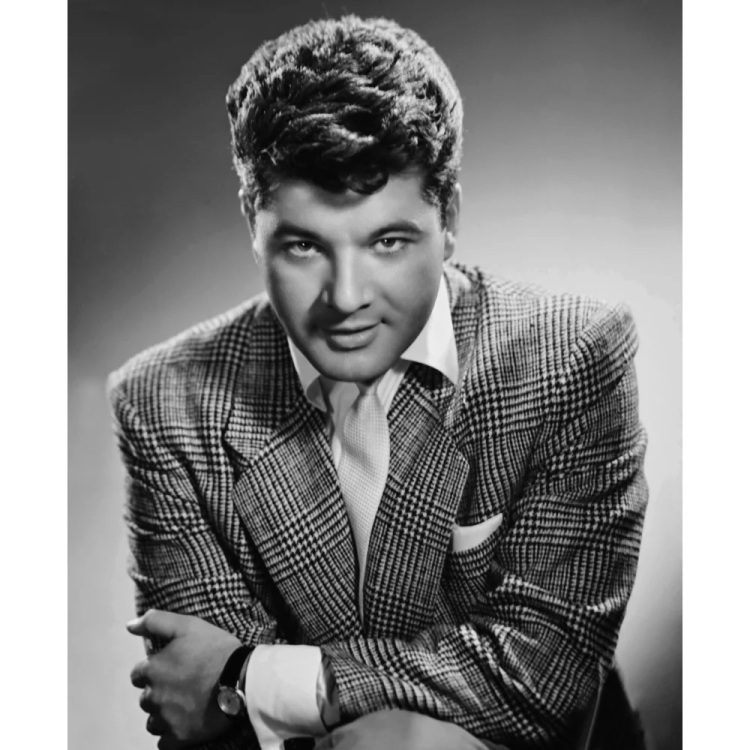
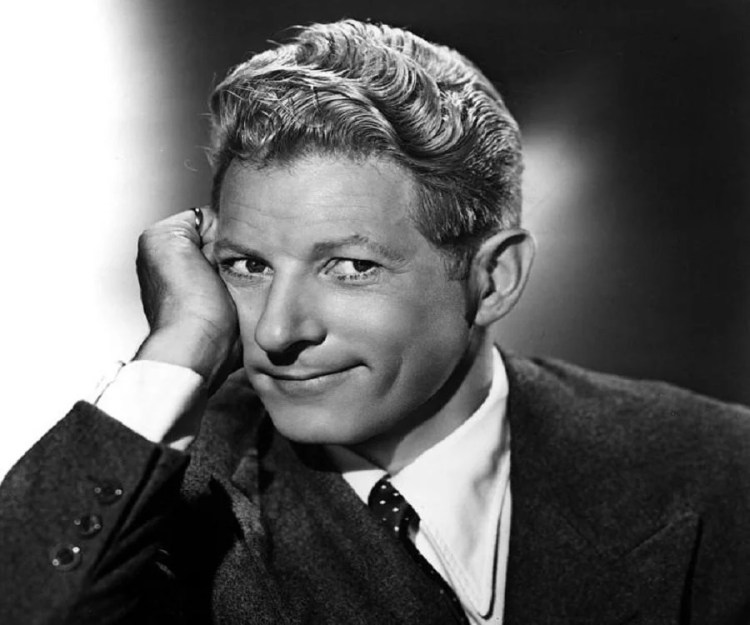

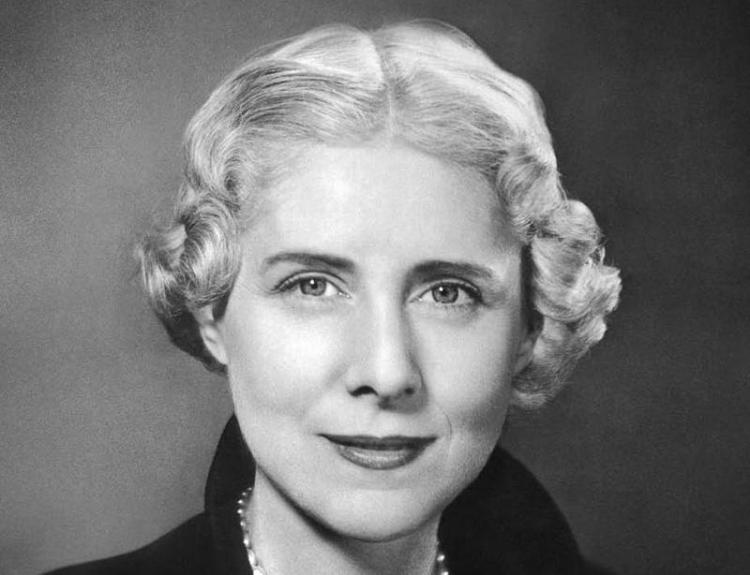
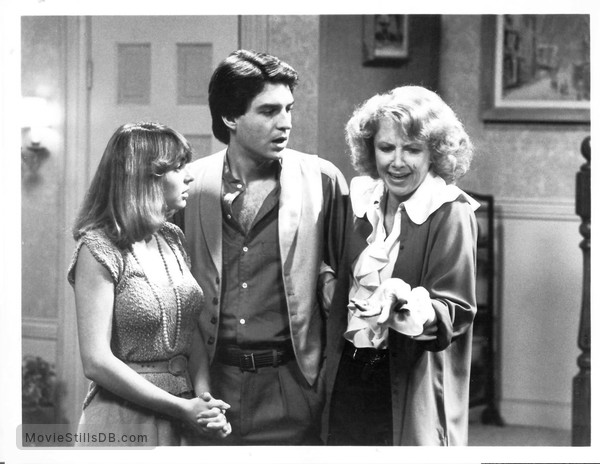

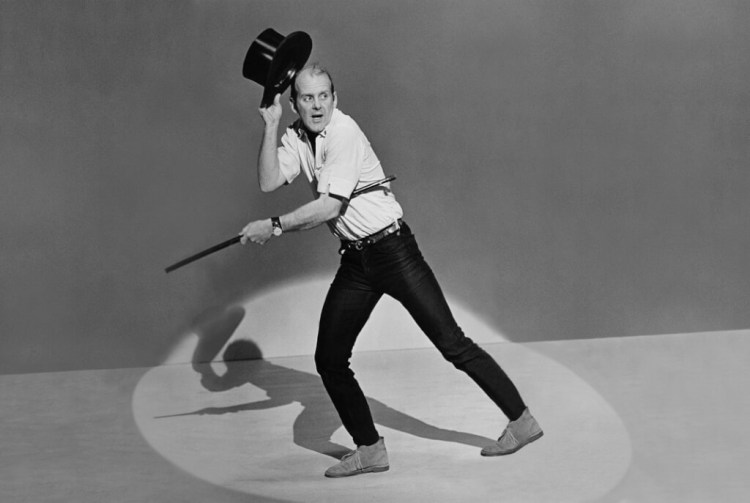
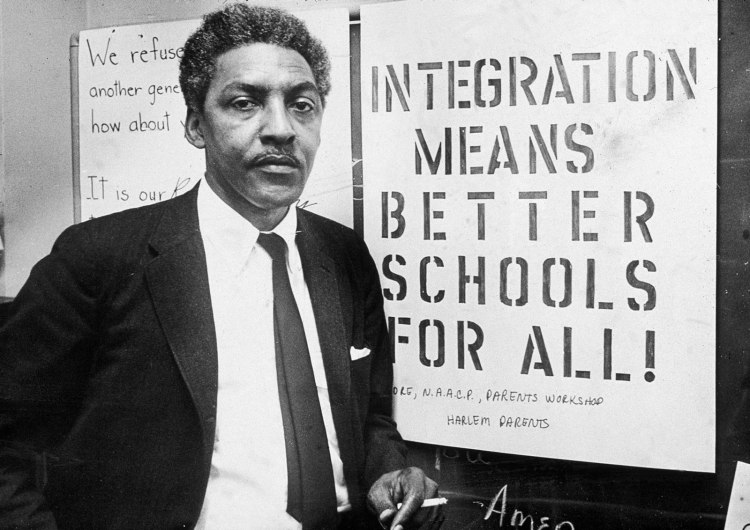

 SCREEN TIME WITH SAM